Blog Archives
A NEW CREATION: DEFINING THE NEW BIRTH [Part 2]

Everyone is born with a preeminent life mission, to discover not only the meaning of life but the purpose of one’s existence, as well as finding the way back home.
.
IT BEGINS
We often come across stories in the news of a child becoming lost. Somehow or another, a young one ventured beyond his boundaries and outside the scope of his usual supervision. Perhaps the best way to understand how such could happen is by recalling one’s own experience in this area.
Children raised right are properly warned. They are told to never go outside the backyard, or too far down the street, or beyond the gate to the back pasture. Whatever the limits may be in one’s urban or rural world, they are set for one’s protection. Of course, boundaries start from essentially a single point and gradually grow outward as a child matures, but each time they are reset it always involves another test. Would that it didn’t have to be this way.
Like many of you, I grew up in suburbia. It was the usual neighborhood of house after house in a vast grid of interlocking streets created as yet another master development plan. Prior to such largely twentieth century creations, tiny townships that grew to massive cities often had relatively crude starts with no concept of master planning. This allowed for much differentiation and an organic character. My city was like that. It was relatively already quite old when I was a kid, dating to the early 1700s. The main downtown area streets venturing outward were based on and followed original haphazard primitive trails and frontier roads. When mass suburban post WWII housing projects were plotted out, it was usually on the outskirts of town upon raw land though enveloped by previous country roads or open highways and other natural or manmade landmarks.
Our house, for example, was on one edge of the seemingly endless overall development. This was a bonus and allowed for potential adventure as opposed to being stuck somewhere in the middle of an endless sea of plain-Jane little houses. We were the third house from the edge, in fact. That edge was composed of a rough two lane street that acted more as a wild asphalt raceway. To add to the danger, our street was just down from the top of a rise from which the neighborhood raceway descended another half a mile or so downward. The older ones among us here will recall a time in America when suburban street rods ruled and demanded speed and decibels. Such teens thus showed much appreciation for that street on the edge.
As a preschool kid I was warned to never venture down the sidewalk from my front yard toward that edge for otherwise obvious reasons. It was a good part of being raised right. Yet beyond that street was an open field and beyond that the woods, like the woods that our neighborhood once consisted of just a few years prior, and woods which beckoned as a call of the wild.
The day came when little three or four year old me tested the boundaries. It was not my fault that I was a natural adventurer that descended from a long line of such people or that I was landlocked in an artificial construct that did nothing for a searcher’s heart. So, I tempted fate. I ventured beyond my boundaries. I stepped over an imaginary line and left my former world behind. I walked slower as I went. With each soft step on the concrete path I came closer to the forbidden boundary. It was all a wonder of new discovery. About the time I transversed all of about seventy feet and approached the end of the sidewalk at the third house down and only a few yards from the very edge, I heard a sound behind me, an indistinguishable voice as off in the distance though growing louder. What was it? What was cruelly interrupting my happy moment? Alas, my impending adventure, as being roused from an awesome dream, was soon to be ended. As I turned to look back to my house, there on the sidewalk before me was my fast approaching very concerned and very loving mother. We headed back to the protection of home.
The good news is I never got run over by a speeding hot-rodding teenager on the edge road raceway or even got lost in the woods far beyond, but I did gain an appreciation for properly set boundaries and that venturing beyond into the wild world would have to wait a fortnight. I also fully understood that such boundaries would not be crossed easily and would demand much effort to get past on some future date. Thankfully, though I certainly learned my lesson that day, I never lost my great unbounded yearning for the search.
LOST IN A LOST WORLD
“My people have become lost sheep;
Their shepherds have led them astray.
They have made them turn aside on the mountains;
They have gone along from mountain to hill
And have forgotten their resting place.” [Jeremiah 50:6]
But He answered and said, “I was sent only to the lost sheep of the house of Israel.” [Matthew 15:24]
The new birth must begin with a search. A person must be hungry for spiritual truth or will never find it. To simply cruise through life as if this world is all there is reveals a nature devoid of the desire to seek the highest good. One must obviously prioritize survival in the here and now and do whatever one can to make a living but never make that the top priority except at the most on a temporary basis. Nevertheless, searching for spiritual reality and even for the Creator Himself is often met with severe challenges that sometimes cause one to stray off course not due to personal failure or resolve but the character of the struggle. It is the nature of such individual pursuits in a fallen world to be overcome with the sheer scale of the project since it requires doing the opposite of the vast majority, such as constantly swimming upstream and facing off against steady headwinds in one’s face. In this regard, the term “lost” is thus relative.
One must therefore deduce that there is something deep within the heart of those who yearn for something seemingly far away and from long ago which proves an inarticulate spiritual connection which must be identified and secured. This yearning, however, will likely never bear fruit until it is met by another from the other side who enjoins the search on the behalf of the searcher. That is, one’s spiritual hunger is the activation element which causes the searcher not to find but to be found.
So He told them this parable, saying, “What man among you, if he has a hundred sheep and has lost one of them, does not leave the ninety-nine in the open pasture and go after the one which is lost until he finds it? When he has found it, he lays it on his shoulders, rejoicing. And when he comes home, he calls together his friends and his neighbors, saying to them, ‘Rejoice with me, for I have found my sheep which was lost!’” [Luke 15:3-6]
DEFINING THE NEW BIRTH
The Lord taught that one’s spirit must be resurrected and come to life again and is exactly what the new birth entails. It is the New Covenant directive which allows one to essentially return to the Garden. Therefore, when comparing the average normal natural non-born again human being to the Lord Jesus, we see such a massive difference. There is simply no comparison. We see the same difference, though obviously not as dramatic and on a lower scale, between such natural sinful humans and actual spiritually born again humans who have been saved from sin by the Lord and released from its power. The latter are certainly not perfect but certainly have been transformed into entirely new creations (see Galatians 6:15).
Therefore if anyone is in Christ, he is a new creature; the old things passed away; behold, new things have come. [2Corinthians 5:17][1]
They are thus like Adam and Eve before the fall in the spiritual sense because the salvation process has resurrected their spirits (which had only existed in seed form to that point). Their bodies, however, are still subject to the effects of sin in this fallen world (which results in aging and physical death) until one’s future resurrection when body, soul, and spirit will each be made perfect and whole again for all eternity.
This means ultimate salvation starts with the new birth. Since this is obviously so important, the new birth must be specifically defined. One must know exactly what the new birth entails. For this we must go to Scripture. What was it about the apostles, the 120, and all the members of the Lord’s first spiritual Community that separated them from everybody else? What did they do to become so much like the Lord? How did they gain their spiritual power? What common experience did they all undergo?
© 2025 by RJ Dawson. All Rights Reserved. [To Be Continued…]
[1] Unless otherwise noted all Scriptures are taken from the New American Standard Bible, © 1960, 1963, 1968, 1971, 1972, 1973, 1975, 1977, 1995 by The Lockman Foundation. Used by permission.
A NEW CREATION: DEFINING THE NEW BIRTH [Part 1]

Because original Creation was severely damaged by sin and rebellion in both the angelic and human realms, it required God’s subsequent plan for a New Creation.
.
AND GOD SAW THAT IT WAS GOOD
Creation does not work as intended according to the will of the Creator unless the Creator is recognized and honored by all members of His Creation. Anything less than this will cause problems, allow for faults and malfunctions, and may ultimately cause major failures. Yet the Creator has deemed that all who desire His intention and will can only agree to it voluntarily. It is why He gifted humanity with a free will. People are thus given both the authority and responsibility to choose the Creator’s will and vision or not. The correct choice also should be their top priority since it is the Creator who created everything to begin with, and everything in His original Creation extended forth and branched out from Him, that is, from His plans and creative process—and that it was good.
In this we can see that the Creator is both benevolent and non-coercive in that He never forces one to recognize and honor Him and will not violate His complimentary endowment of free will, which proves His love and His obvious understanding that love can only be freely given. He has also created human beings with the power of perception—the ability to perceive on their own—and the desire to “look around and discover” whatever His Creation has to behold. He knows that in this process, if one remains honorable and honest in one’s ongoing search, one will eventually find Him.
OF SAINTS AND SINNERS
The perfection of His original Creation was marred due to an angelic revolt. One may wonder why such a thing happened or how it could have happened within the bliss and harmony of the heavenly realm. Such bewilderment reigns until one considers the foundational culprit at the heart of it all—the sin of pride. This unfortunate trait is the result of a strange brew. It arises as an alchemical concoction formulated deep within the bowels of worshipful reflection upon self—arising from gifts such as outward beauty, lofty intellect, and/or superior attributes and abilities—that which the self had nothing to do with but takes possession of as if it did.
When one is thinking correctly, the proper response to such personal gifts and attributes is the very opposite of the aforementioned sin. It is one’s focus on the Creator and the recognition that one is a created being with no right to claim creative title nor the right to choose as one sees fit. Thus, rather than personal pride, in which one puts his or her own selfish interests first, one chooses instead to yield to the will of one’s Maker and appropriate the positive character trait of humility, which is a recognition of endowed blessings as gifts given in love. This is an acknowledgment of the Giver and an expression of gratitude to Him. Humility thus originates from the unpretentious heart of a person very aware that he or she is the blessed creation of a loving and beneficent Creator.
As such, rather than focusing laterally on self and generating rebellion, one instead looks upwardly towards one’s Maker and offers praise.
REBELS WITHOUT A CAUSE
And there was war in heaven, Michael and his angels waging war with the dragon. The dragon and his angels waged war, and they were not strong enough, and there was no longer a place found for them in heaven. And the great dragon was thrown down, the serpent of old who is called the devil and Satan, who deceives the whole world; he was thrown down to the earth, and his angels were thrown down with him. [Revelation 12:7-9]
An apparent third of the angels of heaven rebelled against the Creator (Rev 12:4). This was followed by a much greater percentage of humanity throughout history. Such defiant outcomes had to be in order to allow for a dutiful Community willingly dedicated to the Creator composed of those who honored Him, appreciated Him, and loved Him. Those who refused were culled by their own choices. Each of the rebels, whether angelic or human, chose incorrectly, having been made vulnerable by personal pride, which caused their inability to withstand temptation, which further caused their descent into the darkness of deception.
THE TEMPTER’S TRICKS
The temptation tactics of the enemy are exactly the same in pretty much every respect as that which was presented to the Lord during His temptation in the wilderness, though nuanced to varying degrees to fit the person thereof:
(1) It was suggested to the Lord that He act out of character and turn stones into bread to satisfy His natural hunger, that is, prioritize natural desires and natural food over spiritual desires (serving God) and spiritual food—the Word of God.
(2) It was suggested to the Lord that He act out of character upon arrival at the “pinnacle of the temple” (having the highest level of spiritual authority and power) by operating outside the Law of God through engaging in a potentially harmful and injurious personal act, knowingly and purposely, in the sight of all, as if to prove He was bulletproof and above approach no matter what He did, in order to summon God’s unilateral protection and unconditional approval, and thus verify His official outward exalted sanitized religious image. (Sound familiar?)
(3) It was suggested to the Lord that He act out of character and accept the rule over all the kingdoms on earth in exchange for worshipping the devil, that is, trade His spiritual authority over His eternal spiritual kingdom for all the temporary perks of natural authority at the highest level over the entire planet, while serving as the devil’s flunky.
This is pretty much what Adam and Eve did. Of course, their spiritual kingdom was the Garden and the devil lied about the world outside it, which brings to mind the following:
For a day in Your courts is better than a thousand outside.
I would rather stand at the threshold of the house of my God
Than dwell in the tents of wickedness. [Psalm 84:10]
Therefore, we must understand that there are basic natural tendencies endemic to every person which can be utilized by the enemy to gain advantage. The serpent in the Garden knew this, of course, since he was a fallen angel who had failed his own temptation battle. He was very aware of personal makeup and knew the newly created humans had a similar nature in that they were free will beings made in the image of God. It is why temptation always starts in one of three overall areas:
For all that is in the world, the lust of the flesh and the lust of the eyes and the boastful pride of life, is not from the Father, but is from the world. [John 2:16]
When the woman saw that the tree was good for food, and that it was a delight to the eyes, and that the tree was desirable to make one wise, she took from its fruit and ate… [Genesis 3:6]
IN THE IMAGE OF GOD
God created man in His own image, in the image of God He created him; male and female He created them. [Genesis 1:27]
One might take a step back here when thinking of the devil and demons as somehow being like God but one must also understand that such fallen angels were at one time bright shining sinless creatures who dwelt in heaven and that in his previous personification the devil was apparently the most gifted angel among them. We must also understand that God Himself has a particular distinct and unique nature and that He draws from Himself to create those whom He would be in relationship with, which, again, means that both angels and humans are at least similar to Him if not predominantly like Him (until they rebel against Him). It is why both have such wondrous abilities in both the spiritual and natural spheres.
Human beings, “made, lower than the angels” (Hebrews 2:7), are intelligent, physically gifted, and infused with potentially tremendous spiritual aptitude including the inherent capacity for accomplishing the things we see the Lord doing in the Gospels. The first man was like that, whose attributes also included immortality before his fall into sin, and was “a type of Him who was to come” (Romans 5:14). It is why the apostle Paul related the first created man to the Lord Jesus, calling both Adam:
So also it is written, “The first man, Adam, became a living soul.” The last Adam became a life-giving spirit. [1Corinthians 15:45] [1]
Adam was made in the image of God. The Lord Jesus IS the Image of God.
This puts things into greater perspective regarding God’s original intentions for humanity and also how very different humanity was originally. What we see in the Lord Jesus is an absolutely perfect Man but also One who is a type of what all people should be. In fact, Christians are instructed by the Lord’s teachings to strive to be just like Him, as impossible as that may appear. What He means by this is one must appropriate the same divine nature that Adam and Eve had before the fall. It is also why the Lord Jesus taught that every one of His followers must undergo a new spiritual birth in that they must be born again, which means “born from above” (John 3:7).
The Lord’s mission is thus the process of transforming humanity back to its original state and condition.
© 2025 by RJ Dawson. All Rights Reserved. [To Be Continued…]
[1] Unless otherwise noted all Scriptures are taken from the New American Standard Bible, © 1960, 1963, 1968, 1971, 1972, 1973, 1975, 1977, 1995 by The Lockman Foundation. Used by permission.
WHEN WAS THE APOSTLE PAUL BORN? [Part 3]

It is my conclusion that Paul had just turned 30 years old when the Lord met him on the road to Damascus. From this I was able to calculate his year of birth.
.
WHEN WAS THE LORD JESUS BORN?
According to my extensive research over many years, I have discovered that there should not be such a relatively wide range of dates regarding the birth of our Lord. There are several clues to follow in the written New Testament accounts primarily within the Gospel of Luke. This man was not only an excellent writer and historian, he was also a man who put forth an exceptional effort at arranging the Lord’s life and ministry in a chronological manner. By the time he began his two part project which also included the Book of Acts, there already existed some written accounts of the Lord’s ministry, some probably brief, including at least one written in Hebrew.
Luke also paid close attention to historical dates which corroborated the Lord’s personal history. There is also no doubt that he sought as many eyewitness testimonies that he could gather. He at last wove all this material together in a clean, comprehensive fashion to create an excellent treatise of inestimable worth, especially regarding the Book of Acts as it is the only extant history of first-century Christianity.
When I became a real Christian decades ago, it seemed as though the standard date for the Lord’s death and resurrection was 30AD. I have not done all that much research into how such a date was chosen but the main reason appears to be primarily based on the demise of King Herod the Great. According to the general consensus this date has for the most part always been 4BC which would mean the Lord would have to have been born before this since Herod was very much alive when the Lord came into the world. Yet it could not have been too much before 4BC because the Lord’s birth date also had to fit with the historical record stated in Luke’s Gospel. However, the dates Luke gives were apparently somewhat contested by historians if they appeared to differ from what most perceived as the official record derived from secular sources, again, primarily based on Herod’s death.
According to my own research, though, beginning many years ago, I discovered that the official date of Herod’s death does not hold up under close scrutiny. In fact, a very good case can be made that Herod did not actually die until early in the year 1BC, most likely in January. I will not get into all the details of my research here but based on this date and the fact that the Wise Men actually visited the Lord about a full year after He was born, I concluded that the Lord’s Birthday was in the early autumn of 3BC, most likely on the 15th of the seventh month.
This also fits perfectly with Luke’s account of the fourteenth year of Tiberius since the previous emperor Augustus died in 14AD. Based on the way the Roman dating system worked with reference to regnal years, the Lord actually began His ministry in the autumn of 28AD which fits perfectly with 3BC as His year of birth. (Remember, there is no Year Zero. From 3BC to 1AD is three years.)
BUT WHAT ABOUT PAUL?
In Part 1 and Part 2 of this series I revealed my working theory regarding Paul’s birth year, based on several Scriptural clues, and that the Apostle Paul was actually 30 years old when he experienced his unprecedented visitation from the Lord out on the highway. We also know that the general consensus range of this event is about 33-36AD though it varies slightly according to different sources.
I had always thought it odd that nothing more concrete has apparently ever been discovered regarding the actual year of Paul’s conversion. As far as I’m concerned, though, I believe what I have accomplished here is at this point the definitive date. Please know I have already done a deep dive on this subject matter and have a good set of notes from which I am writing this series. If I am correct, it is also due to major clues I believe the Lord gave me which came as an answer to prayer when I began this project:
With regard to birth years, as Joseph was to his younger brother Benjamin, so was the Lord to Paul.
Based on the clues I received and a closer look at many Scriptural accounts, I concluded that there was a nine year difference in the ages of Joseph and Benjamin.
What I discovered was not at all far from the general consensus dates. But rather than give a range, which is not all that difficult to do and could be construed as lazy research, I wanted to find the exact year of Paul’s birth. I believe I did:
The Apostle Paul was born in the year 7AD.
He was nine years younger than the Lord. When the Lord began His ministry in 28AD, Paul (Saul) was a young man of 21. He had already spent much time in Jerusalem learning at the feet of his rabbi Gamaliel (Acts 22:3) which probably began when he was a young teen. It is also likely the case that Paul made several pilgrimages to the City of David throughout his youth since his father had to be a man of relative wealth and prominence to afford Paul’s exceptional education.
And as many have speculated, it is not at all beyond reason that this young man had heard the news of a new Rabbi up in the Galilee who appeared to defy convention and also draw comparisons to the mighty prophets of old. Did young Paul ever cross paths with the Lord? I think he did. One can only wonder if the young impressionable student ever allowed himself the opportunity to open his heart toward his destiny before his fierce hardcore religious indoctrination slammed it shut with no cure.
That is, until 37AD:
“While so engaged as I was journeying to Damascus with the authority and commission of the chief priests, at midday, O King, I saw on the way a light from heaven, brighter than the sun, shining all around me and those who were journeying with me. And when we had all fallen to the ground, I heard a voice saying to me in the Hebrew dialect,
‘Saul, Saul, why are you persecuting Me? It is hard for you to kick against the goads.’ And I said, ‘Who are You, Lord?’ And the Lord said, ‘I am Jesus whom you are persecuting. But get up and stand on your feet; for this purpose I have appeared to you, to appoint you a minister and a witness not only to the things which you have seen, but also to the things in which I will appear to you;
‘Rescuing you from the Jewish people and from the Gentiles, to whom I am sending you,
‘To open their eyes so that they may turn from darkness to light and from the dominion of Satan to God,
‘That they may receive forgiveness of sins and an inheritance among those who have been sanctified by faith in Me.’” [Acts 26:12-18][1]
© 2025 by RJ Dawson. All Rights Reserved.
[1] Unless otherwise noted all Scriptures are taken from the New American Standard Bible, © 1960, 1963, 1968, 1971, 1972, 1973, 1975, 1977, 1995 by The Lockman Foundation. Used by permission.
WHEN WAS THE APOSTLE PAUL BORN? [Part 2]

In Part 1 I mentioned several otherwise hidden Scriptural clues in my search for Paul’s actual birth year which continued to build toward a remarkable conclusion…
.
I LOVE IT WHEN A PLAN COMES TOGETHER
As inapplicable as it may initially appear, the first clue of note with reference to Paul’s birth year regarded the ages of the Hebrew patriarchs Joseph and Benjamin. These were the last two sons of Jacob (#11 and #12). Though there was technically not a “Tribe of Joseph,” he actually was given two tribes by his father Jacob—the tribes of Ephraim and Manasseh—named after Joseph’s two sons. Though these were Jacob’s grandsons, they were given equal standing and rank as Jacob’s own sons and were counted as tribal progenitors of the Hebrew nation. Here is the list of Jacob’s twelve sons by birth order including the mother of each:
- Reuben (Leah)
- Simeon (Leah)
- Levi (Leah)
- Judah (Leah)
- Dan (Bilhah)
- Naphtali (Bilhah)
- Gad (Zilpah)
- Asher (Zilpah)
- Issachar (Leah)
- Zebulun (Leah)
- Joseph (Rachel): Sons Ephraim and Manasseh
- Benjamin (Rachel)
One might note that though they are generally referred to as the twelve tribes of Israel, there are actually thirteen tribes due to the inclusion of the two tribes descending from Joseph. It is interesting, however, that by the time of the writing of the Book of Revelation in the early 60s AD, the tribe list located there in chapter seven refers to the tribe of Ephraim as the tribe of Joseph and also does not mention the tribe of Dan. Hence, it is a list of twelve instead of thirteen. One might wonder what happened to Dan (I’ve done much past research on this) but that’s another study for another day.
The next clue I received/discovered concerned the age difference between Joseph and Benjamin. As I wrote in Part 1, I saw the Lord as Joseph and Paul as Benjamin.
This would mean the difference in ages between Joseph and Benjamin would be the same as that between the Lord and Paul.
MY WORKING THEORY
At the end of Part 1 I revealed that the scholarly consensus was that the man Benjamin, when he went to Egypt with the rest of his extended family, was 32-35 years of age. This is a reasonable estimate. But I decided on a specific age that was not only just as reasonable but scripturally foundational:
Benjamin was 30 when he went to Egypt.
I like this age number because it is significant in Scripture. Most importantly, it was the age of the Lord when He began His ministry. It was also the age of Joseph when the Lord raised him up to become second in power in Egypt. In addition to these, a Levite of Kohath/Gershon/Merari had to be at least 30 (to 50) to “enter the service to do the work in the tent of meeting” (Numbers 4:3, 23, 30), as was also required of Levites such as the tent carriers. Both King Saul and King David were 30 when beginning their reigns. All of these prove that the age of 30 was chosen by God as the age of maturity for higher service and ministry in general.
Since Benjamin already had ten sons by the time he went to Egypt, he could have started his family early, maybe around 15-16 years old, since Jacob would have doted on him, and money, provision, shelter, etc. would not have been a problem. This is assuming, however, that Benjamin had only one wife, something Scripture does not address (or name), though the apocryphal book of Jasher (not likely the same one mentioned in the OT) claims he had two. A man would otherwise have to work very hard to build up his life in preparation for marriage and children and usually not be ready until his mid-twenties or so. Under that condition Benjamin would not have had the time to father ten sons.
Here is another interesting indication: Jacob was 130 years old when he went to Egypt, at two years into the famine during the “bad seven.” This would mean, according to this scenario, that he fathered Benjamin when he was exactly 100, just as it was with Abraham and Isaac, which could definitely be another clue. Incidentally, Joseph was born when Jacob was 91 which, as I mentioned in Part 1, would make him 39 at that same time.
This means, according to my working theory, that there was a 9 year age difference between Joseph and Benjamin.
If Benjamin was indeed 30 at that time, which appears increasingly plausible, it is why the age of 30 also fits so perfectly for Paul at the time of his salvation and the effective beginning of his ministry. It is also in keeping with why the Lord decided to make such a significant unprecedented move at that particular time, at least in part:
As he was traveling, it happened that he was approaching Damascus, and suddenly a light from heaven flashed around him; and he fell to the ground and heard a voice saying to him, “Saul, Saul, why are you persecuting Me?” And he said, “Who are You, Lord?” And He said, “I am Jesus whom you are persecuting, but get up and enter the city, and it will be told you what you must do.” The men who traveled with him stood speechless, hearing the voice but seeing no one. Saul got up from the ground, and though his eyes were open, he could see nothing; and leading him by the hand, they brought him into Damascus. And he was three days without sight, and neither ate nor drank. [Acts 9:3-9][1]
The time had come. Paul had turned 30.
By appearing to Paul in a flash of light “brighter than the (midday) sun,” the Lord had chosen a dramatic way to get Paul straightened out and on the right track toward his destiny. It was probably the only thing that would have worked when dealing with a headstrong, stubborn, intensely driven and focused man set on achieving his fervent religious duty come hell or very high water.
In Part 3, the conclusion of this series, I will complete what I believe is a relatively solid case with additional clues and a general timeline based on a very important key date which leads to Paul’s actual birth year. See you then.
© 2025 by RJ Dawson. All Rights Reserved. [To Be Continued…]
[1] Unless otherwise noted all Scriptures are taken from the New American Standard Bible, © 1960, 1963, 1968, 1971, 1972, 1973, 1975, 1977, 1995 by The Lockman Foundation. Used by permission.
WHEN WAS THE APOSTLE PAUL BORN? [Part 1]

Though this subject may initially appear as unimportant or incidental, in looking into it recently I discovered some promising spiritual parallels that are quite intriguing…
.
A few days ago I was watching a multipart film series on the ministry travels of the Apostle Paul. This was a subject I knew fairly well, having read several accounts of Paul’s life in my lifetime and doing further extensive research on the subject roughly eight years ago or so. At that time I had determined to follow Paul on each of his journeys and get all the more familiar with the locations he visited and the happenings thereof, dovetailing his adventures with the Scriptural accounts in the Book of Acts and his own letters. In that process I discovered an interactive online map that gave one the feel of actually traveling along with the apostle and his cohorts which served as an excellent visual aid. I also supplemented this with much location information and dates. Both filled out the many texts I was reading which included excellent scholarly books, some going back over 150 years.
Early in the aforementioned film series, which was produced five years ago, the host and narrator, who was also traveling in Paul’s footsteps showcasing the locations and evocative ancient ruins of the very places Paul visited, said in passing that Paul was born in about 4-5AD. For whatever reason, I was instantly intrigued with this (as I likely was many times in the past concerning Paul’s birth year though apparently never doing a deep dive regarding it). I then paused the video and immediately decided to begin looking into the subject as though nothing was more important. But before starting the process I prayed for insight and revelation as if I was looking for certain clues. I wanted to receive from the Lord whatever He might want to reveal that I likely never would find otherwise.
A MAJOR CLUE
The scholarly consensus opinion I discovered early on was about 5AD with one source mentioning a range up to 10AD which I thought was too high. The author of the first book I ever read on Paul—The Man Who Shook the World—said he was born in 1AD. However, I wasn’t looking for an actual overall definitive consensus though 5AD might very well be it. While continuing this early process I suddenly hit on something seemingly out of left field. It ended up being what initially appeared to be the major clue I was seeking, which, if true, had to be a revelation from the Lord: It regarded the ages of Joseph and Benjamin.
Now, I think I know what you may be thinking. What would the ages of these two ancient tribal patriarchs have to do with Paul’s birth date? Well, to add to the spiritual types and shadows thereof, I saw the Lord Jesus as Joseph and Paul as Benjamin. With this it started coming together. Of course, Joseph was certainly a type of the Lord. He was also the one chosen by God to actually save his nation which would have otherwise perished in a future famine that only God knew was coming. It was also the case that Joseph and Benjamin were full blood brothers with the same father and mother (Jacob and Rachel) and had no other such siblings. There was thus a very special bond between these two especially because Rachel was the one real love of Jacob’s life though he fathered children by three other women.
With reference to the patriarch Benjamin, his most famous descendant by far was the future Apostle Paul. If you studied much history of the tribe of Benjamin you would possess greater understanding of Paul’s natural personality and demeanor. In essence, Paul was a perfect type of Benjamin. Not only does Paul state in his epistles that he was descended from this tribe he also claimed to be a then current member of it which must have carried a certain amount of weight among his former religious peers. In 1Corinthians 15:3-11, he also explains his spiritual stature in association with the twelve apostles as though he very much belonged. Paul writes in that passage that the newly risen Lord Jesus first appeared to Peter and then to the twelve. After also mentioning the Lord’s appearance to the 500 and the Lord’s brother James, he says the following:
…And last of all, as to one untimely born, He appeared to me also. [1Corinthians 15:8]
The KJV translates it this way:
And last of all he was seen of me also, as of one born out of due time. [1Corinthians 15:8 KJV]
This fits perfectly with the Benjamin scenario in that he was not only the last son born to Jacob (#12), but there was also a substantial gap in the ages of the last two sons, Joseph and Benjamin, which does not occur in any other pairing. And because Jacob lost his favored son Joseph to what he previously thought was a violent death when Benjamin was very young, he undoubtedly became even more protective of his final son and likely did all he could to shield him which likely spoiled the child and even stunted his growth. This would make Benjamin less mature and disciplined which, again, appeared to show up as an ongoing flaw in his descendants.
In keeping with this probability in association with the findings of past historians, the Apostle Paul was likely not even five feet tall. Again, Scripture appears to say the same about Benjamin in that he was apparently small in stature. For example, there are several passages in the Book of Genesis in which Benjamin is referred to by his brothers as a “lad.” This occurs nine times in Genesis 43 and 44 which is in the time frame when Joseph was prime minister of Egypt dealing with his brothers. With this description—a lad—the reader night think Benjamin was a mere boy. However, this word “lad” is from a Hebrew word with a wide range denoting infancy to boy to adolescence, but could also possibly refer to a young adult depending on the context. I will get to more on this later. Suffice it to say that just as there was a large age difference between Joseph and Benjamin, it was also most likely if not certain that Paul was younger than all twelve apostles.
ANOTHER MAJOR CLUE
So, to sum up to this point in keeping with the large clue I believe the Lord gave me, I began studying the difference in ages between Joseph and Benjamin. I discovered what I thought was a high range in my early research with one source claiming 13 years. I thought that was too much. Other sources claimed that Benjamin was not even born when Joseph was sold into slavery (he was 17 at the time). I thought that was way too much. Yet, I was looking for the truth and these had to be considered.
I began trying to put it all together. The next major clue came regarding Benjamin’s age when he went to Egypt while being referred to as a “lad” by his brothers. They called him this not because he was a boy or even a teenager but because he was so much younger than they were. The fact is that Joseph, son of Jacob #11, was 39 years old at this time. We know this because he was 30 when he became prime minister of Egypt which was also the beginning of the “good seven” years in which bumper crops would come forth. But when his family moved to Egypt it was already at the end of the first two years of the “bad seven” when the great famine had arrived. Therefore, since Joseph was 39, imagine how old Reuben was, the first son of Jacob. He could have been almost 50. This puts things in better perspective regarding the way they referred to Benjamin even though he was not at all a young man. The major clue proving this is the following: Benjamin had ten sons when he went to Egypt:
And these are the names of the children of Israel, which came into Egypt, Jacob and his sons… And the sons of Benjamin were Belah, and Becher, and Ashbel, Gera, and Naaman, Ehi, and Rosh, Muppim, and Huppim, and Ard. [Genesis 46:8, 21][1]
With this little factoid as a key puzzle piece it becomes evident that Benjamin was far from being a mere “lad.” In fact, the early scholarly consensus was that Benjamin was actually a full grown man in the vicinity of 32-35 years old at that time.
But I saw it differently. Thus, regarding the discovery of the actual birth year of the Apostle Paul, I perceived yet another major clue which I will reveal in Part 2. Stayed tuned.
© 2025 by RJ Dawson. All Rights Reserved. [To Be Continued…]
[1] Unless otherwise noted all Scriptures are taken from the New American Standard Bible, © 1960, 1963, 1968, 1971, 1972, 1973, 1975, 1977, 1995 by The Lockman Foundation. Used by permission.
OBSERVATIONS ON THE GENESIS CREATION ACCOUNT

In the beginning, God set out to create a perfect world. While in the process of creation He often looked upon His work and saw that it was good…
.
It continued being good until His great project was completed and all the finishing touches were made. It was an astounding and truly amazing success. At the end, “God saw all that He had made, and behold, it was very good” (Genesis 1:31).[1]
From this initial Scriptural account we learn that the goodness of original creation reflected the goodness of the Creator. We understand further that everything God does is good and perfect because God is good and perfect. Regardless of whether anyone recognizes or acknowledges such an otherwise easily discernable fact has no effect on God’s true nature or the nature of His Creation but, if contrary, certainly hints at the makeup of the observer.
THE GENESIS OF HISTORY
The initial Biblical creation account comprising Chapter 1 and the first three verses of Chapter 2 of the ancient Book of Genesis gives an accurate though brief depiction of how things came to be and the perfect state in which Creation originally existed. However, it is not actually the very beginning of the story. Instead, it is an account of how God made something great and very good of a place that was originally quite the opposite.
In Genesis at the beginning of God’s work He does not actually start with a necessarily clean palette so to speak. Instead there is the clear inference of a prior state or condition that was not good at all. From New Covenant Scripture we understand that God creates something from apparently nothing or at least that which is not visible or a part of the three dimensional world of which we are aware. As the writer of the Book of Hebrews records:
By faith we understand that the worlds [during the successive ages] were framed (fashioned, put in order, and equipped for their intended purpose) by the word of God, so that what we see was not made out of things which are visible. [Hebrews 11:3 AMPLIFIED]
As the preceding verse states, we must note something quite significant in the Genesis 1 record, that God actually spoke things into existence. That which was created was by the spoken word of God. It is also apparent that whatever God made did not exist physically as we know it prior to His making it, meaning that He used something or some means beyond the observance of the five senses. It must also be noted that, again, whatever God made was always good. The clear inference is that God does not make bad stuff. Yet Genesis 1:2a describes a pre-existing state or condition that is precisely that:
And the earth was without form, and void; and darkness was upon the face of the deep. [KJV]
The earth was formless and void, and darkness was over the surface of the deep… [NASB95]
The earth was without form and an empty waste, and darkness was upon the face of the very great deep. [AMPLIFIED]
Now it could be the case that the author of Genesis is simply describing a prior level of God’s Creation in which He brought it to that particular not so good condition from an original state of pure non-existence. Geologic science seems to confirm this by claiming a consensus hypothesis that the early planet existed in a relatively smoothed over state and was fully covered with water. Is this what Genesis is stating? Was the earth a water world?
The Hebrew certainly describes something that is akin to desolation, primeval chaos, formlessness, emptiness, a void, and a veritable wasteland or extreme wilderness. These descriptive terms are not good. How so? And to top it all off, the earth was also enveloped by total darkness. Was this condition simply a state of creation leading to its final stages as science portends? Or was the earth actually a place of former goodness that met destruction, which was somehow destroyed? If so, there would have to be a destroyer. Whatever the case, whatever existed here prior to the Genesis Creation account was not good.
© 2025 by RJ Dawson. All Rights Reserved. [To Be Continued…]
[1] Unless otherwise noted all Scriptures are taken from the New American Standard Bible, © 1960, 1963, 1968, 1971, 1972, 1973, 1975, 1977, 1995 by The Lockman Foundation. Used by permission.
HAPPY NEW YEAR?

Today is the day we celebrate the beginning of a brand new year. In that regard, may 2025 be a blessed year for all.
.
In reality, though, this particular day is essentially meaningless regarding actual new beginnings.
Even though the civil calendar we presently use—the Gregorian—contains 365 days and twelve months, it otherwise has little cyclical bearing on celestial events. This means our months are not based on actual lunar cycles but are largely made up and based on nothing. The beginning of the calendar (today) also has no bearing on celestial cycles. Nevertheless, because particular authority figures created the Gregorian calendar several centuries ago and everyone was forced to adopt it, it begins today, January 1.
CELESTIAL CALENDARS
Ancient calendars were originally based on such celestial events, primarily the time it takes planet Earth to travel around the Sun. Yet within that cycle was an earlier calendar—smaller cycles regarding the time it takes the Moon to travel around the Earth.
The former is referred to as a solar calendar and the latter a lunar calendar. Their significance is that one can actually refer to something tangible, and in the above cases, something very powerfully tangible, to order the passing of time.
Though our current calendar is divided into twelve months and fifty-two weeks, it remains a mere abstract construct in relation to the actual celestial cycles.
Hence, January 1 is largely meaningless from a celestial perspective.
Regarding the actual first day of the calendar, common sense tells us that the year, divided up into four seasons, would naturally begin with the season of new life, the spring. The end of winter and the beginning of spring constitutes the actual beginning of a new solar cycle from our perspective, though this differs regarding on which side of the equator one lives.
The ancients had figured out that a year lasted 365 days. They figured out that lunar cycles, or months, lasted 29-30 days. We now know that such cycles can be calculated further to 365.2422 days and 29.53 days respectively.
The ancient Sumerians and later Babylonians managed to combine both of these cycles into a single calendar, a lunisolar calendar. This calendar was later adopted by the Hebrews during their Babylonian exile after the destruction of Jerusalem in 586BC.
It was discovered that 235 lunar cycles fit almost perfectly into 19 solar cycles. This results in 12 years of 12 months and 7 years of 13 months. By installing an additional month every third year or so during the 19 years, one arrives at an overall cycle (19 years) encompassing both the solar and lunar cycles and what is essentially a perfect calendar based on celestial events, in which one can mark time by the actual movements of the sun and moon.
For example, the actual current lunar cycle or month began with the new moon of December 30, 2024 at 4:26pm CST. There will be a full moon on January 13 which constitutes the exact middle of the lunar cycle. Therefore, like the solar cycle, one can see that January 1 also has no bearing on the lunar cycle although this year it was very close.
The present Hebrew calendar is lunisolar, but does not actually line up perfectly with exact lunar cycles since it is calculated based on when a new moon is sighted with respect to “evening and morning.” This means the new day always started at sunset and the first day of a new month also had to start at sunset. In reality, lunar cycles can start at any time during a 24 hour day.
For example, today, January 1, is represented on the Hebrew calendar as the 1st day of Tevet. Tevet, however, is actually the fourth month, since the official Hebrew civil calendar begins in the autumn of the year.
Calendars based specifically on celestial cycles used to matter very much. They were necessary for the right times regarding planting and harvesting.
SPIRITUAL CALENDARS
Spiritually speaking, could it be the same? Does God have a spiritual calendar? Is pure nature a reflection of the unseen spiritual? Remember, pure astronomy is not astrology. God created celestial events and cycles. The Universe in this sense runs like clockwork. The more one studies such cycles, the more one discovers an absolutely perfect system which demands an extremely brilliant intelligence. These are not just random cycles, but cycles with cycles to the effective infinite degree.
Also, because we know that God, in His Word, makes thousands of references to time and cycles, as well as numbers, He no doubt has a reason for it. But if that reason is to be discovered, it can only be discovered by using His actual calendar rather than a man-made abstract.
Then God said, “Let there be lights in the expanse of the heavens to separate the day from the night, and let them be for signs and for seasons and for days and years; and let them be for lights in the expanse of the heavens to give light on the earth;” and it was so.
God made the two great lights, the greater light to govern the day, and the lesser light to govern the night; He made the stars also. God placed them in the expanse of the heavens to give light on the earth, and to govern the day and the night, and to separate the light from the darkness; and God saw that it was good. [Genesis 1:14-18] [1]
© 2015 by RJ Dawson. All Rights Reserved.
[1] Unless otherwise noted all Scriptures are taken from the New American Standard Bible, © 1960, 1963, 1968, 1971, 1972, 1973, 1975, 1977, 1995 by The Lockman Foundation. Used by permission.
GAINING SPIRITUAL HEALTH

Everyone wants to be healthy. Everyone desires to walk in good health and feel good. However, spiritual health should be our top priority.
.
It is readily available. Spiritual health is God’s promise to us. He revealed to the world multiple centuries ago what it is and how to acquire it. In fact, in the very beginning, spiritual health was the norm.
THE BOOK OF GENESIS
First of all, we know that God is good. He is perfect. He can be trusted to the nth degree. Therefore, anything that God creates is good and anything God creates to sustain life, including food, is good.
In the Genesis account, at the beginning of Life on Earth just after the Days of Creation were completed, everything God had created was pronounced good. This included the good health in general of all living creatures but also the spiritual health of humanity. Yet God created only one life form akin to Himself:
God created man in His own image, in the image of God He created him; male and female He created them. God blessed them… [Genesis 1:27-28]
By this we see that not only is God good but the first people God created were good. He had blessed them abundantly with every form of good health. He had provided for them everything they could possibly need or want. They were living in a good place. Life was good.
As you read the following familiar passage from Genesis Chapter 1, see if you can find any hidden details in the narrative one might otherwise pass over. See if you can ascertain clear facts pertaining to spiritual health and good health in general. The foundational basics are all there. Let’s take a look:
27 God created man in His own image, in the image of God He created him; male and female He created them. 28 God blessed them; and God said to them, “Be fruitful and multiply, and fill the earth, and subdue it; and rule over the fish of the sea and over the birds of the sky and over every living thing that moves on the earth.” 29 Then God said, “Behold, I have given you every plant yielding seed that is on the surface of all the earth, and every tree which has fruit yielding seed; it shall be food for you; 30 and to every beast of the earth and to every bird of the sky and to every thing that moves on the earth which has life, I have given every green plant for food”; and it was so. 31 God saw all that He had made, and behold, it was very good. And there was evening and there was morning, the sixth day. [Genesis 1:27-31]
According to this ancient narrative, whatever living creature God creates is not only good but God created the beginning and consequent perpetual process that allows for such living creatures to birth new generations. He also created the means required to sustain such living creatures, that is, how each must be nourished and gain the proper nutrients for good health and ongoing life. All of these were good.
In reading Genesis 1, then, we discover that at the end of each Day of Creation, God deemed everything He created on each day as good. The Hebrew word is טוֹב ṭôḇ (tobe). I suggest your own research to discover the full description of this word but Strong’s defines it as: Beautiful, best, better, bountiful, cheerful, at ease, × fair (word), (be in) favour, fine, glad, graciously, joyful, kindly, kindness, liketh (best), loving, merry, × most, pleasant, pleaseth, pleasure, precious, prosperity, ready, sweet, wealth, welfare, (be) well(-favoured).
You get the idea. Regarding such Creation days and specific life forms and living creatures, on the Third Day of Creation God created the Plant Kingdom. On Day Five He created Part 1 of the Animal Kingdom (the creatures of the air and water, primarily birds and fish). On Day Six, the final day of His active work, God created Part 2 of the Animal Kingdom, the land creatures, that which may be termed advanced life. These land animals are listed in three categories: (1) cattle, (2) creeping things, and (3) beasts of the earth. The original Hebrew equivalent of these three are bᵊhēmâ (be-hay-maw’), remeś (reh’-mes), and ḥay ‘ereṣ (khah’-ee) (eh’-rets).
The following brief Strong’s definitions gives us a better idea of these three primary life forms:
(1) בְּהֵמָה bᵉhêmâh (be-hay-maw’); from an unused root (probably meaning to be mute); properly, a dumb beast; especially any large quadruped or animal (often collective):—beast, cattle.
(2) רֶמֶשׂ remes (reh’-mes); from H7430; a reptile or any other rapidly moving animal:—that creepeth, creeping (moving) thing.
(3a) חַי chay (khah’-ee); from H2421; alive; also (as noun, especially in the feminine singular and masculine plural) life (or living thing), whether literally or figuratively:— age, alive, appetite, (wild) beast, company, congregation, life(-time), live(-ly), living (creature, thing), maintenance, merry, multitude, (be) old, quick, raw, running, springing, troop.
(3b) אֶרֶץ ʼerets (eh’-rets); from an unused root probably meaning to be firm; the earth (at large, or partitively a land):—× common, country, earth, field, ground, land, × nations, way, + wilderness, world.
One of the common characteristics of all of these land animals was their food: They were apparently all herbivores—plant eaters. This included the birds:
29 Then God said, “Behold, I have given you every plant yielding seed that is on the surface of all the earth, and every tree which has fruit yielding seed; it shall be food for you; 30 and to every beast of the earth and to every bird of the sky and to every thing that moves on the earth which has life, I have given every green plant for food”; and it was so. [Genesis 1:29-30] [1]
The first thing which may come to mind here is this: What about the carnivores? Why does the Genesis account apparently either not list meat-eating predators or makes the apparent claim that such predators were actually herbivores at that long distant early time before the fall of man?
This opens up a big box of questions, to say the least, but I will try to stay on point here. Remember, the author of Genesis, as God’s spokesman, was primarily referencing the grocery list of early humans in that God had originally made human beings to subsist on a diet of “every plant yielding seed,” the fruit of “every tree which has fruit yielding seed,” and by extension, “every green plant.”
Now, it is also a fact that the majority of quadruped mammals such as cattle and deer are herbivores. Most birds of the present are not strict herbivores but the majority of their diet is plant-based. Some mammals and most birds are omnivores in that they eat both plant and animal matter. Some birds are carnivorous predators. Scientific studies have shown that animal diets in general have changed over time and location and that the normal process of such change, when it occurs, goes from herbivore to omnivore and in some instances to carnivore.[2] Of course, natural herbivores and carnivores are quite different in physiognomy regarding their teeth and digestive abilities which obviously portends original creation.
Again, I don’t want to get off point here, but this section of Genesis, while it never mentions it, also brings up the topical discussion of animal death. Some believe there was no death whatsoever on the planet before the fall of man. Others explain that there must have been death as part of God’s original creation or the land would eventually be overrun with far too many animals which it could not possibly support. Death would therefore require predators to keep nature in the proper balance. Death would also require carrion eaters.
But back to our topic. The Genesis account is clear that mankind was originally created to be strict herbivores (no meat or dairy). Our bodies are constructed in such a way to back this up. We have the teeth for it. In fact, the Garden of Eden was actually primarily a fruit tree orchard. Human health, then, depends on proper human diet and if we were originally created to eat only fruits, vegetables (including leafy greens), grains, and nuts (and possibly roots) then a diet of that sort would appear to be far healthier than one that introduces foreign matter not suitable for human biology and digestion.
Sadly, much of our food supply and subsequent diet at present consists mostly of “foreign matter” in that it is predominantly non-organic, factory processed, and chemical-laden/saturated. This makes the very food we need to survive the likely leading cause of disease and general ill health whether people know it or not (or care).
What does this have to do with spiritual health? I’m getting to it. Stay tuned for Part 2.
© 2023 by RJ Dawson. All Rights Reserved.
[1] Unless otherwise noted all Scriptures are taken from the New American Standard Bible, © 1960, 1963, 1968, 1971, 1972, 1973, 1975, 1977, 1995 by The Lockman Foundation. Used by permission.
[2] www.sciencedaily.com/releases/2012/04/120416154417.htm
A CONFUSION OF BELIEFS AND TRADITIONS: OUR CHRISTIAN TOWER OF BABEL (Part 3)
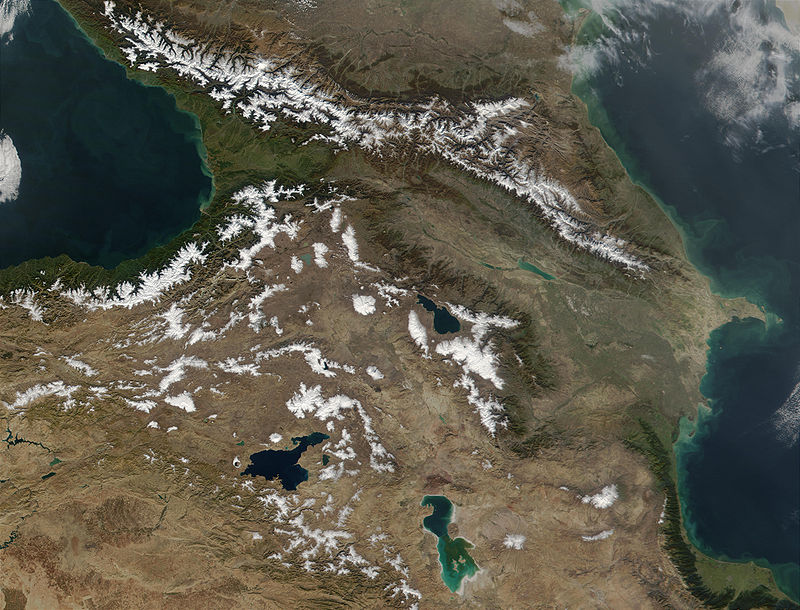
The Book of Genesis states clearly that the land of Eden was located in the area of the Tigris-Euphrates headwaters in what is now a region predominated by eastern Turkey.
.
EDEN
It is where YHWH Elohim planted the garden in which He later placed Adam and Eve. The garden is initially characterized as a garden of trees—an orchard—“every tree that is pleasing to the sight and good for food.” The Greek Septuagint calls this abundant fruitful garden Paradise. The home of Adam and Eve was a place of divine perfection and both natural and spiritual order.
Now a river flowed out of Eden to water the garden; and from there it divided and became four rivers. The name of the first is Pishon; it flows around the whole land of Havilah, where there is gold. The gold of that land is good; the bdellium and the onyx stone are there. The name of the second river is Gihon; it flows around the whole land of Cush. The name of the third river is Tigris; it flows east of Assyria. And the fourth river is the Euphrates. [Genesis 2:10-14][1]
Eden was located in what is now the Armenian Highlands, an area rich in water resources, the location of several rivers, their tributaries, large natural lakes, and springs. The source of the Tigris River is primarily Lake Hazar and is also fed by many small tributaries in the area. The Euphrates begins not far from the headwaters of the Tigris at the confluence of two smaller rivers, the Karasu and Murat, which flow west from the eastern ranges. This area of confluence is now Lake Keban. (There are many relatively new hydroelectric dams on these rivers.)
The greater region has most probably changed appreciably since very ancient times. It was likely a relatively peaceful place with a different climate before the advent of much volcanic activity and the associated uplift which created mountains, etc. For example, Mount Ararat is presently an inactive volcano which last erupted in 1840.
WHEN WAS ADAM?
Christians have postulated various dates for the creation of Adam based on different criteria, one of which follows an exact rendering of the listed patriarch’s ages in Genesis which gives a date of about 4000BC (Young Earth). Others say such a late date is unreasonable because it fails to consider and/or ignores scientific facts. These place Adam as far back as 50,000 years ago, or at various dates since, including just after the Ice Age, known scientifically as the Last Glacial Maximum of 11,000-8,000BC when the Pleistocene ended and the Holocene began.
As the great glacial ice sheets began melting and retreating to the north, the resulting meltwater caused sea levels to begin rising precipitously. From approximately 20,000-13,000BC, the ocean level rose about 45 feet. Then from about 13,000BC to roughly 4,000BC sea levels rose another 375 feet for an overall total of approximately 420 feet. Since 4000BC the ocean level has remained constant.
It was not until after the Ice Age that evidence of human habitation appears on the historical record. Evolutionary theory claims that homo sapiens sapiens first appeared from out of nowhere 200,000 years ago (the big leap forward) but offers no actual evidence of transition or habitation at such an early date. According to Young Earth theory, the flood of Noah took place around 2300BC. Yet, interestingly enough, we have clear evidence of three roughly distinct cultures emerging circa 6000BC or even earlier in the same Armenian Highlands location where Eden once existed. We also know that Noah’s Ark came to rest after the flood in that same region.
So here we have (1) Eden, (2) the garden of Eden, (3) the place where Noah landed the Ark (the mountains of Ararat) and likely began his sailing journey, and (4) the evidence of human habitation and the rise of three distinct cultures all in the same geographic area. It is a great thing that over the last few decades among a few erstwhile researchers, proponents of both science/ancient history/archaeology/etc. and the Biblical record have utilized both to come to a meeting of the minds rather than stay incommunicado over perceived insurmountable differences.
THINGS TO PONDER
There are central differences of opinion among Christians regarding our origins and the Genesis record. Most of what we believe is what we have been taught. It is most often the case that Christians do not challenge their beliefs to any significant degree if at all and therefore rarely change their minds. If we continue to frequent institutions which support our beliefs and ban any and all challenges to them we develop a mindset of enforcement rather than enquiry and thus do not see the need of any research regarding them. When a person in another institution in another part of town has an opposing view which he also refuses to test properly we should see why we do not communicate and why fellowship is not possible.
There are some who believe Creation commenced in 4000BC. There are some who believe it was earlier and likely much earlier. There are some who believe that Noah’s flood was worldwide. There are others who believe it was a local flood. Some believe that the Genesis 1 Creation story is the same as Genesis 2 but that Genesis 2 is more specific. Others believe these two are separate accounts, which means God created human beings in general in Genesis 1 but created two specific human beings (among the others elsewhere) with a distinct purpose in Genesis 2.
I have found that the best way to go about finding the truth is allowing what we think is true to be challenged. Our own individual research can do that. Over many decades of open-minded truth-seeking Biblical study and research, I am absolutely convinced that the Biblical record is true. I believe the Bible is the inspired Word of God. But I can guarantee you that I have tested many Christian doctrines against the Word of God and found many to be unsupportable. We can do the same concerning our ancient origins if we have an inquisitive mind to do so. I believe the benefits gained are well worth the effort.
Truth never fears a challenge.
© 2022 by RJ Dawson. All Rights Reserved. [To Be Continued]
[1] Unless otherwise noted all Scriptures are taken from the New American Standard Bible, © 1960, 1963, 1968, 1971, 1972, 1973, 1975, 1977, 1995 by The Lockman Foundation. Used by permission.
A CONFUSION OF BELIEFS AND TRADITIONS: OUR CHRISTIAN TOWER OF BABEL (Part 1)
A CONFUSION OF BELIEFS AND TRADITIONS: OUR CHRISTIAN TOWER OF BABEL (Part 2)
A CONFUSION OF BELIEFS AND TRADITIONS: OUR CHRISTIAN TOWER OF BABEL (Part 4)
A CONFUSION OF BELIEFS AND TRADITIONS: OUR CHRISTIAN TOWER OF BABEL (Part 5)
A CONFUSION OF BELIEFS AND TRADITIONS: OUR CHRISTIAN TOWER OF BABEL (Part 6)
A CONFUSION OF BELIEFS AND TRADITIONS: OUR CHRISTIAN TOWER OF BABEL (Part 7)
A CONFUSION OF BELIEFS AND TRADITIONS: OUR CHRISTIAN TOWER OF BABEL (Part 8)
A CONFUSION OF BELIEFS AND TRADITIONS: OUR CHRISTIAN TOWER OF BABEL (Part 9)
A CONFUSION OF BELIEFS AND TRADITIONS: OUR CHRISTIAN TOWER OF BABEL (Part 2)

In Part 1 we discussed the basis for the great sin of those who decided to settle on “a plain in the land of Shinar” to eventually build the Tower. What was their motivation?
.
I posted Part 1 last Thursday. I had hoped to post Part 2 the next day. Then my research took me to places I had not planned to go. The trail kept going deeper into uncharted territory. I had to keep following it. And as is often the case, new research has a tendency to take precedence over schedules…
For example, I found one interesting quasi-scholarly article from several years ago which put forth a thesis that the Biblical land of Shinar was not necessarily in the southern region of Mesopotamia, the place scholarly consensus locates ancient Sumer, but actually quite a ways further to the northwest in what is now eastern Syria. The author made many good points. He made enough good points that I had to question what I had come to believe in the past on this subject. And if you may be wondering, I have done some deep dives into far ancient history and the origins of mankind over many years. It is always interesting what one discovers.
I always start with Scripture. I believe Scripture is inspired by God. I use the Book of Genesis as an ancient factual foundation and framework from which to build out the historical record. Of course, Genesis is relatively brief and often starkly brief but God always gives the pertinent information necessary to get His point across. Due to its concise nature, however, it allows for many different scholarly opinions and perspectives regarding the actual ancient historical and chronological record. There are a few basic reasons for such differences:
(1) Some scholars are less interested in being open minded and going where the truth takes them and more interested in maintaining whatever status quo belief they have accepted as the truth. Such people have a vested interest in their interpretation of ancient history in that their churches, ministries, and Bible schools have adopted a particular viewpoint which disallows any further light or updates based on new information. In other words, it would be significantly inconvenient to modify their mindsets since such would cause systemic change which the majority within their institutions et al simply would not understand. They make the decision, therefore, to protect the institution and the majority opinion thereof at the expense of truth.
(2) Some scholars simply are not very good at their profession. It is why some have put forth the wackiest of ideas from somewhere out in left field. They either do not have the proper background information which usually easily disproves their notions, simply do not know any better, and don’t seem to care about becoming better informed, or maybe they are taking a sensationalist tack with their theories to gain attention and notoriety.
(3) And then there are those compromised by money. Most people are apparently unaware that money talks and in this case paychecks and prestige talk. If one knew the percentage of people in society who were willingly compromised in this way they would be shocked. It is not a small number. In fact, it is most likely a decided majority. That includes academic professors who generally teach what they are taught to teach and told to teach. There is no room for modifying their curriculum to include newly discovered information if it somehow puts a damper on what they have been teaching for years. But this is due primarily to economic reasons in that the entity—colleges, universities, etc.—are built on specific knowledge models which may or may not be true because such models work best for making monetary profits. Many churches work the same way.
I could go on but those are the basics. One may notice that it was all three of these, at least in part, that essentially got the Lord Jesus killed. He came in as a shining Light proclaiming pure Truth and those who didn’t put Truth first hated Him for it. They didn’t appreciate their hidden darkness being exposed. And keep in mind that some of the most wonderful, nice, and polite people, including ministers, can suddenly be transformed from Dr. Jekyll to Mr. Hyde when they are exposed for what they really are.
RETURNING TO THE GENESIS NARRATIVE
Now the whole earth used the same language and the same words. It came about as they journeyed east, that they found a plain in the land of Shinar and settled there. [Genesis 11:1-2][1]
We must therefore understand that simply because a general consensus of opinion exists does not mean that opinion is necessarily correct. Most people are not of a mind to question authority or check their betters but simply believe what they are told in that they allow themselves to be indoctrinated. They have been taught that having everybody on the same page is healthy and good for society when the opposite is true.
I’m going to be running some things by you, my readers, in this series, that may appear to be somewhat foreign or unusual and it will require you to think deeper on the subject and consider doing some additional research. It’s all for the sake of truth. Also, please keep in mind that I don’t have any ulterior agendas. The preceding three points do not apply to me. This is a free site. You can take it or leave it. Of course, your contributions are most welcome. I certainly believe in community involvement, dialogue, and discussion. Comment threads on this subject will likely be quite revealing and informative.
Remember, the issue at hand is the sad truth that Unreal Christianity has built a modern Tower of Babel that puts to shame the original that existed millennia ago out on the distant windblown plain of Shinar built by religious rebels too fearful of Truth to honor it and too disobedient to God to honor Him.
Both stories have the same outcome.
© 2022 by RJ Dawson. All Rights Reserved. [To Be Continued]
[1] Unless otherwise noted all Scriptures are taken from the New American Standard Bible, © 1960, 1963, 1968, 1971, 1972, 1973, 1975, 1977, 1995 by The Lockman Foundation. Used by permission.
A CONFUSION OF BELIEFS AND TRADITIONS: OUR CHRISTIAN TOWER OF BABEL (Part 1)
A CONFUSION OF BELIEFS AND TRADITIONS: OUR CHRISTIAN TOWER OF BABEL (Part 3)
A CONFUSION OF BELIEFS AND TRADITIONS: OUR CHRISTIAN TOWER OF BABEL (Part 4)
A CONFUSION OF BELIEFS AND TRADITIONS: OUR CHRISTIAN TOWER OF BABEL (Part 5)
A CONFUSION OF BELIEFS AND TRADITIONS: OUR CHRISTIAN TOWER OF BABEL (Part 6)
A CONFUSION OF BELIEFS AND TRADITIONS: OUR CHRISTIAN TOWER OF BABEL (Part 7)
A CONFUSION OF BELIEFS AND TRADITIONS: OUR CHRISTIAN TOWER OF BABEL (Part 8)
A CONFUSION OF BELIEFS AND TRADITIONS: OUR CHRISTIAN TOWER OF BABEL (Part 9)
A CONFUSION OF BELIEFS AND TRADITIONS: OUR CHRISTIAN TOWER OF BABEL (Part 1)

Throughout our Christian Age, countless Christians have taken liberties to create and adopt beliefs and practices which were never granted or supported by the Lord Jesus.
.
There is only one New Testament. It contains the only original record of the teachings of the Lord Jesus. It is upon His teachings that Christianity bases its entire existence. He is the chief Cornerstone. His teachings are the foundation of our instruction. They contain the code by which real Christians live—the standard—the only means by which to bring forth spiritual fruitfulness and please God. There should therefore never be any deviation in any direction to any degree from His original perfect curriculum.
Right.
In reality, there is likely no other major belief system or “religion” of any kind that contains more deviations, more divergences, more departures, more differences, and more digressions from the original. It is truly the saddest state of affairs among all such sad states, from a New Covenant perspective, which illustrates a complete disregard for the Author and Finisher of our Faith and the high price He paid to bring us the only perfect belief system in existence—so perfect that it’s full and correct application results in the only means to actually rescue people from eternal damnation.
But whatever.
LET’S PUT THIS IN PERSPECTIVE
There was a time in the very early days on this lovely earth of ours many millennia ago when all the people of the earth (a relative few compared to later billions), instead of venturing forth over the planet as the individual adventurers they should have been in obedience to the Lord’s commandment and positive desire for them, decided to instead all hang out together as an ancient collective, so to speak. They had an entire planet to explore but opted instead to be a congealed mass of low common denominator conformists believing only what everyone else believed. Sound familiar? It helped that there was only one language:
Now the whole earth used the same language and the same words. It came about as they journeyed east, that they found a plain in the land of Shinar and settled there. [Genesis 11:1-2] [1]
The Biblical Shinar is the same as ancient Sumer. Though much research has transpired regarding this geographical area, one cannot be definite regarding all aspects. For example it is said that there was another people that existed in the area prior to the Sumerians. These are termed the Ubadians. They are said to have arrived as early as 4500BC. Some sources claim they spoke an earlier language than the later Sumerians who arrived roughly 1000-1200 years later.
Incidentally, I have researched ancient Sumerian, the language of ancient Sumer circa 3500-2000BC, and discovered that it was a language isolate in that it belongs to no known language family. This has been contested by a few but remains the consensus view. It is also the oldest known written language in the world. Archaic Sumerian, its oldest form, has been proven to exist as early as 3100BC. Sumerian gradually began disappearing as a spoken language in circa 1750BC but continued to be used in cuneiform writing until that medium ceased to exist at around the time of our Lord. [2]
Is Sumerian also the oldest spoken language in history? The debate at present usually names Sumerian and Sanskrit, the latter language indigenous primarily to India, as the earliest of the world’s spoken languages (Sumerian no longer exists), although there is ongoing debate about the actual origin of Sanskrit. Some claim it also originated circa 3000BC but this is a reach. However, Sanskrit is an Indo-European language (Indo-Aryan branch) which must share origins with whatever was the first Indo-European language spoken. That language was obviously distinct from Sumerian and must have come into existence later.
From the Biblical perspective, it certainly appears that Sumerian was the very language spoken at the time of the Tower of Babel incident, which would make it the one language spoken then and the original common language of world history. In this regard, one must keep in mind that the Old Testament historical texts contained the only general written world history for many centuries, going back to well over 2500 years ago. Moses had collected the world’s history through Egyptian sources during his time (1526-1406 BC). His history was passed down orally among the Hebrews until committed to writing centuries later. Yet, it was not until roughly two to three centuries ago that much ancient history as we now understand it was developed, aided in large part through the new science of archaeology.
During this entire time, then—three and a half millennia—the world had already possessed the record of Genesis. Of course, with the advance of science, primarily in the 1800s, the Biblical record of Genesis suffered ongoing attacks as being merely a collection of ancient myths unworthy of modern scientific knowledge. Yet, archaeology continued to prove the Biblical record as correct and the early “scientific” naysayers as wrong.
I have studied the beginnings of archaeology which took place in the early 1800s. I have studied the work of those men as they continued their pursuits in the Middle East and primarily the “Holy Land.” It was modern archaeology in its infancy. Palestine was one of their first targets. They wanted to dig up the tells (buried stratified city mounds) of ancient Israel to prove or disprove the Biblical record. From there they branched out to other lands mentioned in Holy Writ. Their discoveries were astounding. Hidden beneath the sands and strata of the Middle East were the actual long lost cities of the ancients and the Biblical record, proving to all but the most incredulous skeptics that the Bible was historically accurate.
And the rest, as they say, is history. Moses, the writer of Genesis, was right. The God who spoke to him was obviously right. The only legitimate time-tested record for the ancient origins of mankind, therefore, continues to name that ancient land between two rivers—Mesopotamia—as the place where it all began.
© 2022 by RJ Dawson. All Rights Reserved. [To Be Continued]
[1] Unless otherwise noted all Scriptures are taken from the New American Standard Bible, © 1960, 1963, 1968, 1971, 1972, 1973, 1975, 1977, 1995 by The Lockman Foundation. Used by permission.
[2] The Graeco-Babyloniaca Once Again © 2007: “The latest datable cuneiform tablet that we have today concerns astronomical events of 75 AD and comes from Babylon. It provides a terminus post quem, at least for Babylon.”
A CONFUSION OF BELIEFS AND TRADITIONS: OUR CHRISTIAN TOWER OF BABEL (Part 2)
A CONFUSION OF BELIEFS AND TRADITIONS: OUR CHRISTIAN TOWER OF BABEL (Part 3)
A CONFUSION OF BELIEFS AND TRADITIONS: OUR CHRISTIAN TOWER OF BABEL (Part 4)
A CONFUSION OF BELIEFS AND TRADITIONS: OUR CHRISTIAN TOWER OF BABEL (Part 5)
A CONFUSION OF BELIEFS AND TRADITIONS: OUR CHRISTIAN TOWER OF BABEL (Part 6)
A CONFUSION OF BELIEFS AND TRADITIONS: OUR CHRISTIAN TOWER OF BABEL (Part 7)
A CONFUSION OF BELIEFS AND TRADITIONS: OUR CHRISTIAN TOWER OF BABEL (Part 8)
A CONFUSION OF BELIEFS AND TRADITIONS: OUR CHRISTIAN TOWER OF BABEL (Part 9)
HAPPY NEW YEAR? 2019

Today is the day we celebrate the beginning of a brand new year. In that regard, may 2019 be a blessed year for all. In reality, though, this particular day is essentially meaningless regarding actual new beginnings.
.
Even though the civil calendar we presently use (the Gregorian), contains 365 days, it otherwise has little cyclical bearing on celestial events. Nevertheless, it begins today, January 1.
Ancient calendars were originally based on such celestial events, primarily the time it takes planet Earth to travel around the Sun. Yet within that cycle was an earlier calendar—smaller cycles regarding the time it takes the Moon to travel around the Earth.
The former is referred to as a solar calendar and the latter a lunar calendar. Their significance is that one can actually refer to something tangible, and in the above cases, something very powerfully tangible, to order the passing of time.
Though our current calendar is divided into twelve months and fifty-two weeks, it remains a mere abstract construct in relation to the actual celestial cycles. Hence, January 1 is largely meaningless from a celestial perspective.
Regarding the actual first day of the calendar, common sense tells us that the year, divided up into four seasons, would naturally begin with the season of new life, the spring. The end of winter and the beginning of spring constitutes the actual beginning of a new solar cycle from our perspective, though this differs regarding on which side of the equator one lives.
The ancients had figured out that a year lasted 365 days. They figured out that lunar cycles, or months, lasted 29-30 days. We now know that such cycles can be calculated further to 365.2422 days and 29.5306 days respectively. The late Sumerians and later Babylonians managed to combine both of these cycles into a single calendar, a lunisolar calendar. This calendar was later adopted by the Hebrews during their Babylonian exile after the destruction of Jerusalem in 586BC.
It was discovered that 235 lunar cycles fit almost perfectly into 19 solar cycles. This results in 12 years of twelve months, and 7 years of thirteen months. By installing an additional month every third year or so during the 19 years, one arrives at an overall cycle (19 years) encompassing both the solar and lunar cycles and what is essentially a perfect calendar based on celestial events in which one can mark time by the actual movements of the sun and moon.
For example, the actual current lunar cycle or month began with the new moon of December 7, 2018 at 1:20am CST. The next new moon takes place on Saturday, January 5, 2019 at 7:28pm CST. Therefore, like the solar cycle, one can see that January 1 also has no bearing on the lunar cycle.
The present Hebrew calendar is lunisolar, but does not actually line up perfectly with exact lunar cycles since it is calculated based on when a new moon is sighted with respect to “evening and morning.” Accordingly, today, January 1, is represented on the Hebrew calendar as the 24th day of Tevet, the fourth month, since the Hebrew calendar begins in the autumn of the year.
Calendars based specifically on celestial cycles used to matter very much. They were necessary for the right times regarding planting and harvesting.
Spiritually speaking, could it be the same? Remember, pure astronomy is not astrology. God created celestial events and cycles. The universe in this sense runs like clockwork. The more one studies such cycles, the more one discovers an absolutely perfect system which demands an extremely brilliant intelligence. These are not just random cycles but cycles within cycles to the effective infinite degree.
Also, because we know that God, in His Word, makes thousands of references to time and cycles, as well as numbers, He no doubt has a reason for it. But if that reason is to be discovered, it can only be discovered by using His actual calendar rather than the man-made abstract we currently use.
Then God said, “Let there be lights in the expanse of the heavens to separate the day from the night, and let them be for signs and for seasons and for days and years; and let them be for lights in the expanse of the heavens to give light on the earth;” and it was so.
God made the two great lights, the greater light to govern the day, and the lesser light to govern the night; He made the stars also. God placed them in the expanse of the heavens to give light on the earth, and to govern the day and the night, and to separate the light from the darkness; and God saw that it was good. [Genesis 1:14-18] [1]
© 2019 by RJ Dawson. All Rights Reserved.
[1] Unless otherwise noted all Scriptures are taken from the New American Standard Bible, © 1960, 1963, 1968, 1971, 1972, 1973, 1975, 1977, 1995 by The Lockman Foundation. Used by permission.
Happy New Year? 2016
Today is the day we celebrate the beginning of a brand new year. In that regard, may 2016 be a blessed year for all. In reality, though, this particular day is essentially meaningless regarding actual new beginnings.
.
Even though the civil calendar we presently use (the Gregorian), contains 365 days (366 this year), it otherwise has little cyclical bearing on celestial events. Nevertheless, it begins today, January 1.
Ancient calendars were originally based on such celestial events, primarily the time it takes planet Earth to travel around the Sun. Yet within that cycle was an earlier calendar—smaller cycles regarding the time it takes the Moon to travel around the Earth.
The former is referred to as a solar calendar and the latter a lunar calendar. Their significance is that one can actually refer to something tangible, and in the above cases, something very powerfully tangible, to order the passing of time.
Though our current calendar is divided into twelve months and fifty-two weeks, it remains a mere abstract construct in relation to the actual celestial cycles. Hence, January 1 is largely meaningless from a celestial perspective.
Regarding the actual first day of the calendar, common sense tells us that the year, divided up into four seasons, would naturally begin with the season of new life, the spring. The end of winter and the beginning of spring constitutes the actual beginning of a new solar cycle from our perspective, though this differs regarding on which side of the equator one lives.
The ancients had figured out that a year lasted 365 days. They figured out that lunar cycles, or months, lasted 29-30 days. We now know that such cycles can be calculated further to 365.2422 days and 29.53 days respectively.
The late Sumerians and later Babylonians managed to combine both of these cycles into a single calendar, a lunisolar calendar. This calendar was later adopted by the Hebrews during their Babylonian exile after the destruction of Jerusalem in 586BC.
It was discovered that 235 lunar cycles fit almost perfectly into 19 solar cycles. This results in 12 years of twelve months, and 7 years of thirteen months. By installing an additional month every third year or so during the 19 years, one arrives at an overall cycle (19 years) encompassing both the solar and lunar cycles and what is essentially a perfect calendar based on celestial events, in which one can mark time by the actual movements of the sun and moon.
For example, the actual current lunar cycle or month began with the new moon of December 11, 2015 at 4:29am CST. The next new moon takes place on January 9, 2016 at 7:30pm CST. Therefore, like the solar cycle, one can see that January 1 also has no bearing on the lunar cycle.
The present Hebrew calendar is lunisolar, but does not actually line up perfectly with exact lunar cycles since it is calculated based on when a new moon is sighted with respect to “evening and morning.”
For example, today, January 1, is represented on the Hebrew calendar as the 20th day of Tevet. Tevet is the fourth month, since the Hebrew calendar begins in the autumn of the year. Calendars based specifically on celestial cycles used to matter very much. They were necessary for the right times regarding planting and harvesting.
Spiritually speaking, could it be the same? Remember, pure astronomy is not astrology. God created celestial events and cycles. The Universe in this sense runs like clockwork. The more one studies such cycles, the more one discovers an absolutely perfect system which demands an extremely brilliant intelligence. These are not just random cycles, but cycles within cycles to the effective infinite degree.
Also, because we know that God, in His Word, makes thousands of references to time and cycles, as well as numbers, He no doubt has a reason for it. But if that reason is to be discovered, it can only be discovered by using His actual calendar rather than a man-made abstract.
Then God said, “Let there be lights in the expanse of the heavens to separate the day from the night, and let them be for signs and for seasons and for days and years; and let them be for lights in the expanse of the heavens to give light on the earth;” and it was so.
God made the two great lights, the greater light to govern the day, and the lesser light to govern the night; He made the stars also. God placed them in the expanse of the heavens to give light on the earth, and to govern the day and the night, and to separate the light from the darkness; and God saw that it was good. [Genesis 1:14-18] [1]
© 2016 by RJ Dawson. All Rights Reserved.
[1] Unless otherwise noted all Scriptures are taken from the New American Standard Bible, © 1960, 1963, 1968, 1971, 1972, 1973, 1975, 1977, 1995 by The Lockman Foundation. Used by permission.
Happy New Year? 2015
Today is the day we celebrate the beginning of a brand new year. In that regard, may 2015 be a blessed year for all.
.
In reality, though, this particular day is essentially meaningless regarding actual new beginnings.
Even though the civil calendar we presently use (the Gregorian), contains 365 days, it otherwise has little cyclical bearing on celestial events. Nevertheless, it begins today, January 1.
Ancient calendars were originally based on such celestial events, primarily the time it takes planet Earth to travel around the Sun. Yet within that cycle was an earlier calendar—smaller cycles regarding the time it takes the Moon to travel around the Earth.
The former is referred to as a solar calendar and the latter a lunar calendar. Their significance is that one can actually refer to something tangible, and in the above cases, something very powerfully tangible, to order the passing of time.
Though our current calendar is divided into twelve months and fifty-two weeks, it remains a mere abstract construct in relation to the actual celestial cycles. Hence, January 1 is largely meaningless from a celestial perspective.
Regarding the actual first day of the calendar, common sense tells us that the year, divided up into four seasons, would naturally begin with the season of new life, the spring. The end of winter and the beginning of spring constitutes the actual beginning of a new solar cycle from our perspective, though this differs regarding on which side of the equator one lives.
The ancients had figured out that a year lasted 365 days. They figured out that lunar cycles, or months, lasted 29-30 days. We now know that such cycles can be calculated further to 365.2422 days and 29.53 days respectively.
The late Sumerians and later Babylonians managed to combine both of these cycles into a single calendar, a lunisolar calendar. This calendar was later adopted by the Hebrews during their Babylonian exile after the destruction of Jerusalem in 586BC.
It was discovered that 235 lunar cycles fit almost perfectly into 19 solar cycles. This results in 12 years of 12 months, and 7 years of thirteen months. By installing an additional month every third year or so during the 19 years, one arrives at an overall cycle (19 years) encompassing both the solar and lunar cycles and what is essentially a perfect calendar based on celestial events, in which one can mark time by the actual movements of the sun and moon.
For example, the actual current lunar cycle or month began with the new moon of December 21, 2014 at 8:36pm EST. There will be a full moon on January 4 which constitutes the exact middle of the lunar cycle. Therefore, like the solar cycle, one can see that January 1 also has no bearing on the lunar cycle.
The present Hebrew calendar is lunisolar, but does not actually line up perfectly with exact lunar cycles since it is calculated based on when a new moon is sighted with respect to “evening and morning.”
For example, today, January 1, is represented on the Hebrew calendar as the 10th day of Tevet. Tevet is the fourth month, since the Hebrew calendar begins in the autumn of the year. And rather than the full moon of January 4, 2015 (11:53pm EST) falling correctly on the 15th day of the lunar cycle, it is shown as falling on the 14th of the month on the official Hebrew calendar (after sunset).
Calendars based specifically on celestial cycles used to matter very much. They were necessary for the right times regarding planting and harvesting.
Spiritually speaking, could it be the same? Remember, pure astronomy is not astrology. God created celestial events and cycles. The Universe in this sense runs like clockwork. The more one studies such cycles, the more one discovers an absolutely perfect system which demands an extremely brilliant intelligence. These are not just random cycles, but cycles within cycles to the effective infinite degree.
Also, because we know that God, in His Word, makes thousands of references to time and cycles, as well as numbers, He no doubt has a reason for it. But if that reason is to be discovered, it can only be discovered by using His actual calendar rather than a man-made abstract.
Then God said, “Let there be lights in the expanse of the heavens to separate the day from the night, and let them be for signs and for seasons and for days and years; and let them be for lights in the expanse of the heavens to give light on the earth;” and it was so.
God made the two great lights, the greater light to govern the day, and the lesser light to govern the night; He made the stars also. God placed them in the expanse of the heavens to give light on the earth, and to govern the day and the night, and to separate the light from the darkness; and God saw that it was good. [Genesis 1:14-18] [1]
© 2015 by RJ Dawson. All Rights Reserved.
[1] Unless otherwise noted all Scriptures are taken from the New American Standard Bible, © 1960, 1963, 1968, 1971, 1972, 1973, 1975, 1977, 1995 by The Lockman Foundation. Used by permission.


 Real Christianity