Blog Archives
THE RIGHT WAY WE’RE SUPPOSED TO DO “CHURCH” [Part 3]

If we are not following the example of the very first Christians as documented in the New Testament then we are not following the example of the Lord Jesus.
.
“FOLLOW ME AS I FOLLOW CHRIST”
The preceding quote is a standardized version of a statement made by the apostle Paul in 1Corinthians 11:1. It is often referred to when discussing the appropriateness of following the example of a mature Christian in a leadership role. Since young, new, or immature Christians are ubiquitous and are frequently seeking answers from those who have attained an accepted and recognized position of respect, such as “official” Christian ministers, they are often told in lieu of the actual answers they seek to instead follow the example of one who has gone before.
This is all well and good, of course, as many mature Christian ministers have proven their established place in Christian ministry by their growth, maturity, and achievements, as well as in overcoming all the challenges and difficulties toward reaching such a place. As Christians, we honor such people. We especially honor them if they have achieved their position in one’s respective denomination or in accordance with particular beliefs or practices that one holds dear.
However, it is regularly the case that one accepts a current generational Christian leader without seeking forth his or her bona fides regarding the previous generation or what might have transpired in the past to produce such a leader. For example, it is usually the case that such a leader followed in the ministerial footsteps of his or her parents, denomination, or another central leader who acted as a mentor. This means the makeup of a minister is commonly derived through the influence of others or established Christian bodies rather than through the purity of Scripture.
In fact, there are two particular major Christian denominations in the world, truly international in scope with effectively and comparatively ancient origins going back multiple centuries, that refuse to honor an exclusive foundational belief in the New Testament writings first and foremost because such a belief cuts into their desire and necessity for supreme authority. This belief which places Scripture first is referred to theologically as Sola Scriptura in that the Bible in general and the New Testament in particular is honored as the only infallible source of authority for Christian practices and faith. In was the Protestant Reformation which began five centuries ago that brought this truth into the light and established the belief in Scripture as primary which overrode the authority of customary ecclesiastical leaders and “Christian” potentates.
The reason this issue is so important is because a belief in “Christian” authority over Scripture removes the mandatory overall authority of the Lord Jesus. This means His authority is reduced to a secondary position at best which is a blatant violation of His own teachings and the beliefs of those who followed and honored Him in the very beginning who contributed their inspired writings showcasing His teachings. In other words, casting doubt on the veracity of the New Testament Scriptures and refusing to honor them as our sole foundation for Christian belief and practice also casts doubt on the Lord’s supreme authority as the only legitimate Leader of the Church—His Community of Called-Out Ones.
One wonders then at the asinine attitude of those who believe their Christian authority overrides the authority of the Lord Jesus. This is actually pure heresy on their part. However, they counter that the actual heresy is placing the authority of Scripture above their own. How did they arrive at such a place? What prompted them to entertain such a ridiculous notion? By way of answer I will say this: If one were to cut through all the fog and go to the very source one will arrive at the following:
And there was war in heaven, Michael and his angels waging war with the dragon. The dragon and his angels waged war, and they were not strong enough, and there was no longer a place found for them in heaven. And the great dragon was thrown down, the serpent of old who is called the devil and Satan, who deceives the whole world; he was thrown down to the earth, and his angels were thrown down with him.
Then I heard a loud voice in heaven, saying, “Now the salvation, and the power, and the kingdom of our God and the authority of His Christ have come, for the accuser of our brethren has been thrown down, he who accuses them before our God day and night. And they overcame him because of the blood of the Lamb and because of the word of their testimony…” [Revelation 12:7-11a]
Therefore, regarding the statement of the apostle Paul at the beginning of this article, Christians should only honor the authority of those mature Christians, such as Paul, if they follow the Lord Jesus. Such a condition is paramount. The apostle Paul would never in a million years attempt to supersede the authority of the Lord Jesus as so many traditional Christian leaders have done. Though it is obvious that some of these embrace Pharisaical pomp to the nth degree parading around as religious potentates and glorying in the honor and prestige associated thereof, many other Christian leaders downplay such an attitude somewhat while others are very subtle about it. These people don’t want you to know what they actually think of themselves and the position they’ve taken though it is otherwise obvious to those with eyes to see in that everyone knows who is actually in charge. And it’s not the Lord.
So Paul made it clear that one should only look to his example and accept his teachings if he indeed follows the Messiah, having recognized, honored, and submitted fully to the authority of the Lord Jesus:
Be imitators of me, just as I also am of Christ. [1Corinthians 11:1 NASB95]
Pattern yourselves after me [follow my example], as I imitate and follow Christ (the Messiah). [1Corinthians 11:1 Amplified Classic]
The English word “imitate” is from the Greek μιμητής mimētḗs (mim-ay-tace’). It is defined by Strong’s as: “an imitator:—follower.”
We know, of course, by what the Lord teaches as written in the Gospels, that to “follow” Him ultimately means that one must imitate Him, which means one must follow the Lord’s example, one must honor and obey His teachings, and one must do one’s best to represent Him correctly and properly. Now this is obviously a very tall order and the mind reels at the prospect of getting such an otherwise impossible thing right. But He said to do it which means it is not only possible and doable but mandatory. Or else one is not a real Christian.
This being said, and regarding the particulars of this teaching series, one must consider the following statements of the apostle Paul which appear in our subject Scriptural passage, 1Corinthins Chapter 14:
(1) Pursue love, yet desire earnestly spiritual gifts, but especially that you may prophesy. [14:1]
(2) Now I wish that you all spoke in tongues, but even more that you would prophesy; [14:5a]
(3) So also you, since you are zealous of spiritual gifts, seek to abound for the edification of the church. [14:12]
(4) Therefore let one who speaks in a tongue pray that he may interpret. [14:13]
(5) I thank God, I speak in tongues more than you all; [14:18]
(6) So then tongues are for a sign, not to those who believe but to unbelievers; but prophecy is for a sign, not to unbelievers but to those who believe. [14:22]
(7) If anyone speaks in a tongue, it should be by two or at the most three, and each in turn, and one must interpret; but if there is no interpreter, he must keep silent in the church; and let him speak to himself and to God. Let two or three prophets speak, and let the others pass judgment. [14:27-29]
(8) Therefore, my brethren, desire earnestly to prophesy, and do not forbid to speak in tongues. But all things must be done properly and in an orderly manner. [14:39-40][1]
© 2025 by RJ Dawson. All Rights Reserved. [To Be Continued…]
[1] Unless otherwise noted all Scriptures are taken from the New American Standard Bible, © 1960, 1963, 1968, 1971, 1972, 1973, 1975, 1977, 1995 by The Lockman Foundation. Used by permission.
THE RIGHT WAY WE’RE SUPPOSED TO DO “CHURCH” [Part 2]
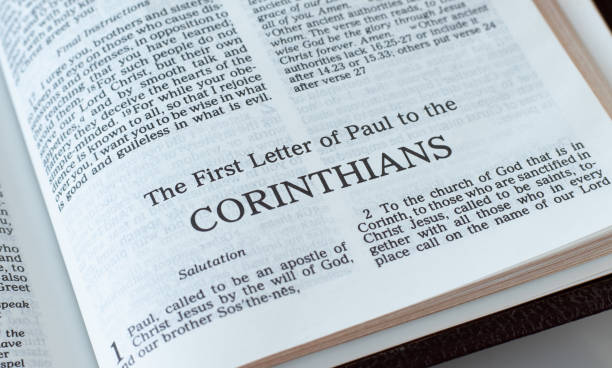
The following includes a captivating Scriptural account of original New Covenant meetings and the Apostle Paul’s detailed Scriptural instructions thereof.
.
1 CORINTHIANS 14
As a lead in to what we will be looking into regarding how the Early Church originals in the first century AD actually conducted their spiritual meetings, I will present here the entire fourteenth chapter of the Apostle Paul’s first letter to the believers in the Greek city of Corinth. This chapter is probably not only the most representative of the content of Christian meetings but also gives the most amount of information with regard to what took place in them. In Chapter 12 Paul had just addressed the many spiritual gifts, manifestations of the Spirit, and places of service in the Community and touches on them again in Chapter 14, applying instructions on their use.
If you have yet to read Part 1 I highly recommend it since it sets the tone for the series. There are already many edifying comments there which add to the article content and I am most appreciative of those of you who participated. Thank you.
I also decided to add the Scriptural text as it appears in the NASB95 online version which includes full footnotes. Though I have used and still use many different Bible versions I began using the New American Standard Bible 1995 Update exclusively for teaching and writing purposes about the time it was first published. To clarify the text format I have added the following explanations per the Bible’s introduction:
- FOOTNOTES are used only where the text especially requires them for clarification.
- ITALICS are used in the text to indicate words which are not found in the original Hebrew, Aramaic, or Greek but implied by it.
- SMALL CAPS in the New Testament are used in the text to indicate Old Testament quotations or obvious references to Old Testament texts.
Now let’s read what Paul wrote way back when and see how the meetings of our original forebears proceeded:
1 Pursue love, yet desire earnestly spiritual gifts, but especially that you may prophesy. 2 For one who speaks in a tongue does not speak to men but to God; for no one [a]understands, but [b]in his spirit he speaks mysteries. 3 But one who prophesies speaks to men for edification and exhortation and consolation. 4 One who speaks in a tongue edifies himself; but one who prophesies edifies the church. 5 Now I wish that you all spoke in tongues, but even more that you would prophesy; and greater is one who prophesies than one who speaks in tongues, unless he interprets, so that the church may receive edifying.
6 But now, brethren, if I come to you speaking in tongues, what will I profit you unless I speak to you either by way of revelation or of knowledge or of prophecy or of teaching? 7 Yet even lifeless things, either flute or harp, in producing a sound, if they do not produce a distinction in the tones, how will it be known what is played on the flute or on the harp? 8 For if the [c]bugle produces an indistinct sound, who will prepare himself for battle? 9 So also you, unless you utter by the tongue speech that is clear, how will it be known what is spoken? For you will be speaking into the air. 10 There are, perhaps, a great many kinds of [d]languages in the world, and no kind is without meaning. 11 If then I do not know the meaning of the language, I will be to the one who speaks a [e]barbarian, and the one who speaks will be a [f]barbarian [g]to me. 12 So also you, since you are zealous of [h]spiritual gifts, seek to abound for the edification of the church.
13 Therefore let one who speaks in a tongue pray that he may interpret. 14 For if I pray in a tongue, my spirit prays, but my mind is unfruitful. 15 What is the outcome then? I will pray with the spirit and I will pray with the mind also; I will sing with the spirit and I will sing with the mind also. 16 Otherwise if you bless [i]in the spirit only, how will the one who fills the place of the [j]ungifted say the “Amen” at your giving of thanks, since he does not know what you are saying? 17 For you are giving thanks well enough, but the other person is not edified. 18 I thank God, I speak in tongues more than you all; 19 however, in the church I desire to speak five words with my mind so that I may instruct others also, rather than ten thousand words in a tongue.
20 Brethren, do not be children in your thinking; yet in evil be infants, but in your thinking be mature. 21 In the Law it is written, “BY MEN OF STRANGE TONGUES AND BY THE LIPS OF STRANGERS I WILL SPEAK TO THIS PEOPLE, AND EVEN SO THEY WILL NOT LISTEN TO ME,” says the Lord. 22 So then tongues are for a sign, not to those who believe but to unbelievers; but prophecy is for a sign, not to unbelievers but to those who believe. 23 Therefore if the whole church assembles together and all speak in tongues, and [k]ungifted men or unbelievers enter, will they not say that you are mad? 24 But if all prophesy, and an unbeliever or an [l]ungifted man enters, he is convicted by all, he is called to account by all; 25 the secrets of his heart are disclosed; and so he will fall on his face and worship God, declaring that God is certainly among you.
26 What is the outcome then, brethren? When you assemble, each one has a psalm, has a teaching, has a revelation, has a tongue, has an interpretation. Let all things be done for edification. 27 If anyone speaks in a tongue, it should be by two or at the most three, and each in turn, and one must interpret; 28 but if there is no interpreter, he must keep silent in the church; and let him speak to himself and to God. 29 Let two or three prophets speak, and let the others pass judgment. 30 But if a revelation is made to another who is seated, the first one must keep silent. 31 For you can all prophesy one by one, so that all may learn and all may be exhorted; 32 and the spirits of prophets are subject to prophets; 33 for God is not a God of confusion but of [m]peace, as in all the churches of the saints.
34 The women are to keep silent in the churches; for they are not permitted to speak, but are to subject themselves, just as the Law also says. 35 If they desire to learn anything, let them ask their own husbands at home; for it is [n]improper for a woman to speak in church. 36 [o]Was it from you that the word of God first went forth? Or has it come to you only?
37 If anyone thinks he is a prophet or spiritual, let him recognize that the things which I write to you are the Lord’s commandment. 38 But if anyone does not recognize this, he [p]is not recognized.
39Therefore, my brethren, desire earnestly to prophesy, and do not forbid to speak in tongues. 40But all things must be done properly and in an orderly manner. [1Corinthians 14:1-40] [1]
FOOTNOTES:
a. Lit hears
b. Or by the Spirit
c. Lit trumpet
d. Lit voices
e. Or foreigner
f. Or foreigner
g. Or in my estimation
h. Lit spirits
i. Or with the
j. I.e. unversed in spiritual gifts
k. V 16, note 2
l. V 16, note 2
m. Or peace. As in all…saints, let
n. Or disgraceful
o. Lit Or was
p. Two early mss read is not to be recognized
© 2025 by RJ Dawson. All Rights Reserved. [To Be Continued…]
[1] Unless otherwise noted all Scriptures are taken from the New American Standard Bible, © 1960, 1963, 1968, 1971, 1972, 1973, 1975, 1977, 1995 by The Lockman Foundation. Used by permission.
The Prophetic Word—The Gift of Prophecy
In his first letter to the Corinthians, Paul clearly places special emphasis regarding spiritual gifts on the gift of prophecy.
It is as if he thinks it is most important. On the face of it, this makes little sense. All of the gifts are obviously important and necessary.
Perhaps this is one of those teachings of Paul that some so-called Christians like to put in a separate category. You know, the ones they have a problem with because they’re either unwilling to understand or too rebellious to accept.
Let’s review the verse in question:
Pursue love, yet desire earnestly spiritual gifts, but especially that you may prophesy. [1 Corinthians 14:1]
Paul certainly has the priorities right. Love must always come first or the ministry process will not work. This has everything to do with putting the Lord first in all things, but also because the Lord is Love, and love never fails.
The second thing he tells the Corinthians is to desire earnestly spiritual gifts. These are actually spirituals, or “spiritual things,” since the word “gifts” does not appear in the original Greek. The Greek word is pneumatikos and is defined as that which is spiritual, or pertaining to the spirit. These pneumatikos are referenced in the twelfth chapter of First Corinthians:
Now concerning spiritual gifts, brethren, I do not want you to be unaware. You know that when you were pagans, you were led astray to the mute idols, however you were led. Therefore I make known to you that no one speaking by the Spirit of God says, “Jesus is accursed”; and no one can say, “Jesus is Lord,” except by the Holy Spirit.
Now there are varieties of gifts, but the same Spirit.
And there are varieties of ministries, and the same Lord.
There are varieties of effects, but the same God who works all things in all persons. But to each one is given the manifestation of the Spirit for the common good.
(1) For to one is given the word of wisdom through the Spirit,
(2) and to another the word of knowledge according to the same Spirit;
(3) to another faith by the same Spirit,
(4) and to another gifts of healing by the one Spirit,
(5) and to another the effecting of miracles,
(6) and to another prophecy,
(7) and to another the distinguishing of spirits,
(8) to another various kinds of tongues,
(9) and to another the interpretation of tongues.
But one and the same Spirit works all these things, distributing to each one individually just as He wills. [1Corinthians 12:1-11]
The nine spirituals listed above are directly connected to the Spirit immersion of Acts Chapter 2. In fact, they are the result, or effect of the Spirit of God working through believers.
In 1 Corinthians 12:6, the Greek word energema is translated in the NASV as “effects,” and in other versions as “operations, working, or activities,” and is explained as spiritual things energized by God for His purposes.
Many people have discounted this direct association primarily as a way to discount the Acts 2 experience since they personally oppose it. But this is grossly incorrect. I say this so people will no longer be deceived by false teaching. Pneumatikos are given by the Lord Jesus to His people for service in the kingdom. One of these is prophecy, and without prophesying, the Prophetic Word would be absent.
The third directive Paul gives in 1 Corinthians 14:1 is to pursue especially the gift of prophesy. I use the term “prophesying” because spiritual energema have to do with function. If they are not being used, they effectively do not exist.
There is the potential for spiritual pride within individuals who believe they possess gifts and are thus worthy of greater honor, and consequently appropriating titles for themselves based on what they think is a resident gift.
However, the gift shows itself by our use of it, or its functionality, not because it is added as a title to a man-made spiritual resume. It is much more correct to state that a person functions in the gift of prophesying rather than that he is a prophet. Yet, it does not mean that a believer cannot be characterized as such if it is obvious that he functions on a regular basis in that particular place of service. This point is more important than one might think due to the desire of so many false prophets within Christianity who are more concerned with their standing among men than before God. They like the high places and open doors that come with titles. They also very much like the money than can be derived from their position.
Real prophets, however, like real apostles, know that serving God according to their calling means that they will be treated the opposite of the false prophets. Paul states several times the perils of true apostolic ministry. It appears oftentimes that the Lord has thrown them into an evil world without much concern for their welfare. The apostles and prophets of the first century suffered greatly in their walk with God though they were very close to Him, leading us to surmise that the “initial” ministries are subject to often greater persecution, just as pioneers have it the hardest compared to later generations. False prophets, particularly those of the present, cannot relate to this and reject the entire idea. The apostles and prophets of the first century often did not know where their next meal was coming from, and that is the way God wanted it.
For, I think, God has exhibited us apostles last of all, as men condemned to death; because we have become a spectacle to the world, both to angels and to men. We are fools for Christ’s sake, but you are prudent in Christ; we are weak, but you are strong; you are distinguished, but we are without honor.
To this present hour we are both hungry and thirsty, and are poorly clothed, and are roughly treated, and are homeless; and we toil, working with our own hands; when we are reviled, we bless; when we are persecuted, we endure; when we are slandered, we try to conciliate; we have become as the scum of the world, the dregs of all things, even until now. [1Corinthians 4:9-13]
Does this look like any ministers you know? (They would never allow Paul in most pulpits in America and certainly not on Christian television.)
We must never forget as real disciples that the Lord has chosen for us a walk of faith and obedience. This is characterized as “Go here, do this.” What about the next step, one may wonder? The Lord almost always reveals the next step after a person has completed the prior step. Therefore, being a “prophet” cannot possibly be a static, entitled position associated with high standing among the Christian elite and with popularity among people in general, but one of obedience to God (not man) and functionality.
Again, since there are nine energema, or effects of the Spirit, why would Paul single out prophesying as seemingly the most important?
We must look at the context. He was referring to what was taking place in meetings of believers in first century Corinth. He was simply trying to explain that in open meetings it is better to speak in an understandable way, so that proper communication takes place.
Speaking in tongues is all fine, good, necessary, and scriptural in individual prayer or prayer meetings, or in an open meeting if an interpreter is present (Paul himself wrote in verse eighteen, “I thank God, I speak in tongues more than you all.”) Otherwise, it is largely a waste of time for the group as a whole in community meetings when people need to hear from God.
Prophesying, on the other hand, is a Word from God spoken in the language of all, or pretty much all, and subsequently edifies the entire group. Thus, the Prophetic Word is that which is spoken by the inspiration of God and by the power of his Spirit to benefit another, and oftentimes many others.
Moreover, groups of real believers usually contain more than one person who functions in the gift of prophecy, or should, and should thus take turns, though in polite order (see 14:29-32).
The reason for all of this is to allow the Lord to speak to His people. If it is attempted through a way contrary to this model, or if another method is formulated which is actually in opposition to it, it generally means that the Lord Jesus is no longer in charge and has been subverted by false believers who have circumvented His authority. And if the group allows this, they are also guilty partakers.
It should not be difficult, then, for an objective observer to note that traditional Christian church practice, regardless of denomination, is usually much different from that of first-century believers.
This is why, for those who violate Scripture, the Prophetic Word has ceased.
Therefore, my brethren, desire earnestly to prophesy, and do not forbid to speak in tongues. [1 Corinthians 14:39] [1]
© 2015 by RJ Dawson. All Rights Reserved.
[1] Unless otherwise noted all Scriptures are taken from the New American Standard Bible, © 1960, 1963, 1968, 1971, 1972, 1973, 1975, 1977, 1995 by The Lockman Foundation. Used by permission.


 Real Christianity