Blog Archives
EXPOSING THE ANTICHRIST SPIRIT: THE HISTORICAL RECORD
Posted by RJ Dawson

The light of the real Gospel exposes all darkness. It shines upon all who lurk in the shadows of sin. It reveals every hidden enemy of the Lord Jesus to those with eyes to see.
.
We live in a time of veiled opposition. Most people are completely unaware of the spiritual warfare raging all around them. There are times when this warfare flashes into the open. It happens whenever the real Gospel is properly presented by the power and anointing of the Holy Spirit. This is when sinners are exposed. Their sin becomes known to them. Many blessedly surrender unto salvation. When this happens on a large scale, Great Awakenings break forth. The kingdom of the Lord Jesus expands and advances.
ANTICHRIST AGITATORS
Parallel to this, the unrepentant enemies of the Lord are also exposed, often by their own hateful and rapid reactionary response which they most often cannot manage. We call this triggering or getting triggered. It often takes place in people with low or no impulse control. Some stimulus causes a reflex. Something sets them off.
That something is the truth of the Gospel. More so, it is the truth of the real identity of the Lord Jesus. When His real identity is veiled, obscured, watered-down, or removed, there is little reaction. His enemies are pacified. But when the real Gospel is brought forth and His real identity, authority, and presence are fully noted, His enemies suddenly become extremely upset and angry. They are instantly inflated with antagonism and rapidly rise up to fight. The more resentful they are the more reactionary they become. The more antichrist they are, the more they agitate.
It never changes. When the real Gospel is preached as it was in the beginning it happens. When the Lord Jesus is lifted up for who He really is it always occurs. His enemies cannot contain themselves. Their bitterness and hatred will not allow them to. They must fight back to defend their false paradigm and faulty construct to which they have dedicated their lives and in which they are fully invested.
THE EARLY CHURCH IN ACTS
The real time demonstration of this dynamic is entirely clear as plainly illustrated by the following compelling events from the Book of Acts, captured brilliantly by Luke. Many Christians are not aware of these passages and many others rebuff them as irrelevant and even inappropriate. Others, especially Christian Zionists, are embarrassed and discomfited by these historical recordings from the Word of God, as the Scriptural record does not fit their contrived religious and cultural narrative.
Though listed here as highlighted sections in a chronological format, I encourage everyone to also read these passages in full context and thereby gain even greater insight into the genuine outworking of the original Gospel presentation, why it applies to the present, and how it exposes the antichrist spirit. We are blessed to have this historical documentation.
For I am not ashamed of the gospel, for it is the power of God for salvation to everyone who believes, to the Jew first and also to the Greek. [Romans 1:16]
THE BOOK OF ACTS HISTORICAL RECORD
But Saul kept increasing in strength and confounding the Jews who lived at Damascus by proving that this Jesus is the Christ. When many days had elapsed, the Jews plotted together to do away with him, but their plot became known to Saul. They were also watching the gates day and night so that they might put him to death; but his disciples took him by night and let him down through an opening in the wall, lowering him in a large basket. [Acts 9:22-25]
And he was with them, moving about freely in Jerusalem, speaking out boldly in the name of the Lord. And he was talking and arguing with the Hellenistic Jews; but they were attempting to put him to death. [Acts 9:28-29]
“You know of Jesus of Nazareth, how God anointed Him with the Holy Spirit and with power, and how He went about doing good and healing all who were oppressed by the devil, for God was with Him. We are witnesses of all the things He did both in the land of the Jews and in Jerusalem. They also put Him to death by hanging Him on a cross.” [Acts 10:38-39]
Now about that time Herod the king laid hands on some who belonged to the church in order to mistreat them. And he had James the brother of John put to death with a sword. When he saw that it pleased the Jews, he proceeded to arrest Peter also. Now it was during the days of Unleavened Bread. [Acts 12:1-3]
When they reached Salamis, they began to proclaim the word of God in the synagogues of the Jews; and they also had John as their helper. When they had gone through the whole island as far as Paphos, they found a magician, a Jewish false prophet whose name was Bar-Jesus, who was with the proconsul, Sergius Paulus, a man of intelligence. This man summoned Barnabas and Saul and sought to hear the word of God. But Elymas the magician (for so his name is translated) was opposing them, seeking to turn the proconsul away from the faith. [Acts 13:5-8]
The next Sabbath nearly the whole city assembled to hear the word of the Lord. But when the Jews saw the crowds, they were filled with jealousy and began contradicting the things spoken by Paul, and were blaspheming. Paul and Barnabas spoke out boldly and said, “It was necessary that the word of God be spoken to you first; since you repudiate it and judge yourselves unworthy of eternal life, behold, we are turning to the Gentiles. For so the Lord has commanded us, ‘I HAVE PLACED YOU AS A LIGHT FOR THE GENTILES, THAT YOU MAY BRING SALVATION TO THE END OF THE EARTH.’”
When the Gentiles heard this, they began rejoicing and glorifying the word of the Lord; and as many as had been appointed to eternal life believed. And the word of the Lord was being spread through the whole region. But the Jews incited the devout women of prominence and the leading men of the city, and instigated a persecution against Paul and Barnabas, and drove them out of their district. But they shook off the dust of their feet in protest against them and went to Iconium. And the disciples were continually filled with joy and with the Holy Spirit. [Acts 13:44-52]
In Iconium they entered the synagogue of the Jews together, and spoke in such a manner that a large number of people believed, both of Jews and of Greeks. But the Jews who disbelieved stirred up the minds of the Gentiles and embittered them against the brethren. Therefore they spent a long time there speaking boldly with reliance upon the Lord, who was testifying to the word of His grace, granting that signs and wonders be done by their hands. But the people of the city were divided; and some sided with the Jews, and some with the apostles. And when an attempt was made by both the Gentiles and the Jews with their rulers, to mistreat and to stone them, they became aware of it and fled to the cities of Lycaonia, Lystra and Derbe, and the surrounding region; and there they continued to preach the gospel. [Acts 14:1-7]
But Jews came from Antioch and Iconium, and having won over the crowds, they stoned Paul and dragged him out of the city, supposing him to be dead. But while the disciples stood around him, he got up and entered the city. The next day he went away with Barnabas to Derbe. [Acts 14:19-20]
But the Jews, becoming jealous and taking along some wicked men from the market place, formed a mob and set the city in an uproar; and attacking the house of Jason, they were seeking to bring them out to the people. When they did not find them, they began dragging Jason and some brethren before the city authorities, shouting, “These men who have upset the world have come here also; and Jason has welcomed them, and they all act contrary to the decrees of Caesar, saying that there is another king, Jesus.” They stirred up the crowd and the city authorities who heard these things. And when they had received a pledge from Jason and the others, they released them. [Acts 17:5-9]
But when the Jews of Thessalonica found out that the word of God had been proclaimed by Paul in Berea also, they came there as well, agitating and stirring up the crowds. Then immediately the brethren sent Paul out to go as far as the sea; and Silas and Timothy remained there. [Acts 17:13-14]
And he was reasoning in the synagogue every Sabbath and trying to persuade Jews and Greeks. But when Silas and Timothy came down from Macedonia, Paul began devoting himself completely to the word, solemnly testifying to the Jews that Jesus was the Christ. But when they resisted and blasphemed, he shook out his garments and said to them, “Your blood be on your own heads! I am clean. From now on I will go to the Gentiles.” Then he left there and went to the house of a man named Titius Justus, a worshiper of God, whose house was next to the synagogue. [Acts 18:4-7]
But while Gallio was proconsul of Achaia, the Jews with one accord rose up against Paul and brought him before the judgment seat, saying, “This man persuades men to worship God contrary to the law.” But when Paul was about to open his mouth, Gallio said to the Jews, “If it were a matter of wrong or of vicious crime, O Jews, it would be reasonable for me to put up with you; but if there are questions about words and names and your own law, look after it yourselves; I am unwilling to be a judge of these matters.” And he drove them away from the judgment seat. And they all took hold of Sosthenes, the leader of the synagogue, and began beating him in front of the judgment seat. But Gallio was not concerned about any of these things. [Acts 18:12-17]
After the uproar had ceased, Paul sent for the disciples, and when he had exhorted them and taken his leave of them, he left to go to Macedonia. When he had gone through those districts and had given them much exhortation, he came to Greece. And there he spent three months, and when a plot was formed against him by the Jews as he was about to set sail for Syria, he decided to return through Macedonia. [Acts 20:1-3]
From Miletus he sent to Ephesus and called to him the elders of the church. And when they had come to him, he said to them, “You yourselves know, from the first day that I set foot in Asia, how I was with you the whole time, serving the Lord with all humility and with tears and with trials which came upon me through the plots of the Jews; how I did not shrink from declaring to you anything that was profitable, and teaching you publicly and from house to house, solemnly testifying to both Jews and Greeks of repentance toward God and faith in our Lord Jesus Christ. [Acts 20:17-21]
As we were staying there for some days, a prophet named Agabus came down from Judea. And coming to us, he took Paul’s belt and bound his own feet and hands, and said, “This is what the Holy Spirit says: ‘In this way the Jews at Jerusalem will bind the man who owns this belt and deliver him into the hands of the Gentiles.’” When we had heard this, we as well as the local residents began begging him not to go up to Jerusalem. [Acts 21:10-12]
Then Paul took the men, and the next day, purifying himself along with them, went into the temple giving notice of the completion of the days of purification, until the sacrifice was offered for each one of them. When the seven days were almost over, the Jews from Asia, upon seeing him in the temple, began to stir up all the crowd and laid hands on him, crying out, “Men of Israel, come to our aid! This is the man who preaches to all men everywhere against our people and the Law and this place; and besides he has even brought Greeks into the temple and has defiled this holy place.” For they had previously seen Trophimus the Ephesian in the city with him, and they supposed that Paul had brought him into the temple. Then all the city was provoked, and the people rushed together, and taking hold of Paul they dragged him out of the temple, and immediately the doors were shut. While they were seeking to kill him, a report came up to the commander of the Roman cohort that all Jerusalem was in confusion. [Acts 21:26-31]
But on the next day, wishing to know for certain why he had been accused by the Jews, he released him and ordered the chief priests and all the Council to assemble, and brought Paul down and set him before them. Paul, looking intently at the Council, said, “Brethren, I have lived my life with a perfectly good conscience before God up to this day.” The high priest Ananias commanded those standing beside him to strike him on the mouth. Then Paul said to him, “God is going to strike you, you whitewashed wall! Do you sit to try me according to the Law, and in violation of the Law order me to be struck?” [Acts 22:30 – 23:3]
And as a great dissension was developing, the commander was afraid Paul would be torn to pieces by them and ordered the troops to go down and take him away from them by force, and bring him into the barracks. But on the night immediately following, the Lord stood at his side and said, “Take courage; for as you have solemnly witnessed to My cause at Jerusalem, so you must witness at Rome also.” When it was day, the Jews formed a conspiracy and bound themselves under an oath, saying that they would neither eat nor drink until they had killed Paul. There were more than forty who formed this plot. They came to the chief priests and the elders and said, “We have bound ourselves under a solemn oath to taste nothing until we have killed Paul. Now therefore, you and the Council notify the commander to bring him down to you, as though you were going to determine his case by a more thorough investigation; and we for our part are ready to slay him before he comes near the place.”
But the son of Paul’s sister heard of their ambush, and he came and entered the barracks and told Paul. Paul called one of the centurions to him and said, “Lead this young man to the commander, for he has something to report to him.” So he took him and led him to the commander and said, “Paul the prisoner called me to him and asked me to lead this young man to you since he has something to tell you.” The commander took him by the hand and stepping aside, began to inquire of him privately, “What is it that you have to report to me?” And he said, “The Jews have agreed to ask you to bring Paul down tomorrow to the Council, as though they were going to inquire somewhat more thoroughly about him. So do not listen to them, for more than forty of them are lying in wait for him who have bound themselves under a curse not to eat or drink until they slay him; and now they are ready and waiting for the promise from you.” So the commander let the young man go, instructing him, “Tell no one that you have notified me of these things.” And he called to him two of the centurions and said, “Get two hundred soldiers ready by the third hour of the night to proceed to Caesarea, with seventy horsemen and two hundred spearmen.” They were also to provide mounts to put Paul on and bring him safely to Felix the governor. [Acts 23:10-13]
After five days the high priest Ananias came down with some elders, with an attorney named Tertullus, and they brought charges to the governor against Paul. After Paul had been summoned, Tertullus began to accuse him, saying to the governor, “Since we have through you attained much peace, and since by your providence reforms are being carried out for this nation, we acknowledge this in every way and everywhere, most excellent Felix, with all thankfulness. But, that I may not weary you any further, I beg you to grant us, by your kindness, a brief hearing. For we have found this man a real pest and a fellow who stirs up dissension among all the Jews throughout the world, and a ringleader of the sect of the Nazarenes. And he even tried to desecrate the temple; and then we arrested him. We wanted to judge him according to our own Law. But Lysias the commander came along, and with much violence took him out of our hands, ordering his accusers to come before you. By examining him yourself concerning all these matters you will be able to ascertain the things of which we accuse him.” The Jews also joined in the attack, asserting that these things were so. [Acts 24:1-9]
Festus then, having arrived in the province, three days later went up to Jerusalem from Caesarea. And the chief priests and the leading men of the Jews brought charges against Paul, and they were urging him, requesting a concession against Paul, that he might have him brought to Jerusalem (at the same time, setting an ambush to kill him on the way). Festus then answered that Paul was being kept in custody at Caesarea and that he himself was about to leave shortly. [Acts 25:1-4]
After he had spent not more than eight or ten days among them, he went down to Caesarea, and on the next day he took his seat on the tribunal and ordered Paul to be brought. After Paul arrived, the Jews who had come down from Jerusalem stood around him, bringing many and serious charges against him which they could not prove, while Paul said in his own defense, “I have committed no offense either against the Law of the Jews or against the temple or against Caesar.” But Festus, wishing to do the Jews a favor, answered Paul and said, “Are you willing to go up to Jerusalem and stand trial before me on these charges?” But Paul said, “I am standing before Caesar’s tribunal, where I ought to be tried. I have done no wrong to the Jews, as you also very well know. If, then, I am a wrongdoer and have committed anything worthy of death, I do not refuse to die; but if none of those things is true of which these men accuse me, no one can hand me over to them. I appeal to Caesar.” Then when Festus had conferred with his council, he answered, “You have appealed to Caesar, to Caesar you shall go.” [Acts 25:6-12]
So, King Agrippa, I did not prove disobedient to the heavenly vision, but kept declaring both to those of Damascus first, and also at Jerusalem and then throughout all the region of Judea, and even to the Gentiles, that they should repent and turn to God, performing deeds appropriate to repentance. For this reason some Jews seized me in the temple and tried to put me to death. So, having obtained help from God, I stand to this day testifying both to small and great, stating nothing but what the Prophets and Moses said was going to take place; that the Christ was to suffer, and that by reason of His resurrection from the dead He would be the first to proclaim light both to the Jewish people and to the Gentiles.” [Acts 26:19-23]
When they had set a day for Paul, they came to him at his lodging in large numbers; and he was explaining to them by solemnly testifying about the kingdom of God and trying to persuade them concerning Jesus, from both the Law of Moses and from the Prophets, from morning until evening. Some were being persuaded by the things spoken, but others would not believe. And when they did not agree with one another, they began leaving after Paul had spoken one parting word, “The Holy Spirit rightly spoke through Isaiah the prophet to your fathers, saying, ‘GO TO THIS PEOPLE AND SAY, “YOU WILL KEEP ON HEARING, BUT WILL NOT UNDERSTAND; AND YOU WILL KEEP ON SEEING, BUT WILL NOT PERCEIVE; FOR THE HEART OF THIS PEOPLE HAS BECOME DULL, AND WITH THEIR EARS THEY SCARCELY HEAR, AND THEY HAVE CLOSED THEIR EYES; OTHERWISE THEY MIGHT SEE WITH THEIR EYES, AND HEAR WITH THEIR EARS, AND UNDERSTAND WITH THEIR HEART AND RETURN, AND I WOULD HEAL THEM.”’ Therefore let it be known to you that this salvation of God has been sent to the Gentiles; they will also listen.” When he had spoken these words, the Jews departed, having a great dispute among themselves.
And he stayed two full years in his own rented quarters and was welcoming all who came to him, preaching the kingdom of God and teaching concerning the Lord Jesus Christ with all openness, unhindered. [Acts 28:23-31] [1]
© 2018 by RJ Dawson. All Rights Reserved.
[1] Unless otherwise noted all Scriptures are taken from the New American Standard Bible, © 1960, 1963, 1968, 1971, 1972, 1973, 1975, 1977, 1995 by The Lockman Foundation. Used by permission.
Posted in Real Christianity
Tags: Book of Acts, Christian Persecution, Christian Pharisees, Doctrines of Demons, Evangelization and Witnessing, Gospel Truth, Lord Jesus, Luke, spirit of antichrist, Spiritual Warfare, The Early Church, The Gospel Message, The Great Awakening, The War On Truth, Victory in Jesus
Real Christianity is Acts Chapter Two—Acts Chapter Two is Real Christianity: WHO CAN TAME THE TONGUE? (3)
Posted by RJ Dawson

According to Scripture, the human tongue is the only member of the body that is capable of defiling the entire human body.
.
Think about this. While it is clearly true that one can introduce a foreign element into the body that can defile it or even destroy it, most often by oral transmission or syringe injection, there is apparently no other strictly indigenous member of the human body that can do the job on its own except the tongue. How can this be? What power does the tongue have that other members of the body do not possess?
And, of course, the obvious though possibly overlooked inherent power and ability of the tongue is that it allows for and enables human speech. And, of course, again, it is not the tongue itself since it is only a tool—an instrument or means—but human speech that is the actual culprit. And, of course, thirdly, human speech must contain a clearly defined communicative language in order to launch its characteristic potency and capability. This means the particular language and particular words thereof must be able to be understood by both the party speaking and the party hearing. Otherwise, one’s speaking will appear as mere gibberish.
STRANGE TONGUES
I vaguely remember, when I was a kid, the first time I heard a foreign language. There were people close by just talking away back and forth, clearly communicating and carrying on a conversation, but I had absolutely no idea whatsoever what they were saying. It was really strange. They were talking so fast. The retorts were coming back in rapid fire, eyes meeting eyes, facial expressions bursting forth and changing on a whim, the expression of emotions—the whole nine yards. One notices more appreciably all the peripheral stuff regarding speech and communication when one has no comprehension of the language itself, when the words are meaningless and not even distinguishable. It is really strange. It’s weird. These people just jabbering away back and forth and there I stand not getting any of it.
Then I meet up once again with my own kind speaking our language and all is well. But, of course, when we speak back and forth and communicate we, of course, don’t sound like those strange foreigners at all with all their weird impossible to understand jibber jabber that makes no sense whatsoever. When we speak we speak a real language, the best language, our language…
Thus is one child’s introduction to strange tongues and their apparent inherent bizarreness.
GAINING AN ADULT PERSPECTIVE
When I was a child, I used to speak like a child, think like a child, reason like a child; when I became a man, I did away with childish things. [1Corinthians 13:11]
The same thing must be said of spiritual maturity, which Paul alludes to here, though with an outer wrapping of natural maturity. The point is to grow up. You see, we have those who progress toward natural maturity at about the right rate regarding their years. Then we have those who are forced to grow up too fast, those who grow up too slow, and those who never grow up. The natural body will mature and age within a relatively small comparative range in that one may be well-preserved in older years while another looks old at forty, due largely and likely to one’s lifestyle, though the persons within said bodies may mature at oppositional rates. In other words, the choice is ours. We can mature as our bodies mature and even far in advance of them. Or not.
In the somewhat distant past, the onset of puberty was a naturally accepted sign that childhood was over. The person reaching this stage knew he or she must consequently begin making changes in preparation for the immediate future. This is no longer the case in much of the world in that childhood is allowed to linger, whether by enabling parents or an enabling culture that works in defiance of the natural order. It is now becoming the norm that childhood must be extended as far into the future as possible as if maturity was an evil thing, an enemy.
Sadly, though it may be a relatively new cultural norm, it is not new to Christianity. There has always been spiritual laziness and rebellion to varying degrees, often to a high degree, within Christianity in general against the acceptance and embracing of spiritual maturity. Christians in general have always most often coddled their flesh rather than develop their spirit, something the Lord Jesus commanded for all of His followers. We see this in the following statement:
“Therefore you are to be perfect, as your heavenly Father is perfect.” [Matthew 5:48]
This is an extremely high standard. What He means here is that every one of His followers must put in the work to develop, grow, and gain full spiritual maturity. The word “perfect” is from the Greek word τέλειος (teleios tel’-i-os). It is defined as “complete (in various applications of labor, growth, mental and moral character, etc.); completeness:—of full age, man, perfect,” and “brought to its end, finished; lacking nothing necessary to completeness; perfect.”
This is what the Lord Jesus requires. He will not accept excuses, half-measures, or insistence upon perpetual immaturity. He is a Master Teacher and wants as followers only those who give their full heart, mind, and strength which invokes and perfectly agrees with the greatest commandment. Now, this is not quite as austere as it may sound. The key is love. Love makes the entire difference. Becoming fully spiritually mature (“perfect”) is possible if one loves Him with all his heart.
Now, whoever may take it upon himself to do the impossible (sarcasm alert) and actually read and study the teachings of the Lord Jesus, he will find early on that the Lord placed a high premium on discipleship. In fact, though one may have a dozen to fourteen years or so of childhood before the big signal to begin the embrace of adulthood, the Lord in general rarely (apparently) gave his followers that much time. This proves that the spiritual body, so to speak, does not entail an extended childhood phase but can come to term much sooner. One may look at the twelve apostles as an example. They followed the Lord for only three and a half years before the big it’s-time-to-become-a-spiritual-adult signal of Pentecost.
Recall the spiritual state of the apostle Peter at the time just before and just after the Lord’s death and resurrection and then compare it to the spiritual state of the apostle Peter at Pentecost in which he took the bull by the horns and did a masterfully mature and responsible job of helping kick off Phase 2 of the Lord’s ministry. How did he manage to grow up so fast?
The biggest difference, of course, was that he gained something great that he never had before: He was filled and anointed with and energized by the Holy Spirit of the Lord! This is the great maturation signal of the spiritual man or woman in which he or she knows that spiritual adulthood has commenced. It is the time to put away childish things, including childish religious things with which Christianity in general is saturated. It is a time to no longer think, speak, or reason like a child.
So, the initial discipleship period of the early followers of the Lord was only three and half years at the most and even less for many others. And for those who had previously never followed the Lord but got saved and spiritually equipped for ministry at Pentecost it was appreciably almost no time at all.
As another case in point, consider Stephen, the first great martyr of the Early Church, who had somehow become so extremely knowledgeable, eloquent, and BOLD at a relatively young age and a very short time that he was willing to take on the entire Messiah-rejecting religious establishment with no fear whatsoever. How did he mature so rapidly? How was it possible that he embraced spiritual adulthood in so short a time? The Lord was so pleased with this young man that He dedicated to Stephen an entire one and a half chapters in the Book of Acts and a total of 68 consecutive verses! On a side note, if you happen to be dragging somewhat in your spiritual walk and need some instant inspiration, read Acts 6:8 to 7:60. The exploits of Stephen will likely charge you up and get you running.
THE POWER OF THE SPOKEN WORD
For the word of God is living and active and sharper than any two-edged sword, and piercing as far as the division of soul and spirit, of both joints and marrow, and able to judge the thoughts and intentions of the heart. And there is no creature hidden from His sight, but all things are open and laid bare to the eyes of Him with whom we have to do. Therefore, since we have a great high priest who has passed through the heavens, Jesus the Son of God, let us hold fast our confession. [Hebrews 4:12-14]
In the beginning was the Word, and the Word was with God, and the Word was God. He was in the beginning with God. All things came into being through Him, and apart from Him nothing came into being that has come into being. [John 1:1-3]
For you have been born again not of seed which is perishable but imperishable, that is, through the living and enduring word of God. For,
“All flesh is like grass,
And all its glory like the flower of grass.
The grass withers,
And the flower falls off,
But the word of the Lord endures forever.” (Isaiah 40:6-8)
And this is the word which was preached to you. [1Peter 1:23-25]
God created everything by speaking it into existence (see Genesis 1). That there, my friends, is some mighty speaking ability. He is the living eternal Word and spent three and a half years plus speaking His Word to us when He dwelt among us. Is there any wonder then why He has placed such supreme importance on human speech? Must we be reminded that He created the human body and put great power in the tongue?
That He created speech?
That He then created anointed spiritual speech?
That He gave us the same ability He had?
That He gave this great power of anointed speech to Peter and the 120 and a great many others on the Day of Pentecost and on other Pentecost events, and to Stephen and countless others after them?
That speech was the sign He chose to indicate and confirm full repentance and acceptance of the sacrifice?
TAMING THE TONGUE
The following is a reminder of the great evil of soul-destroying sinful human speech and why there had to be a means to save it and empower it for good:
If anyone does not stumble in what he says, he is a perfect (teleios) man, able to bridle the whole body as well. Now if we put the bits into the horses’ mouths so that they will obey us, we direct their entire body as well. Look at the ships also, though they are so great and are driven by strong winds, are still directed by a very small rudder wherever the inclination of the pilot desires. So also the tongue is a small part of the body, and yet it boasts of great things.
See how great a forest is set aflame by such a small fire! And the tongue is a fire, the very world of iniquity; the tongue is set among our members as that which defiles the entire body, and sets on fire the course of our life, and is set on fire by hell. For every species of beasts and birds, of reptiles and creatures of the sea, is tamed and has been tamed by the human race. But no one can tame the tongue; it is a restless evil and full of deadly poison. [James 3:2-8]
Thus, this is what the Pentecostal phenomenon of “speaking with tongues” was all about. It was about taming the human tongue, overpowering the rebellious speech of humanity, and thereby granting the means of overall control of the human body back to those who desired to do God’s will. It was about freeing the tongue and essentially granting it salvation, of saving it from being used in a sinful manner which defiles the person so it could become holy and used for the holy purposes of God. Therefore, “speaking in tongues” was a sign, a very clear sign, that the Lord had regained authoritative control of humanity by regaining control of human speech.
A SACRIFICE OF PRAISE
This was done through a free will offering, a full submission to the Lord—a sacrifice—made by each person dedicated to follow Him and develop to complete spiritual maturity, willingly and lovingly offering himself or herself up, just as the Lord had done by His great sacrifice.
And because the tongue is the most unruly and rebellious member of the body it is the last to surrender. When it does surrender, and is fully tamed, this is what happens:
And they were all filled with the Holy Spirit and began to speak with other tongues, as the Spirit was giving them utterance. [Acts 2:1-4]
“We hear them in our own tongues speaking of the mighty deeds of God.” [Acts 2:11]
For they were hearing them speaking with tongues and exalting God. [Acts 10:46]
And when Paul had laid his hands upon them, the Holy Spirit came on them, and they began speaking with tongues and prophesying. [Acts 19:6] [1]
© 2023 by RJ Dawson. All Rights Reserved. [To Be Continued…]
[1] Unless otherwise noted all Scriptures are taken from the New American Standard Bible, © 1960, 1963, 1968, 1971, 1972, 1973, 1975, 1977, 1995 by The Lockman Foundation. Used by permission.
Real Christianity is Acts Chapter Two—Acts Chapter Two is Real Christianity: THE SECRET PLAN (1)
Posted in Real Christianity
Tags: 120, Acts of the Apostles, Ancient Jerusalem, Apostle Peter, Baptism of the Holy Spirit, Community of the Called-Out Ones, Day of Pentecost, Discipleship, Early Church, Early Church History 101, Freedom of Speech, Holy Spirit of Jesus, Human Speech, Infilling of the Holy Spirit, Language, Lord Jesus, Luke, Miracles, Real Christianity, Real Christianity The Nature of the Church, Signs and Wonders, Signs Following Believers, Speaking in Tongues, Spiritual Maturity, Stephen, The Book of Acts, The Gospel Message, The Great Awakening, Unreal Christianity, Upper Room, Word of God
Real Christianity is Acts Chapter Two—Acts Chapter Two is Real Christianity: MIRACULOUS TONGUES—A SIGN (2)
Posted by RJ Dawson

The Book of Acts reveals that the infilling of the Holy Spirit is a miraculous experience accompanied by distinct signs and wonders.
.
FINAL PREPARATIONS PRIOR TO PENTECOST
In Part 1 we discussed the Lord’s preparations for Pentecost and His secret plan. This great event would take place ten days after His Ascension. Right before He ascended to heaven He gave His disciples clear commands both for preparing for the event and what to expect when the day arrived:
Gathering them together, He commanded them not to leave Jerusalem, but to wait for what the Father had promised, “Which,” He said, “you heard of from Me; for John baptized with water, but you will be baptized with the Holy Spirit not many days from now.” [Acts 1:4-5]
The Greek word for “baptized” in this verse means full immersion. It is from a Hebrew word that also means full immersion. The Lord is telling His disciples here that just as one must be fully immersed in water regarding water baptism in order to fulfill the Law and for one’s water baptism to be legitimate, so must one be fully immersed in the Holy Spirit in order to be filled with the Holy Spirit. He then reveals to them in part why the infilling of the Holy Spirit is necessary:
…But you will receive power when the Holy Spirit has come upon you; and you shall be My witnesses both in Jerusalem, and in all Judea and Samaria, and even to the remotest part of the earth.” [Acts 1:8]
THE UPPER ROOM
The Lord’s Ascension took place on a Thursday, likely in the morning. Afterwards, the disciples who witnessed that great occurrence returned to Jerusalem as instructed. They went to a private residence that contained an Upper Room large enough to comfortably hold at least 120 persons. This was the same room where the Lord and his disciples had gathered for the Last Supper. To refresh your memory:
And Jesus sent Peter and John, saying, “Go and prepare the Passover for us, so that we may eat it.” They said to Him, “Where do You want us to prepare it?” And He said to them, “When you have entered the city, a man will meet you carrying a pitcher of water; follow him into the house that he enters. And you shall say to the owner of the house, ‘The Teacher says to you, “Where is the guest room in which I may eat the Passover with My disciples?”’ And he will show you a large, furnished upper room; prepare it there.” And they left and found everything just as He had told them; and they prepared the Passover. [Luke 22:8-13]
This house containing the Upper Room was likely owned by Mary, mother of John Mark (whose name graces the Gospel of Mark and which contains primarily the witness of the apostle Peter). We learn later in Scripture that Mark’s older cousin is Barnabas (see Colossians 4:10) who was an early evangelistic traveling companion of the apostle Paul. It is likely that Mark’s father and the father of Barnabas were brothers and were relatively wealthy. Since Mark’s father is not mentioned one must assume he had already passed on and that his wife Mary owned the residence. She and her house are mentioned in Scripture within the narrative of Peter’s angelic release from prison while he was awaiting execution:
When Peter came to himself, he said, “Now I know for sure that the Lord has sent forth His angel and rescued me from the hand of Herod and from all that the Jewish people were expecting.” And when he realized this, he went to the house of Mary, the mother of John who was also called Mark, where many were gathered together and were praying. When he knocked at the door of the gate, a servant-girl named Rhoda came to answer. [Acts 12:11-13]
According to tradition, the house containing the Upper Room was located in the relatively newer section of Jerusalem on the higher hill due west of the old original crescent-shaped City of David. The Upper Room is said to have been situated in the southern area of this western hill. While this may be the case and that there appears to be evidence to support it, there is actually no direct proof. One must remember that the city of Jerusalem of the present contains nothing of the original city proper in the time of the Lord Jesus. That city was completely destroyed and demolished. The only thing remaining from that time is the ancient high-walled Roman fort of Antonia which is mistakenly referred to today as the Temple Mount. The upper courses of these walls, however, were later additions.
It could have been the case that the Upper Room was actually located in the original old city of David acquired and built a full millennium before the Lord’s time. It would be fitting that the prophesied “Son of David” and “King of kings,” the actual final King of Israel (and first, prior to King Saul), would have chosen to start His Community (Church) on the actual royal ground of His kingly forebears from which He descended.
THE DAY OF PENTECOST
As per the Lord’s instructions, the disciples awaiting Pentecost truly tarried in the city of Jerusalem. In that process, the 120 chosen ones readied themselves accordingly. They repented profusely, preparing their hearts. They spent their time in ongoing prayer, fasting, and worship. Then, on exactly the fiftieth day since the Lord’s resurrection, exactly ten days after His Ascension, on the first day of the week (Sunday), at approximately nine o’clock in the morning, the following astonishing miraculous event, as recorded by Luke, transpired:
When the day of Pentecost had come, they were all together in one place.
And suddenly there came from heaven a noise like a violent rushing wind…
And it filled the whole house where they were sitting.
And there appeared to them tongues as of fire distributing themselves, and they rested on each one of them.
And they were all filled with the Holy Spirit and began to speak with other tongues, as the Spirit was giving them utterance. [Acts 2:1-4]
SPEAKING WITH TONGUES
Due largely to the original English translation of the New Testament (primarily the King James Version of 1611) and the language custom and usage of that time, the phrase “speak with other tongues” has been misunderstood by much of the English speaking Christian world. In essence, it should have simply been translated not as “tongues” but as languages. But again, at that time four centuries ago in England the word “tongues” meant languages and the people of that time understood it that way.
This would otherwise be obvious by what Luke revealed next in his historical narrative: Many Israelite world travelers in Jerusalem for the Feast of Pentecost at that time, in the immediate vicinity on the streets and environs below, said they heard from the Upper Room the incessant voices of many people speaking in many different languages other than their customary Hebrew. They identified them as primarily northern Israelite Galileans due to their distinct dialect, accent, and inflection. They also surmised that these “unlearned and ignorant” [1] Galilean Israelites had never learned the many languages they spoke yet did so with excellent enunciation. Astounded and taken aback by this event, the visiting Israelites wondered why this was so, having never experienced such a wondrous thing before. Here is Luke’s account:
Now there were Jews living in Jerusalem, devout men from every nation under heaven. And when this sound occurred, the crowd came together, and were bewildered because each one of them was hearing them speak in his own language. They were amazed and astonished, saying, “Why, are not all these who are speaking Galileans? And how is it that we each hear them in our own language to which we were born? Parthians and Medes and Elamites, and residents of Mesopotamia, Judea and Cappadocia, Pontus and Asia, Phrygia and Pamphylia, Egypt and the districts of Libya around Cyrene, and visitors from Rome, both Jews and proselytes, Cretans and Arabs—we hear them in our own tongues speaking of the mighty deeds of God.” And they all continued in amazement and great perplexity, saying to one another, “What does this mean?” But others were mocking and saying, “They are full of sweet wine.” [Acts 2:5-13] [2]
There is arguably no greater controversy in Christianity than this miraculous “speaking in tongues.” Other than those relatively few Christians who have experienced the phenomenon (though accounting for multiple millions worldwide), it has largely been misunderstood, denied, railed against, rejected outright, and even mocked by the majority of Christians, many of whom are embarrassed and discomfited by it. Why is “tongues” such a charged subject evoking such strong emotion? One wonders how this could have happened. How is it that this great miracle brought forth by our Savior and Master is treated by many Christians the same way it was treated by the antichrist Messiah-rejecting Israelites of the first century, the chief persecutors of the Early Church?
There are answers for these questions. For astute students of the New Testament, there are various passages of the Lord’s teachings that can be applied though not necessarily specifically regarding the miracle of tongues itself. It has more to do with the severe reaction He said His teachings and commands would garner.
Of course, He has a perfect reason for His choice of anointing His followers with the ability to speak in languages they never learned through conventional means. We will delve into this in Part 3.
© 2023 by RJ Dawson. All Rights Reserved. [To Be Continued…]
[1] Acts 4:13 KJV
[2] Unless otherwise noted all Scriptures are taken from the New American Standard Bible, © 1960, 1963, 1968, 1971, 1972, 1973, 1975, 1977, 1995 by The Lockman Foundation. Used by permission.
Real Christianity is Acts Chapter Two—Acts Chapter Two is Real Christianity: THE SECRET PLAN (1)
Posted in Real Christianity
Tags: 120, Acts of the Apostles, Ancient Jerusalem, Ascension, Baptism of the Holy Spirit, Community of the Called-Out Ones, Day of Pentecost, Discipleship, Early Church, Early Church History 101, Herod's Temple, Holy Spirit of Jesus, Infilling of the Holy Spirit, Lord Jesus, Luke, Miracles, Real Christianity, Real Christianity The Nature of the Church, Signs and Wonders, Signs Following Believers, Speaking in Tongues, Temple Mount, The Book of Acts, The Gospel Message, The Great Awakening, Unreal Christianity, Upper Room
Real Christianity is Acts Chapter Two—Acts Chapter Two is Real Christianity: THE SECRET PLAN (1)
Posted by RJ Dawson

The Second Chapter of the Book of Acts DEFINES real Christianity. Whatever form of Christianity rejects Acts 2 must be defined as Unreal Christianity.
.
THE REAL GOSPEL
The Lord Jesus had it right from the very beginning. He taught perfect truth. Regarding the then immediate future after His ministry concluded and before His ascension, He revealed to His closest most dedicated disciples what to expect next. He told them exactly what to do regarding carrying on His ministry and continuing with its next stage of development after His departure. He had prepped them very well. They were to do nothing on their own but follow His instructions exactly. To the letter. With no deviations. They achieved this perfectly.
The Book of Acts thus contains the exact history of the working out and application of the perfect teachings of the Lord Jesus. He supported and directed His early Community and confirmed what they taught with miracles. Without such miraculous supernatural happenings proving the arrival of His spiritual Kingdom and the people He worked through to bring it forth there was no endorsement or confirmation from Him. He never supported any deviations from His curriculum.
THE PLAN
He always had a plan of ministry in the world to be applied after His physical departure but had to protect it and could only initiate it at the right time. It thus had to stay concealed and could only be revealed as necessary. Of course, accordingly, it meant He could only tell His deeper plans to a comparative few.
One must remember that, during His ministry, among His group of dedicated disciples (students), which might have eventually amounted to perhaps hundreds, the Lord had an original group of disciples—the original apostles—comprised of only twelve men. Among this group he had an even smaller inner circle which was comprised of only three men—Peter, James, and John. Among these three He placed the largest amount of authority upon Peter whose name He had changed from Simon. He had reason for this—Peter (Petros) means rock.
Therefore, regarding all the prophetic events and intricate spiritual plans that had to take place in the final days of His ministry, including the forty days after His resurrection and the ten days after His ascension to heaven prior to the great event of Pentecost, only a relative few could know. Consequently, in effect, a great reduction in the Lord’s overall band of followers must transpire for the immediate purposes at hand followed by the setting apart of a relatively small group for a higher purpose in order to pull it off.
This happened in part due to the scattering which took place during and immediately after His crucifixion when His thousands of followers became marked men and women subject to being hunted down by the evil religious authorities. There was much fear and trepidation among them and also a great lack of understanding of the events taking place. Even those closest to Him were shocked by the turn of events. Nevertheless, a core group remained. This small assemblage rallied together. Its members stayed together for the most part in those final fifty days and were united into a relatively tightknit group. One could call this the small inner remnant among the overall Remnant of Israelites who recognized the Lord Jesus as the Messiah and chose to follow Him.
Accordingly, in order to make His great plan toward Pentecost work, it required only the best of the best and the most dedicated, faithful, and obedient. In fact, it demanded only those disciples who were 100% committed to all that He commanded no matter what it cost them regardless of their personal sacrifices. It was the highest of callings. This meant only a relative few would participate because only a relative few could be fully trusted and could manifest the perfect unison and spiritual unity required. It was all for one and one for all.
Thus, of the tens of thousands that followed the Lord Jesus during His public ministry, which included perhaps hundreds of dedicated disciples, the final number of the most dedicated that actually made it to the Upper Room and stayed there for the full ten days doing all that the Lord required amounted to only 120 people. 120! This was a clear indication of the Gideon paradigm.
Those who know the story of Gideon understand this. In brief, in roughly the twelfth century BC, God had required a dedicated band of obedient warriors to perform a certain task regarding the battle at hand. The task had to be performed to perfection in order to work. In order to find those who could do this God commenced a couple of tests to weed out the pretenders. He started with a band of 32,000 men. The first test reduced the group to only 10,000. The second test reduced it to an astonishing 300. He then divided the 300 into three bands of 100. These best of the best warriors that required great faith and trust in their overall Leader (God) and His commander (Gideon, a no-name), using extremely peculiar and extraordinary war tactics that involved clay pots and hidden torches (Sound familiar?) ended up achieving the goal perfectly and won a great battle defeating a much greater force of seasoned warriors and commanders. By this God showed what He could do using the most unconventional means and processes though with dedicated men who followed His commands and instructions to the letter.
The Lord Jesus did the same at Pentecost. Those disciples who questioned His plan and process in any way were not included. Those who thought the means employed were strange and awkward were not included. Those who refused to give their entire heart were not included. Those who were potentially embarrassed by what they must do and allowed to happen were not included. Only those who would follow Him absolutely, not question anything, perform exactly, and obey every command were included. Thus, a great overall force of followers was whittled down to a mere 120. And with this tiny band the Lord Jesus created His Church—His initial Community of Called-Out Ones.
THE ASCENSION ACCOUNTS AND THE PLAN
He revealed to these, His most dedicated disciples, just prior to His Ascension, that He would be leaving this earth in physical form very soon but would not be leaving them alone, at least not for ten days. He had told them previously that He—the Truth—would never leave them as orphans without a Father but would return to them soon after He left:
“I will ask the Father, and He will give you another Helper, that He may be with you forever; that is the Spirit of truth, whom the world cannot receive, because it does not see Him or know Him, but you know Him because He abides with you and will be in you. I will not leave you as orphans; I will come to you. After a little while the world will no longer see Me, but you will see Me; because I live, you will live also. In that day you will know that I am in My Father, and you in Me, and I in you.” [John 14:16-20]
Regarding the Lord’s remarkable, inexplicable, and astonishing ascension from earth (something most Christians seem to not pay much attention to or are likely even aware of), relatively few direct witnesses experienced it. Again, He allowed only a small trusted group for the occasion. After giving final instructions toward the Pentecost plan and the relaying of His heartfelt goodbyes, He simply began levitating off the ground briefly and then rose through the air, upwards, possibly gradually, likely keeping eye contact for a while with the band of disciples below as he floated upwards. This happened on our calendar in roughly late May of 32AD.
There were enough witnesses, however, that the incident was remembered and some apparently put it into writing early on. Luke was the man chosen by God to closely interview some of these remaining eye witnesses and also read whatever brief accounts he had located at the later date of His writing, around 60AD, and compile them into his two books—his Gospel and the Book of Acts, his history book of the Early Church.
The Ascension thus served as a perfect segue between the end of one era and beginning of another. God had become a Man and dwelled among us. He taught and ministered. He gave His life to pay for our sin. He rose from the dead. He was glorified. He opened a door into His Kingdom. He then left in physical form, which had certain limits, but would soon return in spiritual form which would have no limits.
What follows are the two Ascension accounts of Luke. At the end of the Lord’s forty days on earth after His resurrection He had led a relatively few chosen disciples up to a location just east of the city of Jerusalem. This was higher ground beyond the precipitous slope of the Mount of Olives where the Lord was crucified, entombed, and rose from death. His chosen spot of departure was a short distance away in the vicinity of the town of Bethany. It was here, fully within His tribal land of Judah, the land of His birth, that the Lord had decided to exit this earth in physical form:
THE GOSPEL OF LUKE
And He led them out as far as Bethany, and He lifted up His hands and blessed them. While He was blessing them, He parted from them and was carried up into heaven. And they, after worshiping Him, returned to Jerusalem with great joy, and were continually in the temple praising God. [Luke 24:50-53]
THE BOOK OF ACTS
The first account I composed, Theophilus, about all that Jesus began to do and teach, until the day when He was taken up to heaven, after He had by the Holy Spirit given orders to the apostles whom He had chosen. To these He also presented Himself alive after His suffering, by many convincing proofs, appearing to them over a period of forty days and speaking of the things concerning the kingdom of God.
Gathering them together, He commanded them not to leave Jerusalem, but to wait for what the Father had promised, “Which,” He said, “you heard of from Me; for John baptized with water, but you will be baptized with the Holy Spirit not many days from now.”
So when they had come together, they were asking Him, saying, “Lord, is it at this time You are restoring the kingdom to Israel?” He said to them, “It is not for you to know times or epochs which the Father has fixed by His own authority; but you will receive power when the Holy Spirit has come upon you; and you shall be My witnesses both in Jerusalem, and in all Judea and Samaria, and even to the remotest part of the earth.”
And after He had said these things, He was lifted up while they were looking on, and a cloud received Him out of their sight. And as they were gazing intently into the sky while He was going, behold, two men in white clothing stood beside them. They also said, “Men of Galilee, why do you stand looking into the sky? This Jesus, who has been taken up from you into heaven, will come in just the same way as you have watched Him go into heaven.” [Acts 1:1-11] [1]
© 2023 by RJ Dawson. All Rights Reserved. [To Be Continued…]
[1] Unless otherwise noted all Scriptures are taken from the New American Standard Bible, © 1960, 1963, 1968, 1971, 1972, 1973, 1975, 1977, 1995 by The Lockman Foundation. Used by permission.
Posted in Real Christianity
Tags: 120, Acts of the Apostles, Ascension, Community of the Called-Out Ones, Day of Pentecost, Discipleship, Early Church, Early Church History 101, Gideon, Holy Spirit of Jesus, Lord Jesus, Luke, Miracles, Real Christianity, Real Christianity The Nature of the Church, The Book of Acts, The Gospel Message, The Great Awakening, Unreal Christianity, Upper Room
The Lighter Side of Darkness
Posted by RJ Dawson
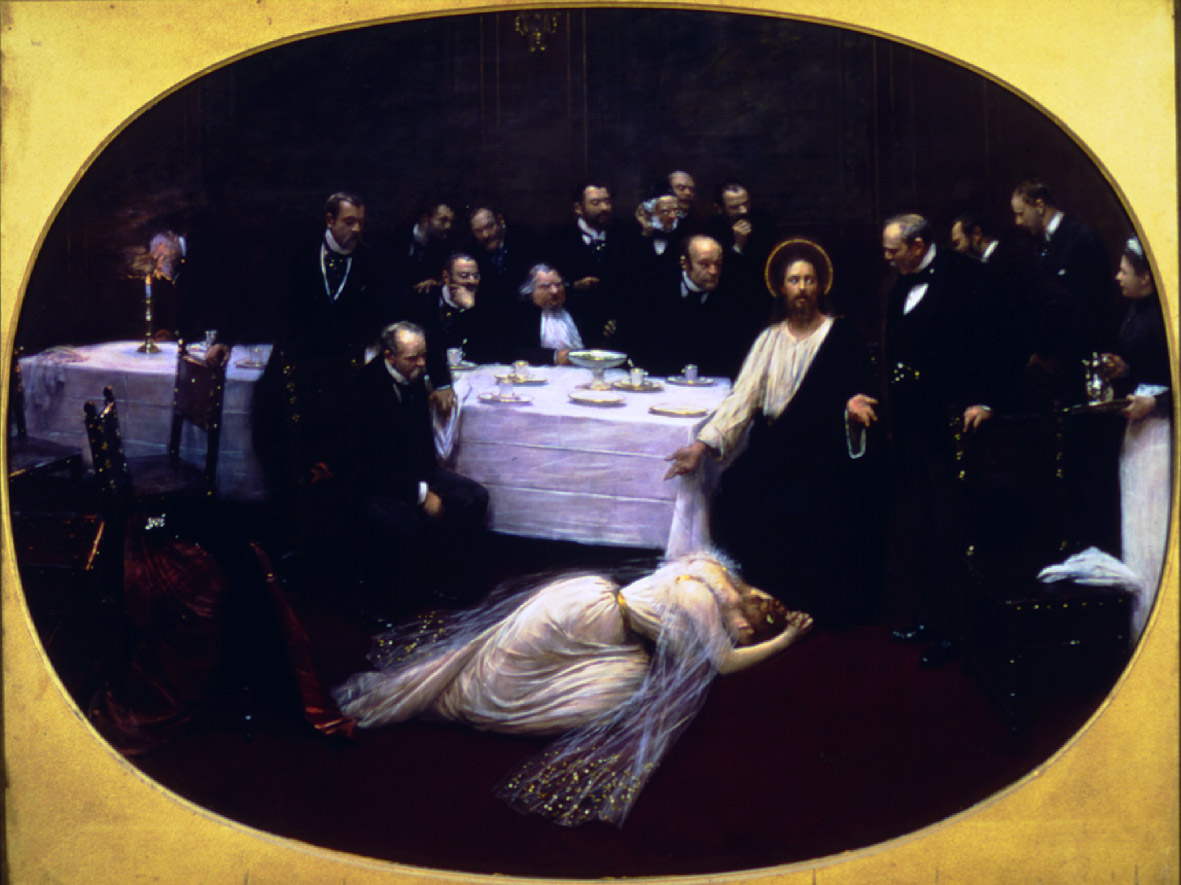
When human beings are subjected to the full authority of the Lord Jesus, they treat other human beings with equal respect. They have long since gotten down off their high horse. They see by the light of the Gospel that they were formerly sinners destined to hell and realize they were saved from that hell by the sacrificial death of their Lord and Master. They consequently can no longer be critical of others as “sinners” since they themselves are former sinners saved only by the grace of God.
Real Christians still commit sins, however. What changes is the lifestyle of sin. Those not subjected to the Lord have no true awareness of their sin and no true desire to cease from it. They exist in a fairy tale land of no recompense for their evil deeds. Indeed, the idea that they do “evil deeds” is ridiculous to them. In their reasoning, only vile criminals, murderers, etc, engage in “evil deeds.” But God has a different opinion. And when people come into contact with God for the first time through the hearing of the powerful Gospel message, which includes the cutting truth that one is a sinner in opposition to God, it causes them to bow before their Creator and seek His pardon.
Now one of the Pharisees was requesting Him to dine with him, and He entered the Pharisee’s house and reclined at the table. And there was a woman in the city who was a sinner; and when she learned that He was reclining at the table in the Pharisee’s house, she brought an alabaster vial of perfume, and standing behind Him at His feet, weeping, she began to wet His feet with her tears, and kept wiping them with the hair of her head, and kissing His feet and anointing them with the perfume. Now when the Pharisee who had invited Him saw this, he said to himself, “If this man were a prophet He would know who and what sort of person this woman is who is touching Him, that she is a sinner.
And Jesus answered him, “Simon, I have something to say to you.” And he replied, “Say it, Teacher.” “A moneylender had two debtors: one owed five hundred denarii, and the other fifty. When they were unable to repay, he graciously forgave them both. So which of them will love him more?” Simon answered and said, “I suppose the one whom he forgave more.” And He said to him, “You have judged correctly.” Turning toward the woman, He said to Simon, “Do you see this woman? I entered your house; you gave Me no water for My feet, but she has wet My feet with her tears and wiped them with her hair. You gave Me no kiss; but she, since the time I came in, has not ceased to kiss My feet. You did not anoint My head with oil, but she anointed My feet with perfume. For this reason I say to you, her sins, which are many, have been forgiven, for she loved much; but he who is forgiven little, loves little.”
Then He said to her, “Your sins have been forgiven.” Those who were reclining at the table with Him began to say to themselves, “Who is this man who even forgives sins?” And He said to the woman, “Your faith has saved you; go in peace.” [Luke 7:36-50]
Real repentance is often done with much emotion. For those who refuse to repent, they consider the Gospel message as inapplicable to themselves, in that they see themselves as righteous apart from God.
These reject the Gospel message and continue on their journey toward hell.
Those who repent, on the other hand, cease being sinners in that their previous sins are removed by the cleansing blood of the Lamb of God. They do an about face. They start walking in the opposite direction. They get off the train to hell and hop on board the train to heaven.
They still sin from time to time, partly from ignorance, partly from not yet fully overcoming the dictates of their sinful nature, and partly from not continuing in their spiritual disciplines. An altar of repentance always awaits them for personal use when needed, and the blood of the Lord is once again invoked to cleanse them. In time, they grow more spiritually mature and their faults grow fewer.
They learn to take it on the chin. They learn to not fight back against others who treat them with contempt. They see other people as those in need of salvation the same way they were. They become more accommodating and graceful. They learn the art of spiritual tact. They attempt to help others see the light that was shown to them. They do not consider themselves better, or holier, or a greater specimen of humanity, but someone who was saved from a life of sin and eventual hell by a loving Savior through no effort whatsoever of their own.
They understand that their righteousness is a gift.
They see clearly that the death of the Lord Jesus paid for all sins for all time.
They see there is nothing to crow about, that though they are cleansed, they personally had nothing to do with it except merely saying yes to God and accepting His generous offer of salvation.
Humility becomes their standard.
Obedience to the Lord becomes their modus operandi.
Loving the Lord and others becomes their purpose.
Telling others about the Good News becomes their principle occupation.
They want to see others saved from sin and set free the way they were.
They want others to meet the Lord.
“Come to Me, all who are weary and heavy-laden, and I will give you rest. Take My yoke upon you and learn from Me, for I am gentle and humble in heart, and YOU WILL FIND REST FOR YOUR SOULS. For My yoke is easy and My burden is light.” [Matthew 11:28-30] [1]
© 2012 by RJ Dawson. All Rights Reserved.
[1] Unless otherwise noted all Scriptures are taken from the New American Standard Bible, © 1960, 1963, 1968, 1971, 1972, 1973, 1975, 1977, 1995 by The Lockman Foundation. Used by permission.
THANKS TO ALL FOR READING AND SPREADING THE WORD


 Real Christianity