Blog Archives
THE RIGHT WAY WE’RE SUPPOSED TO DO “CHURCH” [Part 3]

If we are not following the example of the very first Christians as documented in the New Testament then we are not following the example of the Lord Jesus.
.
“FOLLOW ME AS I FOLLOW CHRIST”
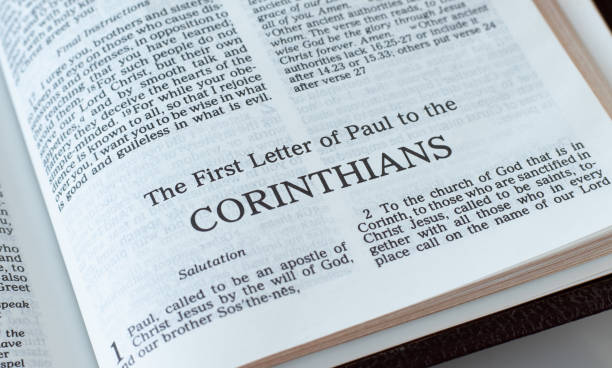
The preceding quote is a standardized version of a statement made by the apostle Paul in 1Corinthians 11:1. It is often referred to when discussing the appropriateness of following the example of a mature Christian in a leadership role. Since young, new, or immature Christians are ubiquitous and are frequently seeking answers from those who have attained an accepted and recognized position of respect, such as “official” Christian ministers, they are often told in lieu of the actual answers they seek to instead follow the example of one who has gone before.
This is all well and good, of course, as many mature Christian ministers have proven their established place in Christian ministry by their growth, maturity, and achievements, as well as in overcoming all the challenges and difficulties toward reaching such a place. As Christians, we honor such people. We especially honor them if they have achieved their position in one’s respective denomination or in accordance with particular beliefs or practices that one holds dear.
However, it is regularly the case that one accepts a current generational Christian leader without seeking forth his or her bona fides regarding the previous generation or what might have transpired in the past to produce such a leader. For example, it is usually the case that such a leader followed in the ministerial footsteps of his or her parents, denomination, or another central leader who acted as a mentor. This means the makeup of a minister is commonly derived through the influence of others or established Christian bodies rather than through the purity of Scripture.
In fact, there are two particular major Christian denominations in the world, truly international in scope with effectively and comparatively ancient origins going back multiple centuries, that refuse to honor an exclusive foundational belief in the New Testament writings first and foremost because such a belief cuts into their desire and necessity for supreme authority. This belief which places Scripture first is referred to theologically as Sola Scriptura in that the Bible in general and the New Testament in particular is honored as the only infallible source of authority for Christian practices and faith. In was the Protestant Reformation which began five centuries ago that brought this truth into the light and established the belief in Scripture as primary which overrode the authority of customary ecclesiastical leaders and “Christian” potentates.
The reason this issue is so important is because a belief in “Christian” authority over Scripture removes the mandatory overall authority of the Lord Jesus. This means His authority is reduced to a secondary position at best which is a blatant violation of His own teachings and the beliefs of those who followed and honored Him in the very beginning who contributed their inspired writings showcasing His teachings. In other words, casting doubt on the veracity of the New Testament Scriptures and refusing to honor them as our sole foundation for Christian belief and practice also casts doubt on the Lord’s supreme authority as the only legitimate Leader of the Church—His Community of Called-Out Ones.
One wonders then at the asinine attitude of those who believe their Christian authority overrides the authority of the Lord Jesus. This is actually pure heresy on their part. However, they counter that the actual heresy is placing the authority of Scripture above their own. How did they arrive at such a place? What prompted them to entertain such a ridiculous notion? By way of answer I will say this: If one were to cut through all the fog and go to the very source one will arrive at the following:
And there was war in heaven, Michael and his angels waging war with the dragon. The dragon and his angels waged war, and they were not strong enough, and there was no longer a place found for them in heaven. And the great dragon was thrown down, the serpent of old who is called the devil and Satan, who deceives the whole world; he was thrown down to the earth, and his angels were thrown down with him.
Then I heard a loud voice in heaven, saying, “Now the salvation, and the power, and the kingdom of our God and the authority of His Christ have come, for the accuser of our brethren has been thrown down, he who accuses them before our God day and night. And they overcame him because of the blood of the Lamb and because of the word of their testimony…” [Revelation 12:7-11a]
Therefore, regarding the statement of the apostle Paul at the beginning of this article, Christians should only honor the authority of those mature Christians, such as Paul, if they follow the Lord Jesus. Such a condition is paramount. The apostle Paul would never in a million years attempt to supersede the authority of the Lord Jesus as so many traditional Christian leaders have done. Though it is obvious that some of these embrace Pharisaical pomp to the nth degree parading around as religious potentates and glorying in the honor and prestige associated thereof, many other Christian leaders downplay such an attitude somewhat while others are very subtle about it. These people don’t want you to know what they actually think of themselves and the position they’ve taken though it is otherwise obvious to those with eyes to see in that everyone knows who is actually in charge. And it’s not the Lord.
So Paul made it clear that one should only look to his example and accept his teachings if he indeed follows the Messiah, having recognized, honored, and submitted fully to the authority of the Lord Jesus:
Be imitators of me, just as I also am of Christ. [1Corinthians 11:1 NASB95]
Pattern yourselves after me [follow my example], as I imitate and follow Christ (the Messiah). [1Corinthians 11:1 Amplified Classic]
The English word “imitate” is from the Greek μιμητής mimētḗs (mim-ay-tace’). It is defined by Strong’s as: “an imitator:—follower.”
We know, of course, by what the Lord teaches as written in the Gospels, that to “follow” Him ultimately means that one must imitate Him, which means one must follow the Lord’s example, one must honor and obey His teachings, and one must do one’s best to represent Him correctly and properly. Now this is obviously a very tall order and the mind reels at the prospect of getting such an otherwise impossible thing right. But He said to do it which means it is not only possible and doable but mandatory. Or else one is not a real Christian.
This being said, and regarding the particulars of this teaching series, one must consider the following statements of the apostle Paul which appear in our subject Scriptural passage, 1Corinthins Chapter 14:
(1) Pursue love, yet desire earnestly spiritual gifts, but especially that you may prophesy. [14:1]
(2) Now I wish that you all spoke in tongues, but even more that you would prophesy; [14:5a]
(3) So also you, since you are zealous of spiritual gifts, seek to abound for the edification of the church. [14:12]
(4) Therefore let one who speaks in a tongue pray that he may interpret. [14:13]
(5) I thank God, I speak in tongues more than you all; [14:18]
(6) So then tongues are for a sign, not to those who believe but to unbelievers; but prophecy is for a sign, not to unbelievers but to those who believe. [14:22]
(7) If anyone speaks in a tongue, it should be by two or at the most three, and each in turn, and one must interpret; but if there is no interpreter, he must keep silent in the church; and let him speak to himself and to God. Let two or three prophets speak, and let the others pass judgment. [14:27-29]
(8) Therefore, my brethren, desire earnestly to prophesy, and do not forbid to speak in tongues. But all things must be done properly and in an orderly manner. [14:39-40][1]
© 2025 by RJ Dawson. All Rights Reserved. [To Be Continued…]
[1] Unless otherwise noted all Scriptures are taken from the New American Standard Bible, © 1960, 1963, 1968, 1971, 1972, 1973, 1975, 1977, 1995 by The Lockman Foundation. Used by permission.
THE RIGHT WAY WE’RE SUPPOSED TO DO “CHURCH” [Part 2]
The following includes a captivating Scriptural account of original New Covenant meetings and the Apostle Paul’s detailed Scriptural instructions thereof.
.
1 CORINTHIANS 14
As a lead in to what we will be looking into regarding how the Early Church originals in the first century AD actually conducted their spiritual meetings, I will present here the entire fourteenth chapter of the Apostle Paul’s first letter to the believers in the Greek city of Corinth. This chapter is probably not only the most representative of the content of Christian meetings but also gives the most amount of information with regard to what took place in them. In Chapter 12 Paul had just addressed the many spiritual gifts, manifestations of the Spirit, and places of service in the Community and touches on them again in Chapter 14, applying instructions on their use.
If you have yet to read Part 1 I highly recommend it since it sets the tone for the series. There are already many edifying comments there which add to the article content and I am most appreciative of those of you who participated. Thank you.
I also decided to add the Scriptural text as it appears in the NASB95 online version which includes full footnotes. Though I have used and still use many different Bible versions I began using the New American Standard Bible 1995 Update exclusively for teaching and writing purposes about the time it was first published. To clarify the text format I have added the following explanations per the Bible’s introduction:
- FOOTNOTES are used only where the text especially requires them for clarification.
- ITALICS are used in the text to indicate words which are not found in the original Hebrew, Aramaic, or Greek but implied by it.
- SMALL CAPS in the New Testament are used in the text to indicate Old Testament quotations or obvious references to Old Testament texts.
Now let’s read what Paul wrote way back when and see how the meetings of our original forebears proceeded:
1 Pursue love, yet desire earnestly spiritual gifts, but especially that you may prophesy. 2 For one who speaks in a tongue does not speak to men but to God; for no one [a]understands, but [b]in his spirit he speaks mysteries. 3 But one who prophesies speaks to men for edification and exhortation and consolation. 4 One who speaks in a tongue edifies himself; but one who prophesies edifies the church. 5 Now I wish that you all spoke in tongues, but even more that you would prophesy; and greater is one who prophesies than one who speaks in tongues, unless he interprets, so that the church may receive edifying.
6 But now, brethren, if I come to you speaking in tongues, what will I profit you unless I speak to you either by way of revelation or of knowledge or of prophecy or of teaching? 7 Yet even lifeless things, either flute or harp, in producing a sound, if they do not produce a distinction in the tones, how will it be known what is played on the flute or on the harp? 8 For if the [c]bugle produces an indistinct sound, who will prepare himself for battle? 9 So also you, unless you utter by the tongue speech that is clear, how will it be known what is spoken? For you will be speaking into the air. 10 There are, perhaps, a great many kinds of [d]languages in the world, and no kind is without meaning. 11 If then I do not know the meaning of the language, I will be to the one who speaks a [e]barbarian, and the one who speaks will be a [f]barbarian [g]to me. 12 So also you, since you are zealous of [h]spiritual gifts, seek to abound for the edification of the church.
13 Therefore let one who speaks in a tongue pray that he may interpret. 14 For if I pray in a tongue, my spirit prays, but my mind is unfruitful. 15 What is the outcome then? I will pray with the spirit and I will pray with the mind also; I will sing with the spirit and I will sing with the mind also. 16 Otherwise if you bless [i]in the spirit only, how will the one who fills the place of the [j]ungifted say the “Amen” at your giving of thanks, since he does not know what you are saying? 17 For you are giving thanks well enough, but the other person is not edified. 18 I thank God, I speak in tongues more than you all; 19 however, in the church I desire to speak five words with my mind so that I may instruct others also, rather than ten thousand words in a tongue.
20 Brethren, do not be children in your thinking; yet in evil be infants, but in your thinking be mature. 21 In the Law it is written, “BY MEN OF STRANGE TONGUES AND BY THE LIPS OF STRANGERS I WILL SPEAK TO THIS PEOPLE, AND EVEN SO THEY WILL NOT LISTEN TO ME,” says the Lord. 22 So then tongues are for a sign, not to those who believe but to unbelievers; but prophecy is for a sign, not to unbelievers but to those who believe. 23 Therefore if the whole church assembles together and all speak in tongues, and [k]ungifted men or unbelievers enter, will they not say that you are mad? 24 But if all prophesy, and an unbeliever or an [l]ungifted man enters, he is convicted by all, he is called to account by all; 25 the secrets of his heart are disclosed; and so he will fall on his face and worship God, declaring that God is certainly among you.
26 What is the outcome then, brethren? When you assemble, each one has a psalm, has a teaching, has a revelation, has a tongue, has an interpretation. Let all things be done for edification. 27 If anyone speaks in a tongue, it should be by two or at the most three, and each in turn, and one must interpret; 28 but if there is no interpreter, he must keep silent in the church; and let him speak to himself and to God. 29 Let two or three prophets speak, and let the others pass judgment. 30 But if a revelation is made to another who is seated, the first one must keep silent. 31 For you can all prophesy one by one, so that all may learn and all may be exhorted; 32 and the spirits of prophets are subject to prophets; 33 for God is not a God of confusion but of [m]peace, as in all the churches of the saints.
34 The women are to keep silent in the churches; for they are not permitted to speak, but are to subject themselves, just as the Law also says. 35 If they desire to learn anything, let them ask their own husbands at home; for it is [n]improper for a woman to speak in church. 36 [o]Was it from you that the word of God first went forth? Or has it come to you only?
37 If anyone thinks he is a prophet or spiritual, let him recognize that the things which I write to you are the Lord’s commandment. 38 But if anyone does not recognize this, he [p]is not recognized.
39Therefore, my brethren, desire earnestly to prophesy, and do not forbid to speak in tongues. 40But all things must be done properly and in an orderly manner. [1Corinthians 14:1-40] [1]
FOOTNOTES:
a. Lit hears
b. Or by the Spirit
c. Lit trumpet
d. Lit voices
e. Or foreigner
f. Or foreigner
g. Or in my estimation
h. Lit spirits
i. Or with the
j. I.e. unversed in spiritual gifts
k. V 16, note 2
l. V 16, note 2
m. Or peace. As in all…saints, let
n. Or disgraceful
o. Lit Or was
p. Two early mss read is not to be recognized
© 2025 by RJ Dawson. All Rights Reserved. [To Be Continued…]
[1] Unless otherwise noted all Scriptures are taken from the New American Standard Bible, © 1960, 1963, 1968, 1971, 1972, 1973, 1975, 1977, 1995 by The Lockman Foundation. Used by permission.
THE RIGHT WAY WE’RE SUPPOSED TO DO “CHURCH” [Part 1]

Most Christians would likely be shocked at what the New Testament presents as the actual way Christians are supposed to conduct their spiritual meetings.
.
“WE NEVER TRIED IT THAT WAY BEFORE!”
The preceding quote is what prolific Christian author and minister Ralph Neighbor Jr. referred to as “The Seven Last Words of the Church.” These phrases were the dual title of one of his many books, published way back in 1976, though his visionary ministry has very early roots in at least the early 1950s. Mr. Neighbor, born in 1929, founder of TOUCH Outreach Ministries, is also known for attempting and succeeding in part at many New Testament format applications otherwise rejected by mainstream traditional Christianity. He is perhaps known most for his work regarding what came to be called cell churches which are relatively small groups based on the New Covenant model.
To illustrate his evangelistic attitude and strong desire to do whatever the Lord required to reach the lost, coupled with calling out the deficiencies of standard American Christian practices, he once wrote while ministering in Houston, Texas that “80% of Houston is unchurched and 80% would remain unchurched.” That is, until the New Covenant model could be applied successfully, something which would demand a big change in heart and process.
I had the pleasure of corresponding with Ralph for a time several years ago. He was living in Houston then. I looked to him as an older brother and father in the faith who was quite the innovator regarding his research and writing on actual New Covenant meeting practices and his assertive though joyful attempts at applying them. Though a very busy man, I was blessed that he took the time to briefly discuss such issues with me. He relayed that he was also blessed by my contributions and was pleased to hear about my then new book Real Christianity (2001).
BEYOND THE FORMAT
Though stodgy unwilling-to-change traditional American Christianity has always been more about maintaining whatever achieved status quo may have existed at various times in our history, even going as far back as our colonial foundings over 400 years ago, it has been as a cultural entity generally more concerned about societal acceptance and monetary enterprise than in actually replicating and applying the excellent and highly productive ministry example of the early first-century Church. It was obviously the Lord Jesus, our Founder, who originally set such an example and taught it to His chosen successors. This very clear fact, however, often has no impact whatsoever on those who insist on starting “churches” in a so-called traditional or institutional manner and applying the same non-New Testament format, the one everyone is familiar with and which obviously still exists, as the remaining most popular format at present.
This means Christianity as we know it exists primarily in a form FOREIGN to the New Covenant writings of those directly chosen by the Founder. This also forces the realization, for those who can see it, that there is a high level of resistance being displayed at the hands of Christian masters who have essentially shanghaied the overall operation for their own purposes and desires. If this appears as a harsh assessment it is likely due only to the fact that the false representation has long since become the overall standard representation, meaning that the majority has insisted on it however it has become convinced by it.
However, as we often see in the pages of Holy Writ, the majority, from a Biblical perspective, is often always wrong or lacking. We know this by using only two observable and easily recognizable examples:
(1) The Old Testament nation of Israel continued to exist as long as it did due only to a very small Remnant of actual faithful followers of God, which means the Lord preserved it for His necessary purposes regardless of the actions of the thoroughly unfaithful majority which would have otherwise destroyed it. This majority was a vast collection of spiritually adulterous, inconsistent, stiff-necked sinners always fighting and opposing God despite His great love and support for them. Their unrepentant attitude all came to a head with the final cessation of the rebellious nation of Israel when it came to an end forever in 70AD as directly prophesied by the Lord Jesus.
(2) Even though the Lord had a massive amount of followers throughout His ministry, likely in at least the twenty thousand range if not far higher, He only managed to collect 120 sincere ultra-faithful and obedient disciples for the initial Upper Room experience of Pentecost. These were people who would only do what He instructed them, even to the very letter, and certainly did achieve the objective.
Such people, if they lived today, would also be preaching against standard American church practice regardless of some of the spiritual benefits thereof, simply because they would know it was not what the Lord created in the beginning and would therefore be effectively non-effectual in that it would not work according to the Lord’s intentions. This means it is entirely unfit and thus unable to evangelize the people for salvation and cannot possibly create and develop the people under its authority as the Lord requires. In fact, this majority form of Christianity is much more interested in creating contented converts rather than making powerful Spirit-filled and Spirit-led disciples ready, willing, and able to storm the gates of hell.
We also know this form is wrong due to the way in which its supporters treat Christian reformers, those who are dutifully and obediently carrying out the Lord’s instructions. Such dedicated people are always persecuted by the majority and eventually rejected only because they insist on the easily verifiable teachings of the New Covenant writings regarding how we are supposed to do “church.” I will remind everyone that even though most Christians still believe to this day that the Church is a building they visit to hold “services” and that such Christians go to church in order to have church, the reality is that real Christians ARE the Church.
COMING UP NEXT…
The following verse is a brief excerpt from a New Testament chapter rarely read by many if not most. In fact, it appears the majority of Christians do not even know it exists. Judging by what goes on in the great lot of mainstream church services, this would prove to be true. Though benign, the verse in question holds the spark of a wildfire in that it contains just enough information to set the tone for the chapter which further sets the tone for the entire format for all original New Covenant spiritual meetings.
In it lies a conviction that most Christians would apparently rather do without and a great hint that they are simply not doing their Christianity correctly or at least are doing it in a decidedly incomplete manner. By way of introduction, however, I believe the Lord is only happy to reveal it and thereby use it to reveal so much more:
What is the outcome then, brethren? When you assemble,
Each one has a psalm,
Has a teaching,
Has a revelation,
Has a tongue,
Has an interpretation.
Let all things be done for edification. [1Corinthians 14:26][1]
© 2025 by RJ Dawson. All Rights Reserved. [To Be Continued…]
[1] Unless otherwise noted all Scriptures are taken from the New American Standard Bible, © 1960, 1963, 1968, 1971, 1972, 1973, 1975, 1977, 1995 by The Lockman Foundation. Used by permission.
EARLY CHURCH HISTORY 101 (Lesson 6)

The 120 were gathered together in the Upper Room. The apostle Peter took his place as spokesman for the group. Keep in mind that this assembly was the entire Early Church, from the Greek Ekklesia, which is defined as “the Community of the Called-Out Ones.”
.
INTRODUCTION LESSON 1 LESSON 2 LESSON 3 LESSON 4 LESSON 5
LESSON 6
ACTS 1:16-20
16 “Brethren, the Scripture had to be fulfilled, which the Holy Spirit foretold by the mouth of David concerning Judas, who became a guide to those who arrested Jesus. 17 For he was counted among us and received his share in this ministry.” 18 (Now this man acquired a field with the price of his wickedness, and falling headlong, he burst open in the middle and all his intestines gushed out. 19 And it became known to all who were living in Jerusalem; so that in their own language that field was called Hakeldama, that is, Field of Blood.) 20 “For it is written in the book of Psalms, ‘LET HIS HOMESTEAD BE MADE DESOLATE, AND LET NO ONE DWELL IN IT’; and, ‘LET ANOTHER MAN TAKE HIS OFFICE.’
This was Luke’s first recorded post-Ascension message of the followers of the Lord Jesus. They had a safe place at Mary’s house. Though the Lord was no longer physically present in the environs of Jerusalem, His small group of disciples was still considered a dangerous heretical faction. From the limited perspective of the non-believing Israelite religious leaders, however, with the Lord finally out of the way, there remained a consensual relief not presently threatened by the existence of His small band. But this would soon change.
Regarding the traitor, the greatest villain known to history, he did have second thoughts. He was assisted in his dastardly deed, however, by the devil himself along with the murderous and conniving chief priests which assisted in pushing him over the edge.
And Satan entered into Judas who was called Iscariot, belonging to the number of the twelve. [Luke 22:3]
One wonders at the arguments Satan may have made that at last convinced Judas to act. It was more than the man’s love of money. In essence, though, he was simply deceived. His bad spirit, bad attitude, constant grumbling and complaining, and refusal to adhere to real discipleship caused the man’s unregenerate flesh, his sinful human nature, to remain forever on display. This condition is common to all and without self-imposed restrictions wreaks havoc. It is why all real Christians must at the onset deal strongly with this spiritual enemy and defeat it if they hope to have any chance at serving the Lord.
When Judas saw the Lord condemned and that he had been deceived by the priests and elders he felt great remorse. He tried to return the money but they wouldn’t take it.
“I have sinned by betraying innocent blood.” But they said, “What is that to us? See to that yourself!” And he threw the pieces of silver into the temple sanctuary and departed; and he went away and hanged himself. [Matthew 27:4-5][1]
According to tradition, the Field of Blood was located just beyond the southern edge of the old city of David on the other side of the Hinnom Valley.
This had otherwise been known as Gehenna, the allegorical destination of the wicked.
© 2020 by RJ Dawson. All Rights Reserved.
[1] Unless otherwise noted all Scriptures are taken from the New American Standard Bible, © 1960, 1963, 1968, 1971, 1972, 1973, 1975, 1977, 1995 by The Lockman Foundation. Used by permission.
I appreciate your prayers. For donations, see column at left to purchase my book. Thank you.
EARLY CHURCH HISTORY 101 (Lesson 5)

After watching the Lord rise up before them enveloped by a cloud, the disciples removed from Mount Olivet and returned to Jerusalem per the Lord’s command. It was time to await the promise.
.
INTRODUCTION LESSON 1 LESSON 2 LESSON 3 LESSON 4
LESSON 5
ACTS 1:13-15
13 When they had entered the city, they went up to the upper room where they were staying; that is, Peter and John and James and Andrew, Philip and Thomas, Bartholomew and Matthew, James the son of Alphaeus, and Simon the Zealot, and Judas the son of James. 14 These all with one mind were continually devoting themselves to prayer, along with the women, and Mary the mother of Jesus, and with His brothers. 15 At this time Peter stood up in the midst of the brethren (a gathering of about one hundred and twenty persons was there together), and said…
This Upper Room was most likely in the house belonging to Mary, the mother of John Mark, as mentioned in the twelfth chapter of Acts after Peter’s miraculous release from certain execution:
…he went to the house of Mary, the mother of John who was also called Mark, where many were gathered together and were praying. [Acts 12:12] [1]
It was a very large room which, of course, implies a large house. This denotes Mary, a probable widow, as a woman of means. Mark was a cousin of Barnabas, the apostle Paul’s traveling partner, which made Mary his aunt. One can deduce that the respective fathers of Barnabas and Mark were brothers who were wealthy enough to (1) Own a large high end property in Jerusalem with servants, and (2) Send Barnabas, a man of letters with probable training under a rabbi to school. Barnabas was also the most likely writer of the Book of Hebrews.
The Last Supper was held in this same Upper Room, which made the private home a regular place of meeting for the Early Church. In fact, the entire Early Church at that time could take up residence within it. All eleven apostles were there along with possible family members. The Lord’s brothers were there, maybe all four, as was, of course, His mother Mary. Many other women were there, which must have included Mary Magdalene. With all of these together, it came to about 120 people, on the one hand a large group for a house church, but on the other relatively quite small.
After preaching to perhaps hundreds of thousands over a three and a half year period, having a large band of following disciples, and appearing to as many as five hundred after His resurrection, the Lord Jesus only gathered 120 dedicated praying disciples in the Upper Room awaiting the Day of Pentecost.
This should enlighten us to His selection process.
© 2020 by RJ Dawson. All Rights Reserved.
[1] Unless otherwise noted all Scriptures are taken from the New American Standard Bible, © 1960, 1963, 1968, 1971, 1972, 1973, 1975, 1977, 1995 by The Lockman Foundation. Used by permission.
I appreciate your prayers. For donations, see column at left to purchase my book. Thank you.
EARLY CHURCH HISTORY 101 (Lesson 4)

The Bible records many miraculous historical events. One of the most miraculous, or downright mind-bending if you were there, was the Ascension of the Lord. Some say it defies belief. Believers say He defied gravity.
.
INTRODUCTION LESSON 1 LESSON 2 LESSON 3
LESSON 4
ACTS 1:9-12
9 And after He had said these things, He was lifted up while they were looking on, and a cloud received Him out of their sight. 10 And as they were gazing intently into the sky while He was going, behold, two men in white clothing stood beside them. 11 They also said, “Men of Galilee, why do you stand looking into the sky? This Jesus, who has been taken up from you into heaven, will come in just the same way as you have watched Him go into heaven.” 12 Then they returned to Jerusalem from the mount called Olivet, which is near Jerusalem, a Sabbath day’s journey away. [1]
Luke reports the event in an understated matter-of-fact manner. The likelihood is strong that he wasn’t there so he must have received the information from those who were. Since he wrote The Acts of the Apostles about thirty years after the Ascension, it is most probable that many of the firsthand witnesses had already passed on. Nevertheless, I don’t believe Luke would have relied on secondhand information, no matter how credible. Who might have provided their testimony? There was a large group there, not only the eleven apostles. Some of them probably later traveled into the far reaches of the Greco-Roman world. The apostle Paul, whom Luke spent much time with, would certainly have known many who were there that day.
Regarding the Lord’s departure, it must have been hard on everybody. Maybe the thoroughly unique and otherworldly method He chose took some of the edge off. He knew He would still be with them, though in spiritual form. But His disciples likely felt that an unseen floor had dropped away. They spent almost every day of the last few years with Him. He taught them everything they knew. They would miss Him terribly. We have all had such heartfelt goodbye moments, sometimes involving those we would never see again.
As they stood there on the Mount of Olives between Bethany and Jerusalem peering up into the sky at the Lord’s strange private rapture, the disciples were enthralled with an event never possibly experienced before, lost in their goodbyes, and momentarily overcome with loss. How would they manage without Him?
Then the two angels suddenly showed up with more of the matter-of-fact narrative as if the Ascension were a mere ho hum event. “Why are you guys still standing there looking into the sky?” With that statement the angels announced yet another event, one stranger than the first.
He’s coming back.
© 2020 by RJ Dawson. All Rights Reserved.
[1] Unless otherwise noted all Scriptures are taken from the New American Standard Bible, © 1960, 1963, 1968, 1971, 1972, 1973, 1975, 1977, 1995 by The Lockman Foundation. Used by permission.
I appreciate your prayers. For donations, see column at left to purchase my book. Thank you.
EARLY CHURCH HISTORY 101 (Lesson 3)

In the first century AD, the Israelites continued to be obsessed with the restoration of their kingdom. Other than brief independence under the Hasmonean Dynasty (c142-37 BC), they had been ruled by foreign powers since the Babylonian Captivity six centuries before.
.
INTRODUCTION LESSON 1 LESSON 2
LESSON 3
ACTS 1:6-8
6 So when they had come together, they were asking Him, saying, “Lord, is it at this time You are restoring the kingdom to Israel?” 7 He said to them, “It is not for you to know times or epochs which the Father has fixed by His own authority; 8 but you will receive power when the Holy Spirit has come upon you; and you shall be My witnesses both in Jerusalem, and in all Judea and Samaria, and even to the remotest part of the earth.”
The Lord continued attempting to patiently explain to his disciples that His was a spiritual kingdom. In His Olivet Prophecy, as recorded in Matthew 24 and 25, Mark 13, and Luke 21, He warned them that great tribulation was coming and what was left of the nation of Israel would cease to exist within a generation.
Then He shifted His answer to the immediate future when they would be endowed with a power giving them greater ability to understand. He told them they would become dynamic witnesses of the Gospel message. The Greek word is dunamis and is defined as “strength, ability, inherent power residing in a thing by virtue of its nature, or which a person or thing exerts and puts forth.” This would be an entirely different ballgame. The powerful OT prophets and John the Baptist had the spiritual power of God upon them, but they were not indwelt by the Spirit of the Lord. In fact, the Lord said:
11 “Truly I say to you, among those born of women there has not arisen anyone greater than John the Baptist! Yet the one who is least in the kingdom of heaven is greater than he.” [Matthew 11:11]
How is this possible? John was obviously a great and fearless preacher, the forerunner of the Lord. He had what would otherwise be an impossible objective—to prepare the collective heart of the nation for a soon arriving future. For many, if not most, it would be a future of growing tribulation and destruction. The independence and freedom sought by the Israelites would continually diminish just as John had prophesied:
7 So he began saying to the crowds who were going out to be baptized by him, “You brood of vipers, who warned you to flee from the wrath to come? 8 “Therefore bear fruits in keeping with repentance, and do not begin to say to yourselves, ‘We have Abraham for our father,’ for I say to you that from these stones God is able to raise up children to Abraham. 9 “Indeed the axe is already laid at the root of the trees; so every tree that does not bear good fruit is cut down and thrown into the fire.” [Luke 3:7-9] [1]
A smaller percentage of the people did repent, though not enough to save the nation, and it was the Community of this repentant Remnant composed entirely of Israelites that the Lord initially gathered as a spiritual people for a spiritual kingdom. For this, they would have to be like Him and receive His power. They must each be filled with the Holy Spirit.
© 2020 by RJ Dawson. All Rights Reserved.
[1] Unless otherwise noted all Scriptures are taken from the New American Standard Bible, © 1960, 1963, 1968, 1971, 1972, 1973, 1975, 1977, 1995 by The Lockman Foundation. Used by permission.
I appreciate your prayers. For donations, see column at left to purchase my book. Thank you.
EARLY CHURCH HISTORY 101 (Lesson 2)

The Gospel of Luke is the only one which sets the scene regarding the Lord’s last morning before ascending to heaven. He adds more detail in the opening of Acts. We now continue with the narrative:
.
LESSON 2
ACTS 1:4-5
4 Gathering them together, He commanded them not to leave Jerusalem, but to wait for what the Father had promised, “Which,” He said, “you heard of from Me; 5 for John baptized with water, but you will be baptized with the Holy Spirit not many days from now.”
Many Christians are familiar with the incident in which the Lord appeared to two men on a road west of Jerusalem on the day of His resurrection. That afternoon they were heading to the small village of Emmaus, about seven miles away, when the Lord Jesus approached and began walking with them. Luke is the sole gospel writer to record the full story, though it is also briefly mentioned in Mark 16:12. After an eventful evening the two men quickly returned to Jerusalem and met with the apostles and the others, excitedly telling them what happened. While there the Lord again appeared to all of them and began His final instructions. It was then that we have the only occurrence in the gospels of “the promise” as mentioned above:
49 “And behold, I am sending forth the promise of My Father upon you; but you are to stay in the city until you are clothed with power from on high.” [Luke 24:49]
In both books Luke records the Lord’s commandment that His disciples remain in Jerusalem to await the big event. It will happen in a matter of days. Before they can be His witnesses they must receive His power and anointing. He called it an immersion in the Holy Spirit (from the Greek baptizo, meaning “to submerge or overwhelm”). Though the specific terminology “promise/Father” is recorded nowhere else but these two verses to this point, there are several other gospel references. The first time Luke mentions it is in the following when he also pairs the two baptisms:
15 Now while the people were in a state of expectation and all were wondering in their hearts about John, as to whether he was the Christ, 16 John answered and said to them all, “As for me, I baptize you with water; but One is coming who is mightier than I, and I am not fit to untie the thong of His sandals; He will baptize you with the Holy Spirit and fire.” [Luke 3:15-16]
One of the most profound events referencing the baptism in the Holy Spirit is recorded in the Gospel of John. It is in Jerusalem at the temple on the final day of the feast of Sukkot in the fall of the year. From it we can gain a greater understanding of the significance and timing of the baptism:
37 Now on the last day, the great day of the feast, Jesus stood and cried out, saying, “If anyone is thirsty, let him come to Me and drink. 38 He who believes in Me, as the Scripture said, ‘From his innermost being will flow rivers of living water.’” 39 But this He spoke of the Spirit, whom those who believed in Him were to receive; for the Spirit was not yet given, because Jesus was not yet glorified. [John 7:37-39][1]
© 2020 by RJ Dawson. All Rights Reserved.
[1] Unless otherwise noted all Scriptures are taken from the New American Standard Bible, © 1960, 1963, 1968, 1971, 1972, 1973, 1975, 1977, 1995 by The Lockman Foundation. Used by permission.
I appreciate your prayers. For donations, see column at left to purchase my book. Thank you.
EARLY CHURCH HISTORY 101 (Lesson 1)

After writing his gospel, “about all the things Jesus began to do and teach,” Luke begins Acts by recalling the morning of the Ascension when the Lord gave final instructions to His chosen apostles.
.
LESSON 1
ACTS 1:1-3
1 The first account I composed, Theophilus, about all that Jesus began to do and teach, 2 until the day when He was taken up to heaven, after He had by the Holy Spirit given orders to the apostles whom He had chosen. [Acts 1:1-2]
Luke refers here to the Gospel which bears His name as the first of a two volume work. Though many accounts of the Lord’s life and teachings had previously existed in various forms and lengths from which to draw, Luke set out to write the definitive gospel. He would attempt to write the story sequentially, “in consecutive order,” fill in any gaps, and put the previous accounts into a workable whole. All agree that he did a masterful job. He would do the same with The Acts of the Apostles, though would also act as his own historical eyewitness on many occasions, which was not the case previously.
The “beloved physician” was a man of culture. As he did in the introduction to his gospel, he refers to an eminent associate named Theophilus, who likely lent his assistance and donated funding for the project. This man, whom Luke refers to in his gospel as the equivalent of “your excellency,” was probably a Gentile believer who held a relatively high office. Acts begins as if a letter to a friend recounting the life of the Lord Jesus until His Ascension into heaven. Luke uses the final instructions of the Lord to His close disciples as a starting point for his second volume, which draws in the reader and sets the tone for an energizing new phase of ministry in which all believers would participate in taking the Gospel to the entire world.
3 To these He also presented Himself alive after His suffering, by many convincing proofs, appearing to them over a period of forty days and speaking of the things concerning the kingdom of God. [Acts 1:3] [1]
Luke reiterates the vast body of eyewitnesses who experienced the Lord’s living presence for almost six weeks after His resurrection. The apostle Paul said they were at least five hundred in number. These many accounts give conclusive proof of His resurrection as do manifold thousands of Israelites embracing Him as Savior and Messiah. He was not a ghost but fully human and able to perfectly relate and communicate as He had before. God became manifest in flesh and remains so today.
© 2020 by RJ Dawson. All Rights Reserved.
[1] Unless otherwise noted all Scriptures are taken from the New American Standard Bible, © 1960, 1963, 1968, 1971, 1972, 1973, 1975, 1977, 1995 by The Lockman Foundation. Used by permission.
I appreciate your prayers. For donations, see column at left to purchase my book. Thank you.
EARLY CHURCH HISTORY 101 (Introduction)
Today begins a new teaching series entitled Early Church History 101. Each post will be based on passages from our only text book, The Acts of the Apostles. Your interaction and dialogue are encouraged.
.
INTRODUCTION
Because this is an introductory course, I hope to post on as near a regular schedule as possible and keep the lessons fairly brief, hopefully interesting, and possibly compelling. I suggest engaging in your own research as you see the need.
Our goal is to become better acquainted with the beliefs, practices, and accomplishments of the Lord’s original Community. It served as a prototype and foundation of the Church Age which began at Pentecost in AD 32 and continues to the present. During this almost two thousand year period, the Lord Jesus never taught any subsequent transition or alteration which would negate or change the beliefs and practices of our early forebears. We in the present must therefore respect and seek to emulate their holy and courageous example as they worked in close cooperation with the Lord through the power of the Holy Spirit. The Early Church was sent into an often hostile world with the life-giving Good News in the opening salvos of a spiritual war destined to cover the planet. Their accomplishments were nothing short of miraculous.
The author of The Acts of the Apostles is Luke—Early Church historian, gifted writer, the beloved physician, oft traveling companion of the apostle Paul, and also author of his masterful “first account,” the Gospel of Luke. It is possible that Luke did not originally affix a title to Acts but the title we have is likely correct. However, based on the author’s chosen vocabulary and grammar, he clearly indicates that this historical record is a continuation of the ministry of the Lord, which means it could have been titled The Acts of Jesus. Some have suggested The Acts of the Holy Spirit.
Inserting Apostles in the title, however, serves primarily to indicate the Lord working through His original twelve (minus Judas Iscariot), but certainly was not limited to them. In fact, it was the entire Community through whom He worked, which includes each and every believer, though the apostles were the most spiritually mature at the time. Because they were His initial chosen ones who followed Him throughout His ministry and witnessed the Resurrection, they were the men primarily utilized in the early years. This was especially the case with the apostle Peter, whom the Lord powerfully anointed on that first Day of Pentecost in ancient Jerusalem to set the many authoritative precedents of the Early Church which continue until today.
© 2020 by RJ Dawson. All Rights Reserved.
I appreciate your prayers. For donations, see column at left to purchase my book. Thank you.
THE LORD JESUS DEMANDS TOTAL ALLEGIANCE: WHAT THIS MEANS FOR EVERY CHRISTIAN

The original NT definition has been blurred and undermined by centuries of erroneous Christian teachings, easy believism, and errant agendas.
ALL OR NOTHING
This is what He actually taught. This is what He demanded of His disciples. It was the only way His ministry could possibly work. It is in part why so many original followers turned away from Him. He kept speaking of the great demands their discipleship would require. He kept attempting to teach the deeper and greater truths they must learn but they were finding these difficult to comprehend. He also kept coming up with “hard sayings” that some couldn’t handle or understand, and which caused not a few to develop a problem with Him. Such pure teachings also served to weed out the pretenders, the half-hearted, and the rebellious—those which Christianity later became saturated with, which includes these present times, of course, as the clueless faux bros comprise the majority.
Unreal Christianity thus, by refusing to grant Him full fidelity, instead mocks the Lord and makes a mockery of His work. The Christians involved possess no true allegiance to the One they profess to follow. They may talk the talk but refuse to walk the walk and cannot be counted on. Their leaders expose themselves as mere men for hire (hirelings) in that they never or rarely work without a paycheck.
“WHY ARE YOU SLEEPING?” [LUKE 22:46]
“Awake, sleeper,
And arise from the dead,
And Christ will shine on you.” [Ephesians 5:14]
Though easy Christianity is more comfortable and acceptable it is also spiritually ineffective (understatement alert). That’s the tradeoff. Its lack of salt and light makes it wholly unproductive and largely fruitless in a fallen world growing darker and more sinful every day. In fact, the slow dissolution of American Christianity over the last quarter century into its current backslid, sinful, deceived, and wholly weakened condition is largely the reason the America that once was is now dead and no longer in need of restoration but resurrection. The majority of American Christianity remains locked in a deep sleep and shows no signs whatsoever of waking up. I have been preaching the WAKE UP sermon here on this site for twelve and a half years and the only change I have seen regarding the trending majority is deeper sleep.
Now, the Lord God was certainly successful early on in rousing a few and then later quite a few more though the percentage remains woefully low. This means many Christians have awakened and are doing their best to awaken others. Yet there are likely more awake non-Christians than awake Christians but that is certainly okay. Both are doing great work.
Nevertheless, the effect of the Christian deep sleep has been disastrous for the country. We are now in the exponential rise phase in which the enemy has accelerated his evil and is getting away with massive crimes with no remedy and corruption has run amok. America has suffered a spiritual coup d’état and those who wrested control are purposefully running the place into the ground. It is the end effect of serving mammon and not God. And to add to all of the above, real Christians not only continue being persecuted by the usual suspects but these now include, strangely enough, the deep-sleeping Christians, many of which act like the proverbial small child refusing to rise from slumber and get out of bed in the morning, even turning against those trying to rouse them.
WEIGHTY WITNESS
On the other hand, those Christians who are awake who go all out in service to the Lord make their presence felt. Others feel their weight. There’s something going on with them that causes sinners to feel uncomfortable in their presence. However, sinners searching for truth and trying to escape sin bondage are alerted by their presence in a positive way and see such people as a hopeful answer and seek them out. It is why transformed sinners so love the Lord and His real people. They get it. They know what it’s like to be under sin’s spell and delivered from it and will never go back. It is also why the relatively few dedicated disciples the Lord ended up with in the beginning transformed their world. Even the devil was afraid of them because he knew those people had the power and presence of God! This was their witness, the only real witness. It was all or nothing. It was total dedication or forget it. They were simple people, nothing special, just like you or I, yet their testimony was undeniable—they walked with God.
Now as they observed the confidence of Peter and John and understood that they were uneducated and untrained men, they were amazed, and began to recognize them as having been with Jesus.
And seeing the man who had been healed standing with them, they had nothing to say in reply. But when they had ordered them to leave the Council, they began to confer with one another, saying, “What shall we do with these men? For the fact that a noteworthy miracle has taken place through them is apparent to all who live in Jerusalem, and we cannot deny it. But so that it will not spread any further among the people, let us warn them to speak no longer to any man in this name.”
And when they had summoned them, they commanded them not to speak or teach at all in the name of Jesus. But Peter and John answered and said to them, “Whether it is right in the sight of God to give heed to you rather than to God, you be the judge; for we cannot stop speaking about what we have seen and heard.” [Acts 4:13-20]
This was their profound and powerful effect on a sinful world but also upon a deceptive autocratic bad-natured contrary monetarily-rich religious authority construct that had much to do with the world, the flesh, and the devil but nothing whatsoever to do with God. You will know them by their fruits. It is the same with every manifestation of Unreal Christianity. You see, it was because the world was so far from God that He needed those willing early disciples to push hard and far with all their might in the opposite direction to get as many people in the world back on course, saved, and close to God. In this process false religion would have to be overcome, defeated, and hopefully destroyed so people under its influence could be free and no longer subjected to its evil wiles.
It is why the Lord Jesus, with this in mind, throughout His 3½ year ministry, had to put so much work and wisdom into: Selecting potential disciples, instructing them, guiding them, and developing them with the intention of bringing them to full maturity. The crowning finishing touch was their profound Upper Room experience at Pentecost when they gained the indwelling spiritual power necessary for their walk and work for the Lord. Otherwise such disciples would never have been able to perform His will for the great task at hand. They would never have been able to win spiritual battles. In essence, without such strong dedication they would have been spiritually worthless and would never have been able to operate as the Lord did. The devil would have held them in derision as spiritual sissies instead of shaking in his shoes at their presence. They would have otherwise appeared as the majority of Christians in our era who cannot fight their way out of a wet paper bag and are just fine with such a sorry set-up.
Whether these mile-wide and inch-deep Christians know it or not, their pathetic “Christian” lifestyle has made real Christians appear as something strange and foreign that must be mocked and rejected even by them. They treat allegiance to the Lord (the Man who gave His life for them) in the same manner in that any low level of partial commitment is perfectly okay and acceptable. Hence, they justify their anti-discipleship and deny their potential strength as not only unworkable but something to be shunned. They believe such real discipleship is humanly impossible with far too high a cost.
Those who actually did it then and do it now would beg to differ, however. These decided the great spiritual results were definitely worth the high cost. The originals, against great odds, proved what was possible. They showed every succeeding generation how it was done. This spiritual ability and what they accomplished did not end with that first generation but continued on with each succeeding generation. The road certainly got tougher, however, especially with the great rise of fake Christianity which joined and then surpassed unbelieving Jews as the chief persecutors of real Christians. That most Christians refused to enter and partake of the Lord’s actual kingdom in this world had no bearing on the relative few who did and succeeded.
Again, the Early Church suffered the same egregious treatment as those persecuted by the later fake Christians because their total obedience to the Lord appeared to those without as something strange and untoward even though it brought great spiritual benefits and freed hundreds of thousands from bondage to sin. Those who thought them strange were the actual strange ones in that they put personal comfort and social status above spiritual effectiveness. Their place in the new universal fake Christian religion was much more important in their eyes and the last thing such pretenders wanted was for people to think they were part of a strange minority caste of religious misfits who took God far too seriously.
ALLEGIANCE IN ACTION
The discipleship the Lord instituted, then, demanded that a believer honor their Master exclusively and totally. This is how it was done with itinerant rabbis of that time anyway, in that their students pledged themselves to their leader in order to gain the requisite teaching and wisdom desired for their schooling. Do we not see the same approach in our traditional teacher-student relationship? If a student fails to honor the teacher and believe what he or she is teaching then the construct will fail and knowledge will not be disseminated. This means that any doubt of the process including doubt regarding the teacher’s character, intentions, and material will cause a failure of the process but especially a failure of the student’s development which will not bode well for the student’s future.
This is why the Lord Jesus was so demanding of His disciple’s recognition of His standing—of His place of eminence as their sole Teacher and Shepherd—and of His disciple’s attitude in not only honoring Him but also properly respecting their spiritual vocation in order to excel toward their own proficiency and spiritual effectiveness. In this way, as He did, they could also be effective in making and developing disciples in the future. In other words, great teachers make great students who become great teachers (who make great students who make great teachers…)
So we see why the Lord demanded that one follow Him completely and sincerely or not at all. He would rather have three thoroughly dedicated disciples obeying Him and fully applying His teachings than three hundred or three thousand or three hundred thousand who fall short of this standard. Sadly, the vast majority of Christians in the world over the last two thousand years, especially at present, have always appropriated the latter underachieving class who fail to properly honor the Lord and His clear standard. This intransigence, laziness, compromising attitude, and ignorance of the Lord’s teachings, though primarily their refusal to honor Him as they should, has likely resulted in a much bigger mess in the world than if they had never become Christians to begin with.
For example, what good does it do to obey the Golden Rule only in part? What value is there in treating others the way we want to be treated in only a selective manner? How beneficial can it actually be if we only love the Lord Jesus short of 100% or become believers according to our own terms rather than His? How can one’s relationship with Him be viable if one refuses to give Him all of one’s heart or decline to have one’s heart fully circumcised? Is He not worthy? Is He not the Teacher? He is not the Shepherd? Is He not God?
PROVING A CHRISTIAN’S ALLEGIANCE
The following Scriptural passages reveal the actual truth of the Lord’s teachings and commands regarding our allegiance to Him. Remember, during His time here the Lord Jesus was a man’s Man with a powerful presence and bearing and not the false depiction we so often see of a long-haired hippie spouting fake peace and love with flowers in his hair. One can rest assured that those who initially put forth this false image in the distant past did so in an effort to denigrate Him while exalting themselves.
In reality, the Lord was a Carpenter and Builder engaging in hard manual labor every day until He was thirty years old in a rough environment with no modern conveniences or power tools. He was physically ripped, bronzed by the sun, and weathered by the elements. Many of the disciples He initially chose were also like Him in this regard. They were extremely tough men used to battling the physical world and the Lord then used their strong abilities and character for spiritual ministry purposes which also made great demands upon a man. In this they were perfect for the work they were called to do. They ended up performing admirably and put the devil on the run. None of it was possible, however, without full allegiance toward their ultra-worthy Lord and Master who set the precedent and showed them the way. May we all learn from His example and obey Him as follows:
“He who loves father or mother more than Me is not worthy of Me; and he who loves son or daughter more than Me is not worthy of Me. And he who does not take his cross and follow after Me is not worthy of Me. He who has found his life will lose it, and he who has lost his life for My sake will find it.” [Matthew 10:37-39]
“He who is not with Me is against Me; and he who does not gather with Me scatters.” [Matthew 12:30]
“My sheep hear My voice, and I know them, and they follow Me…” [John 10:27]
“If anyone serves Me, he must follow Me; and where I am, there My servant will be also; if anyone serves Me, the Father will honor him.” [John 12:26]
“If you love Me, you will keep My commandments.” [John 14:15]
“He who has My commandments and keeps them is the one who loves Me; and he who loves Me will be loved by My Father, and I will love him and will disclose Myself to him.” [John 14:21]
Abide in Me, and I in you. As the branch cannot bear fruit of itself unless it abides in the vine, so neither can you unless you abide in Me. I am the vine, you are the branches; he who abides in Me and I in him, he bears much fruit, for apart from Me you can do nothing.” [John 15:4-5][1]
© 2023 by RJ Dawson. All Rights Reserved.
[1] Unless otherwise noted all Scriptures are taken from the New American Standard Bible, © 1960, 1963, 1968, 1971, 1972, 1973, 1975, 1977, 1995 by The Lockman Foundation. Used by permission.


AMERICA’S DESCENT INTO CHAOS: IDENTIFYING THE RESPONSIBLE PARTY

.
Darkness enters the void vacated by the light.
.
Those of you who follow my work know I am an advocate of the Early Church. Regardless of what that term may conjure up in the minds of Christians (and it is likely to invoke quite dissimilar notions), allow me to define it from a New Covenant perspective, the only one that matters.
THE FINAL GENERATION
We must look at the period of roughly forty years between the resurrection of the Lord Jesus and the cessation of the former nation of Israel (the little that was left of it) in AD 70. On Av 9 of that year, which occurs on our calendar in approximately late July to early August, Israel’s third and final temple was destroyed. The great city of Jerusalem was also largely destroyed. Judgment had fallen on a rebellious people, a people with a long track record of violating God’s covenants. Everything that could possibly have been done by the Lord to avert such a disastrous outcome had been done, but to no avail.
Sixty-five years later, in AD 135, after yet another uprising by rebellious Zealots, what may be termed the final termination of what was once Jerusalem occurred, when whatever was left was razed to the ground. There was nothing remaining of the former city except the imposing Roman army camp known as Fort Antonia. Jerusalem had become history. A completely new Roman city was built on the former site of Jerusalem which the Emperor Hadrian named Aelia Capitolina. Hadrian improved and expanded Fort Antonia and it served as a powerful Roman military base of operations and bulwark against her enemies in that treacherous geographical location for many decades into the future. The new Roman city of Aelia Capitolina maintained its name for over 200 years until time of Constantine.
DIVISION AND DESTRUCTION FORETOLD
When He approached Jerusalem, He saw the city and wept over it, saying, “If you had known in this day, even you, the things which make for peace! But now they have been hidden from your eyes. For the days will come upon you when your enemies will throw up a barricade against you, and surround you and hem you in on every side, and they will level you to the ground and your children within you, and they will not leave in you one stone upon another, because you did not recognize the time of your visitation.” [Luke 19:41-44]
Just as the Lord Jesus had predicted during His ministry in AD 32, the temple was gone forever and so was the original city of Jerusalem. The ancient Jebusite city captured by King David in 1003 BC and all its later additions is long gone. There are no intact ruins. What exists of the old city at present after the time of Hadrian was built by later peoples through the centuries, including the Ottoman Sultan Suleiman, known notably for the walls he built in the sixteenth century.
So there you have the two bookends which define the time of the Early Church, from AD 32-70. This roughly 40 year period was the time that the vestiges of ancient Israel existed side by side with the new Kingdom of the Lord Jesus. He took His rightful place as the only possible next king and the final King of Israel, the King of kings and Lord of lords. There had not been an actual king in the Davidic line for over six centuries until His time. A great percentage of Israelites accepted His kingship and honored the Lord as Messiah, King, Savior, and God. A larger percentage rejected Him.
In approximately the first nine years since the Lord’s resurrection, the Early Church (Ekklesia) of the Lord—the Community of Called-Out Ones—consisted entirely of Israelites. There were no Gentiles until the time of Cornelius in roughly AD 41. This made the Early Church strictly a family affair. Spiritual war broke out among two factions of the same family, the believers and unbelievers. Those who believed possessed “eyes to see” in which everything was perfectly revealed. The OT prophecies referencing the Messiah were made clear to them and they taught all who would hear who had a desire to know the truth.
But the unbelieving faction descended into further hatred. What they did to the Lord they also did to many of their believing brothers. The believing Israelites obeyed the Golden Rule and treated their unbelieving brothers with pure spiritual love. The unbelievers in turn responded with pure hatred and murder. It appeared as if there was no way the believers would survive. The unbelievers held all the positions of power and authority. The believers were looked upon as filthy dregs and nothing but heretics and blasphemers.
This was the Early Church. These were the people, in that time frame, who produced the original writings of our New Testament. They were the ones who were most faithful in the face of great persecution. Rather than fade out or die out they grew stronger and more numerous. Despite the rejection and censoring, the hatred displayed by those in power had no effect on stopping them. From the time the Lord rose from the dead and that first great Day of Pentecost until the time of the final destruction of Jerusalem, two distinct camps had formed. The nation was absolutely polarized. However, even with all their political and religious authority, the camp of unbelievers never came close to putting down what they termed a vile rebellion. The real rebels, of course, were not those who were castigated as heretics, but their accusers who had appropriated the side of evil. They chose it. They were the agents of antichrist.
And rather than seek God and align themselves with the Lord’s Community, with rationality and proper conduct, and attempt to make any kind of compromise to gain some semblance of mutual care, they instead gravitated in the opposite direction and began aligning themselves with the Zealot Party, which had previously been only a relatively small segment with little power. Why did the Pharisees and Sadducees do this? Why did the two leading parties, one primarily religious and the other primarily governmental, align themselves with the one group whose only desire was throwing off the Romans even if it meant destroying their country in the process?
The Zealots were nuts. They were crazed revolutionaries who actually believed they could overthrow Rome. Their great passion and martial mentality is unquestioned, but inbred irrational and grandiose beliefs, based in part on a false identification with historical Hebrew leaders, proved to be their downfall since they possessed not the relationship with God of the former and continually proved their opposition to Him by their reprehensible conduct and vicious persona. And as time continued throughout those forty years, as the commingling and entangling grew more complete, the people of the other Hebrew sects began undergoing the same transformation. Did they think by embracing the Zealots they would increase their chances of success?
In the final analysis, all it did was further their demise. When the Great Revolt, otherwise known as the predicted apostasia referred to by Paul, began in the summer of AD 66, it was instigated by the Zealots. The Zealot Party eventually gained ruling control of the temple and the city. Some Pharisee and Sadducee leaders were aghast at the development. A few of them had seen it coming but were powerless to stop the juggernaut. The power of God which they could have had was rejected long before. Because they killed their Messiah, the only One who could have saved them, they killed the possibility of salvation. They had no ability to stop the coming carnage and destruction.
ABSOLUTE FAITHFULNESS IN A TIME OF GREAT TRIAL
The believers continued on through all of this. Jerusalem had remained largely Israelite. The Lord’s brother James, referred to as James the Just, the longtime leader of the local Community in Jerusalem, had done a masterful job of keeping things intact and no doubt remained hopeful of a good outcome, but his mind was primarily set on salvation for his Israelite brothers. As evil continued to grow, however, and became concentrated around and within the city of Jerusalem, events became all the more heinous. This evil reached a pinnacle when the leaders of the unbelieving faction in the city murdered James in cold blood. This rabid faction had years earlier killed Stephen and later James the apostle, but failed in killing Peter. The martyrdom of James the Lord’s brother in AD 63 was the key event that marked the beginning of the final seven years.
Notice, once again, that the Jerusalem Community of Spirit-filled believers had been greatly successful in leading untold thousands of Israelites to salvation during those final forty years. They held the spiritual fort in the face of overwhelming persecution. Though rejected by many family members and friends, nothing could stop them. This was their witness. It is a powerful witness that shouts mightily from the ancient recesses of time into our present and reveals American traditional Christianity as, in general, representing much more so the unbelievers rather than the good guys. This dichotomy has played out all over the world, of course, but is especially apparent in a Christian nation whose many denominations and offshoots have historically revealed division instead of unity, especially that between sincere followers of the Lord faithful to His Word and those with opposing agendas.
The Early Church never sold out. They never demanded authority or walked in it unless it was granted by God. They possessed the proper spiritual fruit and anointing thereof. They were always engaged in spiritual war. The conditions were often unbearable but they soldiered on and kept their powerful witness and reputation intact. In the end they won.
TWO JERUSALEMS / TWO TEMPLES
Regarding the aforementioned spiritual dichotomy between real believers and mere religious posers, the early Christians had understood long before the final conflagration that there were actually two temples and two Jerusalems. One of each represented spiritual bondage, and the other of each represented spiritual freedom. There was the existing city of Jerusalem, on its last legs, under the sentence of destruction, and aligned spiritually with evil forces—a veritable Babylon:
And their dead bodies will lie in the street of the great city which mystically is called Sodom and Egypt, where also their Lord was crucified. [Revelation 11:8]
And then there was the New Jerusalem, above, the spiritual home of real believers, as explained by Paul:
Tell me, you who want to be under law, do you not listen to the law? For it is written that Abraham had two sons, one by the bondwoman and one by the free woman. But the son by the bondwoman was born according to the flesh, and the son by the free woman through the promise. This is allegorically speaking, for these women are two covenants: one proceeding from Mount Sinai bearing children who are to be slaves; she is Hagar. Now this Hagar is Mount Sinai in Arabia and corresponds to the present Jerusalem, for she is in slavery with her children. But the Jerusalem above is free; she is our mother. [Galatians 4:21-26]
Then, back to Revelation, the Lord, through John, gives greater insight on both the new temple and the new city:
“I am coming quickly; hold fast what you have, so that no one will take your crown. He who overcomes, I will make him a pillar in the temple of My God, and he will not go out from it anymore; and I will write on him the name of My God, and the name of the city of My God, the new Jerusalem, which comes down out of heaven from My God, and My new name. He who has an ear, let him hear what the Spirit says to the churches.” [Revelation 3:11-13]
In contrast to the temples of stone, the first of which was built by Solomon a thousand years before the Lord’s time, the second being an entirely new temple constructed from 521-516 BC, and Herod’s third temple completed not long before the Lord’s birth, there was another temple, one built without human hands, which serves as a perfect complement to the New Jerusalem, as revealed in the following passages by Peter and Paul:
And coming to Him as to a living stone which has been rejected by men, but is choice and precious in the sight of God, you also, as living stones, are being built up as a spiritual house for a holy priesthood, to offer up spiritual sacrifices acceptable to God through Jesus Christ. [1Peter 2:4-5]
For we are the temple of the living God; just as God said, “I will dwell in them and walk among them; and I will be their God, and they shall be My people. Therefore, come out from their midst and be separate,” says the Lord. “And do not touch what is unclean; and I will welcome you. And I will be a father to you, and you shall be sons and daughters to Me,” Says the Lord Almighty. [2Corinthians 6:16-18]
So then you are no longer strangers and aliens, but you are fellow citizens with the saints, and are of God’s household, having been built on the foundation of the apostles and prophets, Christ Jesus Himself being the corner stone, in whom the whole building, being fitted together, is growing into a holy temple in the Lord, in whom you also are being built together into a dwelling of God in the Spirit. [Ephesians 2:19-22][1]
The Early Church also knew the third temple of Israel that then existed prior to AD 70 was destined to fall as well, as did the previous two. But the real temple was comprised of spiritual stones, and each one of those early believers was such a stone, fitting in perfectly beside the other. Thus, our original forebears saw the two temples at the same time. They lived in the roughly forty year period when both Jerusalems and both temples existed simultaneously. It was the only time it would ever happen. This was the true Early Church, the faithful witness, and the spiritual prototype of every Christian Community to come.
SUMMER SOLDIERS AND SUNSHINE PATRIOTS
One hopes that what we are experiencing in America at present is not equivalent to what happened in the first century. Nothing lasts forever on the physical plane of existence. Nations rise and fall. Great world empires which appeared impossible of failure have long since come to absolutely nothing except the cold detritus of ruins. One thing I can say with absolute certainty is that if this is the beginning of the end of America, it was an end that did not necessarily have to be, if the Christians in this nation had stayed true to the Lord, and if all the halfway Christians had decided to get right with God.
The majority of those who call themselves Christian leaders in this nation have utterly failed us. And if you may be thinking I just thought of such a thing you may be interested to note that I have been speaking and writing of this sad dynamic for several decades. My book is filled with such rational discussions on how this happened and what we must do to stop it. I warned all who would listen and still am. But my message was initially met primarily with overwhelming rejection and indifference from guess who. And still, after all we have suffered so far this year, the majority of Christian leaders are still acting like the world-loving, weak-willed, spiritual pansies they’ve always been. They’ve always known how to talk the talk. They have also appeared to be walking the walk. The test of the latter, however, never comes in the good times. The test arrives in times like these, when Christians expect their leaders to act like spiritual men rather than crawl that much further into the cloister of careless negligence, deny their responsibilities, blame others, and surrender to petty tyrants who would never otherwise get to first base. Their behavior is a far cry from past spiritual giants and not even in the same galaxy as the Early Church.
“THESE are the times that try men’s souls. The summer soldier and the sunshine patriot will, in this crisis, shrink from the service of their country; but he that stands by it now, deserves the love and thanks of man and woman. Tyranny, like hell, is not easily conquered; yet we have this consolation with us, that the harder the conflict, the more glorious the triumph. What we obtain too cheap, we esteem too lightly: it is dearness only that gives every thing its value. Heaven knows how to put a proper price upon its goods; and it would be strange indeed if so celestial an article as FREEDOM should not be highly rated” [Thomas Paine]
It becomes exasperating to see so many still refuse to gain a backbone. Times like these tell us all the more who the real believers are and who has the fruit of a proper spiritual witness. To all of you who have maintained a strong witness and kept up the spiritual fight, even in the face of really tough circumstances, not just this year, but over the last ten or twenty or thirty or forty years, I salute you as real brothers and sisters in the Lord. For all the rest, it is never too late to get right with God and fulfill one’s destiny.
For all the Christian leaders out there who have no problem stepping into the limelight, claiming funding to feather their own nests while often rejecting assistance to so many of their own, taking authority over well-meaning and sincere Christians who are at a disadvantage for not attending to their due diligence in identifying wooly wolves (because they are taught that holding ministers accountable is wrong), such leaders presently exist on the horns of a very serious dilemma.
There are two roads before them: They must either repent (totally and absolutely) for their excess, their watered-down obfuscating doctrines unaligned with the Lord’s teachings, their abject spiritual wimpiness, and most especially, their rejection of the Lord’s full leadership, a process that will likely transform their current lifestyles into something not so recognizable. Or they will simply continue head long into fully linking hands with the enemy, just as those ancient Pharisees and Sadducees did by joining the Zealots, whose present equivalent grows more brazen and influential on the world scene by the day.
Either way, their compromised Christian kingdoms must eventually crumble.
© 2020 by R.J. Dawson. All Rights Reserved.
[1] Unless otherwise noted all Scriptures are taken from the New American Standard Bible, © 1960, 1963, 1968, 1971, 1972, 1973, 1975, 1977, 1995 by The Lockman Foundation. Used by permission.
ANNOUNCEMENT OF NEW POST—“AMERICA’S DESCENT INTO CHAOS: IDENTIFYING THE RESPONSIBLE PARTY”
Hello everyone. Thank you for your support. I have completed a new article with the preceding title and will be posting it tomorrow morning, August 12. What follows is a brief description.
.
This will be my 20th post since May 30, when I had to suspend my series Early Church History 101 after 22 Lessons. I am still dealing with the circumstances that caused the suspension and look forward to resuming it at some point in the future. Your prayers are appreciated.
In the interim I began writing articles that deal relatively directly with present circumstances in America. My latest article to be posted early tomorrow morning continues in this regard. As I noted recently, these articles are generally longer, or at least getting that way. There is simply so much going on currently that must be addressed it becomes difficult to keep these articles brief.
The state of affairs have reached a strange and unprecedented factor to the nth degree. Christians have been especially affected by them in relation to prior normal conditions. This next article will address the dynamic from a spiritual perspective in greater depth and contains an element of direct comparison to the first century circumstances endured by the Early Church.
As always, we must learn from their example. Nothing will stop the Great Awakening. The great concern at present involves our continued loyalty to the Lord. Many Christian leaders are proving themselves incapable of addressing the issues we must confront if Christian freedom in America is to stay intact. Please inform others of the post and spread the word if you feel led to do so. Thank you.
See you tomorrow.
© 2020 by R.J. Dawson. All Rights Reserved.
EARLY CHURCH HISTORY 101 (Lesson 16)
Peter had begun the first anointed message of the Early Church. After assuring the assembly of clueless Jews outside that the 120 were high on the Holy Spirit, not wine, he declared prophetic fulfillment!
.
Ch 1: LESSON 1 LESSON 2 LESSON 3 LESSON 4 LESSON 5 LESSON 6 LESSON 7
Ch 2: LESSON 8 LESSON 9 LESSON 10 LESSON 11 LESSON 12 LESSON 13 LESSON 14
Ch 2: LESSON 15
LESSON 16:
Acts 2:16-21
16 “But this is what was spoken of through the prophet Joel: 17 ‘AND IT SHALL BE IN THE LAST DAYS,’ God says, ‘THAT I WILL POUR FORTH OF MY SPIRIT ON ALL MANKIND; AND YOUR SONS AND YOUR DAUGHTERS SHALL PROPHESY, AND YOUR YOUNG MEN SHALL SEE VISIONS, AND YOUR OLD MEN SHALL DREAM DREAMS; 18 EVEN ON MY BONDSLAVES, BOTH MEN AND WOMEN, I WILL IN THOSE DAYS POUR FORTH OF MY SPIRIT And they shall prophesy.” [1]
This was not to be a one time occasion for a few but an all time occasion for everyone. The Upper Room experience would be universal from that time forward throughout the Church Age until the present, dependent only on following the prototypical example of the originals as they followed to the letter the teachings of the Lord Jesus.
THE PROPHET JOEL
There is no consensus regarding the time Joel lived. Various dates have been given. It was most likely before the Babylonian exile. A good case can be made for the early 600s BC. Whatever the case, the Lord anointed Peter to use the writings of this relatively obscure Hebrew prophet as the first Scriptural reference in the very first message ever delivered. One might notice that he chose the prophetic and not the priestly. Until John the Immerser there had been no prophet in Israel since the death of Malachi over four centuries earlier. In that non-prophet gap the priests had finally achieved their dream and had taken over. They substituted their own word and natural reasoning over the anointed message of the prophet. It caused a downward slide they never recovered from, even to the point of killing the greatest Prophet of all.
Joel said something far out would happen in the Last Days, meaning the final days of what was left of the Israelite nation. He spoke of not just a few prophets but many, and they would also include women. Is this not awesome? He also spoke of great celestial signs in the sky, fully observable, epochal, and dripping with spiritual portent:
19 ‘AND I WILL GRANT WONDERS IN THE SKY ABOVE AND SIGNS ON THE EARTH BELOW, BLOOD, AND FIRE, AND VAPOR OF SMOKE. 20 ‘THE SUN WILL BE TURNED INTO DARKNESS AND THE MOON INTO BLOOD, BEFORE THE GREAT AND GLORIOUS DAY OF THE LORD SHALL COME.’
Peter finished this portion with a flourish, telling the vast assembly before him that the Lord’s hand is not too short to save! His ear is not too dull to hear! He extends the promise of Joel to everyone both then and now:
21 ‘AND IT SHALL BE THAT EVERYONE WHO CALLS ON THE NAME OF THE LORD WILL BE SAVED.’” [2]
© 2020 by RJ Dawson. All Rights Reserved.
[1] Please note that the use of all caps in the NASB denotes Old Testament passages occurring in the New Testament.
[2] Unless otherwise noted all Scriptures are taken from the New American Standard Bible, © 1960, 1963, 1968, 1971, 1972, 1973, 1975, 1977, 1995 by The Lockman Foundation. Used by permission.
EARLY CHURCH HISTORY 101 (Lesson 15)
Beyond the spiritual manifestations of the infilling of the Spirit, there were also the emotional and physical ones. To outside observers, it appeared as though the Upper-Roomers were drunk or high on something.
.
Ch 1: LESSON 1 LESSON 2 LESSON 3 LESSON 4 LESSON 5 LESSON 6 LESSON 7
Ch 2: LESSON 8 LESSON 9 LESSON 10 LESSON 11 LESSON 12 LESSON 13 LESSON 14
LESSON 15
Acts 2:12-15
12 And they all continued in amazement and great perplexity, saying to one another, “What does this mean?” 13 But others were mocking and saying, “They are full of sweet wine.” 14 But Peter, taking his stand with the eleven, raised his voice and declared to them: “Men of Judea and all you who live in Jerusalem, let this be known to you and give heed to my words. 15 For these men are not drunk, as you suppose, for it is only the third hour of the day… [1]
In the ancient city of Babel, God transformed the one language of all people into many languages. The people could no longer understand one another and were consequently dispersed into separate regions. Conversely, on the day of Pentecost, the languages of the dispersed peoples of the world were spoken by the power of one Person who resided within many. This was a reversal of the confusion of Babel. This act would unite instead of divide. The builders of the city and tower of Babel were united against God. The constructors of the Church are united for Him. This was the clarion call sent out to all nations to join the kingdom without walls, the spiritual kingdom of the Lord Jesus Christ, the new Jerusalem.
But as now and throughout the church age, some were not impressed. Some people openly mocked the work of the Spirit, claiming the boisterous activity and loud voices were merely the actions of the inebriated and ignorant. Though there have always been excesses, were the Upper-Roomers excessive? Was the Lord Jesus excessive? When He walked the earth, His detractors called Him a wino. Is it merely coincidence that the same accusation emerged once again?
Something about the disciples’ behavior reminded the naysayers of common drunks. Sweet wine, or “new wine,” was that which was produced the same year of its harvest. It was very intoxicating. In a relatively joyless world of difficult toil and little natural merriment, wine provided a relaxing and welcome respite from the rigors of the work week. Maybe few Jews drank to excess but those who did were obvious to all. It was indeed a cheap shot to label the Lord’s people Sunday morning Mardi Gras revelers under the influence of strong drink, but what else were the mockers to think? Such a thing had never happened before. It was relatively early in the day and a house load of fellow Israelites had taken on the apparent appearance of festival-goers too impatient or undisciplined to at least wait until evening before engaging the vino.
But the majority of those below sensed something else. Instead of simply making a quick judgment based on minimal evidence, they were drawn to the spectacle in wonder. The Spirit of God was everywhere around them. They began to feel what the Upper-Roomers were feeling. Joy was spilling out of the windows. Great smiles and laughter abounded. A release was taking place. Over and over the same thought kept running through their awestruck and somewhat confused minds, What does this mean?
Peter, sensing that the time had arrived to explain the current happening, moved to the forefront and prepared for his address. He was no longer the impetuous fisherman, but the articulate and well-versed spokesman of the “fishers of men.”
© 2020 by RJ Dawson. All Rights Reserved.
[1] Unless otherwise noted all Scriptures are taken from the New American Standard Bible, © 1960, 1963, 1968, 1971, 1972, 1973, 1975, 1977, 1995 by The Lockman Foundation. Used by permission.
EARLY CHURCH HISTORY 101 (Lesson 14)
While the unprecedented and astonishing miracle was taking place in the Upper Room with those inside oblivious to the outside world, a great stirring was occurring in the streets below: They had an audience.
.
Ch 1: LESSON 1 LESSON 2 LESSON 3 LESSON 4 LESSON 5 LESSON 6 LESSON 7
Ch 2: LESSON 8 LESSON 9 LESSON 10 LESSON 11 LESSON 12 LESSON 13
LESSON 14
Acts 2:5-11
5 Now there were Jews living in Jerusalem, devout men from every nation under heaven. 6 And when this sound occurred, the crowd came together, and were bewildered because each one of them was hearing them speak in his own language. 7 They were amazed and astonished, saying, “Why, are not all these who are speaking Galileans? 8 And how is it that we each hear them in our own language to which we were born? 9 Parthians and Medes and Elamites, and residents of Mesopotamia, Judea and Cappadocia, Pontus and Asia, 10 Phrygia and Pamphylia, Egypt and the districts of Libya around Cyrene, and visitors from Rome, both Jews and proselytes, 11 Cretans and Arabs—we hear them in our own tongues speaking of the mighty deeds of God.”
The Lord said they would be witnesses. I remember many years ago I heard a New Testament studies teacher expounding on the subject. He was a brilliant man and a friend, who has since made the big trip. By this time in my walk I had witnessed to countless people but I had never before heard one particular thing that man spoke forth. It stood out within his teaching and has remained strong in my memory ever since. He said, “Witnessing is a forced option.” What he meant was that Christians are witnesses twenty-four hours a day whether they want to be or not, or whether they think they are or not. We are not witnesses only when we are witnessing.
While that particular thought settles in, let’s think about the mindset of the believers in the midst of the greatest event of their lives. Many had their eyes closed, lost in the Spirit, emotions spilling forth. There were loud voices of praise at various levels, male and female, bass, alto, soprano, all speaking forth in languages they had never spoken before. Most were unaware of their surroundings, being completely focused on the Lord. Tears were streaming. Smiles were beaming. Pure joy was breaking out all over. They had been clothed with power from on high.
And in the midst of it all, those on the streets below, Jews from all over the empire in town for the great Feast of Weeks, were beyond perplexed. It was unprecedented for them as well.
The Upper-Roomers were already fulfilling their call to be witnesses and did not even know it.
“But you will receive power when the Holy Spirit has come upon you; and you shall be My witnesses both in Jerusalem, and in all Judea and Samaria, and even to the remotest part of the earth.” [Acts 1:8] [1]
Every one of those temporary residents of Jerusalem and the city dwellers themselves were receiving a forced witness. They had no choice in the matter. They heard unlearned and ignorant Galileans, given away by their accents, “speaking of the mighty deeds of God,” in their own respective languages. It was the first instance of this “sign for unbelievers,” as Paul mentioned, which would be given again and again—the evidence of a surrendered heart and the fruit of holy speech. It was also an awakening moment for those on the outside looking in.
Pentecost was a reversal of Babel.
© 2020 by RJ Dawson. All Rights Reserved.
[1] Unless otherwise noted all Scriptures are taken from the New American Standard Bible, © 1960, 1963, 1968, 1971, 1972, 1973, 1975, 1977, 1995 by The Lockman Foundation. Used by permission.
EARLY CHURCH HISTORY 101 (Lesson 13)
It happened fast: A loud sound of wind filling the house—A visible Light filling the Upper Room—Division into smaller Lights upon each believer—Speaking new languages by the power of God…
.
Ch 1: LESSON 1 LESSON 2 LESSON 3 LESSON 4 LESSON 5 LESSON 6 LESSON 7
Ch 2: LESSON 8 LESSON 9 LESSON 10 LESSON 11 LESSON 12
LESSON 13
Acts 2:1-4
1 And when the day of Pentecost had fully come, they were all assembled together in one place, 2 when suddenly there came a sound from heaven like the rushing of a violent tempest blast, and it filled the whole house in which they were sitting. 3 And there appeared to them tongues resembling fire, which were separated and distributed and that settled on each one of them. 4 And they were all filled—diffused throughout their souls—with the Holy Spirit and began to speak in other (different, foreign) languages, as the Spirit kept giving them clear and loud expression (in each tongue in appropriate words). [1]
THE TONGUE IS A FIRE
The last member of the human body to yield to the Spirit of God is the tongue. The Lord’s brother James held nothing back when writing the following revelatory verses—strong, intense, and filled with spiritual import—explaining this phenomenon:
Now if we put the bits into the horses’ mouths so that they will obey us, we direct their entire body as well. Look at the ships also, though they are so great and are driven by strong winds, are still directed by a very small rudder wherever the inclination of the pilot desires. So also the tongue is a small part of the body, and yet it boasts of great things. See how great a forest is set aflame by such a small fire!
And the tongue is a fire, the very world of iniquity; the tongue is set among our members as that which defiles the entire body, and sets on fire the course of our life, and is set on fire by hell. For every species of beasts and birds, of reptiles and creatures of the sea, is tamed and has been tamed by the human race. But no one can tame the tongue; it is a restless evil and full of deadly poison. [James 3:3-8] [2]
Speech is a powerful force. It is a great gift from our Creator. Humans are hardwired with the ability to speak. Small children gain the use of extremely complicated language skills, grammars, and word dictionaries with no scientific explanation. We take it all for granted but the evolutionists among us are stymied by this otherwise impossible ability possessed by mere babes.
As all things human can be corrupted and have been corrupted, so it is with speech. In the beginning, God spoke creation into existence. Sinful man destroys by the same power. This is yet further proof that every human is estranged from God until delivered from sin and born anew from above. Those who would gain the Lord’s spiritual life must humble themselves and surrender all. It is not an easy process. As illustrated perfectly by James, the tongue is the deadliest and most sinful member of our body. It dies the hardest.
FREEDOM OF SPEECH
It is no wonder then that the Lord chose speech as an outward sign. It is the last to yield to the Spirit of God and the first to break forth in praises to Him. And this is exactly what the 120 did that morning. Like newborn babes who cry at birth, the first significant thing we ever do under our own power and will, so were these new born babes in the Lord crying forth. They had no idea what they were saying. Remember, these believers were disparaged as mere unlearned and ignorant Galileans, most of whom had no higher education or training. They were certainly not linguists. Yet, from the depths of their hearts, enabled by the newly indwelling Holy Spirit, they were all speaking perfectly and fluently in languages they had never learned.
Again, the same inexplicable phenomenon takes place with babies, whose first word is spoken as early as six months. By eighteen months there are multiple word sentences. They are soon communicating with eye-contact and inflection. Though they pick up this ability in part empirically, most arrives miraculously. Language is far too complex for such unaware babes to develop it at such a young age without some unknown, unexplainable ability.
So it was with the Upper-Roomers. Their speech was miraculous. The sign was unmistakable. The hand of God was evident.
© 2020 by RJ Dawson. All Rights Reserved.
[1] The Amplified Bible © 1965 by Zondervan Publishing House. All Rights Reserved.
[2] Unless otherwise noted all Scriptures are taken from the New American Standard Bible, © 1960, 1963, 1968, 1971, 1972, 1973, 1975, 1977, 1995 by The Lockman Foundation. Used by permission.
EARLY CHURCH HISTORY 101 (Lesson 11)
While the Spirit of the Lord continued to move among the believers as an unseen wind “filling the whole house,” a visible manifestation also took place, centered among them in the Upper Room.
.
Ch 1: LESSON 1 LESSON 2 LESSON 3 LESSON 4 LESSON 5 LESSON 6 LESSON 7
Ch 2: LESSON 8 LESSON 9 LESSON 10
LESSON 11
Acts 2:3
3 And there appeared to them tongues as of fire distributing themselves, and they rested on each one of them.
Wind is the movement of air from an area of high pressure to an area of low pressure. Wind fills a relative void. The lower the air pressure in a given location, the greater the onrushing air there is from a high pressure zone to fill it.
The Upper-Roomers had spent ten days emptying themselves. This was done through much repentance, much fasting, much prayer, much worship, and many tears. They were preparing themselves as a bride adorned for her husband (Rev. 21:2). [1] It was a human low pressure zone. No pride. No sin. No spot, wrinkle, or blemish (Eph. 5:27).
UPPER ROOM DIMENSIONS
Although there is no way of knowing exactly, implications in Scripture would indicate that the Upper Room was probably the same size as the Tabernacle (tent) of Moses, which was 10 x 30 cubits. Based on the Hebrew long cubit of 20.4 inches, the Upper Room would have been 17 x 51 (867 square feet).
An interesting thing happens, however, if it was 840. This number is divisible by every number from 1 to 12 except 9 and 11, which are not especially good numbers for an event like Pentecost (9 is the Biblical number of finality or judgment and 11 signifies disorder and imperfection). In order to arrive at this “perfect” number of 840, the cubit would have to be 20.08 inches, completely within the realm of probability. Based on such, the Upper Room would be 16.73 x 50.2 feet. It would contain 134 feet of perimeter wall space allowing the majority to sit on benches along the walls, and overall floor space would allow each person an average of 7 square feet.
THE BIG EVENT
Pentecost was an explosion of spiritual power and truth—the dunamis of God torqued down to a manageable level for reception within humanity but fully concentrated for the work at hand. They were filled with joy! It was both a release and a reception for those fortunate ones in the Upper Room. In a matter of minutes their pain was gone—the pain of the past, of unrealized dreams, of bitter life in a cold world dominated by the devil’s minions. This was the upper hand! The right hand of God reaching down to infuse them with His strength and might! Though they continued to dwell in houses of clay, they became dynamic and demonstrative.
At nine o’clock in the morning they appeared drunk or high on mushrooms. Joy to the nth degree was ensconced on their shining faces and they were each filled with that very agape love of the Lord that He tried to teach them about previously. They were now as He was, filled to overflowing with a power to work miracles and love others without measure, even enemies who may maim and slander.
As the rushing wind of the Spirit continued to swirl around among the disciples, a visible manifestation accompanied the audible. In the middle of the large Upper Room a great energized Light suddenly appeared, seeming to manifest from thin air. The Spirit of God filled the entire space! The Jews had long considered fire to be a sign of God’s presence and purifying energy and here was God Himself as such fire. He did not come to consume, though, but to infill all these who had properly prepared for His arrival. The warm and engaging Light instantly began dividing into many smaller portions and each of these tiny fire-like Lights began moving about in every direction, this way and that, locating every disciple, and hovering over their heads.
120 small flickering manifestations of God’s presence appeared upon everyone there, and then, as all beheld the great miracle, the Spirit of the Lord entered into each disciple and took up residence in their hearts.
© 2020 by RJ Dawson. All Rights Reserved.
[1] Unless otherwise noted all Scriptures are taken from the New American Standard Bible, © 1960, 1963, 1968, 1971, 1972, 1973, 1975, 1977, 1995 by The Lockman Foundation. Used by permission.
EARLY CHURCH HISTORY 101 (Lesson 10)
“Peace be with you; as the Father has sent Me, I also send you.” And when He had said this, He breathed on them and said to them, “Receive the Holy Spirit.” [John 20:21-22]
.
Ch 1: LESSON 1 LESSON 2 LESSON 3 LESSON 4 LESSON 5 LESSON 6 LESSON 7
LESSON 10
Acts 2:2
2 And suddenly there came from heaven a noise like a violent rushing wind, and it filled the whole house where they were sitting.
Our author Luke characterized the loud sound from heaven that morning as a strong and driving wind, a bearing breeze “bringing forth.” But rather than the prevalent word for wind he used another—pnoe—which primarily means “breath” or “breath of life.” It had a purpose and destination: It was the holy breath of God.
The first thing we must recall is this:
Then the LORD God formed man of dust from the ground, and breathed into his nostrils the breath of life; and man became a living being. [Genesis 2:7]
Adam had been formed—created from the element-rich dry soil of the earth—though was in an inanimate condition. He was the highest life form of Creation and made in God’s own image. This is beyond profound. For such a being there could only be one animating force possible. It must be the breath of God.
“The wind blows where it wishes and you hear the sound of it, but do not know where it comes from and where it is going; so is everyone who is born of the Spirit.” [John 3:8]
Though this verse is well known, it is also otherwise well known for containing a subpar translation. In the New Testament, there are a total of thirty-one occurrences of the Greek word for wind—anemos. As in Acts 2:2, this is not one of them. The word “wind” in this verse is from the Greek word pneuma which is translated as “Spirit” in every other instance of its use in the passage. Thus, the Lord never said, “The wind blows where it wishes,” but more like “The Spirit goes where it will.”
Now, let’s try this verse again and see how closely it matches up with Acts 2:2:
“The Spirit goes where it will and you hear the sound of it, but do not know where it comes from and where it is going; so is everyone who is born of the Spirit.” [John 3:8]
And suddenly there came from heaven a noise like a violent rushing wind, and it filled the whole house where they were sitting. [Acts 2:2]
The 120 people in the Upper Room were about to be born again, or born of the Spirit, just as Adam was once literally born of the Spirit, or the breath of God. The Lord specifically told Nicodemus that no one could see (perceive, discern, discover) or enter into the kingdom of God unless he was born again.
“That which is born of the flesh is flesh, and that which is born of the Spirit is spirit. Do not be amazed that I said to you, ‘You must be born again.’” [John 3:6-7][1]
No one of us remembers our physical birth. Not so with our mothers. It goes without saying, of course, but human birth is a powerful process and unforgettable experience. So is the new birth. It denotes a completely new life and a total transformation. After all, it is the Spirit of God we are referring to here. He is like a rushing mighty wind. There was a sound, a noise. He filled the Upper Room and the entire house with His presence. He would soon fill each person with His Holy Spirit.
He would breathe new life into them just as He did with Adam.
© 2020 by RJ Dawson. All Rights Reserved.
[1] Unless otherwise noted all Scriptures are taken from the New American Standard Bible, © 1960, 1963, 1968, 1971, 1972, 1973, 1975, 1977, 1995 by The Lockman Foundation. Used by permission.
EARLY CHURCH HISTORY 101 (Lesson 7)
The lost apostleship of Judas Iscariot had to be restored. The eleven must again become the twelve. The lesson of Judas is that any believer can become a traitor.
.
INTRODUCTION LESSON 1 LESSON 2 LESSON 3 LESSON 4 LESSON 5 LESSON 6
LESSON 7
Acts 1:21-26
21 “Therefore it is necessary that of the men who have accompanied us all the time that the Lord Jesus went in and out among us— 22 beginning with the baptism of John until the day that He was taken up from us—one of these must become a witness with us of His resurrection.” 23 So they put forward two men, Joseph called Barsabbas (who was also called Justus), and Matthias. 24 And they prayed and said, “You, Lord, who know the hearts of all men, show which one of these two You have chosen 25 to occupy this ministry and apostleship from which Judas turned aside to go to his own place.” 26 And they drew lots for them, and the lot fell to Matthias; and he was added to the eleven apostles. [1]
Even though it was prophesied in the distant past there would be a man who betrayed the coming Messiah, it was never written in stone that Judas must take the course he did. It was a choice, the result of his own will. There were signs all along that there was something wrong with him that needed attention. And then he betrays the Lord with a kiss? How can any man so blessed be such a jackass?
Most of us would consider being one of the apostles as the highest possible honor. Imagine being with the Lord every day, being taught by Him, and being a witness of His majesty. This was the greatest Man who ever lived living an extraordinary life willing to pay the highest price for those He loved. Walking with Him, regardless of the challenges and persecution, would have been an absolute trip.
But Judas was a thief. He ripped off the Lord. He stole money dedicated to ministry. He griped about perceived excess or waste, even though he ended up wasting his own life. There is no excuse for such behavior, not then and not ever. He was a liar, a pretender, and a manipulator. It appears that other apostles didn’t like or trust him. The Lord called him a devil (diabolos), being defined as one prone to slander, vicious gossip, fraudulent accusations, and bearing false witness. Judas characterized an entire group of people. Was this why the Lord chose him? To reveal to His followers what they would face and to thus be prepared? All the apostles were tempted but Judas was the weak link. He refused to discipline himself properly. He never allowed the circumcision of his heart. He chose to oppose.
There had to be twelve. One must be chosen to replace him. It had to be a man who followed the Lord from beginning to end and witnessed His resurrection. The original twelve apostles represented in part the twelve tribes of Israel. Judas had much in common with the progenitor of the tribe of Dan, who was the likely ringleader in betraying Joseph and sending him off to Egyptian bondage. At some point in history this tribe disappeared. There is no record of Dan in the Book of Revelation tribe list. This lets us know what becomes of traitors.
Matthias (gift of God) was chosen as an honorable replacement to resurrect a dead apostleship and restore fullness to the twelve. The thief would be replaced with a giver. It was the highest of honors for one who must have been a thoroughly humble man.
Matthias was an apostolic example of the new birth.
© 2020 by RJ Dawson. All Rights Reserved.
[1] Unless otherwise noted all Scriptures are taken from the New American Standard Bible, © 1960, 1963, 1968, 1971, 1972, 1973, 1975, 1977, 1995 by The Lockman Foundation. Used by permission.
EARLY CHURCH HISTORY 101 (Lesson 6)
The 120 were gathered together in the Upper Room. The apostle Peter took his place as spokesman for the group. Keep in mind that this assembly was the entire Early Church, from the Greek Ekklesia, which is defined as “the community of the called-out ones.”
.
INTRODUCTION LESSON 1 LESSON 2 LESSON 3 LESSON 4 LESSON 5
LESSON 6
ACTS 1:16-20
16 “Brethren, the Scripture had to be fulfilled, which the Holy Spirit foretold by the mouth of David concerning Judas, who became a guide to those who arrested Jesus. 17 For he was counted among us and received his share in this ministry.” 18 (Now this man acquired a field with the price of his wickedness, and falling headlong, he burst open in the middle and all his intestines gushed out. 19 And it became known to all who were living in Jerusalem; so that in their own language that field was called Hakeldama, that is, Field of Blood.) 20 “For it is written in the book of Psalms, ‘LET HIS HOMESTEAD BE MADE DESOLATE, AND LET NO ONE DWELL IN IT’; and, ‘LET ANOTHER MAN TAKE HIS OFFICE.’
This was Luke’s first recorded post-Ascension message of the followers of the Lord Jesus. They had a safe place at Mary’s house. Though the Lord was no longer physically present in the environs of Jerusalem, His small group of disciples was still considered a dangerous heretical faction. From the limited perspective of the Jewish religious leaders, however, with the Lord finally out of the way, there remained a consensual relief not presently threatened by the existence of His small band. But this would soon change.
Regarding the traitor, the greatest villain known to history, he did have second thoughts. He was assisted in his dastardly deed, however, by the devil himself, along with the murderous and conniving chief priests, which assisted in pushing him over the edge.
And Satan entered into Judas who was called Iscariot, belonging to the number of the twelve. [Luke 22:3]
One wonders at the arguments Satan may have made that at last convinced Judas to act. It was more than the man’s love of money. In essence, though, he was simply deceived. His bad spirit, bad attitude, constant grumbling and complaining, and refusal to adhere to real discipleship, caused the man’s unregenerate flesh, his sinful human nature, to remain forever on display. This condition is common to all, and without self-imposed restrictions, wreaks havoc. It is why all real Christians must at the onset deal strongly with this spiritual enemy and defeat it if they hope to have any chance at serving the Lord.
When Judas saw the Lord condemned, and that he had been deceived by the priests and elders, he felt great remorse. He tried to return the money but they wouldn’t take it.
“I have sinned by betraying innocent blood.” But they said, “What is that to us? See to that yourself!” And he threw the pieces of silver into the temple sanctuary and departed; and he went away and hanged himself. [Matthew 27:4-5][1]
According to tradition, the Field of Blood was located just beyond the southern edge of the old city of David on the other side of the Hinnom Valley.
This had otherwise been known as Gehenna, the allegorical destination of the wicked.
© 2020 by RJ Dawson. All Rights Reserved.
[1] Unless otherwise noted all Scriptures are taken from the New American Standard Bible, © 1960, 1963, 1968, 1971, 1972, 1973, 1975, 1977, 1995 by The Lockman Foundation. Used by permission.
EARLY CHURCH HISTORY 101 (Lesson 5)
After watching the Lord rise up before them enveloped by a cloud, the disciples removed from Mount Olivet and returned to Jerusalem per the Lord’s command. It was time to await the promise.
.
INTRODUCTION LESSON 1 LESSON 2 LESSON 3 LESSON 4
LESSON 5
ACTS 1:13-15
13 When they had entered the city, they went up to the upper room where they were staying; that is, Peter and John and James and Andrew, Philip and Thomas, Bartholomew and Matthew, James the son of Alphaeus, and Simon the Zealot, and Judas the son of James. 14 These all with one mind were continually devoting themselves to prayer, along with the women, and Mary the mother of Jesus, and with His brothers. 15 At this time Peter stood up in the midst of the brethren (a gathering of about one hundred and twenty persons was there together), and said…
This Upper Room was most likely in the house belonging to Mary, the mother of John Mark, as mentioned in the twelfth chapter of Acts after Peter’s miraculous release from certain execution:
…he went to the house of Mary, the mother of John who was also called Mark, where many were gathered together and were praying. [Acts 12:12] [1]
It was a very large room which, of course, implies a large house. This denotes Mary, a probable widow, as a woman of means. Mark was a cousin of Barnabas, the apostle Paul’s traveling partner, which made Mary his aunt. One can deduce that the respective fathers of Barnabas and Mark were brothers who were wealthy enough to (1) Own a large high end property in Jerusalem with servants, and (2) Send Barnabas, a man of letters with probable training under a rabbi to school. Barnabas was also the most likely writer of the Book of Hebrews.
The Last Supper was held in this same Upper Room, which made the private home a regular place of meeting for the Early Church. In fact, the entire Early Church at that time could take up residence within it. All eleven apostles were there along with possible family members. The Lord’s brothers were there, maybe all four, as was, of course, His mother Mary. Many other women were there, which must have included Mary Magdalene. With all of these together, it came to about 120 people, on the one hand a large group for a house church, but on the other relatively quite small.
After preaching to perhaps hundreds of thousands over a three and a half year period, having a large band of following disciples, and appearing to as many as five hundred after His resurrection, the Lord Jesus only gathered 120 dedicated praying disciples in the Upper Room awaiting the Day of Pentecost.
This should enlighten us to His selection process.
© 2020 by RJ Dawson. All Rights Reserved.
[1] Unless otherwise noted all Scriptures are taken from the New American Standard Bible, © 1960, 1963, 1968, 1971, 1972, 1973, 1975, 1977, 1995 by The Lockman Foundation. Used by permission.
EARLY CHURCH HISTORY 101 (Lesson 4)
The Bible records many miraculous historical events. One of the most miraculous, or downright mind-bending if you were there, was the Ascension of the Lord. Some say it defies belief. Believers say He defied gravity.
.
INTRODUCTION LESSON 1 LESSON 2 LESSON 3
LESSON 4
ACTS 1:9-12
9 And after He had said these things, He was lifted up while they were looking on, and a cloud received Him out of their sight. 10 And as they were gazing intently into the sky while He was going, behold, two men in white clothing stood beside them. 11 They also said, “Men of Galilee, why do you stand looking into the sky? This Jesus, who has been taken up from you into heaven, will come in just the same way as you have watched Him go into heaven.” 12 Then they returned to Jerusalem from the mount called Olivet, which is near Jerusalem, a Sabbath day’s journey away. [1]
Luke reports the event in an understated matter-of-fact manner. The likelihood is strong that he wasn’t there so he must have received the information from those who were. Since he wrote The Acts of the Apostles about thirty years after the Ascension, it is most probable that many of the firsthand witnesses had already passed on. Nevertheless, I don’t believe Luke would have relied on secondhand information, no matter how credible. Who might have provided their testimony? There was a large group there, not only the eleven apostles. Some of them probably later traveled into the far reaches of the Greco-Roman world. The apostle Paul, whom Luke spent much time with, would certainly have known many who were there that day.
Regarding the Lord’s departure, it must have been hard on everybody. Maybe the thoroughly unique and otherworldly method He chose took some of the edge off. He knew He would still be with them, though in spiritual form. But His disciples likely felt that an unseen floor had dropped away. They spent almost every day of the last few years with Him. He taught them everything they knew. They would miss Him terribly. We have all had such heartfelt goodbye moments, sometimes involving those we would never see again.
As they stood there on the Mount of Olives between Bethany and Jerusalem peering up into the sky at the Lord’s strange private rapture, the disciples were enthralled with an event never possibly experienced before, lost in their goodbyes, and momentarily overcome with loss. How would they manage without Him?
Then the two angels suddenly showed up with more of the matter-of-fact narrative as if the Ascension were a mere ho hum event. “Why are you guys still standing there looking into the sky?” With that statement they announced yet another event, one stranger than the first.
He’s coming back.
© 2020 by RJ Dawson. All Rights Reserved.
[1] Unless otherwise noted all Scriptures are taken from the New American Standard Bible, © 1960, 1963, 1968, 1971, 1972, 1973, 1975, 1977, 1995 by The Lockman Foundation. Used by permission.
EARLY CHURCH HISTORY 101 (Lesson 3)
In the first century AD, the Israelites continued to be obsessed with the restoration of their kingdom. Other than brief independence under the Hasmonean Dynasty (c142-37 BC), they had been ruled by foreign powers since the Babylonian Captivity six centuries before.
.
INTRODUCTION LESSON 1 LESSON 2
LESSON 3
ACTS 1:6-8
6 So when they had come together, they were asking Him, saying, “Lord, is it at this time You are restoring the kingdom to Israel?” 7 He said to them, “It is not for you to know times or epochs which the Father has fixed by His own authority; 8 but you will receive power when the Holy Spirit has come upon you; and you shall be My witnesses both in Jerusalem, and in all Judea and Samaria, and even to the remotest part of the earth.”
The Lord continued attempting to patiently explain to his disciples that His was a spiritual kingdom. In His Olivet Prophecy, as recorded in Matthew 24 and 25, Mark 13, and Luke 21, He warned them that great tribulation was coming and what was left of the nation of Israel would cease to exist within a generation.
Then He shifted His answer to the immediate future when they would be endowed with a power giving them greater ability to understand. He told them they would become dynamic witnesses of the Gospel message. The Greek word is dunamis and is defined as “strength, ability, inherent power residing in a thing by virtue of its nature, or which a person or thing exerts and puts forth.” This would be an entirely different ballgame. The powerful OT prophets and John the Baptist had the spiritual power of God upon them, but they were not indwelt by the Spirit of the Lord. In fact, the Lord said:
11 “Truly I say to you, among those born of women there has not arisen anyone greater than John the Baptist! Yet the one who is least in the kingdom of heaven is greater than he.” [Matthew 11:11]
How is this possible? John was obviously a great and fearless preacher, the forerunner of the Lord. He had what would otherwise be an impossible objective—to prepare the collective heart of the nation for a soon arriving future. For many, if not most, it would be a future of growing tribulation and destruction. The independence and freedom sought by the Jews would continually diminish just as John had prophesied:
7 So he began saying to the crowds who were going out to be baptized by him, “You brood of vipers, who warned you to flee from the wrath to come? 8 “Therefore bear fruits in keeping with repentance, and do not begin to say to yourselves, ‘We have Abraham for our father,’ for I say to you that from these stones God is able to raise up children to Abraham. 9 “Indeed the axe is already laid at the root of the trees; so every tree that does not bear good fruit is cut down and thrown into the fire.” [Luke 3:7-9] [1]
A smaller percentage of the people did repent, though not enough to save the nation, and it was the Community of this repentant Remnant composed entirely of Israelites that the Lord initially gathered as a spiritual people for a spiritual kingdom. For this, they would have to be like Him and receive His power. They must each be filled with the Holy Spirit.
© 2020 by RJ Dawson. All Rights Reserved.
[1] Unless otherwise noted all Scriptures are taken from the New American Standard Bible, © 1960, 1963, 1968, 1971, 1972, 1973, 1975, 1977, 1995 by The Lockman Foundation. Used by permission.
.
THE HEBREW MONTH OF NISAN 2020: CROSSING THE JORDAN (Part 2)
4/3/2020: According to the official Hebrew calendar, Nisan 10 begins tonight at sunset, meaning the anniversary of the Jordan River Crossing is tomorrow, April 4. In reality, however, according to the lunar cycle, it is today. See the above link for historical content.
EARLY CHURCH HISTORY 101 (Lesson 2)
The Gospel of Luke is the only one which sets the scene regarding the Lord’s last morning before ascending to heaven. He adds more detail in the opening of Acts. We now continue with the narrative:
.
LESSON 2
ACTS 1:4-5
4 Gathering them together, He commanded them not to leave Jerusalem, but to wait for what the Father had promised, “Which,” He said, “you heard of from Me; 5 for John baptized with water, but you will be baptized with the Holy Spirit not many days from now.”
Many Christians are familiar with the incident in which the Lord appeared to two men on a road west of Jerusalem on the day of His resurrection. That afternoon they were heading to the small village of Emmaus, about seven miles away, when the Lord Jesus approached and began walking with them. Luke is the sole gospel writer to record the full story, though it is also briefly mentioned in Mark 16:12. After an eventful evening the two men quickly returned to Jerusalem and met with the apostles and the others, excitedly telling them what happened. While there the Lord again appeared to all of them and began His final instructions. It was then that we have the only occurrence in the gospels of “the promise” as mentioned above:
49 “And behold, I am sending forth the promise of My Father upon you; but you are to stay in the city until you are clothed with power from on high.” [Luke 24:49]
In both books Luke records the Lord’s commandment that His disciples remain in Jerusalem to await the big event. It will happen in a matter of days. Before they can be His witnesses they must receive His power and anointing. He called it an immersion in the Holy Spirit (from the Greek baptizo, meaning “to submerge or overwhelm”). Though the specific terminology “promise/Father” is recorded nowhere else but these two verses to this point, there are several other gospel references. The first time Luke mentions it is in the following when he also pairs the two baptisms:
15 Now while the people were in a state of expectation and all were wondering in their hearts about John, as to whether he was the Christ, 16 John answered and said to them all, “As for me, I baptize you with water; but One is coming who is mightier than I, and I am not fit to untie the thong of His sandals; He will baptize you with the Holy Spirit and fire.” [Luke 3:15-16]
One of the most profound events referencing the baptism in the Holy Spirit is recorded in the Gospel of John. It is in Jerusalem at the temple on the final day of the feast of Sukkot in the fall of the year. From it we can gain a greater understanding of the significance and timing of the baptism:
37 Now on the last day, the great day of the feast, Jesus stood and cried out, saying, “If anyone is thirsty, let him come to Me and drink. 38 He who believes in Me, as the Scripture said, ‘From his innermost being will flow rivers of living water.’” 39 But this He spoke of the Spirit, whom those who believed in Him were to receive; for the Spirit was not yet given, because Jesus was not yet glorified. [John 7:37-39][1]
© 2020 by RJ Dawson. All Rights Reserved.
[1] Unless otherwise noted all Scriptures are taken from the New American Standard Bible, © 1960, 1963, 1968, 1971, 1972, 1973, 1975, 1977, 1995 by The Lockman Foundation. Used by permission.
EARLY CHURCH HISTORY 101 (Lesson 1)
After writing his gospel, “about all the things Jesus began to do and teach,” Luke begins Acts by recalling the morning of the Ascension when the Lord gave final instructions to His chosen apostles.
.
LESSON 1
ACTS 1:1-3
1 The first account I composed, Theophilus, about all that Jesus began to do and teach, 2 until the day when He was taken up to heaven, after He had by the Holy Spirit given orders to the apostles whom He had chosen. [Acts 1:1-2]
Luke refers here to the Gospel which bears His name as the first of a two volume work. Though many accounts of the Lord’s life and teachings had previously existed in various forms and lengths from which to draw, Luke set out to write the definitive gospel. He would attempt to write the story sequentially, “in consecutive order,” fill in any gaps, and put the previous accounts into a workable whole. All agree that he did a masterful job. He would do the same with The Acts of the Apostles, though would also act as his own historical eyewitness on many occasions, which was not the case previously.
The “beloved physician” was a man of culture. As he did in the introduction to his gospel, he refers to an eminent associate named Theophilus, who likely lent his assistance and donated funding for the project. This man, whom Luke refers to in his gospel as the equivalent of “your excellency,” was probably a Gentile believer who held a relatively high office. Acts begins as if a letter to a friend recounting the life of the Lord Jesus until His Ascension into heaven. Luke uses the final instructions of the Lord to His close disciples as a starting point for his second volume, which draws in the reader and sets the tone for an energizing new phase of ministry in which all believers would participate in taking the Gospel to the entire world.
3 To these He also presented Himself alive after His suffering, by many convincing proofs, appearing to them over a period of forty days and speaking of the things concerning the kingdom of God. [Acts 1:3] [1]
Luke reiterates the vast body of eyewitnesses who experienced the Lord’s living presence for almost six weeks after His resurrection. The apostle Paul said they were at least five hundred in number. These many accounts give conclusive proof of His resurrection as do manifold thousands of Jews embracing Him as Savior and Messiah. He was not a ghost but fully human and able to perfectly relate and communicate as He had before. God became manifest in flesh and remains so today.
© 2020 by RJ Dawson. All Rights Reserved.
[1] Unless otherwise noted all Scriptures are taken from the New American Standard Bible, © 1960, 1963, 1968, 1971, 1972, 1973, 1975, 1977, 1995 by The Lockman Foundation. Used by permission.
EARLY CHURCH HISTORY 101 (Introduction)
Today begins a new teaching series entitled Early Church History 101. Each post will be based on passages from our only text book, The Acts of the Apostles. Your interaction and dialogue are encouraged.
.
INTRODUCTION
Because this is an introductory course, I hope to post on as near a regular schedule as possible and keep the lessons fairly brief, hopefully interesting, and possibly compelling. I suggest engaging in your own research as you see the need.
Our goal is to become better acquainted with the beliefs, practices, and accomplishments of the Lord’s original Community. It served as a prototype and foundation of the Church Age which began at Pentecost in AD 32 and continues to the present. During this almost two thousand year period, the Lord Jesus never taught any subsequent transition or alteration which would negate or change the beliefs and practices of our early forebears. We in the present must therefore respect and seek to emulate their holy and courageous example as they worked in close cooperation with the Lord through the power of the Holy Spirit. The Early Church was sent into an often hostile world with the life-giving Good News in the opening salvos of a spiritual war destined to cover the planet. Their accomplishments were nothing short of miraculous.
The author of The Acts of the Apostles is Luke—Early Church historian, gifted writer, the beloved physician, oft traveling companion of the apostle Paul, and also author of his masterful “first account,” the Gospel of Luke. It is possible that Luke did not originally affix a title to Acts but the title we have is likely correct. However, based on the author’s chosen vocabulary and grammar, he clearly indicates that this historical record is a continuation of the ministry of the Lord, which means it could have been titled The Acts of Jesus. Some have suggested The Acts of the Holy Spirit.
Inserting Apostles in the title, however, serves primarily to indicate the Lord working through His original twelve (minus Judas Iscariot), but certainly was not limited to them. In fact, it was the entire Community through whom He worked, which includes each and every believer, though the apostles were the most spiritually mature at the time. Because they were His initial chosen ones who followed Him throughout His ministry and witnessed the Resurrection, they were the men primarily utilized in the early years. This was especially the case with the apostle Peter, whom the Lord powerfully anointed on that first Day of Pentecost in ancient Jerusalem to set the many authoritative precedents of the Early Church which continue until today.
© 2020 by RJ Dawson. All Rights Reserved.
In the Beginning, Real Christians Didn’t “Go To Church” to “Have Church.” Real Christians ARE the Church.
The following post is in answer to an excellent comment from one of my long time faithful readers found in the comment section here. I have always appreciated her support and insight. We have never met but have established a good rapport over the last several years. From my perspective, we are a good example of how two Christians might not believe everything the same but want to stay in fellowship anyway. This is what all believers should strive for.
Thank you. Your comment brought many thoughts and memories to me as well. In my extensive church career I have been a member of the very big and very small. I have spent time in mega churches. I have spent time in many small house groups, some which were official “churches” and some not. I presided over my own group for several years. I learned early on that we will never be able to make disciples as the Lord commanded unless we change the focus to much smaller groups so each person has an excellent opportunity to develop. In my case it didn’t matter what size church I attended because I learned most of what I know through my own individual study and walk with the Lord, but I appreciate having a well-rounded perspective.
No preacher should be “rich and famous.” Those who love the spotlight and insist on taking control are not demonstrating the humility of the Lord. They are not in it for the right reasons. Maybe some of them started out well but backslid into the usual false paradigm. The more the big shots claim their head honcho status the more the rest of the congregation must be relegated to irrelevance. They are not allowed to develop. The Lord ends up losing scads of potential ministers because the one guy claims it all for himself.
In smaller groups this would not happen. People have a much greater opportunity to contribute and develop. Seeing the ridiculous seas of silent humanity in the vast majority of “churches” sitting back and doing nothing except honoring ad nauseam the lone dude in the pulpit or spotlight in no way represents real New Testament Christianity. The Lord and the early Church never did it that way. Each group of believers was relatively small and had several mature ministers who brought different gifts and abilities. Those were true communities of people in which everyone was contributing in a substantial way. They were no mere spectators, which now make up the vast majority of church-goers.
People walk in the light they have. It appears that your parents struggled to keep it all together at times serving the Lord over many decades and greatly succeeded. They never looked back. How blessed they were! We play the hand we are dealt. We do the best we can. We work with the tools we have. We try to get better. This agrees with the New Testament example.
But the fake preachers want none of this. They want power and control and money and prestige. They want exactly the same things the false prophets of old wanted and what the Pharisees demanded in the first century. That false set-up strives mightily against the Spirit of the Lord Jesus and exists as the greatest opposing force to doing things His way.
“An appalling and horrible thing has happened in the land: The prophets prophesy falsely, and the priests rule on their own authority; and My people love it so! But what will you do at the end of it?” [Jeremiah 5:30-31]
Instead of these mega churches and large congregations we would be much better off with as many small groups as possible spread all over the countryside and urban areas to reach people where they are and allow every single believer to have a voice and a significant place in real ministry. This is actually happening and has been happening for decades but the big boys have also been very successful in keeping the movement from taking off. They fear their bottom line. They don’t want to lose their money, prestige, jobs, and market share.
In reality, if most of these various congregations and mega churches, along with the few very influential rich and famous who run them, disappeared tomorrow, it would make little difference in the country. Most of them serve no real spiritual purpose. America has become a sin-filled empty spiritual shell compared to what it once was on their watch. And they don’t care.
Real Christians must continue to fight for and stand up for the Lord Jesus. We must submit to Him, serve Him, and serve one another. We must preach the real Gospel. When we do, the very clear evidence of His presence and direction become obvious. The reason real revivals and spiritual awakenings are rare is because stubborn religious flesh wins most of the time. Real Christians are fought against and their efforts curtailed. Worldliness ensues. Unreal Christians subvert themselves to the sinful and rebellious culture. And they submit to the wrong people. Then the devil works through the vast presentation of religious and personal pride. He has a field day. These fake Christians leave the Lord Jesus in the lurch, that is, in a vulnerable and unsupported position.
Whoever has enough money to build cathedrals and mega churches has far too much money. Such vast sums should instead be spent on people, and it is people who comprise the real Church. There are millions of the Lord’s real ministers who struggle every day due to a lack of funds and their ministries are more difficult as a result. But there are always available funds (billions) to build what are essentially extremely expensive and comfortable barns to house those who refuse the Lord’s full counsel. Most of the early cathedrals no longer exist or are mere ruins.
History repeats itself.
“Why do you call Me, ‘Lord, Lord,’ and do not do what I say? Everyone who comes to Me and hears My words and acts on them, I will show you whom he is like: he is like a man building a house, who dug deep and laid a foundation on the rock; and when a flood occurred, the torrent burst against that house and could not shake it, because it had been well built. But the one who has heard and has not acted accordingly, is like a man who built a house on the ground without any foundation; and the torrent burst against it and immediately it collapsed, and the ruin of that house was great.” [Luke 6:46-49][1]
© 2019 by RJ Dawson. All Rights Reserved.
[1] Unless otherwise noted all Scriptures are taken from the New American Standard Bible, © 1960, 1963, 1968, 1971, 1972, 1973, 1975, 1977, 1995 by The Lockman Foundation. Used by permission.
RACE TO THE EGG

Every one of you reading this is the result of a single WINNING race contestant who let nothing stop him from achieving his one and only goal: Being first to reach the egg!
.
Do you not know that those who run in a race all run, but only one receives the prize? Run in such a way that you may win. [1Corinthians 9:24]
In traditional churches this is represented as winning the contest to become the one who controls everything at the very top—becoming the one who commands the bridge and inhabits the one and only pulpit, while everyone else sits back in silence giving full credit and obedience to the worthy one who won the summit.
This, of course, is a complete reversal of that which the Lord Jesus created. Rather than all the spoils going to a single man at the top of the mountain, whether it is a small mountain with a dozen or a massive Everest with tens of thousands over which the single winning contestant rules, the Lord has instead created a process in which every single one of His children can succeed and reach their full potential as a fully developed disciple instead of a mere silent spectator.
We can call these spectator churches. Only one person is allowed to speak. However, I would like to bring your attention to a much different paradigm straight out the Gospels:
Have you ever noticed just how many regular everyday people actually spoke to the Lord? It can easily be argued that the Lord allowed such freedom of speech and the right to question only for the reason of creating a spiritual opportunity for growth and teaching. Really. Go read the gospels and see if this is not true. There was always someone somewhere coming up to Him and asking for His help or asking a question, even His enemies. He never denied them. He always allowed them to approach Him and speak up.
NEWS FLASH: THIS DOES NOT HAPPEN IN MOST CHURCHES.
You are a non-entity. Your presence rarely matters. The service would be the same whether you were there or not. You will be the same whether being there or not. You spend your time tucked away on a bench and are refused any participation except for group-oriented pre-planned participation. Your heart remains the same. It has no outlet.
During the Lord’s ministry, though, you could actually go talk to Him. Your freedom of speech would be restored. He would treat you with respect and honor your input. And from that YOU WOULD GROW AND DEVELOP.
This is His intention. There is no possible way you would ever make it to the egg otherwise and the egg would remain unfertilized and all the greatness the Lord put within you would be wasted and come to nothing simply because you were never allowed to speak up and be who the Lord created you to be.
This is why so many churches are so boring. Ninety-nine percent of all God’s resources (YOU!) are not being utilized. God has created a great world of incredible diversity and action but the faux lords of Christianity are determined to tamp everything down, organize creativity out of existence, and form a strictly controlled unit of virtual automatons who merely parrot what they are told and exist zombie-like in a vast sea of silence occupying mere pews or folding chairs. This is NOT the picture of lively anointed believers dedicated to excellence. This misuse and non-use of God’s greatest resources must stop.
Therefore I urge you, brethren, by the mercies of God, to present your bodies a living and holy sacrifice, acceptable to God, which is your spiritual service of worship. And do not be conformed to this world, but be transformed by the renewing of your mind, so that you may prove what the will of God is, that which is good and acceptable and perfect. For through the grace given to me I say to everyone among you not to think more highly of himself than he ought to think; but to think so as to have sound judgment, as God has allotted to each a measure of faith.
For just as we have many members in one body and all the members do not have the same function, so we, who are many, are one body in Christ, and individually members one of another. Since we have gifts that differ according to the grace given to us, each of us is to exercise them accordingly: if prophecy, according to the proportion of his faith; if service, in his serving; or he who teaches, in his teaching; or he who exhorts, in his exhortation; he who gives, with liberality; he who leads, with diligence; he who shows mercy, with cheerfulness. [Romans 12:1-8] [1]
We must each continue to strive to achieve our ministry callings. There is an egg somewhere depending on you to get there.
© 2017 by RJ Dawson. All Rights Reserved.
[1] Unless otherwise noted all Scriptures are taken from the New American Standard Bible, © 1960, 1963, 1968, 1971, 1972, 1973, 1975, 1977, 1995 by The Lockman Foundation. Used by permission.
The Yoke’s On You
The Lord Jesus promises us an easy yoke. Think about that. The existence of an easy yoke implies the existence of its opposite—a difficult yoke, which no one really wants but many already have.
.
“Take My yoke upon you and learn from Me, for I am gentle and humble in heart, and YOU WILL FIND REST FOR YOUR SOULS.
“For My yoke is easy and My burden is light.” [Matthew 11:29-30]
.
Rather than the counterfeit taskmasters we are used to or the dry, empty instruction of lifeless hirelings that do nothing for our hungry souls, the Lord identifies Himself as a gentle and humble teacher with a guaranteed promise.
He promises a light burden instead of heavy and hard to carry burdens and bleak servitude. He promises an easy yoke, signifying His teaching in the service of God instead of the scribal standard that never satisfies the soul. And He attempts to convince us to trust Him regarding His promises and our discipleship under His authority, that our hearts may be fulfilled and satisfied, and that we find the refreshing we seek.
His intention is to remove us from the fruitless instruction of others (“learn from Me”) and bless us with the spiritual rest and refreshing we need and desire.
He wants to take us back through the fog of countless incomplete and incorrect teachings and teachers to the beginning, to the foundation, to the well—to the answer. He quotes Jeremiah:
Thus says the LORD, “Stand by the ways and see and ask for the ancient paths, where the good way is, and walk in it; and you will find rest for your souls.” [Jeremiah 6:16]
There is another word in the original languages closely associated with the one used for yoke in the above narrative, and is used with reference to a yoked pair. It relates to a rough wooden yoke built for two farm animals standing side by side with their heads yoked together at the neck to work in tandem.
Could it be the Lord is also telling us to be yoked together with Him as in the above? If so, He has already placed Himself in one side of the yoke and is asking each of us to place ourselves in the other side. By this, He would also be saying He will never ask us to do what He is not doing.
Consider the implications of this arrangement—whatever the Lord may propose to do will instantly involve us doing it as well. He refers to it as His yoke, not ours. Yet, even in that, once we are yoked together He cannot force us to go along. We must make the choice to work with Him BESIDE Him. And because it’s an easy yoke, He will always consider a pace we can handle.
This is completely indicative of why Abraham was credited with righteousness. When he entered into covenant with the Lord, as pairing up with Him in a yoke, Abraham committed himself to work alongside the Lord and do whatever was required for the rest of his life. This is the commitment a real Christian makes.
Are we following the Lord within this arrangement? Yes, certainly. Though He is not geographically in front, He still leads, that is, until we learn to work with Him. At that point following Him becomes natural and second nature.
This is what the farm animals do. When a pair of animals is first teamed up they must learn to work together. It takes time and effort to synchronize themselves one with the other, and is much harder than it may appear. The two may fight and pull against each other in the beginning, and maybe even buck. And since the driver following behind wants strong and stout animals it is that much harder to get them on the same page.
For each animal, the arrangement is unnatural. It is difficult enough to be strapped to a plow but to be yoked to another animal as well and be expected to work is next to impossible. The physical strictures are beyond uncomfortable. The entire arrangement demands revolt, which includes yet another brutal cruelty—the callous commands of the driver holding the reins.
How can these two independent farm animals with minds and instincts of their own make such an unnatural set-up work? What if one lags? What if one is trying to set a stronger pace than the other can handle? What if one becomes obstinate like a stubborn mule and refuses to conform? Eventually one becomes the leader and the other follows along until the two arrive at a united and steady pace.
This can take quite a while. The driver must drive the team but also have enough patience to make it work. A good team is hard to put together, but once successful, a lot more work can be accomplished with a yoked team than with two singles.
Consider the pastoral scene before us two thousand years ago. The Lord Jesus was teaching disciples very familiar with the particulars of the illustration. These were rural and semi-rural men, most of whom made a living with their hands. They were in sight of the grainfields of Galilee and likely an existing team of yoked draft cattle working a field. The men would understand the spiritual significance of the Lord’s teaching by seeing the scene right before them.
Imagine, then, those in another rabbi’s school, or one animal in a tandem yoke. The Lord says any other teacher is essentially a mere hireling who has certainly not entered into a committed discipleship covenant with the student, and that a single draft animal in a tandem yoke meant for two is meaningless. In a spiritual sense, a single unyoked worker can certainly appear to work, but without the Lord can actually get nothing done:
“Abide in Me, and I in you. As the branch cannot bear fruit of itself unless it abides in the vine, so neither can you unless you abide in Me. I am the vine, you are the branches; he who abides in Me and I in him, he bears much fruit, for apart from Me you can do nothing.” [John 15:4-5]
Now, considering the implications in the above passage, note in the following verse how the Lord perfectly modeled both the vine and branches figure and the yoke illustration:
Therefore Jesus answered and was saying to them, “Truly, truly, I say to you, the Son can do nothing of Himself, unless it is something He sees the Father doing; for whatever the Father does, these things the Son also does in like manner.” [John 5:19]
This is a perfect picture of the Father and Son being yoked together. The Father and Son, however, are not separate in the sense that two farm animals are separate, yet the two separate farms animals yoked together actually become one in an effectual sense regarding the work they accomplish. They pull together with the same exact strength walking at the same exact pace. They learn to work together so perfectly they instantly anticipate the other’s moves and make adjustments. If one animal suffers a misstep or an injury the other compensates for it. The two become a team working as one.
And He summoned the twelve and began to send them out in pairs… [Mark 6:7]
Interesting, huh?
Now after this the Lord appointed seventy others, and sent them in pairs ahead of Him to every city and place where He Himself was going to come. [Luke 10:1]
As a tandem team of farm animals, so were these disciples. They were learning to work together.
The yoke teaching is thus:
(1) The Father and Son are yoked perfectly together.
(2) Each disciple individually must be yoked together with the Lord (Who is Father and Son).
(3) One disciple must be paired with another.
(4) Each pair must learn to work with each other pair.
The Lord was so successful in making all this unity happen He was able to gather 120 devoted disciples together in the upper room for the Holy Spirit outpouring of Pentecost! That’s not sixty pairs, though, but a single unit composed of 120 individuals. Each one of these were yoked with the Lord which made the yoking together of all possible.
It was the Lord Jesus, by His Holy Spirit, who provided the spiritual connective. This is also why the single fire which was manifested as the visible presence of God in the upper room separated into 120 parts, was distributed, and rested upon each disciple. This could not have happened if the 120 were not in spiritual unity.
This unity was so perfectly formed that the 120 functioned as a single ovum given life by the Spirit of God from which the entire Body of Christ would miraculously grow over the next 20 centuries. How did this happen and why does it rarely happen in comparison with all “Christian” expressions?
The key is in the apostle Peter’s address to the gathering crowd drawn together by the spectacle. Everyone in the upper room had already obeyed the directive later given by Peter or he would not have told the crowd to do something they had not already done.
Peter explained the prophecy of Joel and He identified the Lord as the Messiah and told them of His death and resurrection. He then revealed the yoking process designed to bind the people of God together:
“Therefore let all the house of Israel know for certain that God has made Him both Lord and Christ—this Jesus whom you crucified.” Now when they heard this, they were pierced to the heart, and said to Peter and the rest of the apostles, “Brethren, what shall we do?”
Peter said to them, “Repent, and each of you be baptized in the name of Jesus Christ for the forgiveness of your sins; and you will receive the gift of the Holy Spirit.” [Acts 2:36-38]
This is the secret. This is the answer. This is the easy yoke.
“For the promise is for you and your children and for all who are far off, as many as the Lord our God will call to Himself.” And with many other words he solemnly testified and kept on exhorting them, saying, “Be saved from this perverse generation!” [Acts 2:39-40]
A great many in the crowd did exactly that, which then continued the process of cell division and growth. By the end of the day the 120 had been multiplied to become 25 times as large!
So then, those who had received his word were baptized; and that day there were added about three thousand souls. [Acts 2:41] [1]
May your joy be full.
© 2014 by RJ Dawson. All Rights Reserved.
[1] Unless otherwise noted all Scriptures are taken from the New American Standard Bible, © 1960, 1963, 1968, 1971, 1972, 1973, 1975, 1977, 1995 by The Lockman Foundation. Used by permission.
Please Take Time To Worship the Lord:


 Real Christianity