Blog Archives
A STIFFNECKED PEOPLE [Part 3]

The rebellion against God by stiffnecked ancient Israel that resulted in its 70AD cessation corresponds to the parallel rebellion by stiffnecked Unreal Christianity…
.
SPIRIT OF ANTICHRIST
Whoever has a problem with the Lord Jesus has a pretty big problem. Regardless of whether they understand the stance they have adopted or not, or if they are sane or not, anyone who opposes Him is on the opposite side of salvation. And while this position may not indicate a non-saneness among such people, it does indicate the equivalent thereof in a spiritual sense because the greatest human disease of all is the sin disease and the only cure for that is the salvation which the Lord Jesus, and only the Lord Jesus, has made available. And since this particular issue of spiritual salvation is one of which unbelievers/non-Christians would consider an unrelatable or “religious” one, it is usually not within their purview, meaning they cannot relate to it or will not attempt to try and are thus indifferent toward it and willingly separated from it.
In Parts 1 and 2 I briefly mentioned this inherently common rebellious issue stemming from the rooted bad attitude of majority national Israel which God described as being stiffnecked (KJV) or obstinate (NASB95). Yet I also touched on the fact that Unreal Christianity has proven to be pretty much the exact equivalent. One must remember, however, that this attitude also lies hidden and unperceived until provoked when it then presents itself in full fury. That which causes the provocation is the conviction of sin. That which brings on the conviction is the authentic Gospel. Most people steer clear of this including the majority of Christians who are not experienced with anointed preaching and witnessing against sin which is actually the very heart of the initial Gospel message. It is why John the Baptist, the Lord Jesus, the twelve apostles, and Peter at Pentecost each strongly preached the preliminary need of repentance because it is the first step toward addressing the sin issue:
Now in those days John the Baptist came, preaching in the wilderness of Judea, saying, “Repent, for the kingdom of heaven is at hand.” [Matthew 3:1-2]
Now after John had been taken into custody, Jesus came into Galilee, preaching the gospel of God, and saying, “The time is fulfilled, and the kingdom of God is at hand; repent and believe in the gospel.” [Mark 1:14-15]
They went out and preached that men should repent. And they were casting out many demons and were anointing with oil many sick people and healing them. [Mark 6:12-13]
Peter said to them, “Repent, and each of you be baptized in the name of Jesus Christ for the forgiveness of your sins; and you will receive the gift of the Holy Spirit.” [Acts 2:38]
Accordingly, it means such hesitant Christians (née rebellious), rather than deal with their sin according to the clear Scriptural instruction, hide it and even coddle it, apparently because they have no intention of eliminating it apparently again because they want to reserve the right to continue in it even if it means subjectively reclassifying it as non-sin. To this end they apparently for the third time prefer extremely soft spiritually meaningless churchy sermonettes, liturgical theater, non-spiritual motivational speaker directives (that never or rarely address root sin), and pacifying pabulum so as not to be put on the spot and have their unrepentant sin revealed.
This proves that social and cultural status (and the money derived thereby) are much more important to such people than right standing with a holy God because the very thought of the process of real repentance is both embarrassing and humiliating as well as socially damaging.
HE NEVER SINNED
It is good that the Lord Jesus never supported such an attitude. It would obviously be antithetic to His very mission which demanded He be a bulwark against the sinful and wayward ways of this temporary fallen world. Because He was the epitome of resistance in this regard and even waged spiritual war against this and other spiritual enemies, He was an ongoing and continual target of attack and reprisal by the forces of antichrist. This is why persecution is a constant for real Christians. It is why the mandated command of the Lord to take the offensive, forge ahead, and attack the very gates of hell triggers a defensive counterattack (persecution) which acts as a proof and witness of real Christianity, something Unreal Christianity is completely devoid of since it represents no effective threat to the kingdom of darkness.
Because of the Lord’s wholesale and fearless opposition to sin, He was tempted severely. He was fought at every turn. He was eventually hated by almost everyone but without a cause. He was rejected. Even His own left Him at the end and were not there when He needed them most. His enemies pretty much called Him every name in the book. Of course, His detractors were actually describing themselves and were falsely accusing Him of exactly what they were doing, but they had managed to create such a stunningly believable fabricated front that the deceived humans (the majority) couldn’t see through it. Sound familiar?
Maybe this is why churches in general are loaded by and large with spiritually immature people unpossessed of critical thinking ability, spiritual eyes to see, and the wherewithal to actually do a little reading and research work to build up the eyes of their heart. On the other hand, however, those things are generally outlawed in such places because the last thing churches in general need is a congregation of people open to the revelation of God who seek truth, serve the Lord Jesus, think for themselves, refuse to be dictated to, and are impossible to program. Churches as we know them could never exist with a controlling majority of those kinds of people. They need a spiritually low common denominator of folks perfectly willing to go along to get along which never questions authority or applies the full New Testament to their proceedings.
So right there is another clue: The Lord did not seem to fit. Anywhere. He seemed to be rejected. Everywhere. Why? Well, again, He opposed sin and sinning. He was not a sinner. He had no sin. This means He did not possess the sinful human nature passed down through the millennia from the first humans. The Lord Jesus also had no human father of the biological kind. He had a human mother but she had been an especially chosen one. His mother Mary was certainly in need of a Savior like everybody else but she had to have as close to a sinless nature as there could be, and was likely exceptionally good-natured, humble, and thoroughly obedient to God. She was actually referred to by God as the favored one—one richly blessed—who found favor with God.
We know this by how quickly she said yes to the angel messenger Gabriel. We might remember by comparison that an older, seemingly wiser, very religious, dutiful, excellent member of society and one serving in the priestly ranks had a similar visit by the same angel yet made a significant error which was a perfect display of human nature in action. That man was the future father of no less than John the Baptist himself. As a penalty this older wiser man was struck dumb in large part because as old and wise as he was he still could not completely control his mind or his emotions or his tongue.
But Mary made an A plus. This means the Son of God had derived from a godly mother who likely did better than anyone else regarding doing her best to keep, act on, and correctly believe in and apply the Word of God. When these two are put together—having God for one’s Father and a truly godly human mother (a Man unlike other humans)—it is no wonder the Lord Jesus didn’t fit anywhere in this world. This should be a lesson to all Christians in that if one fits well in the world within human society, he or she likely does not fit so well in the Lord’s kingdom if such a one is in it at all. The Word of God is clear:
Do you not know that friendship with the world is hostility toward God? Therefore whoever wishes to be a friend of the world makes himself an enemy of God. [James 4:4]
For those who are according to the flesh set their minds on the things of the flesh, but those who are according to the Spirit, the things of the Spirit. For the mind set on the flesh is death, but the mind set on the Spirit is life and peace, because the mind set on the flesh is hostile toward God; for it does not subject itself to the law of God, for it is not even able to do so, and those who are in the flesh cannot please God. [Romans 8:5-8][1]
THE FATHER-SON RELATIONSHIP
We know, of course, that the Son pleased the Father to the nth degree. He scored a perfect grade in this area. This means the Son perfectly subjected Himself to the Father and to the law of God. He was perfectly aligned with the Word of God in that He is the Living Word and the Word is God. The Son was on perfectly friendly and loving terms with the Father. He set His mind on the things of the Spirit and never the flesh. And He was never a friend of the world.
God chose to become the Son in part as a living example to His followers. As the example of every real Christian, that is, every Christian who truly loves the Lord, wants to serve the Lord, and dedicates his or her life to the Lord and His work, every real Christian must do his or her best to follow His example and do likewise. This is obviously not easy and will take much work and effort over several years. Regardless of levels of success one can only do one’s best. If one thinks about it too much it will look like a daunting task and may even appear impossible.
Yet we know by the examples of those as recorded in the New Covenant Scriptures that such success can certainly be achieved though it is relative. In other words, there was only one Son of God walking this earth who achieved absolute perfection but He also had by far the most difficult assignment and mission. No one else achieved this perfection, not Peter, not Paul, not any of the apostles or any other disciple. Even so, each of these and so many more were sons in their own right and achieved an astounding level of spiritual success by doing their best to live according to the example of the Son of God—
But when the proper time had fully come, God sent His Son, born of a woman, born subject to [the regulations of] the Law, To purchase the freedom of (to ransom, to redeem, to atone for) those who were subject to the Law, that we might be adopted and have sonship conferred upon us [and be recognized as God’s sons]. And because you [really] are [His] sons, God has sent the [Holy] Spirit of His Son into our hearts, crying, Abba (Father)! Father! Therefore, you are no longer a slave (bond servant) but a son; and if a son, then [it follows that you are] an heir by the aid of God, through Christ. [Galatians 4:4-7 AMPLIFIED]
One must therefore never look at living for the Lord as impossible, unworkable, too difficult, or not worth putting forth the effort due to a perceived likely lack of success, but accept it wholeheartedly as the greatest of privileges knowing that God will grant His sons every ability and means toward spiritual achievement and victory.
Making a resolute stand for the Lord Jesus and being determined to fulfill His will is thus the antithesis of being stiffnecked against Him.
© 2025 by RJ Dawson. All Rights Reserved. [To Be Continued…]
[1] Unless otherwise noted all Scriptures are taken from the New American Standard Bible, © 1960, 1963, 1968, 1971, 1972, 1973, 1975, 1977, 1995 by The Lockman Foundation. Used by permission.
MARY HIGHLY FAVORED: “BLESSED ARE YOU AMONG WOMEN!” (4)
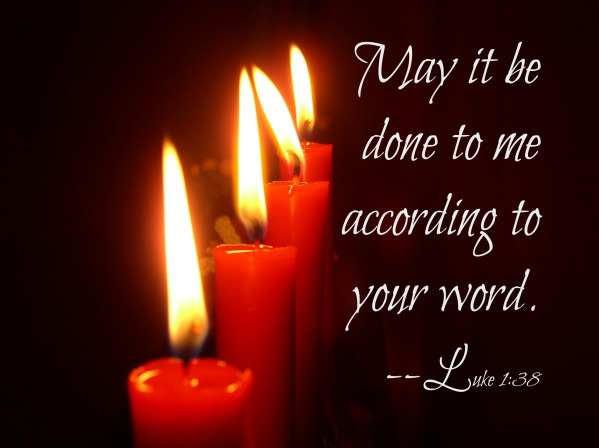
There was an unknown circumstance in Mary’s young life that spoke of great humility. We don’t know what this was exactly, and Luke does not elaborate. But there are directive clues. Read on:
.
The following is from Part 1: There is something else here that Luke’s narrative hints at which he does not delve into, possibly because he knew his audience was aware of whatever particulars were involved with Mary and the circumstances of her humble life.
In the very beginning, after initially being told by the angel Gabriel that she was highly favored and the Lord was indeed with her, Mary became, depending on the translation, troubled/disturbed/perplexed. The Greek says greatly agitated. She wondered where this extraordinary greeting came from and what it could possibly be about. One senses she thought it must be meant for another, that the joyous messenger must have the wrong house.
In answering a faithful reader’s comment on Part 3 when I first wrote this series two years ago, who said of Mary, She must have indeed been a highly intelligent, spiritually sensitive young woman, I wrote the following:
“Yes. A perfect choice. And she had to somehow come to a quick understanding of this fact though her humble nature would otherwise preclude it. She had to look beyond her humble circumstances and do her best to see herself as God saw her. He needed her. He wanted her to be the one. Here we have a good look into the counterintuitive nature of humanity. If Mary had previously thought herself as the best choice she would be disqualified, since that would reveal the presence of sinful pride. But if she thought herself unworthy and could never be persuaded to the contrary she would disqualify herself.”
Why did she feel so unworthy? And why did she refer to herself not once but twice as a bondslave? I mentioned this in Part 1. The Hebrew word for a female slave is shiphchah. The Greek word used here is doulos, which speaks directly to a slave of the basest order and is used throughout the New Testament. One gets the idea that young Mary was somehow familiar with such status.
It is also quite interesting that the New Testament never mentions any interaction with Mary’s parents or possible siblings. We know her father’s name was Eli (Heli), from her genealogy in Luke 3:23, but there is never any mention of her mother or her mother’s name. It appears they were no longer around. It is also evident that Mary was an only child. Imagine that. There is also a distinct possibility that Joseph, her betrothed, was her father’s adopted son, as alluded to in the genealogy. This was actually a Hebrew tradition going back centuries for men with no natural male heirs, so the idea isn’t so far-fetched. Any or all of these challenging life circumstances might be the cause of her feelings of unworthiness, but there is yet another, and it is here where we shall gain even greater understanding of the well known verse, “For God sees not as man sees, for man looks at the outward appearance, but the LORD looks at the heart” (1Samuel 16:7).
There is a Greek word that only occurs four times in the NT. It only applies to two specific people in the NT. Those two people are the Lord Jesus and His mother Mary. The word is tapeinosis. It is defined as “lowness, low estate, and humiliation.” Regarding the Lord it appears in Acts 8:33 in which the author references Isaiah 53:8. Here are both verses with the translated English word underlined:
“IN HUMILIATION HIS JUDGMENT WAS TAKEN AWAY; WHO WILL RELATE HIS GENERATION? FOR HIS LIFE IS REMOVED FROM THE EARTH.” [Acts 8:33]
By oppression and judgment He was taken away; and as for His generation, who considered that He was cut off out of the land of the living for the transgression of my people, to whom the stroke was due? [Isaiah 53:8]
Here is the verse that references Mary, again with the translated English words underlined:
“For He has had regard for the humble state of His bondslave; for behold, from this time on all generations will count me blessed.” [Luke 1:48]
The Hebrew word is otser. It is defined as “restraint, coercion.” It is translated primarily as “oppression.” It refers in a sense to prison or being a prisoner. This indicates a form of slavery. Mary did refer to herself as a bondslave. This speaks indirectly of possessing a particular humble state or condition and we now have a better understanding of what that was. Isaiah chapter 53 is an OT prophetic picture of the Lord Jesus. Here is the verse that ties both Son and mother together:
He has no stately form or majesty that we should look upon Him, nor appearance that we should be attracted to Him. [Isaiah 53:2][1]
In addition to this appearance circumstance shared by both mother and Son there is a much greater condition shared by both. These two people had extremely high character quotients. Of course, there is no comparison between the Lord’s character and that of Mary (or anyone else) in that He is God and is perfect. But regarding their humanity, and because both were exceptionally concerned with their spiritual standing and desired greatly to have as sterling a standing as possible, it was enormously difficult for them to answer the call because their respective callings would serve to destroy their outwardly perceived good character.
Mary was a chaste virgin with perfect spiritual credentials. She was obviously not without sin and thus required a Savior like everyone else but had striven in her young life to obey God and follow the Law of Moses. She was likely the very best at this among young women of her generation. Her heart was right and this is why she was chosen. But being chosen to be the mother of the Lord would also subject her to endless gossip and the wicked mockery of unbelievers who would believe her to be a gross sinner. This would destroy her sterling reputation among all those who rejected her claims of innocence and the highest of callings. Yet, she accepted the mission anyway, knowing it was always far better to serve the Lord than to decline the calling to protect one’s reputation.
This is one reason why many people never answer their callings and even reject salvation. They are far too weak to handle any affront by society to their public character and artificial social status.
© 2019 by RJ Dawson. All Rights Reserved. [To Be Continued]
[1] Unless otherwise noted all Scriptures are taken from the New American Standard Bible, © 1960, 1963, 1968, 1971, 1972, 1973, 1975, 1977, 1995 by The Lockman Foundation. Used by permission.
MARY HIGHLY FAVORED: “BLESSED ARE YOU AMONG WOMEN!” (3)

Prior to her visitation by the angel Gabriel, Mary was burdened by an undisclosed life circumstance. We gain further clues of this by her reaction to Elizabeth’s powerful prophetic message.
.
To set the scene for the next historical interlude which bears upon the foundational Gospel account after her journey to Judea to visit Elizabeth, we must acknowledge the fact that, according to Luke’s account, Mary had yet to speak to anyone about the great news.
She had left Nazareth in a hurry, almost immediately after she had consented to God’s plan. The Holy Spirit had indeed descended upon her and she was overshadowed with the power of the Most High. A miraculous conception had taken place in her womb! She had told no one, not even Joseph. Her elder relative Elizabeth would be her confidant. As the many repercussions played out in her thinking, Mary had remained amazed but laden with knowledge that no one else possessed.
GOD’S PERFECT TIMING
In Part 1, we covered Luke 1:26-38. In Part 2, we covered Luke 1:39-45. There are several components of the narrative within these verses to be addressed. The first thing we must do, however, is address the timing of the events. The angel Gabriel had told Mary that Elizabeth was already with child and in her sixth month. The human gestation period is 280 days, which is almost exactly 9.5 lunar cycles. An exact 9.5 moons would be a half day longer. Here is the math: A lunar cycle is 29.53059 days. Multiplied by 9.5 the gestation period would be 280.54 days. Since we know the Bible grants much importance to the number 40, it is not a coincidence that 280 is 40 times 7 (another significant number). Regarding the number of days into her pregnancy for Elizabeth at the time, it was somewhere between five and six months because Luke’s account says she was in her sixth month. She had yet to complete her second trimester.
I submit that it was exactly five and a half months and during a new moon.
It should have taken Mary less than a week, probably about five days, to get to Elizabeth’s house in Judea from Nazareth since the journey was at least 70 miles as the crow flies but maybe 80 or more considering the roads and terrain. Luke does not tell us the town or Mary’s specific destination in Judea. This was also during the winter rains though most of the precipitation was in the north. We have no knowledge regarding who may have accompanied Mary on the trip. There is no mention of Joseph. Would she have gone alone? From the narrative it certainly appears that she was alone when greeting Elizabeth.
Regarding the time of year, my research has long indicated that the Lord was born in the autumn. I believe it was likely on the 15th of the month of Tishrei on the Hebrew calendar, which was the first day of the weeklong Feast of Succoth (Tabernacles / Booths) and during a full moon. In 2022 this day fell on October 10. We have a hint of this as the Lord’s birthday in John’s gospel. The word “dwelt” in the following verse is from a Greek word meaning “to fix one’s tabernacle or tent:”
And the Word became flesh, and dwelt among us, and we saw His glory, glory as of the only begotten from the Father, full of grace and truth. [John 1:14]
Tishrei was the seventh month of the ancient sacred calendar adopted originally by the Lord during the time of Moses. The spring is the natural beginning of the year and was also the time of the Exodus and the Resurrection of the Lord. It is thus quite clear that the spring feasts are first and then followed by the autumn feasts. Tishrei later became the first month of the civil calendar and begins with Rosh Hashanah, the “head” of the year which is considered the Jewish New Year. This can get confusing, of course, but for the purposes of this study I will number the months as beginning in the spring from the vernal equinox.
Since the Lord was likely born on Tishrei 15 in the autumn, it would mean the angel Gabriel appeared to Mary nine and a half months before, during a new moon on the 1st of Tevet, the tenth month (if it was a twelve month year, which was most probable). Tevet occurs in Dec/Jan. From this we get a clear timeline of these two miraculous pregnancies of Elizabeth and Mary:
YEAR 1: John was conceived in the summer on the 15th of the fourth month during a full moon.
YEAR 1: The Lord Jesus was conceived in the winter on the 1st of the tenth month during a new moon.
YEAR 2: John was born in the spring on the 1st of the second month during a new moon.
YEAR 2: The Lord Jesus was born in the autumn on the 15th of the seventh month during a full moon.
After Elizabeth’s greeting and anointed word, Mary responded once again, as she did to Gabriel, with amazement and great humility. It was no insignificant response but revealed a woman of strong intellect, spiritual grace, and much insightful knowledge of Scripture for one so young. Her words reverberate through the centuries illustrating the profound nature of the Lord’s great plan and her own unique circumstances. We don’t hear much from Mary ever again but the following passage is filled with spiritual portent and the faithfulness of God. He has come to His people:
And Mary said: “My soul exalts the Lord, and my spirit has rejoiced in God my Savior. For He has had regard for the humble state of His bondslave; for behold, from this time on all generations will count me blessed. For the Mighty One has done great things for me; and holy is His name. AND HIS MERCY IS UPON GENERATION AFTER GENERATION TOWARD THOSE WHO FEAR HIM. He has done mighty deeds with His arm; He has scattered those who were proud in the thoughts of their heart. He has brought down rulers from their thrones, and has exalted those who were humble. HE HAS FILLED THE HUNGRY WITH GOOD THINGS; and sent away the rich empty-handed. He has given help to Israel His servant, in remembrance of His mercy, as He spoke to our fathers, to Abraham and his descendants forever.” [Luke 1:46-55][1]
Luke tells us that Mary stayed in Judea with Elizabeth for about three months after her arrival. The two would have had many long talks. As I stated earlier, Elizabeth was Mary’s only confidant. She was the only one who would have understood her circumstances because she had the same circumstances. These two ladies would have discussed all the implications of what they were presented with and how best to deal with the outcome and responses of others, especially as how it affected Mary. She still had to tell Joseph. She had to tell her parents. How would they react? She knew how everybody else would react and it was a hard pill to swallow. The time with Elizabeth was cherished because she gained the support she would need, to build herself up, and prepare for the coming storm of controversy.
And Mary stayed with her about three months, and then returned to her home. [Luke 1:56]
One would think Mary would have stayed for John’s birth. We are tempted to add to the narrative and think she must have stayed, but Luke did not present it that way. With regard to why she left early, the calendar gives us a direct clue: It was now the early spring. The first month of Nisan had arrived. The spring feasts, to which Mary had remained faithful her entire life, were upon the nation. Passover week would be happening very soon, within about a week or so. Did Mary leave a few weeks before John’s birth to celebrate Passover in Jerusalem?
© 2019 by RJ Dawson. All Rights Reserved. [To Be Continued]
[1] Unless otherwise noted all Scriptures are taken from the New American Standard Bible, © 1960, 1963, 1968, 1971, 1972, 1973, 1975, 1977, 1995 by The Lockman Foundation. Used by permission.
MARY HIGHLY FAVORED: “BLESSED ARE YOU AMONG WOMEN!” (2)

The conventional perception of the mother of our Lord is off. It is way off. She is commonly depicted in religious art, iconography, and statuary as European, and often northern European.
.
Knowledge of her Hebrew heritage among Christians is largely lost. Even her actual name is mostly unknown. The name Mary derives from the Judeo-Aramaic variant Maryam, from the Greek Mariam, which was derived from the original Hebrew Miryam, the name of the elder sister of Moses and Aaron (which is translated into English primarily as Miriam). New Testament readers know this was a popular name for Hebrew women at that time, as there are several with the name in the Gospel accounts.
As a young Hebrew maiden of eastern Mediterranean stock, she was likely dark complected with dark hair and Semitic features. Semitic refers to one of the three sons of Noah—Shem—whose descendants predominantly populated the Middle East and still do today. We know from early OT accounts that the ancient Hebrews shared their DNA with many different ethnos of the greater region, including the Canaanite tribes. There were also the two great disruptions to the nation when the ten northern tribes of Israel were deported to the east in 722 BC followed by the Babylonian captivity of Judah 136 years later. The three remaining tribes of the latter—Judah, Levi, and Benjamin—were removed to Babylon for 70 years. They were allowed to return but many chose to stay. The lands of Israel and Judah had been repopulated somewhat by foreigners in the interim, especially the Samaritan region. The land was then ruled by a succession of Persians, Greeks, and Romans. It is therefore difficult if not impossible to arrive at a definitive Hebrew nationality by the first century AD.
Even so, we do have two extant genealogies of our Lord Jesus from that time, both of which stem from the tribe of Judah and feature the persons of Abraham and David. The genealogy of Joseph the carpenter in Matthew’s gospel descends through King David’s son Solomon, the third and final king of a united Israel. After Solomon’s death the kingdom split into the northern Kingdom of Israel and the southern Kingdom of Judah. Luke’s gospel contains the genealogy of Mary, which also goes through David but by his son Nathan, Solomon’s brother. This family tree divergence took place over 900 years before the Lord’s birth. The last of the Hebrew kings of the Judaic line ceased with the Babylonian captivity in 586 BC. Zedekiah was the last king of Judah, but was somewhat illegitimate in that he was installed by the Babylonian king Nebuchadnezzar in 597 BC after the siege of Jerusalem. The king before Zedekiah was Jeconiah (AKA Coniah, Jehoiachin), who was carted off to Babylon a prisoner in chains. This is what the prophet Jeremiah said about him:
“Is this man Coniah a despised, shattered jar? Or is he an undesirable vessel? Why have he and his descendants been hurled out and cast into a land that they had not known? O land, land, land, hear the word of the LORD! Thus says the LORD, ‘Write this man down childless, a man who will not prosper in his days; for no man of his descendants will prosper sitting on the throne of David or ruling again in Judah.’” [Jeremiah 22:28-30]
The Hebrew monarchy was thus abolished. There were no more kings. No one could ever again qualify. Joseph the carpenter’s line included Jeconiah and he is listed in Matthew’s genealogy. Nevertheless, it was established that Joseph, the legal stepfather of the Lord, could trace his direct lineage to Solomon and David. Mary’s genealogy could also be traced directly to King David. This means the Lord Jesus had a legal right as king through Joseph and a biological right through His mother. Though the monarchial birthright was essentially revoked by Jeremiah’s prophecy, this did not apply to the Lord Jesus because he was not a blood descendant of Jeconiah. Thus, the only possible way the Davidic line of kings could be restored, even after a six century interval, would be through the following:
“Behold, a virgin will be with child and bear a son, and she will call His name Immanuel.” [Isaiah 7:14]
GREETINGS FROM THE WOMB
As described in Part 1, Mary was soon on the road south to Judea to visit her relative Elizabeth. The two women were anxious to share the great news of their pregnancies, both of which were only possible through direct miraculous means. Elizabeth was greatly humbled in her long life of barrenness but maintained her faith regardless. Mary was also burdened somewhat by an undisclosed life circumstance. Here we have the young and the old, both of whom must deal with the inevitable gossip of unbelievers, yet blessed abundantly as major players in the great plan of God for the salvation of Israel and humanity. But besides these two who knew each other well, there were others who met for the very first time:
Now at this time Mary arose and went in a hurry to the hill country, to a city of Judah, and entered the house of Zacharias and greeted Elizabeth. When Elizabeth heard Mary’s greeting, the baby leaped in her womb; and Elizabeth was filled with the Holy Spirit. And she cried out with a loud voice and said,
“Blessed are you among women, and blessed is the fruit of your womb! And how has it happened to me, that the mother of my Lord would come to me? For behold, when the sound of your greeting reached my ears, the baby leaped in my womb for joy. And blessed is she who believed that there would be a fulfillment of what had been spoken to her by the Lord.” [Luke 1:39-45][1]
© 2019 by RJ Dawson. All Rights Reserved. [To Be Continued]
[1] Unless otherwise noted all Scriptures are taken from the New American Standard Bible, © 1960, 1963, 1968, 1971, 1972, 1973, 1975, 1977, 1995 by The Lockman Foundation. Used by permission.
MARY HIGHLY FAVORED: “BLESSED ARE YOU AMONG WOMEN!” (1)
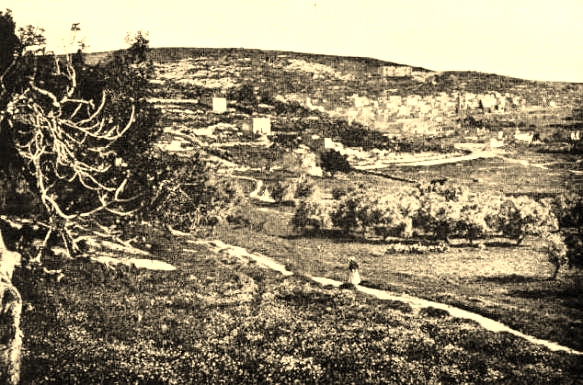
She was given the opportunity to be the mother of Messiah—the Son of the Most High. She accepted without question, filled with wonder, in humble awe of being chosen.
.
In reading between the lines in the initial Gospel references to the mother of our Lord, we happen upon facts otherwise escaping our notice, primarily, her humble origin. We already know her hometown was not the greatest of places, as none other than one of the twelve, Nathanael Bar Tholmai (Bartholomew) articulated,
“Can any good thing come out of Nazareth?” [1]
The rustic community is never mentioned in any of the Old Testament writings, meaning it had yet to exist then, suffered utmost insignificance, or was known by a different name, one of which might have been “white town” or a variation, named after the ready supply of limestone rocks in the area. Nestled among the lower hills of the Nazareth Range in the ancient tribal land of Zebulun, the city lay about halfway between the seas—the great Mediterranean on the west where sailing ships launched for far-off lands, and to the east, the indigenous, often mysterious Sea of Galilee, loved freshwater fishery of the locals.
From the little we know, Mary was likely born is this little village by the cliffs in circa 18 BC. This was during the early years of Augustus, who became the first Roman emperor in 27 BC, and the local reign of the ruthless client-king Herod the Great who had gained power a decade earlier. How she or her family arrived in the area is lost to history. Though Nazareth was within the small area originally allotted to the Tribe of Zebulun (the tenth son of Jacob and sixth born to Leah), Mary was actually a distant descendent of King David of the ruling line of Judah. Her connection to the latter tribe is somewhat problematic for a Galilean from the north due to her clear connection to relatives in the territory of Judea south of Jerusalem. The unknown story of her family’s transplantation is an intriguing one.
We know from the later annual pilgrimages made by the holy family to Jerusalem for the feasts that young Mary likely also made such trips as a child growing up, probably as part of small caravans. She was thus familiar with the territory and probably looked forward to such opportunities to see the great city and visit family. Journeying from the north in Galilee, one would traverse the disparaged Samaria, sandwiched between Galilee and Judea, and venture through the ancient tribal areas of Issachar, Manasseh, and Ephraim in the process, and lastly through the allotment of Benjamin on the approach to Yerushalayim which was located on the southern edge of his tribal land.
The eastern border between the two famous territories of Benjamin and Judah actually runs north and south along the Kidron Valley. The Kidron divides the city of Jerusalem in Benjamin’s territory to the west from the Mount of Olives in Judah’s territory to the east. The southern border between the tribes is divided by the valley of Hinnom which was immediately due south of the ancient city. Beyond these two natural demarcation lines was the fatherland of Judah and the ancestral land of King David to which Mary and her family sojourned frequently. It was also the ancestral homeland of her new husband Joseph, the strong but tender carpenter, chosen also as she was, and suited well for the calling.
AN ANGELIC VISITATION
Now in the sixth month the angel Gabriel was sent from God to a city in Galilee called Nazareth, to a virgin engaged to a man whose name was Joseph, of the descendants of David; and the virgin’s name was Mary. [Luke 1:26-27]
Luke makes it clear in his definitive account that Mary was a virgin when the angel Gabriel revealed to her the plan of God which would soon go into effect upon her consent. She was betrothed to the carpenter, meaning the marriage was not yet fully contracted, and both were honorable and chaste. It is often not acknowledged that young Mary had a choice regarding the Lord’s plan for her life. We all have a choice, and for everyone there is a plan. Notwithstanding the discipline required to live and work for the Lord according to His will and not our own, any other plan created and chosen by a person is always inferior to His. Mary understood this. It is why she replied to Gabriel with no hesitation in her heart:
And coming in, he said to her, “Greetings, favored one! The Lord is with you.” But she was very perplexed at this statement, and kept pondering what kind of salutation this was. The angel said to her, “Do not be afraid, Mary; for you have found favor with God. And behold, you will conceive in your womb and bear a son, and you shall name Him Jesus. He will be great and will be called the Son of the Most High; and the Lord God will give Him the throne of His father David; and He will reign over the house of Jacob forever, and His kingdom will have no end.”
Mary said to the angel, “How can this be, since I am a virgin?” The angel answered and said to her, “The Holy Spirit will come upon you, and the power of the Most High will overshadow you; and for that reason the holy Child shall be called the Son of God. And behold, even your relative Elizabeth has also conceived a son in her old age; and she who was called barren is now in her sixth month. For nothing will be impossible with God.”
And Mary said, “Behold, the bondslave of the Lord; may it be done to me according to your word.” And the angel departed from her. [Luke 1:28-38] [2]
Mary’s use of the word “bondslave” is not without import. It is from the Greek doulos and is defined accordingly as a female slave without any ownership rights of her own. This word, also translated as bond-servant, is used throughout the New Testament denoting the pure servanthood and dedication to the Master by real believers. The Hebrew equivalent for a female servant is shiphchah and has an ancient etymology dating to the book of Genesis. Though we often fail to perceive, in these brief Scriptural renderings, the full connotation and significance of the choice she made, Mary knew exactly what she was doing by deciding in the affirmative. She understood the gravity of the situation, the ramifications thereof, and that it was a lifelong commitment.
But there is more. Mary alluded to her current state of life before the angelic visitation as thoroughly humble and insignificant. We see this first in her initial reaction to Gabriel’s greeting when he referred to her as “favored one” and said the Lord was with her: But she was very perplexed at this statement, and kept pondering what kind of salutation this was. She was also afraid, probably for the same reasons you or I would be startled at the appearance of an angel. It was more than this, however. She was concerned about what it meant for her life and, in those first few seconds, that she was in no way worthy of such an astounding visitation and calling.
Why did she feel this way? There is something else here that Luke’s narrative hints at which he does not delve into, possibly because he knew his audience was aware of whatever particulars were involved with Mary and the circumstances of her humble life.
In Part 2, I will continue delving into such lesser-known particulars. We will look closer at Mary’s upbringing, family, and momentous visit to her elderly but expecting relative Elizabeth, also a chosen woman of the Lord who found much grace in His sight.
© 2019 by RJ Dawson. All Rights Reserved. [To Be Continued]
[1] John 1:46
[2] Unless otherwise noted all Scriptures are taken from the New American Standard Bible, © 1960, 1963, 1968, 1971, 1972, 1973, 1975, 1977, 1995 by The Lockman Foundation. Used by permission.
WHY THE CHRISTMAS STORY IS ALSO A PARABLE
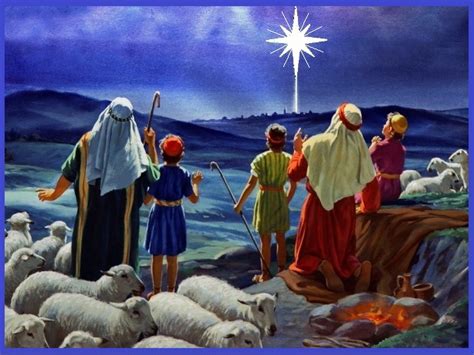
“Okay, here’s what the Lord’s going to do. He must go stealth. The enemies are always waiting at the doors and ready to pounce. He will bypass them. He will go in under the radar. They will never recognize Him.”
.
[If you are reading this at the WP Reader, please read at my website. Thank you.]
.
“But that’s going to make things very difficult for the people He chooses to work through.”
“Yes, but they love Him. They know what they signed up for. They will answer His call.”
“It would seem some would never answer that call. They may even think it was the enemy. Anything that would cause so much discomfort, rejection, and pain may be seen as coming from the wrong source.”
“Yes, but that is only true for those who don’t really know Him. The ones who hear His voice, well, they will certainly act. They will obey. They will know it is not because He doesn’t love them or is purposefully causing them to sacrifice so greatly without a higher purpose somehow being involved.”
“How does He manage to do this?”
“He speaks to their hearts. He shows them things in their spirit. It is a form of communication that escapes detection from outside sources, and those who receive cannot even readily relay what it is they hear because they sense no one will understand.”
“So they act.”
“Yes. They act. He knew Mary would act. He knew she would obey. It was completely her decision, of course. But that’s what a calling is. It is not only the Lord telling people they have been chosen or called into a particular service, it is also that He already knows they will say yes. They say yes because they hear His voice and love Him, but also because they know deep within that the calling He gives them answers a very deep need and desire in their hearts. They want to serve, but they want it to be right. Many serve incorrectly, thinking they are serving Him, but never get the satisfaction they desire or that deep feeling in their hearts. They feel like they are working very hard but not getting anywhere. This never happens with Him. Those who hear His voice and obey know something substantial happens when they do. They know they are entering an area in which their soul is satisfied, filled, and blessed. Mary knew this.”
Now in the sixth month the angel Gabriel was sent from God to a city in Galilee called Nazareth, to a virgin engaged to a man whose name was Joseph, of the descendants of David; and the virgin’s name was Mary.
And coming in, he said to her, “Greetings, favored one! The Lord is with you.” But she was very perplexed at this statement, and kept pondering what kind of salutation this was. The angel said to her, “Do not be afraid, Mary; for you have found favor with God. And behold, you will conceive in your womb and bear a son, and you shall name Him Jesus. He will be great and will be called the Son of the Most High; and the Lord God will give Him the throne of His father David; and He will reign over the house of Jacob forever, and His kingdom will have no end.” Mary said to the angel, “How can this be, since I am a virgin?” The angel answered and said to her, “The Holy Spirit will come upon you, and the power of the Most High will overshadow you; and for that reason the holy Child shall be called the Son of God. And behold, even your relative Elizabeth has also conceived a son in her old age; and she who was called barren is now in her sixth month. For nothing will be impossible with God.” And Mary said, “Behold, the bondslave of the Lord; may it be done to me according to your word.” And the angel departed from her. [Luke 1:26-38] [1]
© 2017 by RJ Dawson. All Rights Reserved.
[1] Unless otherwise noted all Scriptures are taken from the New American Standard Bible, © 1960, 1963, 1968, 1971, 1972, 1973, 1975, 1977, 1995 by The Lockman Foundation. Used by permission.
MARY HIGHLY FAVORED: “BLESSED ARE YOU AMONG WOMEN!” (4)
There was an unknown circumstance in Mary’s young life that spoke of great humility. We don’t know what this was exactly, and Luke does not elaborate. But there are directive clues. Read on:
.
The following is from Part 1: There is something else here that Luke’s narrative hints at which he does not delve into, possibly because he knew his audience was aware of whatever particulars were involved with Mary and the circumstances of her humble life.
In the very beginning, after initially being told by the angel Gabriel that she was highly favored and the Lord was indeed with her, Mary became, depending on the translation, troubled/disturbed/perplexed. The Greek says greatly agitated. She wondered where this extraordinary greeting came from and what it could possibly be about. One senses she thought it must be meant for another, that the joyous messenger must have the wrong house.
In answering a faithful reader’s comment on Part 3 when I first wrote this series two years ago, who said of Mary, She must have indeed been a highly intelligent, spiritually sensitive young woman, I wrote the following:
“Yes. A perfect choice. And she had to somehow come to a quick understanding of this fact though her humble nature would otherwise preclude it. She had to look beyond her humble circumstances and do her best to see herself as God saw her. He needed her. He wanted her to be the one. Here we have a good look into the counterintuitive nature of humanity. If Mary had previously thought herself as the best choice she would be disqualified, since that would reveal the presence of sinful pride. But if she thought herself unworthy and could never be persuaded to the contrary she would disqualify herself.”
Why did she feel so unworthy? And why did she refer to herself not once but twice as a bondslave? I mentioned this in Part 1. The Hebrew word for a female slave is shiphchah. The Greek word used here is doulos, which speaks directly to a slave of the basest order and is used throughout the New Testament. One gets the idea that young Mary was somehow familiar with such status.
It is also quite interesting that the New Testament never mentions any interaction with Mary’s parents or possible siblings. We know her father’s name was Eli (Heli), from her genealogy in Luke 3:23, but there is never any mention of her mother or her mother’s name. It appears they were no longer around. It is also evident that Mary was an only child. Imagine that. There is also a distinct possibility that Joseph, her betrothed, was her father’s adopted son, as alluded to in the genealogy. This was actually a Hebrew tradition going back centuries for men with no natural male heirs, so the idea isn’t so far-fetched. Any or all of these challenging life circumstances might be the cause of her feelings of unworthiness, but there is yet another, and it is here where we shall gain even greater understanding of the well known verse, “For God sees not as man sees, for man looks at the outward appearance, but the LORD looks at the heart” (1Samuel 16:7).
There is a Greek word that only occurs four times in the NT. It only applies to two specific people in the NT. Those two people are the Lord Jesus and His mother Mary. The word is tapeinosis. It is defined as “lowness, low estate, and humiliation.” Regarding the Lord it appears in Acts 8:33 in which the author references Isaiah 53:8. Here are both verses with the translated English word underlined:
“IN HUMILIATION HIS JUDGMENT WAS TAKEN AWAY; WHO WILL RELATE HIS GENERATION? FOR HIS LIFE IS REMOVED FROM THE EARTH.” [Acts 8:33]
By oppression and judgment He was taken away; and as for His generation, who considered that He was cut off out of the land of the living for the transgression of my people, to whom the stroke was due? [Isaiah 53:8]
Here is the verse that references Mary, again with the translated English words underlined:
“For He has had regard for the humble state of His bondslave; for behold, from this time on all generations will count me blessed.” [Luke 1:48]
The Hebrew word is otser. It is defined as “restraint, coercion.” It is translated primarily as “oppression.” It refers in a sense to prison or being a prisoner. This indicates a form of slavery. Mary did refer to herself as a bondslave. This speaks indirectly of possessing a particular humble state or condition and we now have a better understanding of what that was. Isaiah chapter 53 is an OT prophetic picture of the Lord Jesus. Here is the verse that ties both Son and mother together:
He has no stately form or majesty that we should look upon Him, nor appearance that we should be attracted to Him. [Isaiah 53:2][1]
In addition to this appearance circumstance shared by both mother and Son there is a much greater condition shared by both. These two people had extremely high character quotients. Of course, there is no comparison between the Lord’s character and that of Mary (or anyone else) in that He is God and is perfect. But regarding their humanity, and because both were exceptionally concerned with their spiritual standing and desired greatly to have as sterling a standing as possible, it was enormously difficult for them to answer the call because their respective callings would serve to destroy their outwardly perceived characters.
Mary was a chaste virgin with perfect spiritual credentials. She was obviously not without sin and thus required a Savior like everyone else but had striven in her young life to obey God and follow the Law of Moses. She was likely the very best at this among young women of her generation. Her heart was right and this is why she was chosen. But being chosen to be the mother of the Lord would also subject her to endless gossip and the wicked mockery of unbelievers who would believe her to be a gross sinner. This would destroy her sterling reputation among all those who rejected her claims of innocence and the highest of callings. Yet, she accepted the mission anyway, knowing it was always far better to serve the Lord than to decline the calling to protect one’s reputation.
This is one reason why many people never answer their callings and even reject salvation. They are far too weak to handle any affront by society to their public character and artificial social status.
© 2019 by RJ Dawson. All Rights Reserved. [To Be Continued]
[1] Unless otherwise noted all Scriptures are taken from the New American Standard Bible, © 1960, 1963, 1968, 1971, 1972, 1973, 1975, 1977, 1995 by The Lockman Foundation. Used by permission.
MARY HIGHLY FAVORED: “BLESSED ARE YOU AMONG WOMEN!” (3)
Prior to her visitation by the angel Gabriel, Mary was burdened by an undisclosed life circumstance. We gain further clues of this by her reaction to Elizabeth’s powerful prophetic message.
.
To set the scene for the next historical interlude which bears upon the foundational Gospel account after her journey to Judea to visit Elizabeth, we must acknowledge the fact that, according to Luke’s account, Mary had yet to speak to anyone about the great news.
She had left Nazareth in a hurry, almost immediately after she had consented to God’s plan. The Holy Spirit had indeed descended upon her and she was overshadowed with the power of the Most High. A miraculous conception had taken place in her womb! She had told no one, not even Joseph. Her elder relative Elizabeth would be her confidant. As the many repercussions played out in her thinking, Mary had remained amazed but laden with knowledge that no one else possessed.
GOD’S PERFECT TIMING
In Part 1, we covered Luke 1:26-38. In Part 2, we covered Luke 1:39-45. There are several components of the narrative within these verses to be addressed. The first thing we must do, however, is address the timing of the events. The angel Gabriel had told Mary that Elizabeth was already with child and in her sixth month. The human gestation period is 280 days, which is almost exactly 9.5 lunar cycles. An exact 9.5 moons would be a half day longer. Here is the math: A lunar cycle is 29.53059 days. Multiplied by 9.5 the gestation period would be 280.54 days. Since we know the Bible grants much importance to the number 40, it is not a coincidence that 280 is 40 times 7 (another significant number). Regarding the number of days into her pregnancy for Elizabeth at the time, it was somewhere between five and six months because Luke’s account says she was in her sixth month. She had yet to complete her second trimester.
I submit that it was exactly five and a half months and during a new moon.
It should have taken Mary less than a week, probably about five days, to get to Elizabeth’s house in Judea from Nazareth since the journey was at least 70 miles as the crow flies but maybe 80 or more considering the roads and terrain. Luke does not tell us the town or Mary’s specific destination in Judea. This was also during the winter rains though most of the precipitation was in the north. We have no knowledge regarding who may have accompanied Mary on the trip. There is no mention of Joseph. Would she have gone alone? From the narrative it certainly appears that she was alone when greeting Elizabeth.
Regarding the time of year, my research has long indicated that the Lord was born in the autumn. I believe it was likely on the 15th of the month of Tishrei on the Hebrew calendar, which was the first day of the weeklong Feast of Succoth (Tabernacles / Booths) and during a full moon. In 2021 this day fell on September 21. We have a hint of this as the Lord’s birthday in John’s gospel. The word “dwelt” in the following verse is from a Greek word meaning “to fix one’s tabernacle or tent:”
And the Word became flesh, and dwelt among us, and we saw His glory, glory as of the only begotten from the Father, full of grace and truth. [John 1:14]
Tishrei was the seventh month of the ancient sacred calendar adopted originally by the Lord during the time of Moses. The spring is the natural beginning of the year and was also the time of the Exodus and the Resurrection of the Lord. It is thus quite clear that the spring feasts are first and then followed by the autumn feasts. Tishrei later became the first month of the civil calendar and begins with Rosh Hashanah, the “head” of the year which is considered the Jewish New Year. This can get confusing, of course, but for the purposes of this study I will number the months as beginning in the spring from the vernal equinox.
Since the Lord was likely born on Tishrei 15 in the autumn, it would mean the angel Gabriel appeared to Mary nine and a half months before, during a new moon on the 1st of Tevet, the tenth month (if it was a twelve month year, which was most probable). Tevet occurs in Dec/Jan. From this we get a clear timeline of these two miraculous pregnancies of Elizabeth and Mary:
YEAR 1: John was conceived in the summer on the 15th of the fourth month during a full moon.
YEAR 1: The Lord Jesus was conceived in the winter on the 1st of the tenth month during a new moon.
YEAR 2: John was born in the spring on the 1st of the second month during a new moon.
YEAR 2: The Lord Jesus was born in the autumn on the 15th of the seventh month during a full moon.
After Elizabeth’s greeting and anointed word, Mary responded once again, as she did to Gabriel, with amazement and great humility. It was no insignificant response but revealed a woman of strong intellect, spiritual grace, and much insightful knowledge of Scripture for one so young. Her words reverberate through the centuries illustrating the profound nature of the Lord’s great plan and her own unique circumstances. We don’t hear much from Mary ever again but the following passage is filled with spiritual portent and the faithfulness of God. He has come to His people:
And Mary said: “My soul exalts the Lord, and my spirit has rejoiced in God my Savior. For He has had regard for the humble state of His bondslave; for behold, from this time on all generations will count me blessed. For the Mighty One has done great things for me; and holy is His name. AND HIS MERCY IS UPON GENERATION AFTER GENERATION TOWARD THOSE WHO FEAR HIM. He has done mighty deeds with His arm; He has scattered those who were proud in the thoughts of their heart. He has brought down rulers from their thrones, and has exalted those who were humble. HE HAS FILLED THE HUNGRY WITH GOOD THINGS; and sent away the rich empty-handed. He has given help to Israel His servant, in remembrance of His mercy, as He spoke to our fathers, to Abraham and his descendants forever.” [Luke 1:46-55][1]
Luke tells us that Mary stayed in Judea with Elizabeth for about three months after her arrival. The two would have had many long talks. As I stated earlier, Elizabeth was Mary’s only confidant. She was the only one who would have understood her circumstances because she had the same circumstances. These two ladies would have discussed all the implications of what they were presented with and how best to deal with the outcome and responses of others, especially as how it affected Mary. She still had to tell Joseph. She had to tell her parents. How would they react? She knew how everybody else would react and it was a hard pill to swallow. The time with Elizabeth was cherished because she gained the support she would need, to build herself up, and prepare for the coming storm of controversy.
And Mary stayed with her about three months, and then returned to her home. [Luke 1:56]
One would think Mary would have stayed for John’s birth. We are tempted to add to the narrative and think she must have stayed, but Luke did not present it that way. With regard to why she left early, the calendar gives us a direct clue: It was now the early spring. The first month of Nisan had arrived. The spring feasts, to which Mary had remained faithful her entire life, were upon the nation. Passover week would be happening very soon, within about a week or so. Did Mary leave a few weeks before John’s birth to celebrate Passover in Jerusalem?
© 2019 by RJ Dawson. All Rights Reserved. [To Be Continued]
[1] Unless otherwise noted all Scriptures are taken from the New American Standard Bible, © 1960, 1963, 1968, 1971, 1972, 1973, 1975, 1977, 1995 by The Lockman Foundation. Used by permission.
MARY HIGHLY FAVORED: “BLESSED ARE YOU AMONG WOMEN!” (2)
The conventional perception of the mother of our Lord is off. It is way off. She is commonly depicted in religious art, iconography, and statuary as European, and often northern European.
.
Knowledge of her Hebrew heritage among Christians is largely lost. Even her actual name is mostly unknown. The name Mary derives from the Judeo-Aramaic variant Maryam, from the Greek Mariam, which was derived from the original Hebrew Miryam, the name of the elder sister of Moses and Aaron (which is translated into English primarily as Miriam). New Testament readers know this was a popular name for Hebrew women at that time, as there are several with the name in the Gospel accounts.
As a young Hebrew maiden of eastern Mediterranean stock, she was likely dark complected with dark hair and Semitic features. Semitic refers to one of the three sons of Noah—Shem—whose descendants predominantly populated the Middle East and still do today. We know from early OT accounts that the ancient Hebrews shared their DNA with many different ethnos of the greater region, including the Canaanite tribes. There were also the two great disruptions to the nation when the ten northern tribes of Israel were deported to the east in 722 BC followed by the Babylonian captivity of Judah 136 years later. The three remaining tribes of the latter—Judah, Levi, and Benjamin—were removed to Babylon for 70 years. They were allowed to return but many chose to stay. The lands of Israel and Judah had been repopulated somewhat by foreigners in the interim, especially the Samaritan region. The land was then ruled by a succession of Persians, Greeks, and Romans. It is therefore difficult if not impossible to arrive at a definitive Hebrew nationality by the first century AD.
Even so, we do have two extant genealogies of our Lord Jesus from that time, both of which stem from the tribe of Judah and feature the persons of Abraham and David. The genealogy of Joseph the carpenter in Matthew’s gospel descends through King David’s son Solomon, the third and final king of a united Israel. After Solomon’s death the kingdom split into the northern Kingdom of Israel and the southern Kingdom of Judah. Luke’s gospel contains the genealogy of Mary, which also goes through David but by his son Nathan, Solomon’s brother. This family tree divergence took place over 900 years before the Lord’s birth. The last of the Hebrew kings of the Judaic line ceased with the Babylonian captivity in 586 BC. Zedekiah was the last king of Judah, but was somewhat illegitimate in that he was installed by the Babylonian king Nebuchadnezzar in 597 BC after the siege of Jerusalem. The king before Zedekiah was Jeconiah (AKA Coniah, Jehoiachin), who was carted off to Babylon a prisoner in chains. This is what the prophet Jeremiah said about him:
“Is this man Coniah a despised, shattered jar? Or is he an undesirable vessel? Why have he and his descendants been hurled out and cast into a land that they had not known? O land, land, land, hear the word of the LORD! Thus says the LORD, ‘Write this man down childless, a man who will not prosper in his days; for no man of his descendants will prosper sitting on the throne of David or ruling again in Judah.’” [Jeremiah 22:28-30]
The Hebrew monarchy was thus abolished. There were no more kings. No one could ever again qualify. Joseph the carpenter’s line included Jeconiah and he is listed in Matthew’s genealogy. Nevertheless, it was established that Joseph, the legal stepfather of the Lord, could trace his direct lineage to Solomon and David. Mary’s genealogy could also be traced directly to King David. This means the Lord Jesus had a legal right as king through Joseph and a biological right through His mother. Though the monarchial birthright was essentially revoked by Jeremiah’s prophecy, this did not apply to the Lord Jesus because he was not a blood descendant of Jeconiah. Thus, the only possible way the Davidic line of kings could be restored, even after a six century interval, would be through the following:
“Behold, a virgin will be with child and bear a son, and she will call His name Immanuel.” [Isaiah 7:14]
GREETINGS FROM THE WOMB
As described in Part 1, Mary was soon on the road south to Judea to visit her relative Elizabeth. The two women were anxious to share the great news of their pregnancies, both of which were only possible through direct miraculous means. Elizabeth was greatly humbled in her long life of barrenness but maintained her faith regardless. Mary was also burdened somewhat by an undisclosed life circumstance. Here we have the young and the old, both of whom must deal with the inevitable gossip of unbelievers, yet blessed abundantly as major players in the great plan of God for the salvation of Israel and humanity. But besides these two who knew each other well, there were others who met for the very first time:
Now at this time Mary arose and went in a hurry to the hill country, to a city of Judah, and entered the house of Zacharias and greeted Elizabeth. When Elizabeth heard Mary’s greeting, the baby leaped in her womb; and Elizabeth was filled with the Holy Spirit. And she cried out with a loud voice and said,
“Blessed are you among women, and blessed is the fruit of your womb! And how has it happened to me, that the mother of my Lord would come to me? For behold, when the sound of your greeting reached my ears, the baby leaped in my womb for joy. And blessed is she who believed that there would be a fulfillment of what had been spoken to her by the Lord.” [Luke 1:39-45][1]
© 2019 by RJ Dawson. All Rights Reserved. [To Be Continued]
[1] Unless otherwise noted all Scriptures are taken from the New American Standard Bible, © 1960, 1963, 1968, 1971, 1972, 1973, 1975, 1977, 1995 by The Lockman Foundation. Used by permission.
MARY HIGHLY FAVORED: “BLESSED ARE YOU AMONG WOMEN!” (1)
She was given the opportunity to be the mother of Messiah—the Son of the Most High. She accepted without question, filled with wonder, in humble awe of being chosen.
.
In reading between the lines in the initial Gospel references to the mother of our Lord, we happen upon facts otherwise escaping our notice, primarily, her humble origin. We already know her hometown was not the greatest of places, as none other than one of the twelve, Nathanael Bar Tholmai (Bartholomew) articulated,
“Can any good thing come out of Nazareth?” [1]
The rustic community is never mentioned in any of the Old Testament writings, meaning it had yet to exist then, suffered utmost insignificance, or was known by a different name, one of which might have been “white town” or a variation, named after the ready supply of limestone rocks in the area. Nestled among the lower hills of the Nazareth Range in the ancient tribal land of Zebulun, the city lay about halfway between the seas—the great Mediterranean on the west where sailing ships launched for far-off lands, and to the east, the indigenous, often mysterious Sea of Galilee, loved freshwater fishery of the locals.
From the little we know, Mary was likely born in this little village by the cliffs in circa 18 BC. This was during the early years of Augustus, who became the first Roman emperor in 27 BC, and the local reign of the ruthless client-king Herod the Great who had gained power a decade earlier. How she or her family arrived in the area is lost to history. Though Nazareth was within the small area originally allotted to the Tribe of Zebulun (the tenth son of Jacob and sixth born to Leah), Mary was actually a distant descendent of King David of the ruling line of Judah. Her connection to the latter tribe is somewhat problematic for a Galilean from the north due to her clear connection to relatives in the territory of Judea south of Jerusalem. The unknown story of her family’s transplantation is an intriguing one.
We know from the later annual pilgrimages made by the holy family to Jerusalem for the feasts that young Mary likely also made such trips as a child growing up, probably as part of small caravans. She was thus familiar with the territory and probably looked forward to such opportunities to see the great city and visit family. Journeying from the north in Galilee, one would traverse the disparaged Samaria, sandwiched between Galilee and Judea, and venture through the ancient tribal areas of Issachar, Manasseh, and Ephraim in the process, and lastly through the allotment of Benjamin on the approach to Yerushalayim which was located on the southern edge of his tribal land.
The eastern border between the two famous territories of Benjamin and Judah actually runs north and south along the Kidron Valley. The Kidron divides the city of Jerusalem in Benjamin’s territory to the west from the Mount of Olives in Judah’s territory to the east. The southern border between the tribes is divided by the valley of Hinnom which was immediately due south of the ancient city. Beyond these two natural demarcation lines was the fatherland of Judah and the ancestral land of King David to which Mary and her family sojourned frequently. It was also the ancestral homeland of her new husband Joseph, the strong but tender carpenter, chosen also as she was, and suited well for the calling.
AN ANGELIC VISITATION
Now in the sixth month the angel Gabriel was sent from God to a city in Galilee called Nazareth, to a virgin engaged to a man whose name was Joseph, of the descendants of David; and the virgin’s name was Mary. [Luke 1:26-27]
Luke makes it clear in his definitive account that Mary was a virgin when the angel Gabriel revealed to her the plan of God which would soon go into effect upon her consent. She was betrothed to the carpenter, meaning the marriage was not yet fully contracted, and both were honorable and chaste. It is often not acknowledged that young Mary had a choice regarding the Lord’s plan for her life. We all have a choice, and for everyone there is a plan. Notwithstanding the discipline required to live and work for the Lord according to His will and not our own, any other plan created and chosen by a person is always inferior to His. Mary understood this. It is why she replied to Gabriel with no hesitation in her heart:
And coming in, he said to her, “Greetings, favored one! The Lord is with you.” But she was very perplexed at this statement, and kept pondering what kind of salutation this was. The angel said to her, “Do not be afraid, Mary; for you have found favor with God. And behold, you will conceive in your womb and bear a son, and you shall name Him Jesus. He will be great and will be called the Son of the Most High; and the Lord God will give Him the throne of His father David; and He will reign over the house of Jacob forever, and His kingdom will have no end.”
Mary said to the angel, “How can this be, since I am a virgin?” The angel answered and said to her, “The Holy Spirit will come upon you, and the power of the Most High will overshadow you; and for that reason the holy Child shall be called the Son of God. And behold, even your relative Elizabeth has also conceived a son in her old age; and she who was called barren is now in her sixth month. For nothing will be impossible with God.”
And Mary said, “Behold, the bondslave of the Lord; may it be done to me according to your word.” And the angel departed from her. [Luke 1:28-38] [2]
Mary’s use of the word “bondslave” is not without import. It is from the Greek doulos and is defined accordingly as a female slave without any ownership rights of her own. This word, also translated as bond-servant, is used throughout the New Testament denoting the pure servanthood and dedication to the Master by real believers. The Hebrew equivalent for a female servant is shiphchah and has an ancient etymology dating to the book of Genesis. Though we often fail to perceive, in these brief Scriptural renderings, the full connotation and significance of the choice she made, Mary knew exactly what she was doing by deciding in the affirmative. She understood the gravity of the situation, the ramifications thereof, and that is was a lifelong commitment.
But there is more. Mary alluded to her current state of life before the angelic visitation as thoroughly humble and insignificant. We see this first in her initial reaction to Gabriel’s greeting when he referred to her as “favored one” and said the Lord was with her: But she was very perplexed at this statement, and kept pondering what kind of salutation this was. She was also afraid, probably for the same reasons you or I would be startled at the appearance of an angel. It was more than this, however. She was concerned about what it meant for her life and, in those first few seconds, that she was in no way worthy of such an astounding visitation and calling.
Why did she feel this way? There is something else here that Luke’s narrative hints at which he does not delve into, possibly because he knew his audience was aware of whatever particulars were involved with Mary and the circumstances of her humble life.
In Part 2, I will continue delving into such lesser-known particulars. We will look closer at Mary’s upbringing, family, and momentous visit to her elderly but expecting relative Elizabeth, also a chosen woman of the Lord who found much grace in His sight.
© 2019 by RJ Dawson. All Rights Reserved. [To Be Continued]
[1] John 1:46
[2] Unless otherwise noted all Scriptures are taken from the New American Standard Bible, © 1960, 1963, 1968, 1971, 1972, 1973, 1975, 1977, 1995 by The Lockman Foundation. Used by permission.
MARY HIGHLY FAVORED: “BLESSED ARE YOU AMONG WOMEN!” (5-Part Series)
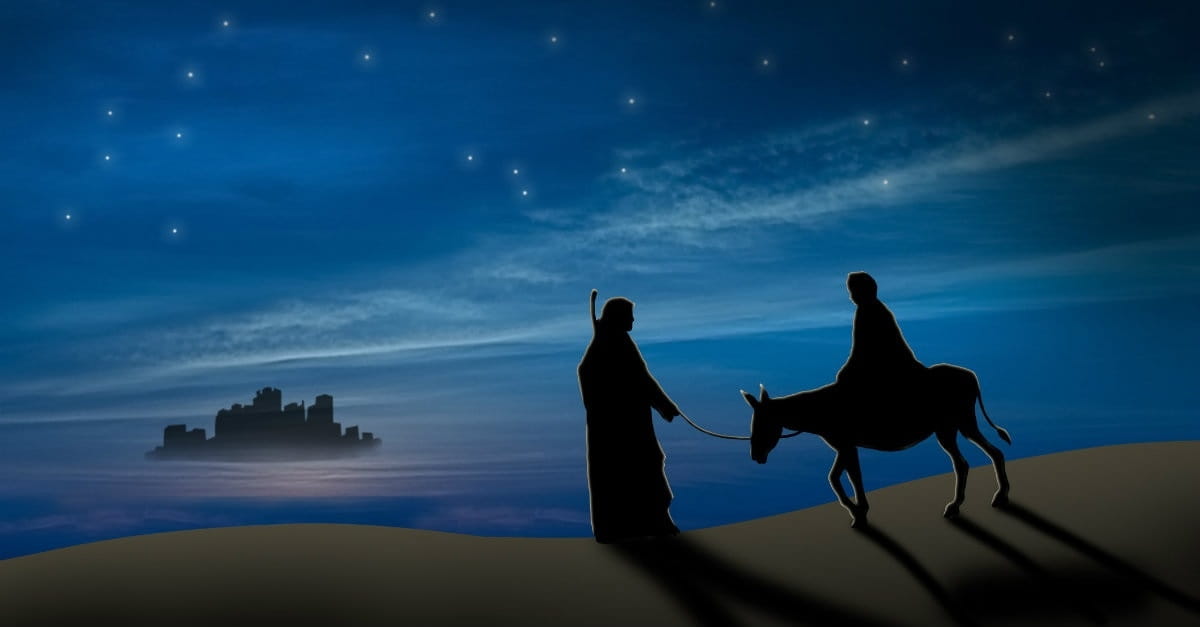
Dear Readers: The following series, based solely on the New Testament, is an in-depth study of Mary, the mother of our Lord. I wrote it last year at Christmas time. Some of you are already familiar with it and have added sterling comments. I highly recommend these posts, as you will undoubtedly fill in many of the blanks regarding Mary’s life and calling. There is actually very little in the New Covenant Scriptures regarding her but much can be gained by drawing on several intriguing clues. She was an exceptional person and deserves a closer look into a life extremely well lived.
Dec. 12, 2019: MARY HIGHLY FAVORED: “BLESSED ARE YOU AMONG WOMEN” (Intro)
Dec. 13, 2019: MARY HIGHLY FAVORED: “BLESSED ARE YOU AMONG WOMEN” (Part 1)
Dec. 18, 2019: MARY HIGHLY FAVORED: “BLESSED ARE YOU AMONG WOMEN” (Part 2)
Dec. 22, 2019: MARY HIGHLY FAVORED: “BLESSED ARE YOU AMONG WOMEN” (Part 3)
Dec. 24, 2019: MARY HIGHLY FAVORED: “BLESSED ARE YOU AMONG WOMEN” (Part 4)
Dec. 25, 2019: MARY HIGHLY FAVORED: “BLESSED ARE YOU AMONG WOMEN” (Part 5)
.
© 2019 by RJ Dawson. All Rights Reserved.
MARY HIGHLY FAVORED: “BLESSED ARE YOU AMONG WOMEN!” (4)
There was an unknown circumstance in Mary’s young life that spoke of great humility. We don’t know what this was exactly, and Luke does not elaborate. But there are directive clues. Read on:
.
The following is from Part 1: There is something else here that Luke’s narrative hints at which he does not delve into, possibly because he knew his audience was aware of whatever particulars were involved with Mary and the circumstances of her humble life.
In the very beginning, after initially being told by the angel Gabriel that she was highly favored and the Lord was indeed with her, Mary became, depending on the translation, troubled/disturbed/perplexed. The Greek says greatly agitated. She wondered where this extraordinary greeting came from and what it could possibly be about. One senses she thought it must be meant for another, that the joyous messenger must have the wrong house.
In answering a faithful reader’s comment on Part 3 today, who said of Mary, She must have indeed been a highly intelligent, spiritually sensitive young woman, I wrote the following:
“Yes. A perfect choice. And she had to somehow come to a quick understanding of this fact though her humble nature would otherwise preclude it. She had to look beyond her humble circumstances and do her best to see herself as God saw her. He needed her. He wanted her to be the one. Here we have a good look into the counterintuitive nature of humanity. If Mary had previously thought herself as the best choice she would be disqualified, since that would reveal the presence of sinful pride. But if she thought herself unworthy and could never be persuaded to the contrary she would disqualify herself.”
Why did she feel so unworthy? And why did she refer to herself not once but twice as a bondslave? I mentioned this in Part 1. The Hebrew word for a female slave is shiphchah. The Greek word used here is doulos, which speaks directly to a slave of the basest order and is used throughout the New Testament. One gets the idea that young Mary was somehow familiar with such status.
It is also quite interesting that the New Testament never mentions any interaction with Mary’s parents or possible siblings. We know her father’s name was Eli (Heli), from her genealogy in Luke 3:23, but there is never any mention of her mother or her mother’s name. It appears they were no longer around. It is also evident that Mary was an only child. Imagine that. There is also a distinct possibility that Joseph, her betrothed, was her father’s adopted son, as alluded to in the genealogy. This was actually a Hebrew tradition going back centuries for men with no natural male heirs, so the idea isn’t so far-fetched. Any or all of these challenging life circumstances might be the cause of her feelings of unworthiness, but there is yet another, and it is here where we shall gain even greater understanding of the well known verse, “For God sees not as man sees, for man looks at the outward appearance, but the LORD looks at the heart” (1Samuel 16:7).
There is a Greek word that only occurs four times in the NT. It only applies to two specific people in the NT. Those two people are the Lord Jesus and His mother Mary. The word is tapeinosis. It is defined as “lowness, low estate, and humiliation.” Regarding the Lord it appears in Acts 8:33 in which the author references Isaiah 53:8. Here are both verses with the translated English word underlined:
“IN HUMILIATION HIS JUDGMENT WAS TAKEN AWAY; WHO WILL RELATE HIS GENERATION? FOR HIS LIFE IS REMOVED FROM THE EARTH.” [Acts 8:33]
By oppression and judgment He was taken away; and as for His generation, who considered that He was cut off out of the land of the living for the transgression of my people, to whom the stroke was due? [Isaiah 53:8]
Here is the verse that references Mary, again with the translated English words underlined:
“For He has had regard for the humble state of His bondslave; for behold, from this time on all generations will count me blessed.” [Luke 1:48]
The Hebrew word is otser. It is defined as “restraint, coercion.” It is translated primarily as “oppression.” It refers in a sense to prison or being a prisoner. This indicates a form of slavery. Mary did refer to herself as a bondslave. This speaks indirectly of possessing a particular humble state or condition and we now have a better understanding of what that was. Isaiah chapter 53 is an OT prophetic picture of the Lord Jesus. Here is the verse that ties both Son and mother together:
He has no stately form or majesty that we should look upon Him, nor appearance that we should be attracted to Him. [Isaiah 53:2][1]
In addition to this appearance circumstance shared by both mother and Son there is a much greater condition shared by both. These two people had extremely high character quotients. Of course, there is no comparison between the Lord’s character and that of Mary (or anyone else) in that He is God and is perfect. But regarding their humanity, and because both were exceptionally concerned with their spiritual standing and desired greatly to have as sterling a standing as possible, it was enormously difficult for them to answer the call because their respective callings would serve to destroy their outwardly perceived characters.
Mary was a chaste virgin with perfect spiritual credentials. She was obviously not without sin and thus required a Savior like everyone else but had striven in her young life to obey God and follow the Law of Moses. She was likely the very best at this among young women of her generation. Her heart was right and this is why she was chosen. But being chosen to be the mother of the Lord would also subject her to endless gossip and the wicked mockery of unbelievers who would believe her to be a gross sinner. This would destroy her sterling reputation among all those who rejected her claims of innocence and the highest of callings. Yet, she accepted the mission anyway, knowing it was always far better to serve the Lord than to decline the calling to protect one’s reputation.
This is one reason why many people never answer their callings and even reject salvation. They are far too weak to handle any affront by society to their public character and artificial social status.
© 2019 by RJ Dawson. All Rights Reserved. [To Be Continued]
[1] Unless otherwise noted all Scriptures are taken from the New American Standard Bible, © 1960, 1963, 1968, 1971, 1972, 1973, 1975, 1977, 1995 by The Lockman Foundation. Used by permission.
MARY HIGHLY FAVORED: “BLESSED ARE YOU AMONG WOMEN!” (Intro)
MARY HIGHLY FAVORED: “BLESSED ARE YOU AMONG WOMEN!” (1)
MARY HIGHLY FAVORED: “BLESSED ARE YOU AMONG WOMEN!” (2)
MARY HIGHLY FAVORED: “BLESSED ARE YOU AMONG WOMEN!” (3)
Prior to her visitation by the angel Gabriel, Mary was burdened by an undisclosed life circumstance. We gain further clues of this by her reaction to Elizabeth’s powerful prophetic message.
.
To set the scene for the next historical interlude which bears upon the foundational Gospel account after her journey to Judea to visit Elizabeth, we must acknowledge the fact that, according to Luke’s account, Mary had yet to speak to anyone about the great news.
She had left Nazareth in a hurry, almost immediately after she had consented to God’s plan. The Holy Spirit had indeed descended upon her and she was overshadowed with the power of the Most High. A miraculous conception had taken place in her womb! She had told no one, not even Joseph. Her elder relative Elizabeth would be her confidant. As the many repercussions played out in her thinking, Mary had remained amazed but laden with knowledge that no one else possessed.
GOD’S PERFECT TIMING
In Part 1, we covered Luke 1:26-38. In Part 2, we covered Luke 1:39-45. There are several components of the narrative within these verses to be addressed. The first thing we must do, however, is address the timing of the events. The angel Gabriel had told Mary that Elizabeth was already with child and in her sixth month. The human gestation period is 280 days, which is almost exactly 9.5 lunar cycles. An exact 9.5 moons would be a half day longer. Here is the math: A lunar cycle is 29.53059 days. Multiplied by 9.5 the gestation period would be 280.54 days. Since we know the Bible grants much importance to the number 40, it is not a coincidence that 280 is 40 times 7 (another significant number). Regarding the number of days into her pregnancy for Elizabeth at the time, it was somewhere between five and six months because Luke’s account says she was in her sixth month. She had yet to complete her second trimester.
I submit that it was exactly five and a half months and during a new moon.
It should have taken Mary less than a week, probably about five days, to get to Elizabeth’s house in Judea from Nazareth since the journey was at least 70 miles as the crow flies but maybe 80 or more considering the roads and terrain. Luke does not tell us the town or Mary’s specific destination in Judea. This was also during the winter rains though most of the precipitation was in the north. We have no knowledge regarding who may have accompanied Mary on the trip. There is no mention of Joseph. Would she have gone alone? From the narrative it certainly appears that she was alone when greeting Elizabeth.
Regarding the time of year, my research has long indicated that the Lord was born in the autumn. I believe it was likely on the 15th of the month of Tishrei on the Hebrew calendar, which was the first day of the weeklong Feast of Succoth (Tabernacles / Booths) and during a full moon. In 2019 this day fell on October 14th. We have a hint of this as the Lord’s birthday in John’s gospel. The word “dwelt” in the following verse is from a Greek word meaning “to fix one’s tabernacle or tent:”
And the Word became flesh, and dwelt among us, and we saw His glory, glory as of the only begotten from the Father, full of grace and truth. [John 1:14]
Tishrei was the seventh month of the ancient sacred calendar adopted originally by the Lord during the time of Moses. The spring is the natural beginning of the year and was also the time of the Exodus and the Resurrection of the Lord. It is thus quite clear that the spring feasts are first and then followed by the autumn feasts. Tishrei later became the first month of the civil calendar and begins with Rosh Hashanah, the “head” of the year which is considered the Jewish New Year. This can get confusing, of course, but for the purposes of this study I will number the months as beginning in the spring from the vernal equinox.
Since the Lord was likely born on Tishrei 15 in the autumn, it would mean the angel Gabriel appeared to Mary nine and a half months before, during a new moon on the 1st of Tevet, the tenth month (if it was a twelve month year, which was most probable). Tevet occurs in Dec/Jan. From this we get a clear timeline of these two miraculous pregnancies of Elizabeth and Mary:
YEAR 1: John was conceived in the summer on the 15th of the fourth month during a full moon.
YEAR 1: The Lord Jesus was conceived in the winter on the 1st of the tenth month during a new moon.
YEAR 2: John was born in the spring on the 1st of the second month during a new moon.
YEAR 2: The Lord Jesus was born in the autumn on the 15th of the seventh month during a full moon.
After Elizabeth’s greeting and anointed word, Mary responded once again, as she did to Gabriel, with amazement and great humility. It was no insignificant response but revealed a woman of strong intellect, spiritual grace, and much insightful knowledge of Scripture for one so young. Her words reverberate through the centuries illustrating the profound nature of the Lord’s great plan and her own unique circumstances. We don’t hear much from Mary ever again but the following passage is filled with spiritual portent and the faithfulness of God. He has come to His people:
And Mary said: “My soul exalts the Lord, and my spirit has rejoiced in God my Savior. For He has had regard for the humble state of His bondslave; for behold, from this time on all generations will count me blessed. For the Mighty One has done great things for me; and holy is His name. AND HIS MERCY IS UPON GENERATION AFTER GENERATION TOWARD THOSE WHO FEAR HIM. He has done mighty deeds with His arm; He has scattered those who were proud in the thoughts of their heart. He has brought down rulers from their thrones, and has exalted those who were humble. HE HAS FILLED THE HUNGRY WITH GOOD THINGS; and sent away the rich empty-handed. He has given help to Israel His servant, in remembrance of His mercy, as He spoke to our fathers, to Abraham and his descendants forever.” [Luke 1:46-55][1]
Luke tells us that Mary stayed in Judea with Elizabeth for about three months after her arrival. The two would have had many long talks. As I stated earlier, Elizabeth was Mary’s only confidant. She was the only one who would have understood her circumstances because she had the same circumstances. These two ladies would have discussed all the implications of what they were presented with and how best to deal with the outcome and responses of others, especially as how it affected Mary. She still had to tell Joseph. She had to tell her parents. How would they react? She knew how everybody else would react and it was a hard pill to swallow. The time with Elizabeth was cherished because she gained the support she would need, to build herself up, and prepare for the coming storm of controversy.
And Mary stayed with her about three months, and then returned to her home. [Luke 1:56]
One would think Mary would have stayed for John’s birth. We are tempted to add to the narrative and think she must have stayed, but Luke did not present it that way. With regard to why she left early, the calendar gives us a direct clue: It was now the early spring. The first month of Nisan had arrived. The spring feasts, to which Mary had remained faithful her entire life, were upon the nation. Passover week would be happening very soon, within about a week or so. Did Mary leave a few weeks before John’s birth to celebrate Passover in Jerusalem?
© 2019 by RJ Dawson. All Rights Reserved. [To Be Continued]
[1] Unless otherwise noted all Scriptures are taken from the New American Standard Bible, © 1960, 1963, 1968, 1971, 1972, 1973, 1975, 1977, 1995 by The Lockman Foundation. Used by permission.
MARY HIGHLY FAVORED: “BLESSED ARE YOU AMONG WOMEN!” (Intro)
MARY HIGHLY FAVORED: “BLESSED ARE YOU AMONG WOMEN!” (1)
MARY HIGHLY FAVORED: “BLESSED ARE YOU AMONG WOMEN!” (2)
MARY HIGHLY FAVORED: “BLESSED ARE YOU AMONG WOMEN!” (4)
MARY HIGHLY FAVORED: “BLESSED ARE YOU AMONG WOMEN!” (5)
MARY HIGHLY FAVORED: “BLESSED ARE YOU AMONG WOMEN!” (2)
The conventional perception of the mother of our Lord is off. It is way off. She is commonly depicted in religious art, iconography, and statuary as European, and often northern European.
.
Knowledge of her Hebrew heritage among Christians is largely lost. Even her actual name is mostly unknown. The name Mary derives from the Judeo-Aramaic variant Maryam, from the Greek Mariam, which was derived from the original Hebrew Miryam, the name of the elder sister of Moses and Aaron (which is translated into English primarily as Miriam). New Testament readers know this was a popular name for Hebrew women at that time, as there are several with the name in the Gospel accounts.
As a young Hebrew maiden of eastern Mediterranean stock, she was likely dark complected with dark hair and Semitic features. Semitic refers to one of the three sons of Noah—Shem—whose descendants predominantly populated the Middle East and still do today. We know from early OT accounts that the ancient Hebrews shared their DNA with many different ethnos of the greater region, including the Canaanite tribes. There were also the two great disruptions to the nation when the ten northern tribes of Israel were deported to the east in 722 BC followed by the Babylonian captivity of Judah 136 years later. The three remaining tribes of the latter—Judah, Levi, and Benjamin—were removed to Babylon for 70 years. They were allowed to return but many chose to stay. The lands of Israel and Judah had been repopulated somewhat by foreigners in the interim, especially the Samaritan region. The land was then ruled by a succession of Persians, Greeks, and Romans. It is therefore difficult if not impossible to arrive at a definitive Hebrew nationality by the first century AD.
Even so, we do have two extant genealogies of our Lord Jesus from that time, both of which stem from the tribe of Judah and feature the persons of Abraham and David. The genealogy of Joseph the carpenter in Matthew’s gospel descends through King David’s son Solomon, the third and final king of a united Israel. After Solomon’s death the kingdom split into the northern Kingdom of Israel and the southern Kingdom of Judah. Luke’s gospel contains the genealogy of Mary, which also goes through David but by his son Nathan, Solomon’s brother. This family tree divergence took place over 900 years before the Lord’s birth. The last of the Hebrew kings of the Judaic line ceased with the Babylonian captivity in 586 BC. Zedekiah was the last king of Judah, but was somewhat illegitimate in that he was installed by the Babylonian king Nebuchadnezzar in 597 BC after the siege of Jerusalem. The king before Zedekiah was Jeconiah (AKA Coniah, Jehoiachin), who was carted off to Babylon a prisoner in chains. This is what the prophet Jeremiah said about him:
“Is this man Coniah a despised, shattered jar? Or is he an undesirable vessel? Why have he and his descendants been hurled out and cast into a land that they had not known? O land, land, land, hear the word of the LORD! Thus says the LORD, ‘Write this man down childless, a man who will not prosper in his days; for no man of his descendants will prosper sitting on the throne of David or ruling again in Judah.’” [Jeremiah 22:28-30]
The Hebrew monarchy was thus abolished. There were no more kings. No one could ever again qualify. Joseph the carpenter’s line included Jeconiah and he is listed in Matthew’s genealogy. Nevertheless, it was established that Joseph, the legal stepfather of the Lord, could trace his direct lineage to Solomon and David. Mary’s genealogy could also be traced directly to King David. This means the Lord Jesus had a legal right as king through Joseph and a biological right through His mother. Though the monarchial birthright was essentially revoked by Jeremiah’s prophecy, this did not apply to the Lord Jesus because he was not a blood descendant of Jeconiah. Thus, the only possible way the Davidic line of kings could be restored, even after a six century interval, would be through the following:
“Behold, a virgin will be with child and bear a son, and she will call His name Immanuel.” [Isaiah 7:14]
GREETINGS FROM THE WOMB
As described in Part 1, Mary was soon on the road south to Judea to visit her relative Elizabeth. The two women were anxious to share the great news of their pregnancies, both of which were only possible through direct miraculous means. Elizabeth was greatly humbled in her long life of barrenness but maintained her faith regardless. Mary was also burdened somewhat by an undisclosed life circumstance. Here we have the young and the old, both of whom must deal with the inevitable gossip of unbelievers, yet blessed abundantly as major players in the great plan of God for the salvation of Israel and humanity. But besides these two who knew each other well, there were others who met for the very first time:
Now at this time Mary arose and went in a hurry to the hill country, to a city of Judah, and entered the house of Zacharias and greeted Elizabeth. When Elizabeth heard Mary’s greeting, the baby leaped in her womb; and Elizabeth was filled with the Holy Spirit. And she cried out with a loud voice and said,
“Blessed are you among women, and blessed is the fruit of your womb! And how has it happened to me, that the mother of my Lord would come to me? For behold, when the sound of your greeting reached my ears, the baby leaped in my womb for joy. And blessed is she who believed that there would be a fulfillment of what had been spoken to her by the Lord.” [Luke 1:39-45][1]
© 2019 by RJ Dawson. All Rights Reserved. [To Be Continued]
[1] Unless otherwise noted all Scriptures are taken from the New American Standard Bible, © 1960, 1963, 1968, 1971, 1972, 1973, 1975, 1977, 1995 by The Lockman Foundation. Used by permission.
MARY HIGHLY FAVORED: “BLESSED ARE YOU AMONG WOMEN!” (Intro)
MARY HIGHLY FAVORED: “BLESSED ARE YOU AMONG WOMEN!” (1)
MARY HIGHLY FAVORED: “BLESSED ARE YOU AMONG WOMEN!” (3)
MARY HIGHLY FAVORED: “BLESSED ARE YOU AMONG WOMEN!” (1)
NAZARETH
She was given the opportunity to be the mother of Messiah—the Son of the Most High. She accepted without question, filled with wonder, in humble awe of being chosen.
.
In reading between the lines in the initial Gospel references to the mother of our Lord, we happen upon facts otherwise escaping our notice, primarily, her humble origin. We already know her hometown was not the greatest of places, as none other than one of the twelve, Nathanael Bar Tholmai (Bartholomew) articulated,
“Can any good thing come out of Nazareth?” [1]
The rustic community is never mentioned in any of the Old Testament writings, meaning it had yet to exist then, suffered utmost insignificance, or was known by a different name, one of which might have been “white town” or a variation, named after the ready supply of limestone rocks in the area. Nestled among the lower hills of the Nazareth Range in the ancient tribal land of Zebulun, the city lay about halfway between the seas—the great Mediterranean on the west where sailing ships launched for far-off lands, and to the east, the indigenous, often mysterious Sea of Galilee, loved freshwater fishery of the locals.
From the little we know, Mary was likely born is this little village by the cliffs in circa 18 BC. This was during the early years of Augustus, who became the first Roman emperor in 27 BC, and the local reign of the ruthless client-king Herod the Great who had gained power a decade earlier. How she or her family arrived in the area is lost to history. Though Nazareth was within the small area originally allotted to the Tribe of Zebulun (the tenth son of Jacob and sixth born to Leah), Mary was actually a distant descendent of King David of the ruling line of Judah. Her connection to the latter tribe is somewhat problematic for a Galilean from the north due to her clear connection to relatives in the territory of Judea south of Jerusalem. The unknown story of her family’s transplantation is an intriguing one.
We know from the later annual pilgrimages made by the holy family to Jerusalem for the feasts that young Mary likely also made such trips as a child growing up, probably as part of small caravans. She was thus familiar with the territory and probably looked forward to such opportunities to see the great city and visit family. Journeying from the north in Galilee, one would traverse the disparaged Samaria, sandwiched between Galilee and Judea, and venture through the ancient tribal areas of Issachar, Manasseh, and Ephraim in the process, and lastly through the allotment of Benjamin on the approach to Yerushalayim which was located on the southern edge of his tribal land.
The eastern border between the two famous territories of Benjamin and Judah actually runs north and south along the Kidron Valley. The Kidron divides the city of Jerusalem in Benjamin’s territory to the west from the Mount of Olives in Judah’s territory to the east. The southern border between the tribes is divided by the valley of Hinnom which was immediately due south of the ancient city. Beyond these two natural demarcation lines was the fatherland of Judah and the ancestral land of King David to which Mary and her family sojourned frequently. It was also the ancestral homeland of her new husband Joseph, the strong but tender carpenter, chosen also as she was, and suited well for the calling.
AN ANGELIC VISITATION
Now in the sixth month the angel Gabriel was sent from God to a city in Galilee called Nazareth, to a virgin engaged to a man whose name was Joseph, of the descendants of David; and the virgin’s name was Mary. [Luke 1:26-27]
Luke makes it clear in his definitive account that Mary was a virgin when the angel Gabriel revealed to her the plan of God which would soon go into effect upon her consent. She was betrothed to the carpenter, meaning the marriage was not yet fully contracted, and both were honorable and chaste. It is often not acknowledged that young Mary had a choice regarding the Lord’s plan for her life. We all have a choice, and for everyone there is a plan. Notwithstanding the discipline required to live and work for the Lord according to His will and not our own, any other plan created and chosen by a person is always inferior to His. Mary understood this. It is why she replied to Gabriel with no hesitation in her heart:
And coming in, he said to her, “Greetings, favored one! The Lord is with you.” But she was very perplexed at this statement, and kept pondering what kind of salutation this was. The angel said to her, “Do not be afraid, Mary; for you have found favor with God. And behold, you will conceive in your womb and bear a son, and you shall name Him Jesus. He will be great and will be called the Son of the Most High; and the Lord God will give Him the throne of His father David; and He will reign over the house of Jacob forever, and His kingdom will have no end.”
Mary said to the angel, “How can this be, since I am a virgin?” The angel answered and said to her, “The Holy Spirit will come upon you, and the power of the Most High will overshadow you; and for that reason the holy Child shall be called the Son of God. And behold, even your relative Elizabeth has also conceived a son in her old age; and she who was called barren is now in her sixth month. For nothing will be impossible with God.”
And Mary said, “Behold, the bondslave of the Lord; may it be done to me according to your word.” And the angel departed from her. [Luke 1:28-38] [2]
Mary’s use of the word “bondslave” is not without import. It is from the Greek doulos and is defined accordingly as a female slave without any ownership rights of her own. This word, also translated as bond-servant, is used throughout the New Testament denoting the pure servanthood and dedication to the Master by real believers. The Hebrew equivalent for a female servant is shiphchah and has an ancient etymology dating to the book of Genesis. Though we often fail to perceive, in these brief Scriptural renderings, the full connotation and significance of the choice she made, Mary knew exactly what she was doing by deciding in the affirmative. She understood the gravity of the situation, the ramifications thereof, and that is was a lifelong commitment.
But there is more. Mary alluded to her current state of life before the angelic visitation as thoroughly humble and insignificant. We see this first in her initial reaction to Gabriel’s greeting when he referred to her as “favored one” and said the Lord was with her: But she was very perplexed at this statement, and kept pondering what kind of salutation this was. She was also afraid, probably for the same reasons you or I would be startled at the appearance of an angel. It was more than this, however. She was concerned about what it meant for her life and, in those first few seconds, that she was in no way worthy of such an astounding visitation and calling.
Why did she feel this way? There is something else here that Luke’s narrative hints at which he does not delve into, possibly because he knew his audience was aware of whatever particulars were involved with Mary and the circumstances of her humble life.
In Part 2, I will continue delving into such lesser-known particulars. We will look closer at Mary’s upbringing, family, and momentous visit to her elderly but expecting relative Elizabeth, also a chosen woman of the Lord who found much grace in His sight.
© 2019 by RJ Dawson. All Rights Reserved. [To Be Continued]
[1] John 1:46
[2] Unless otherwise noted all Scriptures are taken from the New American Standard Bible, © 1960, 1963, 1968, 1971, 1972, 1973, 1975, 1977, 1995 by The Lockman Foundation. Used by permission.
MARY HIGHLY FAVORED: “BLESSED ARE YOU AMONG WOMEN!” (Intro)
MARY HIGHLY FAVORED: “BLESSED ARE YOU AMONG WOMEN!” (2)
MARY HIGHLY FAVORED: “BLESSED ARE YOU AMONG WOMEN!” (3)
MARY HIGHLY FAVORED: “BLESSED ARE YOU AMONG WOMEN!” (4)
MARY HIGHLY FAVORED: “BLESSED ARE YOU AMONG WOMEN!” (5)


 Real Christianity