Blog Archives
THE REAL CHOSEN PEOPLE (PART 2)

I wrote and posted this article in March of 2012 as the second of a series. It revealed the New Testament definition of “The Chosen People.” What follows is an updated version.
.
SAVING ISRAEL FROM ITSELF
The Pharisees and Sadducees were so intent on stopping the Lord Jesus and His followers they unwisely enlisted the help of the belligerent Zealots. This proved to be an inauspicious decision that resulted in national disaster a generation later when powerful warmongering Zealot armies and their false-Messiah leaders took control of the nation and the national city of Jerusalem in a winner-take-all fight against Imperial Rome.
We see the beginning echo of this unfortunate choice at the Lord’s trial in the choosing of the Zealot Barabbas over the Lord. This unrepentant criminal and likely murderer was released from prison by popular demand while the same vociferous crowd demanded the Messiah be crucified. As the man’s name clearly indicates, the choosing of the “son of the father” (which could further indicate “fathers”) illustrates the malicious nature of the choice.
In the Lord’s time this loose collection of brigands which came to be known as Zealots in the early first century AD remained relatively small and incohesive. The party existed primarily as a hyper aggressive small-scale terroristic militarist movement intent on striking back at Rome due to what they perceived as its tyrannical treatment of the otherwise independent Israelite people in their own land.
The Roman Republic’s entry began almost a full century before in 63BC during the ongoing civil war which ensued after the Israelite queen Alexandra-Salome died in 67BC and the two heirs, Hyrcanus and Aristobulus, fought each other for political control. This was yet one more event which demanded outside control to properly govern the region. The Roman general and statesman Pompey had already been moving east since being authorized that same year putting out fires, fighting battles, taking territory, and establishing Roman control across the northern Mediterranean regions. After capturing Syria in 64BC he decided to take advantage of the internal conflict in Judaea and head south.
One might note that this Israelite civil fight also involved the two still somewhat nascent but established major religious parties: The Sadducees sided with Aristobulus and the Pharisees remained true to John Hyrcanus II. Therefore, the Israelite civil war was a religious civil war as well. General Pompey entered the fray in Judaea and then after a siege took Jerusalem and captured the temple. Once establishing Roman control he returned home a hero. Rome then annexed much of the former Israelite kingdom, primarily Galilee and Judaea. This marked the beginning of the end of the independent Hasmonean Dynasty which eventually ceased to exist in 37BC when Herod the Great became the Roman client king. This set the stage for several profound future events culminating with the arrival of the long-awaited Messiah.
CHOOSING THE CHOSEN
But the Pharisees went out and conspired against Him, as to how they might destroy Him. But Jesus, aware of this, withdrew from there. Many followed Him, and He healed them all, and warned them not to tell who He was. This was to fulfill what was spoken through Isaiah the prophet:
“Behold, My Servant whom I have chosen;
My Beloved in whom My soul is well-pleased;
I will put My Spirit upon Him,
And He shall proclaim justice to the Gentiles.
He will not quarrel, nor cry out;
Nor will anyone hear His voice in the streets.
A battered reed He will not break off,
And a smoldering wick He will not put out,
Until He leads justice to victory.
And in His name the Gentiles will hope.” [Matthew 12:15-21]
In these days when everyone is a Christian and Christianity is watered-down to a consistency barely above water itself, why do we think God even cares about doing any choosing? This is how far fake Christianity has traveled. There is hardly any distinction at all between many so-called Christians and a world going to hell. And it is the touchy, thin-skinned, aggressively defensive and convicted Unchosen itself that is often first to speak out strongly against any perceived judgment, however slight, regarding its perceived standing in God. The motto of real Christians, on the other hand, is thus:
“Talk about me if you please, but I’ll talk about you on my knees.”
Where in this country is there a voice that represents the real presence of God? Where is the voice that distinguishes truth from error and fake, dry, dead, boring lifeless expressions of faux Christianity from the real thing? Those who have dissolved the life-giving Gospel of the Lord Jesus Christ will have to account for it. All those who have been deceived by their “other gospel” will rise up against them at the Judgment, not that it will matter then.
Why does one think the people in hell will be gnashing at each other with their teeth like a pack of wild dogs? There is the clear indication that the unchosen do not agree with their ultimate status.
“The kingdom of heaven may be compared to a king who gave a wedding feast for his son. And he sent out his slaves to call those who had been invited to the wedding feast, and they were unwilling to come. Again he sent out other slaves saying, ‘Tell those who have been invited, “Behold, I have prepared my dinner; my oxen and my fattened livestock are all butchered and everything is ready; come to the wedding feast.”’ But they paid no attention and went their way, one to his own farm, another to his business, and the rest seized his slaves and mistreated them and killed them.
“But the king was enraged, and he sent his armies and destroyed those murderers and set their city on fire.
“Then he said to his slaves, ‘The wedding is ready, but those who were invited were not worthy. Go therefore to the main highways, and as many as you find there, invite to the wedding feast.’ Those slaves went out into the streets and gathered together all they found, both evil and good; and the wedding hall was filled with dinner guests. But when the king came in to look over the dinner guests, he saw a man there who was not dressed in wedding clothes, and he said to him, ‘Friend, how did you come in here without wedding clothes?’ And the man was speechless. Then the king said to the servants, ‘Bind him hand and foot, and throw him into the outer darkness; in that place there will be weeping and gnashing of teeth.’ For many are called, but few are chosen.” [Matthew 22:2-14]
This is a perfect illustration of God’s selection process. It goes like this:
(1) The first thing the king does is send out invitations. He makes his choices based on his own criteria. But these criteria must be based on those whom he considers His friends, relatives, and select subjects of his kingdom.
(2) What do the invited guests do? They refuse. They ignore him. They ignore the invitation. They treat the king with supreme indifference and disrespect. They are all completely unwilling to attend the wedding feast.
(3) Curious as to why no one wants to come after having been chosen, the king sends out another group to ask the invitees yet again, explaining how much trouble he has gone to, how much He has prepared, and how much he really wants them all to come and share in his joy. The slaves tell everyone what a great time will be had. There will be barbecued oxen and fatted livestock and a great dinner! My son is getting married and I want you all to come!
(4) This time the invitees not only continued to reject the king but some of them actually mistreated the king’s slaves, and they even killed them! What would compel the invited guests to resort to killing the messenger boys sent out by a loving king? (“Hey Joe, check out this story in the paper. Some dude up north was throwing a wedding for his son and one idiot killed the mailman when he got his invitation.”)
(5) Then what? The king was enraged! So He sent his army, executed the murderers, and torched their sorry city. I mean, all they had to do was politely decline. Why all the rage and murder about a simple wedding invitation?
(6) Now the king decides He is just going to invite everyone he can find. He no longer makes any judgment whatsoever on who may be qualified to come to the wedding. Those who were qualified proved themselves to be completely unworthy. He therefore sends out his slaves to invite one and all, whether good or bad. This time, he ended up with a packed house. His estate was filled to the gills with the rabble of the countryside. They must have thought themselves to be impossibly blessed. No one had ever done anything like this for them before. “Huh? You want little old nobody nothing me to go to a wedding at the king’s estate? Thanks!” They all wasted no time in taking showers and getting their fancy wedding duds on, however humble, and high-tailed it to the big barbecue. The king was most happy!
(7) But all was not perfect. You see, there was this one guy who made no acknowledgement at all of the great thing that happened to him. He didn’t consider himself fortunate and honored to be invited. He didn’t try to get cleaned-up. In fact, he had so little respect for the proceedings that he didn’t even put on a wedding garment. He just kind of wondered in off the street with no expression on his face loosely holding an invitation. The king confronted the man. He even called him his friend. But the man had no answer regarding his lack of proper attire. As a result, he was effectively thrown into hell. To close out the story, the Lord Jesus said: “For many are called, but few are chosen.”
There are three kinds of people in this story:
(A) Those who are called and chosen but do not respect the king and reject his invitation, some of whom even kill the king’s servants. By their own decisions, they revoke their called and chosen status.
(B) Those who are called but are not chosen because they do not properly respect the king or his invitation and dress incorrectly.
(C) Those who are called and chosen because they respect the king, honor his invitation, and dress correctly.
The man without the wedding garment was masquerading as a real Christian. The “wedding clothes” represent the robe of righteousness. Righteousness is a gift. It cannot be earned but can be accepted after one shows the proper respect and honor for the King, and also who properly repents, trusts, and obeys:
I will rejoice greatly in the LORD, My soul will exult in my God; For He has clothed me with garments of salvation, He has wrapped me with a robe of righteousness, As a bridegroom decks himself with a garland, And as a bride adorns herself with her jewels. [Isaiah 61:10]
The following verses give us an indication of what God requires with reference to the appropriate wedding clothes which Isaiah had described so wonderfully in the preceding verse. Please understand that no will enter joyfully into the presence of the King and remain without being properly and respectfully attired:
“But you have a few people in Sardis who have not soiled their garments; and they will walk with Me in white, for they are worthy. He who overcomes will thus be clothed in white garments; and I will not erase his name from the book of life, and I will confess his name before My Father and before His angels. He who has an ear, let him hear what the Spirit says to the churches.” [Revelation 3:4-6]
“Because you say, “I am rich, and have become wealthy, and have need of nothing,” and you do not know that you are wretched and miserable and poor and blind and naked, I advise you to buy from Me gold refined by fire so that you may become rich, and white garments so that you may clothe yourself, and that the shame of your nakedness will not be revealed; and eye salve to anoint your eyes so that you may see. Those whom I love, I reprove and discipline; therefore be zealous and repent.
Behold, I stand at the door and knock; if anyone hears My voice and opens the door, I will come in to him and will dine with him, and he with Me.” [Revelation 3:14-20] [1]
© 2012/2023 by RJ Dawson. All Rights Reserved. [Part 2]
[1] Unless otherwise noted all Scriptures are taken from the New American Standard Bible, © 1960, 1963, 1968, 1971, 1972, 1973, 1975, 1977, 1995 by The Lockman Foundation. Used by permission.
MARY HIGHLY FAVORED: “BLESSED ARE YOU AMONG WOMEN!” (5)
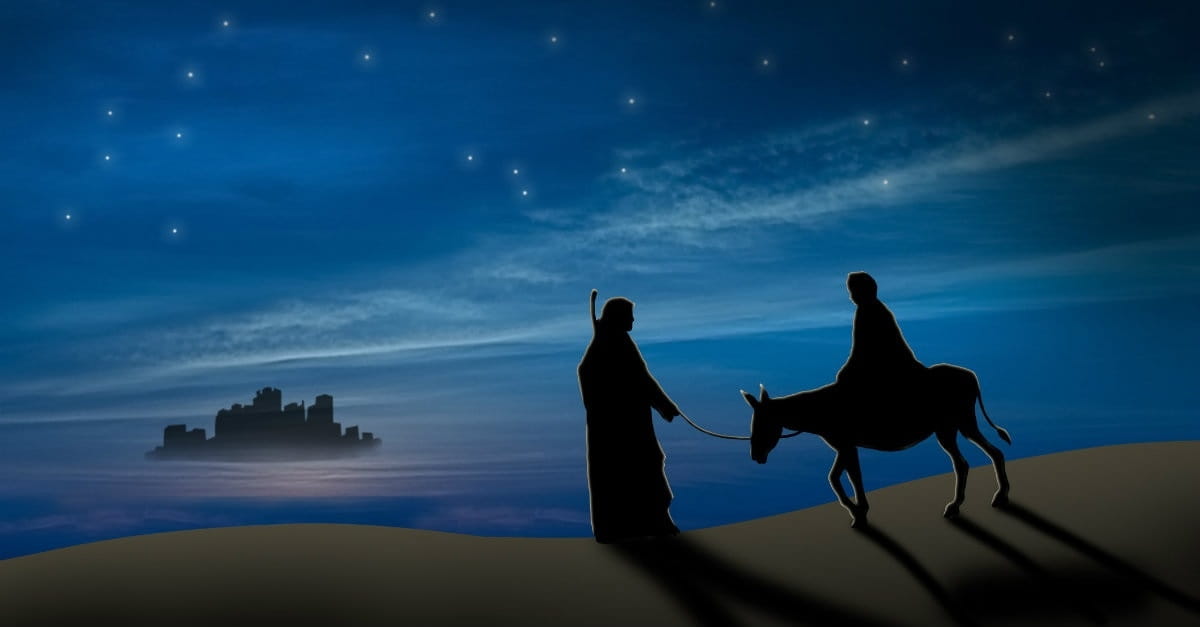
This post concludes our series on Mary. I hope you enjoyed the content and a closer look into her young life. She was one of the most influential and important persons who ever lived. Some say her life was second only to the Lord.
It was the result of a choice she made. She chose to honor the Lord and obey the great summons. So it is for every single person who answers His call. When presented with the call of God, each of His true followers makes the hard call to obey the Lord’s plan rather than any of his or her own, regardless of cost. Of course, the benefits thereof greatly outweigh the resulting persecution associated with it. Mary certainly had her share and much more than most. Indeed, as the apostle writes:
All who desire to live godly in Christ Jesus will be persecuted. [2Timothy 3:12]
Though most of us are very well aware of the following passage from the Gospel of Luke, we must note that it was authored by a man intent on including all the information available on the Lord’s birth including as much detail as possible. Nevertheless, his account remains relatively brief and written in a clean distinct style.
Please note the detail. Imagine being there as the great event unfolded, perhaps as another pilgrim on the road or a resident or visitor on the busy streets of Bethlehem. Imagine being one of the shepherds on that holy night. They experienced celestial events and angelic visitors they could never forget and likely retold their stories often.
Then, ponder, as Mary did, all the events in your life regarding the Lord Jesus, His love expressed to you, the salvation He gave to you, your calling and ministry which He gave to you, and the many occurrences associated with walking it out. The older we are and the more obedient we have been results in a longer list of achievements and experiences in which we have seen the Lord work wonders that never otherwise would have been. How much more could He have done if there was more compliance and obedience toward His will in this world? How much better this world could be if we did things His way.
Sadly, most people never choose as Mary did. Most choose the relatively short selfish path that will end at physical death. However, for the few who make the hard choice, the great choice, the best choice, their lives will be spiritually fruitful and filled with the strength, spiritual ability, faith, and favor of the Lord in which nothing according to His will will be denied them. Victory is theirs despite hardships and suffering. Spiritual achievement continues. And when this life is over the wonder of eternal life awaits.
As I write on this Christmas Eve of 2022 those paying attention know well that the world at large is growing ever more dark. Sin is abounding. Degeneracy has descended. But in the kingdom of God all is bright. Miracles are happening. His people are being blessed and taken care of. He provides their every need. And their love of the Lord increases their determination to serve Him and fulfill their call.
This great desire is encapsulated in the Christmas Story. May we all strive to be as Joseph and Mary were on that cold night almost 2,000 years ago in a crude dwelling under a bright full moon when the greatest promise of all time became a real event. Those outside His kingdom need our help. Those within need our encouragement.
As Isaiah wrote 700 years before the Lord’s birth,
For a child will be born to us, a son will be given to us; And the government will rest on His shoulders; And His name will be called Wonderful Counselor, Mighty God, Eternal Father, Prince of Peace. [Isaiah 9:6]
Here we see clearly that our Lord Jesus is not only the Son but the Father. He is not only a Man but God. And He was once a mere Baby in a Manger.
I value and appreciate each of you, my regular readers, who I have been blessed to have and know, many of you for several years. I also thank any and all visitors for stopping by.
All praise and glory to our Lord Jesus, the Great One who makes it all happen and who chose to enter this world the same way we all have, in a state of innocence and humility.
He is our Greatest Gift. May our lives reflect His.
I wish you all a very Merry Christmas.
Now in those days a decree went out from Caesar Augustus, that a census be taken of all the inhabited earth. This was the first census taken while Quirinius was governor of Syria. And everyone was on his way to register for the census, each to his own city. Joseph also went up from Galilee, from the city of Nazareth, to Judea, to the city of David which is called Bethlehem, because he was of the house and family of David, in order to register along with Mary, who was engaged to him, and was with child.
While they were there, the days were completed for her to give birth. And she gave birth to her firstborn son; and she wrapped Him in cloths, and laid Him in a manger, because there was no room for them in the inn.
In the same region there were some shepherds staying out in the fields and keeping watch over their flock by night. And an angel of the Lord suddenly stood before them, and the glory of the Lord shone around them; and they were terribly frightened. But the angel said to them, “Do not be afraid; for behold, I bring you good news of great joy which will be for all the people; for today in the city of David there has been born for you a Savior, who is Christ the Lord. This will be a sign for you: you will find a baby wrapped in cloths and lying in a manger.” And suddenly there appeared with the angel a multitude of the heavenly host praising God and saying, “Glory to God in the highest, and on earth peace among men with whom He is pleased.”
When the angels had gone away from them into heaven, the shepherds began saying to one another, “Let us go straight to Bethlehem then, and see this thing that has happened which the Lord has made known to us.” So they came in a hurry and found their way to Mary and Joseph, and the baby as He lay in the manger. When they had seen this, they made known the statement which had been told them about this Child. And all who heard it wondered at the things which were told them by the shepherds.
But Mary treasured all these things, pondering them in her heart.
The shepherds went back, glorifying and praising God for all that they had heard and seen, just as had been told them. [Luke 2:1-20][1]
© 2022 by RJ Dawson. All Rights Reserved.
[1] Unless otherwise noted all Scriptures are taken from the New American Standard Bible, © 1960, 1963, 1968, 1971, 1972, 1973, 1975, 1977, 1995 by The Lockman Foundation. Used by permission.
MARY HIGHLY FAVORED: “BLESSED ARE YOU AMONG WOMEN!” (3)

Prior to her visitation by the angel Gabriel, Mary was burdened by an undisclosed life circumstance. We gain further clues of this by her reaction to Elizabeth’s powerful prophetic message.
.
To set the scene for the next historical interlude which bears upon the foundational Gospel account after her journey to Judea to visit Elizabeth, we must acknowledge the fact that, according to Luke’s account, Mary had yet to speak to anyone about the great news.
She had left Nazareth in a hurry, almost immediately after she had consented to God’s plan. The Holy Spirit had indeed descended upon her and she was overshadowed with the power of the Most High. A miraculous conception had taken place in her womb! She had told no one, not even Joseph. Her elder relative Elizabeth would be her confidant. As the many repercussions played out in her thinking, Mary had remained amazed but laden with knowledge that no one else possessed.
GOD’S PERFECT TIMING
In Part 1, we covered Luke 1:26-38. In Part 2, we covered Luke 1:39-45. There are several components of the narrative within these verses to be addressed. The first thing we must do, however, is address the timing of the events. The angel Gabriel had told Mary that Elizabeth was already with child and in her sixth month. The human gestation period is 280 days, which is almost exactly 9.5 lunar cycles. An exact 9.5 moons would be a half day longer. Here is the math: A lunar cycle is 29.53059 days. Multiplied by 9.5 the gestation period would be 280.54 days. Since we know the Bible grants much importance to the number 40, it is not a coincidence that 280 is 40 times 7 (another significant number). Regarding the number of days into her pregnancy for Elizabeth at the time, it was somewhere between five and six months because Luke’s account says she was in her sixth month. She had yet to complete her second trimester.
I submit that it was exactly five and a half months and during a new moon.
It should have taken Mary less than a week, probably about five days, to get to Elizabeth’s house in Judea from Nazareth since the journey was at least 70 miles as the crow flies but maybe 80 or more considering the roads and terrain. Luke does not tell us the town or Mary’s specific destination in Judea. This was also during the winter rains though most of the precipitation was in the north. We have no knowledge regarding who may have accompanied Mary on the trip. There is no mention of Joseph. Would she have gone alone? From the narrative it certainly appears that she was alone when greeting Elizabeth.
Regarding the time of year, my research has long indicated that the Lord was born in the autumn. I believe it was likely on the 15th of the month of Tishrei on the Hebrew calendar, which was the first day of the weeklong Feast of Succoth (Tabernacles / Booths) and during a full moon. In 2022 this day fell on October 10. We have a hint of this as the Lord’s birthday in John’s gospel. The word “dwelt” in the following verse is from a Greek word meaning “to fix one’s tabernacle or tent:”
And the Word became flesh, and dwelt among us, and we saw His glory, glory as of the only begotten from the Father, full of grace and truth. [John 1:14]
Tishrei was the seventh month of the ancient sacred calendar adopted originally by the Lord during the time of Moses. The spring is the natural beginning of the year and was also the time of the Exodus and the Resurrection of the Lord. It is thus quite clear that the spring feasts are first and then followed by the autumn feasts. Tishrei later became the first month of the civil calendar and begins with Rosh Hashanah, the “head” of the year which is considered the Jewish New Year. This can get confusing, of course, but for the purposes of this study I will number the months as beginning in the spring from the vernal equinox.
Since the Lord was likely born on Tishrei 15 in the autumn, it would mean the angel Gabriel appeared to Mary nine and a half months before, during a new moon on the 1st of Tevet, the tenth month (if it was a twelve month year, which was most probable). Tevet occurs in Dec/Jan. From this we get a clear timeline of these two miraculous pregnancies of Elizabeth and Mary:
YEAR 1: John was conceived in the summer on the 15th of the fourth month during a full moon.
YEAR 1: The Lord Jesus was conceived in the winter on the 1st of the tenth month during a new moon.
YEAR 2: John was born in the spring on the 1st of the second month during a new moon.
YEAR 2: The Lord Jesus was born in the autumn on the 15th of the seventh month during a full moon.
After Elizabeth’s greeting and anointed word, Mary responded once again, as she did to Gabriel, with amazement and great humility. It was no insignificant response but revealed a woman of strong intellect, spiritual grace, and much insightful knowledge of Scripture for one so young. Her words reverberate through the centuries illustrating the profound nature of the Lord’s great plan and her own unique circumstances. We don’t hear much from Mary ever again but the following passage is filled with spiritual portent and the faithfulness of God. He has come to His people:
And Mary said: “My soul exalts the Lord, and my spirit has rejoiced in God my Savior. For He has had regard for the humble state of His bondslave; for behold, from this time on all generations will count me blessed. For the Mighty One has done great things for me; and holy is His name. AND HIS MERCY IS UPON GENERATION AFTER GENERATION TOWARD THOSE WHO FEAR HIM. He has done mighty deeds with His arm; He has scattered those who were proud in the thoughts of their heart. He has brought down rulers from their thrones, and has exalted those who were humble. HE HAS FILLED THE HUNGRY WITH GOOD THINGS; and sent away the rich empty-handed. He has given help to Israel His servant, in remembrance of His mercy, as He spoke to our fathers, to Abraham and his descendants forever.” [Luke 1:46-55][1]
Luke tells us that Mary stayed in Judea with Elizabeth for about three months after her arrival. The two would have had many long talks. As I stated earlier, Elizabeth was Mary’s only confidant. She was the only one who would have understood her circumstances because she had the same circumstances. These two ladies would have discussed all the implications of what they were presented with and how best to deal with the outcome and responses of others, especially as how it affected Mary. She still had to tell Joseph. She had to tell her parents. How would they react? She knew how everybody else would react and it was a hard pill to swallow. The time with Elizabeth was cherished because she gained the support she would need, to build herself up, and prepare for the coming storm of controversy.
And Mary stayed with her about three months, and then returned to her home. [Luke 1:56]
One would think Mary would have stayed for John’s birth. We are tempted to add to the narrative and think she must have stayed, but Luke did not present it that way. With regard to why she left early, the calendar gives us a direct clue: It was now the early spring. The first month of Nisan had arrived. The spring feasts, to which Mary had remained faithful her entire life, were upon the nation. Passover week would be happening very soon, within about a week or so. Did Mary leave a few weeks before John’s birth to celebrate Passover in Jerusalem?
© 2019 by RJ Dawson. All Rights Reserved. [To Be Continued]
[1] Unless otherwise noted all Scriptures are taken from the New American Standard Bible, © 1960, 1963, 1968, 1971, 1972, 1973, 1975, 1977, 1995 by The Lockman Foundation. Used by permission.
MARY HIGHLY FAVORED: “BLESSED ARE YOU AMONG WOMEN!” (5)
Now in those days a decree went out from Caesar Augustus, that a census be taken of all the inhabited earth. This was the first census taken while Quirinius was governor of Syria. And everyone was on his way to register for the census, each to his own city. Joseph also went up from Galilee, from the city of Nazareth, to Judea, to the city of David which is called Bethlehem, because he was of the house and family of David, in order to register along with Mary, who was engaged to him, and was with child.
While they were there, the days were completed for her to give birth. And she gave birth to her firstborn son; and she wrapped Him in cloths, and laid Him in a manger, because there was no room for them in the inn.
In the same region there were some shepherds staying out in the fields and keeping watch over their flock by night. And an angel of the Lord suddenly stood before them, and the glory of the Lord shone around them; and they were terribly frightened. But the angel said to them, “Do not be afraid; for behold, I bring you good news of great joy which will be for all the people; for today in the city of David there has been born for you a Savior, who is Christ the Lord. This will be a sign for you: you will find a baby wrapped in cloths and lying in a manger.” And suddenly there appeared with the angel a multitude of the heavenly host praising God and saying, “Glory to God in the highest, and on earth peace among men with whom He is pleased.”
When the angels had gone away from them into heaven, the shepherds began saying to one another, “Let us go straight to Bethlehem then, and see this thing that has happened which the Lord has made known to us.” So they came in a hurry and found their way to Mary and Joseph, and the baby as He lay in the manger. When they had seen this, they made known the statement which had been told them about this Child. And all who heard it wondered at the things which were told them by the shepherds. But Mary treasured all these things, pondering them in her heart. The shepherds went back, glorifying and praising God for all that they had heard and seen, just as had been told them. [Luke 2:1-20][1]
© 2019 by RJ Dawson. All Rights Reserved.
[1] Unless otherwise noted all Scriptures are taken from the New American Standard Bible, © 1960, 1963, 1968, 1971, 1972, 1973, 1975, 1977, 1995 by The Lockman Foundation. Used by permission.
MARY HIGHLY FAVORED: “BLESSED ARE YOU AMONG WOMEN!” (3)
Prior to her visitation by the angel Gabriel, Mary was burdened by an undisclosed life circumstance. We gain further clues of this by her reaction to Elizabeth’s powerful prophetic message.
.
To set the scene for the next historical interlude which bears upon the foundational Gospel account after her journey to Judea to visit Elizabeth, we must acknowledge the fact that, according to Luke’s account, Mary had yet to speak to anyone about the great news.
She had left Nazareth in a hurry, almost immediately after she had consented to God’s plan. The Holy Spirit had indeed descended upon her and she was overshadowed with the power of the Most High. A miraculous conception had taken place in her womb! She had told no one, not even Joseph. Her elder relative Elizabeth would be her confidant. As the many repercussions played out in her thinking, Mary had remained amazed but laden with knowledge that no one else possessed.
GOD’S PERFECT TIMING
In Part 1, we covered Luke 1:26-38. In Part 2, we covered Luke 1:39-45. There are several components of the narrative within these verses to be addressed. The first thing we must do, however, is address the timing of the events. The angel Gabriel had told Mary that Elizabeth was already with child and in her sixth month. The human gestation period is 280 days, which is almost exactly 9.5 lunar cycles. An exact 9.5 moons would be a half day longer. Here is the math: A lunar cycle is 29.53059 days. Multiplied by 9.5 the gestation period would be 280.54 days. Since we know the Bible grants much importance to the number 40, it is not a coincidence that 280 is 40 times 7 (another significant number). Regarding the number of days into her pregnancy for Elizabeth at the time, it was somewhere between five and six months because Luke’s account says she was in her sixth month. She had yet to complete her second trimester.
I submit that it was exactly five and a half months and during a new moon.
It should have taken Mary less than a week, probably about five days, to get to Elizabeth’s house in Judea from Nazareth since the journey was at least 70 miles as the crow flies but maybe 80 or more considering the roads and terrain. Luke does not tell us the town or Mary’s specific destination in Judea. This was also during the winter rains though most of the precipitation was in the north. We have no knowledge regarding who may have accompanied Mary on the trip. There is no mention of Joseph. Would she have gone alone? From the narrative it certainly appears that she was alone when greeting Elizabeth.
Regarding the time of year, my research has long indicated that the Lord was born in the autumn. I believe it was likely on the 15th of the month of Tishrei on the Hebrew calendar, which was the first day of the weeklong Feast of Succoth (Tabernacles / Booths) and during a full moon. In 2021 this day fell on September 21. We have a hint of this as the Lord’s birthday in John’s gospel. The word “dwelt” in the following verse is from a Greek word meaning “to fix one’s tabernacle or tent:”
And the Word became flesh, and dwelt among us, and we saw His glory, glory as of the only begotten from the Father, full of grace and truth. [John 1:14]
Tishrei was the seventh month of the ancient sacred calendar adopted originally by the Lord during the time of Moses. The spring is the natural beginning of the year and was also the time of the Exodus and the Resurrection of the Lord. It is thus quite clear that the spring feasts are first and then followed by the autumn feasts. Tishrei later became the first month of the civil calendar and begins with Rosh Hashanah, the “head” of the year which is considered the Jewish New Year. This can get confusing, of course, but for the purposes of this study I will number the months as beginning in the spring from the vernal equinox.
Since the Lord was likely born on Tishrei 15 in the autumn, it would mean the angel Gabriel appeared to Mary nine and a half months before, during a new moon on the 1st of Tevet, the tenth month (if it was a twelve month year, which was most probable). Tevet occurs in Dec/Jan. From this we get a clear timeline of these two miraculous pregnancies of Elizabeth and Mary:
YEAR 1: John was conceived in the summer on the 15th of the fourth month during a full moon.
YEAR 1: The Lord Jesus was conceived in the winter on the 1st of the tenth month during a new moon.
YEAR 2: John was born in the spring on the 1st of the second month during a new moon.
YEAR 2: The Lord Jesus was born in the autumn on the 15th of the seventh month during a full moon.
After Elizabeth’s greeting and anointed word, Mary responded once again, as she did to Gabriel, with amazement and great humility. It was no insignificant response but revealed a woman of strong intellect, spiritual grace, and much insightful knowledge of Scripture for one so young. Her words reverberate through the centuries illustrating the profound nature of the Lord’s great plan and her own unique circumstances. We don’t hear much from Mary ever again but the following passage is filled with spiritual portent and the faithfulness of God. He has come to His people:
And Mary said: “My soul exalts the Lord, and my spirit has rejoiced in God my Savior. For He has had regard for the humble state of His bondslave; for behold, from this time on all generations will count me blessed. For the Mighty One has done great things for me; and holy is His name. AND HIS MERCY IS UPON GENERATION AFTER GENERATION TOWARD THOSE WHO FEAR HIM. He has done mighty deeds with His arm; He has scattered those who were proud in the thoughts of their heart. He has brought down rulers from their thrones, and has exalted those who were humble. HE HAS FILLED THE HUNGRY WITH GOOD THINGS; and sent away the rich empty-handed. He has given help to Israel His servant, in remembrance of His mercy, as He spoke to our fathers, to Abraham and his descendants forever.” [Luke 1:46-55][1]
Luke tells us that Mary stayed in Judea with Elizabeth for about three months after her arrival. The two would have had many long talks. As I stated earlier, Elizabeth was Mary’s only confidant. She was the only one who would have understood her circumstances because she had the same circumstances. These two ladies would have discussed all the implications of what they were presented with and how best to deal with the outcome and responses of others, especially as how it affected Mary. She still had to tell Joseph. She had to tell her parents. How would they react? She knew how everybody else would react and it was a hard pill to swallow. The time with Elizabeth was cherished because she gained the support she would need, to build herself up, and prepare for the coming storm of controversy.
And Mary stayed with her about three months, and then returned to her home. [Luke 1:56]
One would think Mary would have stayed for John’s birth. We are tempted to add to the narrative and think she must have stayed, but Luke did not present it that way. With regard to why she left early, the calendar gives us a direct clue: It was now the early spring. The first month of Nisan had arrived. The spring feasts, to which Mary had remained faithful her entire life, were upon the nation. Passover week would be happening very soon, within about a week or so. Did Mary leave a few weeks before John’s birth to celebrate Passover in Jerusalem?
© 2019 by RJ Dawson. All Rights Reserved. [To Be Continued]
[1] Unless otherwise noted all Scriptures are taken from the New American Standard Bible, © 1960, 1963, 1968, 1971, 1972, 1973, 1975, 1977, 1995 by The Lockman Foundation. Used by permission.
MARY HIGHLY FAVORED: “BLESSED ARE YOU AMONG WOMEN!” (5-Part Series)
Dear Readers: The following series, based solely on the New Testament, is an in-depth study of Mary, the mother of our Lord. I wrote it last year at Christmas time. Some of you are already familiar with it and have added sterling comments. I highly recommend these posts, as you will undoubtedly fill in many of the blanks regarding Mary’s life and calling. There is actually very little in the New Covenant Scriptures regarding her but much can be gained by drawing on several intriguing clues. She was an exceptional person and deserves a closer look into a life extremely well lived.
Dec. 12, 2019: MARY HIGHLY FAVORED: “BLESSED ARE YOU AMONG WOMEN” (Intro)
Dec. 13, 2019: MARY HIGHLY FAVORED: “BLESSED ARE YOU AMONG WOMEN” (Part 1)
Dec. 18, 2019: MARY HIGHLY FAVORED: “BLESSED ARE YOU AMONG WOMEN” (Part 2)
Dec. 22, 2019: MARY HIGHLY FAVORED: “BLESSED ARE YOU AMONG WOMEN” (Part 3)
Dec. 24, 2019: MARY HIGHLY FAVORED: “BLESSED ARE YOU AMONG WOMEN” (Part 4)
Dec. 25, 2019: MARY HIGHLY FAVORED: “BLESSED ARE YOU AMONG WOMEN” (Part 5)
.
© 2019 by RJ Dawson. All Rights Reserved.
MARY HIGHLY FAVORED: “BLESSED ARE YOU AMONG WOMEN!” (5)
Now in those days a decree went out from Caesar Augustus, that a census be taken of all the inhabited earth. This was the first census taken while Quirinius was governor of Syria. And everyone was on his way to register for the census, each to his own city. Joseph also went up from Galilee, from the city of Nazareth, to Judea, to the city of David which is called Bethlehem, because he was of the house and family of David, in order to register along with Mary, who was engaged to him, and was with child.
While they were there, the days were completed for her to give birth. And she gave birth to her firstborn son; and she wrapped Him in cloths, and laid Him in a manger, because there was no room for them in the inn.
In the same region there were some shepherds staying out in the fields and keeping watch over their flock by night. And an angel of the Lord suddenly stood before them, and the glory of the Lord shone around them; and they were terribly frightened. But the angel said to them, “Do not be afraid; for behold, I bring you good news of great joy which will be for all the people; for today in the city of David there has been born for you a Savior, who is Christ the Lord. This will be a sign for you: you will find a baby wrapped in cloths and lying in a manger.” And suddenly there appeared with the angel a multitude of the heavenly host praising God and saying, “Glory to God in the highest, and on earth peace among men with whom He is pleased.”
When the angels had gone away from them into heaven, the shepherds began saying to one another, “Let us go straight to Bethlehem then, and see this thing that has happened which the Lord has made known to us.” So they came in a hurry and found their way to Mary and Joseph, and the baby as He lay in the manger. When they had seen this, they made known the statement which had been told them about this Child. And all who heard it wondered at the things which were told them by the shepherds. But Mary treasured all these things, pondering them in her heart. The shepherds went back, glorifying and praising God for all that they had heard and seen, just as had been told them. [Luke 2:1-20][1]
© 2019 by RJ Dawson. All Rights Reserved.
[1] Unless otherwise noted all Scriptures are taken from the New American Standard Bible, © 1960, 1963, 1968, 1971, 1972, 1973, 1975, 1977, 1995 by The Lockman Foundation. Used by permission.
MARY HIGHLY FAVORED: “BLESSED ARE YOU AMONG WOMEN!” (Intro)
MARY HIGHLY FAVORED: “BLESSED ARE YOU AMONG WOMEN!” (1)
MARY HIGHLY FAVORED: “BLESSED ARE YOU AMONG WOMEN!” (2)
MARY HIGHLY FAVORED: “BLESSED ARE YOU AMONG WOMEN!” (3)
MARY HIGHLY FAVORED: “BLESSED ARE YOU AMONG WOMEN!” (4)
MARY HIGHLY FAVORED: “BLESSED ARE YOU AMONG WOMEN!” (3)
Prior to her visitation by the angel Gabriel, Mary was burdened by an undisclosed life circumstance. We gain further clues of this by her reaction to Elizabeth’s powerful prophetic message.
.
To set the scene for the next historical interlude which bears upon the foundational Gospel account after her journey to Judea to visit Elizabeth, we must acknowledge the fact that, according to Luke’s account, Mary had yet to speak to anyone about the great news.
She had left Nazareth in a hurry, almost immediately after she had consented to God’s plan. The Holy Spirit had indeed descended upon her and she was overshadowed with the power of the Most High. A miraculous conception had taken place in her womb! She had told no one, not even Joseph. Her elder relative Elizabeth would be her confidant. As the many repercussions played out in her thinking, Mary had remained amazed but laden with knowledge that no one else possessed.
GOD’S PERFECT TIMING
In Part 1, we covered Luke 1:26-38. In Part 2, we covered Luke 1:39-45. There are several components of the narrative within these verses to be addressed. The first thing we must do, however, is address the timing of the events. The angel Gabriel had told Mary that Elizabeth was already with child and in her sixth month. The human gestation period is 280 days, which is almost exactly 9.5 lunar cycles. An exact 9.5 moons would be a half day longer. Here is the math: A lunar cycle is 29.53059 days. Multiplied by 9.5 the gestation period would be 280.54 days. Since we know the Bible grants much importance to the number 40, it is not a coincidence that 280 is 40 times 7 (another significant number). Regarding the number of days into her pregnancy for Elizabeth at the time, it was somewhere between five and six months because Luke’s account says she was in her sixth month. She had yet to complete her second trimester.
I submit that it was exactly five and a half months and during a new moon.
It should have taken Mary less than a week, probably about five days, to get to Elizabeth’s house in Judea from Nazareth since the journey was at least 70 miles as the crow flies but maybe 80 or more considering the roads and terrain. Luke does not tell us the town or Mary’s specific destination in Judea. This was also during the winter rains though most of the precipitation was in the north. We have no knowledge regarding who may have accompanied Mary on the trip. There is no mention of Joseph. Would she have gone alone? From the narrative it certainly appears that she was alone when greeting Elizabeth.
Regarding the time of year, my research has long indicated that the Lord was born in the autumn. I believe it was likely on the 15th of the month of Tishrei on the Hebrew calendar, which was the first day of the weeklong Feast of Succoth (Tabernacles / Booths) and during a full moon. In 2019 this day fell on October 14th. We have a hint of this as the Lord’s birthday in John’s gospel. The word “dwelt” in the following verse is from a Greek word meaning “to fix one’s tabernacle or tent:”
And the Word became flesh, and dwelt among us, and we saw His glory, glory as of the only begotten from the Father, full of grace and truth. [John 1:14]
Tishrei was the seventh month of the ancient sacred calendar adopted originally by the Lord during the time of Moses. The spring is the natural beginning of the year and was also the time of the Exodus and the Resurrection of the Lord. It is thus quite clear that the spring feasts are first and then followed by the autumn feasts. Tishrei later became the first month of the civil calendar and begins with Rosh Hashanah, the “head” of the year which is considered the Jewish New Year. This can get confusing, of course, but for the purposes of this study I will number the months as beginning in the spring from the vernal equinox.
Since the Lord was likely born on Tishrei 15 in the autumn, it would mean the angel Gabriel appeared to Mary nine and a half months before, during a new moon on the 1st of Tevet, the tenth month (if it was a twelve month year, which was most probable). Tevet occurs in Dec/Jan. From this we get a clear timeline of these two miraculous pregnancies of Elizabeth and Mary:
YEAR 1: John was conceived in the summer on the 15th of the fourth month during a full moon.
YEAR 1: The Lord Jesus was conceived in the winter on the 1st of the tenth month during a new moon.
YEAR 2: John was born in the spring on the 1st of the second month during a new moon.
YEAR 2: The Lord Jesus was born in the autumn on the 15th of the seventh month during a full moon.
After Elizabeth’s greeting and anointed word, Mary responded once again, as she did to Gabriel, with amazement and great humility. It was no insignificant response but revealed a woman of strong intellect, spiritual grace, and much insightful knowledge of Scripture for one so young. Her words reverberate through the centuries illustrating the profound nature of the Lord’s great plan and her own unique circumstances. We don’t hear much from Mary ever again but the following passage is filled with spiritual portent and the faithfulness of God. He has come to His people:
And Mary said: “My soul exalts the Lord, and my spirit has rejoiced in God my Savior. For He has had regard for the humble state of His bondslave; for behold, from this time on all generations will count me blessed. For the Mighty One has done great things for me; and holy is His name. AND HIS MERCY IS UPON GENERATION AFTER GENERATION TOWARD THOSE WHO FEAR HIM. He has done mighty deeds with His arm; He has scattered those who were proud in the thoughts of their heart. He has brought down rulers from their thrones, and has exalted those who were humble. HE HAS FILLED THE HUNGRY WITH GOOD THINGS; and sent away the rich empty-handed. He has given help to Israel His servant, in remembrance of His mercy, as He spoke to our fathers, to Abraham and his descendants forever.” [Luke 1:46-55][1]
Luke tells us that Mary stayed in Judea with Elizabeth for about three months after her arrival. The two would have had many long talks. As I stated earlier, Elizabeth was Mary’s only confidant. She was the only one who would have understood her circumstances because she had the same circumstances. These two ladies would have discussed all the implications of what they were presented with and how best to deal with the outcome and responses of others, especially as how it affected Mary. She still had to tell Joseph. She had to tell her parents. How would they react? She knew how everybody else would react and it was a hard pill to swallow. The time with Elizabeth was cherished because she gained the support she would need, to build herself up, and prepare for the coming storm of controversy.
And Mary stayed with her about three months, and then returned to her home. [Luke 1:56]
One would think Mary would have stayed for John’s birth. We are tempted to add to the narrative and think she must have stayed, but Luke did not present it that way. With regard to why she left early, the calendar gives us a direct clue: It was now the early spring. The first month of Nisan had arrived. The spring feasts, to which Mary had remained faithful her entire life, were upon the nation. Passover week would be happening very soon, within about a week or so. Did Mary leave a few weeks before John’s birth to celebrate Passover in Jerusalem?
© 2019 by RJ Dawson. All Rights Reserved. [To Be Continued]
[1] Unless otherwise noted all Scriptures are taken from the New American Standard Bible, © 1960, 1963, 1968, 1971, 1972, 1973, 1975, 1977, 1995 by The Lockman Foundation. Used by permission.
MARY HIGHLY FAVORED: “BLESSED ARE YOU AMONG WOMEN!” (Intro)
MARY HIGHLY FAVORED: “BLESSED ARE YOU AMONG WOMEN!” (1)
MARY HIGHLY FAVORED: “BLESSED ARE YOU AMONG WOMEN!” (2)
MARY HIGHLY FAVORED: “BLESSED ARE YOU AMONG WOMEN!” (4)
MARY HIGHLY FAVORED: “BLESSED ARE YOU AMONG WOMEN!” (5)


 Real Christianity