Blog Archives
THE OLD COVENANT IS OBSOLETE AND NO LONGER APPLIES

According to the teachings of the Lord Jesus and New Testament writings, the Old Covenant has been superseded by the New Covenant.
.
If you want to delve into this topic deeply in order to remove any possible cloudy thinking on the subject, the Epistle to the Hebrews will give you a good start and likely answer most or all of your questions. That monumental treatise was written in the early 60s AD by Hebrew followers of the Lord Jesus to their fellow Hebrews in a concerted effort to teach the principles of the New Covenant and how it surpassed the Old Covenant.
The following seven Scriptural passages from Hebrews provide a good starter kit to gain the basic elementary facts of the topic and put to rest any objections against this truth as well as jettison the false assertions that certain Old Covenant legalities remain in effect which attempt to subvert the ratification of the New Covenant, hinder the spiritual freedom thereof, and claim benefits which have no legal standing:
THE NEW COVENANT OF MESSIAH JESUS
ONE:
Now if perfection was through the Levitical priesthood (for on the basis of it the people received the Law), what further need was there for another priest to arise according to the order of Melchizedek, and not be designated according to the order of Aaron? For when the priesthood is changed, of necessity there takes place a change of law also. For the one concerning whom these things are spoken belongs to another tribe, from which no one has officiated at the altar. For it is evident that our Lord was descended from Judah, a tribe with reference to which Moses spoke nothing concerning priests. And this is clearer still, if another priest arises according to the likeness of Melchizedek, who has become such not on the basis of a law of physical requirement, but according to the power of an indestructible life. For it is attested of Him,
“You are a priest forever
According to the order of Melchizedek.” [Hebrews 7:11-17]
TWO:
For, on the one hand, there is a setting aside of a former commandment because of its weakness and uselessness (for the Law made nothing perfect), and on the other hand there is a bringing in of a better hope, through which we draw near to God. And inasmuch as it was not without an oath (for they indeed became priests without an oath, but He with an oath through the One who said to Him,
“The Lord has sworn
And will not change His mind,
‘You are a priest forever’”);
So much the more also Jesus has become the guarantee of a better covenant. [Hebrews 7:18-22]
THREE:
But now He has obtained a more excellent ministry, by as much as He is also the mediator of a better covenant, which has been enacted on better promises. For if that first covenant had been faultless, there would have been no occasion sought for a second. For finding fault with them, He says,
“Behold, days are coming, says the Lord,
When I will effect a new covenant
With the house of Israel and with the house of Judah;
Not like the covenant which I made with their fathers
On the day when I took them by the hand
To lead them out of the land of Egypt;
For they did not continue in My covenant,
And I did not care for them, says the Lord.
For this is the covenant that I will make with the house of Israel
After those days, says the Lord:
I will put My laws into their minds,
And I will write them on their hearts.
And I will be their God,
And they shall be My people.
And they shall not teach everyone his fellow citizen,
And everyone his brother, saying, ‘Know the Lord,’
For all will know Me,
From the least to the greatest of them.
For I will be merciful to their iniquities,
And I will remember their sins no more.”
When He said, “A new covenant,” He has made the first obsolete. But whatever is becoming obsolete and growing old is ready to disappear. [Hebrews 8:6-13]
FOUR:
For this reason He is the mediator of a new covenant, so that, since a death has taken place for the redemption of the transgressions that were committed under the first covenant, those who have been called may receive the promise of the eternal inheritance. For where a covenant is, there must of necessity be the death of the one who made it. For a covenant is valid only when men are dead, for it is never in force while the one who made it lives. Therefore even the first covenant was not inaugurated without blood. [Hebrews 9:15-18]
FIVE:
After saying above, “Sacrifices and offerings and whole burnt offerings and sacrifices for sin You have not desired, nor have You taken pleasure in them” (which are offered according to the Law), then He said, “Behold, I have come to do Your will.” He takes away the first in order to establish the second. By this will we have been sanctified through the offering of the body of Jesus Christ once for all.
Every priest stands daily ministering and offering time after time the same sacrifices, which can never take away sins; but He, having offered one sacrifice for sins for all time, sat down at the right hand of God, waiting from that time onward until His enemies be made a footstool for His feet. For by one offering He has perfected for all time those who are sanctified. And the Holy Spirit also testifies to us; for after saying,
“This is the covenant that I will make with them
After those days, says the Lord:
I will put My laws upon their heart,
And on their mind I will write them,”
He then says,
“And their sins and their lawless deeds
I will remember no more.”
Now where there is forgiveness of these things, there is no longer any offering for sin.
Therefore, brethren, since we have confidence to enter the holy place by the blood of Jesus, by a new and living way which He inaugurated for us through the veil, that is, His flesh, and since we have a great priest over the house of God, let us draw near with a sincere heart in full assurance of faith, having our hearts sprinkled clean from an evil conscience and our bodies washed with pure water. Let us hold fast the confession of our hope without wavering, for He who promised is faithful; and let us consider how to stimulate one another to love and good deeds, not forsaking our own assembling together, as is the habit of some, but encouraging one another; and all the more as you see the day drawing near. [Hebrews 10:8-25]
SIX:
But you have come to Mount Zion and to the city of the living God, the heavenly Jerusalem, and to myriads of angels, to the general assembly and church of the firstborn who are enrolled in heaven, and to God, the Judge of all, and to the spirits of the righteous made perfect, and to Jesus, the mediator of a new covenant, and to the sprinkled blood, which speaks better than the blood of Abel. [Hebrews 12:22-24]
SEVEN:
Now the God of peace, who brought up from the dead the great Shepherd of the sheep through the blood of the eternal covenant, even Jesus our Lord, equip you in every good thing to do His will, working in us that which is pleasing in His sight, through Jesus Christ, to whom be the glory forever and ever. Amen. [Hebrews 13:20-21][1]
© 2023 by RJ Dawson. All Rights Reserved.
[1] Unless otherwise noted all Scriptures are taken from the New American Standard Bible, © 1960, 1963, 1968, 1971, 1972, 1973, 1975, 1977, 1995 by The Lockman Foundation. Used by permission.
MARY HIGHLY FAVORED: “BLESSED ARE YOU AMONG WOMEN!” (2)

The conventional perception of the mother of our Lord is off. It is way off. She is commonly depicted in religious art, iconography, and statuary as European, and often northern European.
.
Knowledge of her Hebrew heritage among Christians is largely lost. Even her actual name is mostly unknown. The name Mary derives from the Judeo-Aramaic variant Maryam, from the Greek Mariam, which was derived from the original Hebrew Miryam, the name of the elder sister of Moses and Aaron (which is translated into English primarily as Miriam). New Testament readers know this was a popular name for Hebrew women at that time, as there are several with the name in the Gospel accounts.
As a young Hebrew maiden of eastern Mediterranean stock, she was likely dark complected with dark hair and Semitic features. Semitic refers to one of the three sons of Noah—Shem—whose descendants predominantly populated the Middle East and still do today. We know from early OT accounts that the ancient Hebrews shared their DNA with many different ethnos of the greater region, including the Canaanite tribes. There were also the two great disruptions to the nation when the ten northern tribes of Israel were deported to the east in 722 BC followed by the Babylonian captivity of Judah 136 years later. The three remaining tribes of the latter—Judah, Levi, and Benjamin—were removed to Babylon for 70 years. They were allowed to return but many chose to stay. The lands of Israel and Judah had been repopulated somewhat by foreigners in the interim, especially the Samaritan region. The land was then ruled by a succession of Persians, Greeks, and Romans. It is therefore difficult if not impossible to arrive at a definitive Hebrew nationality by the first century AD.
Even so, we do have two extant genealogies of our Lord Jesus from that time, both of which stem from the tribe of Judah and feature the persons of Abraham and David. The genealogy of Joseph the carpenter in Matthew’s gospel descends through King David’s son Solomon, the third and final king of a united Israel. After Solomon’s death the kingdom split into the northern Kingdom of Israel and the southern Kingdom of Judah. Luke’s gospel contains the genealogy of Mary, which also goes through David but by his son Nathan, Solomon’s brother. This family tree divergence took place over 900 years before the Lord’s birth. The last of the Hebrew kings of the Judaic line ceased with the Babylonian captivity in 586 BC. Zedekiah was the last king of Judah, but was somewhat illegitimate in that he was installed by the Babylonian king Nebuchadnezzar in 597 BC after the siege of Jerusalem. The king before Zedekiah was Jeconiah (AKA Coniah, Jehoiachin), who was carted off to Babylon a prisoner in chains. This is what the prophet Jeremiah said about him:
“Is this man Coniah a despised, shattered jar? Or is he an undesirable vessel? Why have he and his descendants been hurled out and cast into a land that they had not known? O land, land, land, hear the word of the LORD! Thus says the LORD, ‘Write this man down childless, a man who will not prosper in his days; for no man of his descendants will prosper sitting on the throne of David or ruling again in Judah.’” [Jeremiah 22:28-30]
The Hebrew monarchy was thus abolished. There were no more kings. No one could ever again qualify. Joseph the carpenter’s line included Jeconiah and he is listed in Matthew’s genealogy. Nevertheless, it was established that Joseph, the legal stepfather of the Lord, could trace his direct lineage to Solomon and David. Mary’s genealogy could also be traced directly to King David. This means the Lord Jesus had a legal right as king through Joseph and a biological right through His mother. Though the monarchial birthright was essentially revoked by Jeremiah’s prophecy, this did not apply to the Lord Jesus because he was not a blood descendant of Jeconiah. Thus, the only possible way the Davidic line of kings could be restored, even after a six century interval, would be through the following:
“Behold, a virgin will be with child and bear a son, and she will call His name Immanuel.” [Isaiah 7:14]
GREETINGS FROM THE WOMB
As described in Part 1, Mary was soon on the road south to Judea to visit her relative Elizabeth. The two women were anxious to share the great news of their pregnancies, both of which were only possible through direct miraculous means. Elizabeth was greatly humbled in her long life of barrenness but maintained her faith regardless. Mary was also burdened somewhat by an undisclosed life circumstance. Here we have the young and the old, both of whom must deal with the inevitable gossip of unbelievers, yet blessed abundantly as major players in the great plan of God for the salvation of Israel and humanity. But besides these two who knew each other well, there were others who met for the very first time:
Now at this time Mary arose and went in a hurry to the hill country, to a city of Judah, and entered the house of Zacharias and greeted Elizabeth. When Elizabeth heard Mary’s greeting, the baby leaped in her womb; and Elizabeth was filled with the Holy Spirit. And she cried out with a loud voice and said,
“Blessed are you among women, and blessed is the fruit of your womb! And how has it happened to me, that the mother of my Lord would come to me? For behold, when the sound of your greeting reached my ears, the baby leaped in my womb for joy. And blessed is she who believed that there would be a fulfillment of what had been spoken to her by the Lord.” [Luke 1:39-45][1]
© 2019 by RJ Dawson. All Rights Reserved. [To Be Continued]
[1] Unless otherwise noted all Scriptures are taken from the New American Standard Bible, © 1960, 1963, 1968, 1971, 1972, 1973, 1975, 1977, 1995 by The Lockman Foundation. Used by permission.
MARY HIGHLY FAVORED: “BLESSED ARE YOU AMONG WOMEN!” (1)
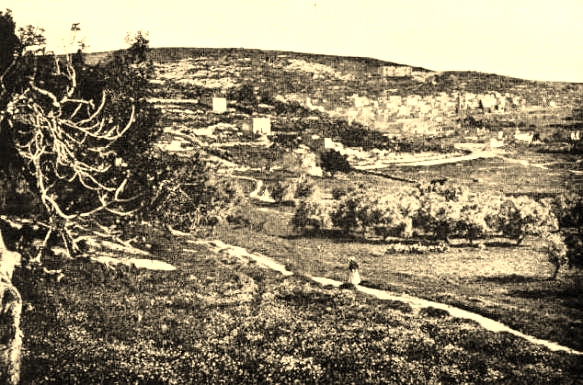
She was given the opportunity to be the mother of Messiah—the Son of the Most High. She accepted without question, filled with wonder, in humble awe of being chosen.
.
In reading between the lines in the initial Gospel references to the mother of our Lord, we happen upon facts otherwise escaping our notice, primarily, her humble origin. We already know her hometown was not the greatest of places, as none other than one of the twelve, Nathanael Bar Tholmai (Bartholomew) articulated,
“Can any good thing come out of Nazareth?” [1]
The rustic community is never mentioned in any of the Old Testament writings, meaning it had yet to exist then, suffered utmost insignificance, or was known by a different name, one of which might have been “white town” or a variation, named after the ready supply of limestone rocks in the area. Nestled among the lower hills of the Nazareth Range in the ancient tribal land of Zebulun, the city lay about halfway between the seas—the great Mediterranean on the west where sailing ships launched for far-off lands, and to the east, the indigenous, often mysterious Sea of Galilee, loved freshwater fishery of the locals.
From the little we know, Mary was likely born is this little village by the cliffs in circa 18 BC. This was during the early years of Augustus, who became the first Roman emperor in 27 BC, and the local reign of the ruthless client-king Herod the Great who had gained power a decade earlier. How she or her family arrived in the area is lost to history. Though Nazareth was within the small area originally allotted to the Tribe of Zebulun (the tenth son of Jacob and sixth born to Leah), Mary was actually a distant descendent of King David of the ruling line of Judah. Her connection to the latter tribe is somewhat problematic for a Galilean from the north due to her clear connection to relatives in the territory of Judea south of Jerusalem. The unknown story of her family’s transplantation is an intriguing one.
We know from the later annual pilgrimages made by the holy family to Jerusalem for the feasts that young Mary likely also made such trips as a child growing up, probably as part of small caravans. She was thus familiar with the territory and probably looked forward to such opportunities to see the great city and visit family. Journeying from the north in Galilee, one would traverse the disparaged Samaria, sandwiched between Galilee and Judea, and venture through the ancient tribal areas of Issachar, Manasseh, and Ephraim in the process, and lastly through the allotment of Benjamin on the approach to Yerushalayim which was located on the southern edge of his tribal land.
The eastern border between the two famous territories of Benjamin and Judah actually runs north and south along the Kidron Valley. The Kidron divides the city of Jerusalem in Benjamin’s territory to the west from the Mount of Olives in Judah’s territory to the east. The southern border between the tribes is divided by the valley of Hinnom which was immediately due south of the ancient city. Beyond these two natural demarcation lines was the fatherland of Judah and the ancestral land of King David to which Mary and her family sojourned frequently. It was also the ancestral homeland of her new husband Joseph, the strong but tender carpenter, chosen also as she was, and suited well for the calling.
AN ANGELIC VISITATION
Now in the sixth month the angel Gabriel was sent from God to a city in Galilee called Nazareth, to a virgin engaged to a man whose name was Joseph, of the descendants of David; and the virgin’s name was Mary. [Luke 1:26-27]
Luke makes it clear in his definitive account that Mary was a virgin when the angel Gabriel revealed to her the plan of God which would soon go into effect upon her consent. She was betrothed to the carpenter, meaning the marriage was not yet fully contracted, and both were honorable and chaste. It is often not acknowledged that young Mary had a choice regarding the Lord’s plan for her life. We all have a choice, and for everyone there is a plan. Notwithstanding the discipline required to live and work for the Lord according to His will and not our own, any other plan created and chosen by a person is always inferior to His. Mary understood this. It is why she replied to Gabriel with no hesitation in her heart:
And coming in, he said to her, “Greetings, favored one! The Lord is with you.” But she was very perplexed at this statement, and kept pondering what kind of salutation this was. The angel said to her, “Do not be afraid, Mary; for you have found favor with God. And behold, you will conceive in your womb and bear a son, and you shall name Him Jesus. He will be great and will be called the Son of the Most High; and the Lord God will give Him the throne of His father David; and He will reign over the house of Jacob forever, and His kingdom will have no end.”
Mary said to the angel, “How can this be, since I am a virgin?” The angel answered and said to her, “The Holy Spirit will come upon you, and the power of the Most High will overshadow you; and for that reason the holy Child shall be called the Son of God. And behold, even your relative Elizabeth has also conceived a son in her old age; and she who was called barren is now in her sixth month. For nothing will be impossible with God.”
And Mary said, “Behold, the bondslave of the Lord; may it be done to me according to your word.” And the angel departed from her. [Luke 1:28-38] [2]
Mary’s use of the word “bondslave” is not without import. It is from the Greek doulos and is defined accordingly as a female slave without any ownership rights of her own. This word, also translated as bond-servant, is used throughout the New Testament denoting the pure servanthood and dedication to the Master by real believers. The Hebrew equivalent for a female servant is shiphchah and has an ancient etymology dating to the book of Genesis. Though we often fail to perceive, in these brief Scriptural renderings, the full connotation and significance of the choice she made, Mary knew exactly what she was doing by deciding in the affirmative. She understood the gravity of the situation, the ramifications thereof, and that it was a lifelong commitment.
But there is more. Mary alluded to her current state of life before the angelic visitation as thoroughly humble and insignificant. We see this first in her initial reaction to Gabriel’s greeting when he referred to her as “favored one” and said the Lord was with her: But she was very perplexed at this statement, and kept pondering what kind of salutation this was. She was also afraid, probably for the same reasons you or I would be startled at the appearance of an angel. It was more than this, however. She was concerned about what it meant for her life and, in those first few seconds, that she was in no way worthy of such an astounding visitation and calling.
Why did she feel this way? There is something else here that Luke’s narrative hints at which he does not delve into, possibly because he knew his audience was aware of whatever particulars were involved with Mary and the circumstances of her humble life.
In Part 2, I will continue delving into such lesser-known particulars. We will look closer at Mary’s upbringing, family, and momentous visit to her elderly but expecting relative Elizabeth, also a chosen woman of the Lord who found much grace in His sight.
© 2019 by RJ Dawson. All Rights Reserved. [To Be Continued]
[1] John 1:46
[2] Unless otherwise noted all Scriptures are taken from the New American Standard Bible, © 1960, 1963, 1968, 1971, 1972, 1973, 1975, 1977, 1995 by The Lockman Foundation. Used by permission.
MARY HIGHLY FAVORED: “BLESSED ARE YOU AMONG WOMEN!” (2)
The conventional perception of the mother of our Lord is off. It is way off. She is commonly depicted in religious art, iconography, and statuary as European, and often northern European.
.
Knowledge of her Hebrew heritage among Christians is largely lost. Even her actual name is mostly unknown. The name Mary derives from the Judeo-Aramaic variant Maryam, from the Greek Mariam, which was derived from the original Hebrew Miryam, the name of the elder sister of Moses and Aaron (which is translated into English primarily as Miriam). New Testament readers know this was a popular name for Hebrew women at that time, as there are several with the name in the Gospel accounts.
As a young Hebrew maiden of eastern Mediterranean stock, she was likely dark complected with dark hair and Semitic features. Semitic refers to one of the three sons of Noah—Shem—whose descendants predominantly populated the Middle East and still do today. We know from early OT accounts that the ancient Hebrews shared their DNA with many different ethnos of the greater region, including the Canaanite tribes. There were also the two great disruptions to the nation when the ten northern tribes of Israel were deported to the east in 722 BC followed by the Babylonian captivity of Judah 136 years later. The three remaining tribes of the latter—Judah, Levi, and Benjamin—were removed to Babylon for 70 years. They were allowed to return but many chose to stay. The lands of Israel and Judah had been repopulated somewhat by foreigners in the interim, especially the Samaritan region. The land was then ruled by a succession of Persians, Greeks, and Romans. It is therefore difficult if not impossible to arrive at a definitive Hebrew nationality by the first century AD.
Even so, we do have two extant genealogies of our Lord Jesus from that time, both of which stem from the tribe of Judah and feature the persons of Abraham and David. The genealogy of Joseph the carpenter in Matthew’s gospel descends through King David’s son Solomon, the third and final king of a united Israel. After Solomon’s death the kingdom split into the northern Kingdom of Israel and the southern Kingdom of Judah. Luke’s gospel contains the genealogy of Mary, which also goes through David but by his son Nathan, Solomon’s brother. This family tree divergence took place over 900 years before the Lord’s birth. The last of the Hebrew kings of the Judaic line ceased with the Babylonian captivity in 586 BC. Zedekiah was the last king of Judah, but was somewhat illegitimate in that he was installed by the Babylonian king Nebuchadnezzar in 597 BC after the siege of Jerusalem. The king before Zedekiah was Jeconiah (AKA Coniah, Jehoiachin), who was carted off to Babylon a prisoner in chains. This is what the prophet Jeremiah said about him:
“Is this man Coniah a despised, shattered jar? Or is he an undesirable vessel? Why have he and his descendants been hurled out and cast into a land that they had not known? O land, land, land, hear the word of the LORD! Thus says the LORD, ‘Write this man down childless, a man who will not prosper in his days; for no man of his descendants will prosper sitting on the throne of David or ruling again in Judah.’” [Jeremiah 22:28-30]
The Hebrew monarchy was thus abolished. There were no more kings. No one could ever again qualify. Joseph the carpenter’s line included Jeconiah and he is listed in Matthew’s genealogy. Nevertheless, it was established that Joseph, the legal stepfather of the Lord, could trace his direct lineage to Solomon and David. Mary’s genealogy could also be traced directly to King David. This means the Lord Jesus had a legal right as king through Joseph and a biological right through His mother. Though the monarchial birthright was essentially revoked by Jeremiah’s prophecy, this did not apply to the Lord Jesus because he was not a blood descendant of Jeconiah. Thus, the only possible way the Davidic line of kings could be restored, even after a six century interval, would be through the following:
“Behold, a virgin will be with child and bear a son, and she will call His name Immanuel.” [Isaiah 7:14]
GREETINGS FROM THE WOMB
As described in Part 1, Mary was soon on the road south to Judea to visit her relative Elizabeth. The two women were anxious to share the great news of their pregnancies, both of which were only possible through direct miraculous means. Elizabeth was greatly humbled in her long life of barrenness but maintained her faith regardless. Mary was also burdened somewhat by an undisclosed life circumstance. Here we have the young and the old, both of whom must deal with the inevitable gossip of unbelievers, yet blessed abundantly as major players in the great plan of God for the salvation of Israel and humanity. But besides these two who knew each other well, there were others who met for the very first time:
Now at this time Mary arose and went in a hurry to the hill country, to a city of Judah, and entered the house of Zacharias and greeted Elizabeth. When Elizabeth heard Mary’s greeting, the baby leaped in her womb; and Elizabeth was filled with the Holy Spirit. And she cried out with a loud voice and said,
“Blessed are you among women, and blessed is the fruit of your womb! And how has it happened to me, that the mother of my Lord would come to me? For behold, when the sound of your greeting reached my ears, the baby leaped in my womb for joy. And blessed is she who believed that there would be a fulfillment of what had been spoken to her by the Lord.” [Luke 1:39-45][1]
© 2019 by RJ Dawson. All Rights Reserved. [To Be Continued]
[1] Unless otherwise noted all Scriptures are taken from the New American Standard Bible, © 1960, 1963, 1968, 1971, 1972, 1973, 1975, 1977, 1995 by The Lockman Foundation. Used by permission.
MARY HIGHLY FAVORED: “BLESSED ARE YOU AMONG WOMEN!” (1)
She was given the opportunity to be the mother of Messiah—the Son of the Most High. She accepted without question, filled with wonder, in humble awe of being chosen.
.
In reading between the lines in the initial Gospel references to the mother of our Lord, we happen upon facts otherwise escaping our notice, primarily, her humble origin. We already know her hometown was not the greatest of places, as none other than one of the twelve, Nathanael Bar Tholmai (Bartholomew) articulated,
“Can any good thing come out of Nazareth?” [1]
The rustic community is never mentioned in any of the Old Testament writings, meaning it had yet to exist then, suffered utmost insignificance, or was known by a different name, one of which might have been “white town” or a variation, named after the ready supply of limestone rocks in the area. Nestled among the lower hills of the Nazareth Range in the ancient tribal land of Zebulun, the city lay about halfway between the seas—the great Mediterranean on the west where sailing ships launched for far-off lands, and to the east, the indigenous, often mysterious Sea of Galilee, loved freshwater fishery of the locals.
From the little we know, Mary was likely born in this little village by the cliffs in circa 18 BC. This was during the early years of Augustus, who became the first Roman emperor in 27 BC, and the local reign of the ruthless client-king Herod the Great who had gained power a decade earlier. How she or her family arrived in the area is lost to history. Though Nazareth was within the small area originally allotted to the Tribe of Zebulun (the tenth son of Jacob and sixth born to Leah), Mary was actually a distant descendent of King David of the ruling line of Judah. Her connection to the latter tribe is somewhat problematic for a Galilean from the north due to her clear connection to relatives in the territory of Judea south of Jerusalem. The unknown story of her family’s transplantation is an intriguing one.
We know from the later annual pilgrimages made by the holy family to Jerusalem for the feasts that young Mary likely also made such trips as a child growing up, probably as part of small caravans. She was thus familiar with the territory and probably looked forward to such opportunities to see the great city and visit family. Journeying from the north in Galilee, one would traverse the disparaged Samaria, sandwiched between Galilee and Judea, and venture through the ancient tribal areas of Issachar, Manasseh, and Ephraim in the process, and lastly through the allotment of Benjamin on the approach to Yerushalayim which was located on the southern edge of his tribal land.
The eastern border between the two famous territories of Benjamin and Judah actually runs north and south along the Kidron Valley. The Kidron divides the city of Jerusalem in Benjamin’s territory to the west from the Mount of Olives in Judah’s territory to the east. The southern border between the tribes is divided by the valley of Hinnom which was immediately due south of the ancient city. Beyond these two natural demarcation lines was the fatherland of Judah and the ancestral land of King David to which Mary and her family sojourned frequently. It was also the ancestral homeland of her new husband Joseph, the strong but tender carpenter, chosen also as she was, and suited well for the calling.
AN ANGELIC VISITATION
Now in the sixth month the angel Gabriel was sent from God to a city in Galilee called Nazareth, to a virgin engaged to a man whose name was Joseph, of the descendants of David; and the virgin’s name was Mary. [Luke 1:26-27]
Luke makes it clear in his definitive account that Mary was a virgin when the angel Gabriel revealed to her the plan of God which would soon go into effect upon her consent. She was betrothed to the carpenter, meaning the marriage was not yet fully contracted, and both were honorable and chaste. It is often not acknowledged that young Mary had a choice regarding the Lord’s plan for her life. We all have a choice, and for everyone there is a plan. Notwithstanding the discipline required to live and work for the Lord according to His will and not our own, any other plan created and chosen by a person is always inferior to His. Mary understood this. It is why she replied to Gabriel with no hesitation in her heart:
And coming in, he said to her, “Greetings, favored one! The Lord is with you.” But she was very perplexed at this statement, and kept pondering what kind of salutation this was. The angel said to her, “Do not be afraid, Mary; for you have found favor with God. And behold, you will conceive in your womb and bear a son, and you shall name Him Jesus. He will be great and will be called the Son of the Most High; and the Lord God will give Him the throne of His father David; and He will reign over the house of Jacob forever, and His kingdom will have no end.”
Mary said to the angel, “How can this be, since I am a virgin?” The angel answered and said to her, “The Holy Spirit will come upon you, and the power of the Most High will overshadow you; and for that reason the holy Child shall be called the Son of God. And behold, even your relative Elizabeth has also conceived a son in her old age; and she who was called barren is now in her sixth month. For nothing will be impossible with God.”
And Mary said, “Behold, the bondslave of the Lord; may it be done to me according to your word.” And the angel departed from her. [Luke 1:28-38] [2]
Mary’s use of the word “bondslave” is not without import. It is from the Greek doulos and is defined accordingly as a female slave without any ownership rights of her own. This word, also translated as bond-servant, is used throughout the New Testament denoting the pure servanthood and dedication to the Master by real believers. The Hebrew equivalent for a female servant is shiphchah and has an ancient etymology dating to the book of Genesis. Though we often fail to perceive, in these brief Scriptural renderings, the full connotation and significance of the choice she made, Mary knew exactly what she was doing by deciding in the affirmative. She understood the gravity of the situation, the ramifications thereof, and that is was a lifelong commitment.
But there is more. Mary alluded to her current state of life before the angelic visitation as thoroughly humble and insignificant. We see this first in her initial reaction to Gabriel’s greeting when he referred to her as “favored one” and said the Lord was with her: But she was very perplexed at this statement, and kept pondering what kind of salutation this was. She was also afraid, probably for the same reasons you or I would be startled at the appearance of an angel. It was more than this, however. She was concerned about what it meant for her life and, in those first few seconds, that she was in no way worthy of such an astounding visitation and calling.
Why did she feel this way? There is something else here that Luke’s narrative hints at which he does not delve into, possibly because he knew his audience was aware of whatever particulars were involved with Mary and the circumstances of her humble life.
In Part 2, I will continue delving into such lesser-known particulars. We will look closer at Mary’s upbringing, family, and momentous visit to her elderly but expecting relative Elizabeth, also a chosen woman of the Lord who found much grace in His sight.
© 2019 by RJ Dawson. All Rights Reserved. [To Be Continued]
[1] John 1:46
[2] Unless otherwise noted all Scriptures are taken from the New American Standard Bible, © 1960, 1963, 1968, 1971, 1972, 1973, 1975, 1977, 1995 by The Lockman Foundation. Used by permission.
MARY HIGHLY FAVORED: “BLESSED ARE YOU AMONG WOMEN!” (5-Part Series)
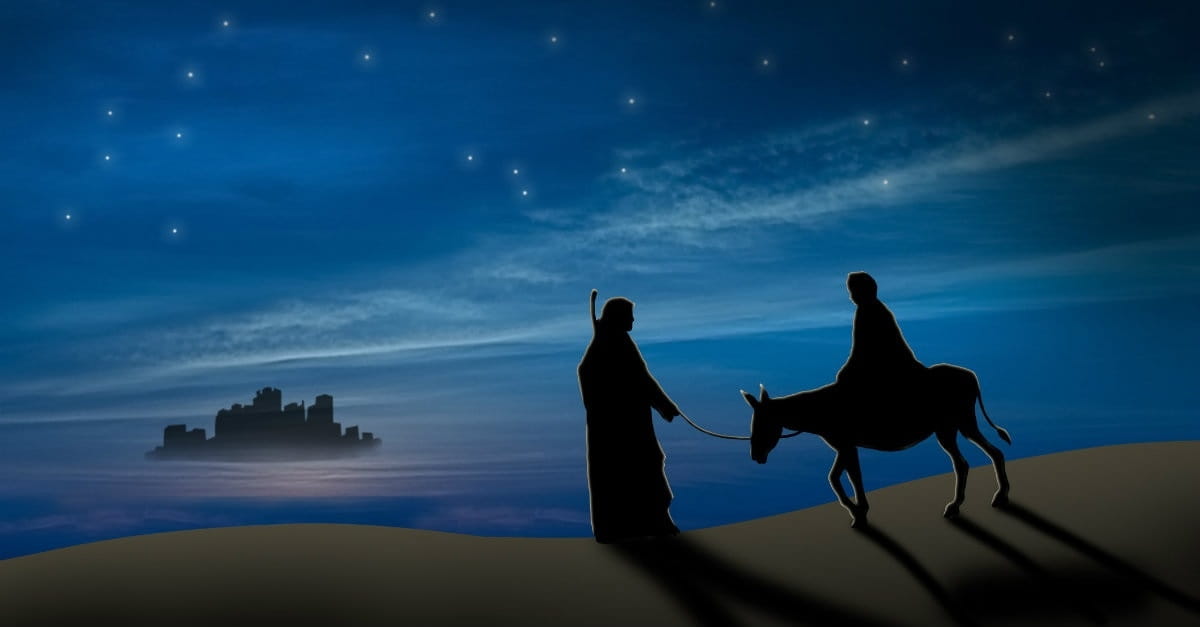
Dear Readers: The following series, based solely on the New Testament, is an in-depth study of Mary, the mother of our Lord. I wrote it last year at Christmas time. Some of you are already familiar with it and have added sterling comments. I highly recommend these posts, as you will undoubtedly fill in many of the blanks regarding Mary’s life and calling. There is actually very little in the New Covenant Scriptures regarding her but much can be gained by drawing on several intriguing clues. She was an exceptional person and deserves a closer look into a life extremely well lived.
Dec. 12, 2019: MARY HIGHLY FAVORED: “BLESSED ARE YOU AMONG WOMEN” (Intro)
Dec. 13, 2019: MARY HIGHLY FAVORED: “BLESSED ARE YOU AMONG WOMEN” (Part 1)
Dec. 18, 2019: MARY HIGHLY FAVORED: “BLESSED ARE YOU AMONG WOMEN” (Part 2)
Dec. 22, 2019: MARY HIGHLY FAVORED: “BLESSED ARE YOU AMONG WOMEN” (Part 3)
Dec. 24, 2019: MARY HIGHLY FAVORED: “BLESSED ARE YOU AMONG WOMEN” (Part 4)
Dec. 25, 2019: MARY HIGHLY FAVORED: “BLESSED ARE YOU AMONG WOMEN” (Part 5)
.
© 2019 by RJ Dawson. All Rights Reserved.
MARY HIGHLY FAVORED: “BLESSED ARE YOU AMONG WOMEN!” (2)
The conventional perception of the mother of our Lord is off. It is way off. She is commonly depicted in religious art, iconography, and statuary as European, and often northern European.
.
Knowledge of her Hebrew heritage among Christians is largely lost. Even her actual name is mostly unknown. The name Mary derives from the Judeo-Aramaic variant Maryam, from the Greek Mariam, which was derived from the original Hebrew Miryam, the name of the elder sister of Moses and Aaron (which is translated into English primarily as Miriam). New Testament readers know this was a popular name for Hebrew women at that time, as there are several with the name in the Gospel accounts.
As a young Hebrew maiden of eastern Mediterranean stock, she was likely dark complected with dark hair and Semitic features. Semitic refers to one of the three sons of Noah—Shem—whose descendants predominantly populated the Middle East and still do today. We know from early OT accounts that the ancient Hebrews shared their DNA with many different ethnos of the greater region, including the Canaanite tribes. There were also the two great disruptions to the nation when the ten northern tribes of Israel were deported to the east in 722 BC followed by the Babylonian captivity of Judah 136 years later. The three remaining tribes of the latter—Judah, Levi, and Benjamin—were removed to Babylon for 70 years. They were allowed to return but many chose to stay. The lands of Israel and Judah had been repopulated somewhat by foreigners in the interim, especially the Samaritan region. The land was then ruled by a succession of Persians, Greeks, and Romans. It is therefore difficult if not impossible to arrive at a definitive Hebrew nationality by the first century AD.
Even so, we do have two extant genealogies of our Lord Jesus from that time, both of which stem from the tribe of Judah and feature the persons of Abraham and David. The genealogy of Joseph the carpenter in Matthew’s gospel descends through King David’s son Solomon, the third and final king of a united Israel. After Solomon’s death the kingdom split into the northern Kingdom of Israel and the southern Kingdom of Judah. Luke’s gospel contains the genealogy of Mary, which also goes through David but by his son Nathan, Solomon’s brother. This family tree divergence took place over 900 years before the Lord’s birth. The last of the Hebrew kings of the Judaic line ceased with the Babylonian captivity in 586 BC. Zedekiah was the last king of Judah, but was somewhat illegitimate in that he was installed by the Babylonian king Nebuchadnezzar in 597 BC after the siege of Jerusalem. The king before Zedekiah was Jeconiah (AKA Coniah, Jehoiachin), who was carted off to Babylon a prisoner in chains. This is what the prophet Jeremiah said about him:
“Is this man Coniah a despised, shattered jar? Or is he an undesirable vessel? Why have he and his descendants been hurled out and cast into a land that they had not known? O land, land, land, hear the word of the LORD! Thus says the LORD, ‘Write this man down childless, a man who will not prosper in his days; for no man of his descendants will prosper sitting on the throne of David or ruling again in Judah.’” [Jeremiah 22:28-30]
The Hebrew monarchy was thus abolished. There were no more kings. No one could ever again qualify. Joseph the carpenter’s line included Jeconiah and he is listed in Matthew’s genealogy. Nevertheless, it was established that Joseph, the legal stepfather of the Lord, could trace his direct lineage to Solomon and David. Mary’s genealogy could also be traced directly to King David. This means the Lord Jesus had a legal right as king through Joseph and a biological right through His mother. Though the monarchial birthright was essentially revoked by Jeremiah’s prophecy, this did not apply to the Lord Jesus because he was not a blood descendant of Jeconiah. Thus, the only possible way the Davidic line of kings could be restored, even after a six century interval, would be through the following:
“Behold, a virgin will be with child and bear a son, and she will call His name Immanuel.” [Isaiah 7:14]
GREETINGS FROM THE WOMB
As described in Part 1, Mary was soon on the road south to Judea to visit her relative Elizabeth. The two women were anxious to share the great news of their pregnancies, both of which were only possible through direct miraculous means. Elizabeth was greatly humbled in her long life of barrenness but maintained her faith regardless. Mary was also burdened somewhat by an undisclosed life circumstance. Here we have the young and the old, both of whom must deal with the inevitable gossip of unbelievers, yet blessed abundantly as major players in the great plan of God for the salvation of Israel and humanity. But besides these two who knew each other well, there were others who met for the very first time:
Now at this time Mary arose and went in a hurry to the hill country, to a city of Judah, and entered the house of Zacharias and greeted Elizabeth. When Elizabeth heard Mary’s greeting, the baby leaped in her womb; and Elizabeth was filled with the Holy Spirit. And she cried out with a loud voice and said,
“Blessed are you among women, and blessed is the fruit of your womb! And how has it happened to me, that the mother of my Lord would come to me? For behold, when the sound of your greeting reached my ears, the baby leaped in my womb for joy. And blessed is she who believed that there would be a fulfillment of what had been spoken to her by the Lord.” [Luke 1:39-45][1]
© 2019 by RJ Dawson. All Rights Reserved. [To Be Continued]
[1] Unless otherwise noted all Scriptures are taken from the New American Standard Bible, © 1960, 1963, 1968, 1971, 1972, 1973, 1975, 1977, 1995 by The Lockman Foundation. Used by permission.
MARY HIGHLY FAVORED: “BLESSED ARE YOU AMONG WOMEN!” (Intro)
MARY HIGHLY FAVORED: “BLESSED ARE YOU AMONG WOMEN!” (1)
MARY HIGHLY FAVORED: “BLESSED ARE YOU AMONG WOMEN!” (3)
MARY HIGHLY FAVORED: “BLESSED ARE YOU AMONG WOMEN!” (1)
NAZARETH
She was given the opportunity to be the mother of Messiah—the Son of the Most High. She accepted without question, filled with wonder, in humble awe of being chosen.
.
In reading between the lines in the initial Gospel references to the mother of our Lord, we happen upon facts otherwise escaping our notice, primarily, her humble origin. We already know her hometown was not the greatest of places, as none other than one of the twelve, Nathanael Bar Tholmai (Bartholomew) articulated,
“Can any good thing come out of Nazareth?” [1]
The rustic community is never mentioned in any of the Old Testament writings, meaning it had yet to exist then, suffered utmost insignificance, or was known by a different name, one of which might have been “white town” or a variation, named after the ready supply of limestone rocks in the area. Nestled among the lower hills of the Nazareth Range in the ancient tribal land of Zebulun, the city lay about halfway between the seas—the great Mediterranean on the west where sailing ships launched for far-off lands, and to the east, the indigenous, often mysterious Sea of Galilee, loved freshwater fishery of the locals.
From the little we know, Mary was likely born is this little village by the cliffs in circa 18 BC. This was during the early years of Augustus, who became the first Roman emperor in 27 BC, and the local reign of the ruthless client-king Herod the Great who had gained power a decade earlier. How she or her family arrived in the area is lost to history. Though Nazareth was within the small area originally allotted to the Tribe of Zebulun (the tenth son of Jacob and sixth born to Leah), Mary was actually a distant descendent of King David of the ruling line of Judah. Her connection to the latter tribe is somewhat problematic for a Galilean from the north due to her clear connection to relatives in the territory of Judea south of Jerusalem. The unknown story of her family’s transplantation is an intriguing one.
We know from the later annual pilgrimages made by the holy family to Jerusalem for the feasts that young Mary likely also made such trips as a child growing up, probably as part of small caravans. She was thus familiar with the territory and probably looked forward to such opportunities to see the great city and visit family. Journeying from the north in Galilee, one would traverse the disparaged Samaria, sandwiched between Galilee and Judea, and venture through the ancient tribal areas of Issachar, Manasseh, and Ephraim in the process, and lastly through the allotment of Benjamin on the approach to Yerushalayim which was located on the southern edge of his tribal land.
The eastern border between the two famous territories of Benjamin and Judah actually runs north and south along the Kidron Valley. The Kidron divides the city of Jerusalem in Benjamin’s territory to the west from the Mount of Olives in Judah’s territory to the east. The southern border between the tribes is divided by the valley of Hinnom which was immediately due south of the ancient city. Beyond these two natural demarcation lines was the fatherland of Judah and the ancestral land of King David to which Mary and her family sojourned frequently. It was also the ancestral homeland of her new husband Joseph, the strong but tender carpenter, chosen also as she was, and suited well for the calling.
AN ANGELIC VISITATION
Now in the sixth month the angel Gabriel was sent from God to a city in Galilee called Nazareth, to a virgin engaged to a man whose name was Joseph, of the descendants of David; and the virgin’s name was Mary. [Luke 1:26-27]
Luke makes it clear in his definitive account that Mary was a virgin when the angel Gabriel revealed to her the plan of God which would soon go into effect upon her consent. She was betrothed to the carpenter, meaning the marriage was not yet fully contracted, and both were honorable and chaste. It is often not acknowledged that young Mary had a choice regarding the Lord’s plan for her life. We all have a choice, and for everyone there is a plan. Notwithstanding the discipline required to live and work for the Lord according to His will and not our own, any other plan created and chosen by a person is always inferior to His. Mary understood this. It is why she replied to Gabriel with no hesitation in her heart:
And coming in, he said to her, “Greetings, favored one! The Lord is with you.” But she was very perplexed at this statement, and kept pondering what kind of salutation this was. The angel said to her, “Do not be afraid, Mary; for you have found favor with God. And behold, you will conceive in your womb and bear a son, and you shall name Him Jesus. He will be great and will be called the Son of the Most High; and the Lord God will give Him the throne of His father David; and He will reign over the house of Jacob forever, and His kingdom will have no end.”
Mary said to the angel, “How can this be, since I am a virgin?” The angel answered and said to her, “The Holy Spirit will come upon you, and the power of the Most High will overshadow you; and for that reason the holy Child shall be called the Son of God. And behold, even your relative Elizabeth has also conceived a son in her old age; and she who was called barren is now in her sixth month. For nothing will be impossible with God.”
And Mary said, “Behold, the bondslave of the Lord; may it be done to me according to your word.” And the angel departed from her. [Luke 1:28-38] [2]
Mary’s use of the word “bondslave” is not without import. It is from the Greek doulos and is defined accordingly as a female slave without any ownership rights of her own. This word, also translated as bond-servant, is used throughout the New Testament denoting the pure servanthood and dedication to the Master by real believers. The Hebrew equivalent for a female servant is shiphchah and has an ancient etymology dating to the book of Genesis. Though we often fail to perceive, in these brief Scriptural renderings, the full connotation and significance of the choice she made, Mary knew exactly what she was doing by deciding in the affirmative. She understood the gravity of the situation, the ramifications thereof, and that is was a lifelong commitment.
But there is more. Mary alluded to her current state of life before the angelic visitation as thoroughly humble and insignificant. We see this first in her initial reaction to Gabriel’s greeting when he referred to her as “favored one” and said the Lord was with her: But she was very perplexed at this statement, and kept pondering what kind of salutation this was. She was also afraid, probably for the same reasons you or I would be startled at the appearance of an angel. It was more than this, however. She was concerned about what it meant for her life and, in those first few seconds, that she was in no way worthy of such an astounding visitation and calling.
Why did she feel this way? There is something else here that Luke’s narrative hints at which he does not delve into, possibly because he knew his audience was aware of whatever particulars were involved with Mary and the circumstances of her humble life.
In Part 2, I will continue delving into such lesser-known particulars. We will look closer at Mary’s upbringing, family, and momentous visit to her elderly but expecting relative Elizabeth, also a chosen woman of the Lord who found much grace in His sight.
© 2019 by RJ Dawson. All Rights Reserved. [To Be Continued]
[1] John 1:46
[2] Unless otherwise noted all Scriptures are taken from the New American Standard Bible, © 1960, 1963, 1968, 1971, 1972, 1973, 1975, 1977, 1995 by The Lockman Foundation. Used by permission.
MARY HIGHLY FAVORED: “BLESSED ARE YOU AMONG WOMEN!” (Intro)
MARY HIGHLY FAVORED: “BLESSED ARE YOU AMONG WOMEN!” (2)
MARY HIGHLY FAVORED: “BLESSED ARE YOU AMONG WOMEN!” (3)
MARY HIGHLY FAVORED: “BLESSED ARE YOU AMONG WOMEN!” (4)
MARY HIGHLY FAVORED: “BLESSED ARE YOU AMONG WOMEN!” (5)


 Real Christianity