Blog Archives
A NEW CREATION: DEFINING THE NEW BIRTH [Part 1]

Because original Creation was severely damaged by sin and rebellion in both the angelic and human realms, it required God’s subsequent plan for a New Creation.
.
AND GOD SAW THAT IT WAS GOOD
Creation does not work as intended according to the will of the Creator unless the Creator is recognized and honored by all members of His Creation. Anything less than this will cause problems, allow for faults and malfunctions, and may ultimately cause major failures. Yet the Creator has deemed that all who desire His intention and will can only agree to it voluntarily. It is why He gifted humanity with a free will. People are thus given both the authority and responsibility to choose the Creator’s will and vision or not. The correct choice also should be their top priority since it is the Creator who created everything to begin with, and everything in His original Creation extended forth and branched out from Him, that is, from His plans and creative process—and that it was good.
In this we can see that the Creator is both benevolent and non-coercive in that He never forces one to recognize and honor Him and will not violate His complimentary endowment of free will, which proves His love and His obvious understanding that love can only be freely given. He has also created human beings with the power of perception—the ability to perceive on their own—and the desire to “look around and discover” whatever His Creation has to behold. He knows that in this process, if one remains honorable and honest in one’s ongoing search, one will eventually find Him.
OF SAINTS AND SINNERS
The perfection of His original Creation was marred due to an angelic revolt. One may wonder why such a thing happened or how it could have happened within the bliss and harmony of the heavenly realm. Such bewilderment reigns until one considers the foundational culprit at the heart of it all—the sin of pride. This unfortunate trait is the result of a strange brew. It arises as an alchemical concoction formulated deep within the bowels of worshipful reflection upon self—arising from gifts such as outward beauty, lofty intellect, and/or superior attributes and abilities—that which the self had nothing to do with but takes possession of as if it did.
When one is thinking correctly, the proper response to such personal gifts and attributes is the very opposite of the aforementioned sin. It is one’s focus on the Creator and the recognition that one is a created being with no right to claim creative title nor the right to choose as one sees fit. Thus, rather than personal pride, in which one puts his or her own selfish interests first, one chooses instead to yield to the will of one’s Maker and appropriate the positive character trait of humility, which is a recognition of endowed blessings as gifts given in love. This is an acknowledgment of the Giver and an expression of gratitude to Him. Humility thus originates from the unpretentious heart of a person very aware that he or she is the blessed creation of a loving and beneficent Creator.
As such, rather than focusing laterally on self and generating rebellion, one instead looks upwardly towards one’s Maker and offers praise.
REBELS WITHOUT A CAUSE
And there was war in heaven, Michael and his angels waging war with the dragon. The dragon and his angels waged war, and they were not strong enough, and there was no longer a place found for them in heaven. And the great dragon was thrown down, the serpent of old who is called the devil and Satan, who deceives the whole world; he was thrown down to the earth, and his angels were thrown down with him. [Revelation 12:7-9]
An apparent third of the angels of heaven rebelled against the Creator (Rev 12:4). This was followed by a much greater percentage of humanity throughout history. Such defiant outcomes had to be in order to allow for a dutiful Community willingly dedicated to the Creator composed of those who honored Him, appreciated Him, and loved Him. Those who refused were culled by their own choices. Each of the rebels, whether angelic or human, chose incorrectly, having been made vulnerable by personal pride, which caused their inability to withstand temptation, which further caused their descent into the darkness of deception.
THE TEMPTER’S TRICKS
The temptation tactics of the enemy are exactly the same in pretty much every respect as that which was presented to the Lord during His temptation in the wilderness, though nuanced to varying degrees to fit the person thereof:
(1) It was suggested to the Lord that He act out of character and turn stones into bread to satisfy His natural hunger, that is, prioritize natural desires and natural food over spiritual desires (serving God) and spiritual food—the Word of God.
(2) It was suggested to the Lord that He act out of character upon arrival at the “pinnacle of the temple” (having the highest level of spiritual authority and power) by operating outside the Law of God through engaging in a potentially harmful and injurious personal act, knowingly and purposely, in the sight of all, as if to prove He was bulletproof and above approach no matter what He did, in order to summon God’s unilateral protection and unconditional approval, and thus verify His official outward exalted sanitized religious image. (Sound familiar?)
(3) It was suggested to the Lord that He act out of character and accept the rule over all the kingdoms on earth in exchange for worshipping the devil, that is, trade His spiritual authority over His eternal spiritual kingdom for all the temporary perks of natural authority at the highest level over the entire planet, while serving as the devil’s flunky.
This is pretty much what Adam and Eve did. Of course, their spiritual kingdom was the Garden and the devil lied about the world outside it, which brings to mind the following:
For a day in Your courts is better than a thousand outside.
I would rather stand at the threshold of the house of my God
Than dwell in the tents of wickedness. [Psalm 84:10]
Therefore, we must understand that there are basic natural tendencies endemic to every person which can be utilized by the enemy to gain advantage. The serpent in the Garden knew this, of course, since he was a fallen angel who had failed his own temptation battle. He was very aware of personal makeup and knew the newly created humans had a similar nature in that they were free will beings made in the image of God. It is why temptation always starts in one of three overall areas:
For all that is in the world, the lust of the flesh and the lust of the eyes and the boastful pride of life, is not from the Father, but is from the world. [John 2:16]
When the woman saw that the tree was good for food, and that it was a delight to the eyes, and that the tree was desirable to make one wise, she took from its fruit and ate… [Genesis 3:6]
IN THE IMAGE OF GOD
God created man in His own image, in the image of God He created him; male and female He created them. [Genesis 1:27]
One might take a step back here when thinking of the devil and demons as somehow being like God but one must also understand that such fallen angels were at one time bright shining sinless creatures who dwelt in heaven and that in his previous personification the devil was apparently the most gifted angel among them. We must also understand that God Himself has a particular distinct and unique nature and that He draws from Himself to create those whom He would be in relationship with, which, again, means that both angels and humans are at least similar to Him if not predominantly like Him (until they rebel against Him). It is why both have such wondrous abilities in both the spiritual and natural spheres.
Human beings, “made, lower than the angels” (Hebrews 2:7), are intelligent, physically gifted, and infused with potentially tremendous spiritual aptitude including the inherent capacity for accomplishing the things we see the Lord doing in the Gospels. The first man was like that, whose attributes also included immortality before his fall into sin, and was “a type of Him who was to come” (Romans 5:14). It is why the apostle Paul related the first created man to the Lord Jesus, calling both Adam:
So also it is written, “The first man, Adam, became a living soul.” The last Adam became a life-giving spirit. [1Corinthians 15:45] [1]
Adam was made in the image of God. The Lord Jesus IS the Image of God.
This puts things into greater perspective regarding God’s original intentions for humanity and also how very different humanity was originally. What we see in the Lord Jesus is an absolutely perfect Man but also One who is a type of what all people should be. In fact, Christians are instructed by the Lord’s teachings to strive to be just like Him, as impossible as that may appear. What He means by this is one must appropriate the same divine nature that Adam and Eve had before the fall. It is also why the Lord Jesus taught that every one of His followers must undergo a new spiritual birth in that they must be born again, which means “born from above” (John 3:7).
The Lord’s mission is thus the process of transforming humanity back to its original state and condition.
© 2025 by RJ Dawson. All Rights Reserved. [To Be Continued…]
[1] Unless otherwise noted all Scriptures are taken from the New American Standard Bible, © 1960, 1963, 1968, 1971, 1972, 1973, 1975, 1977, 1995 by The Lockman Foundation. Used by permission.
THE LORD WILL NOT HOLD CHRISTIANS GUILTLESS FOR SUPPORTING SIN AND EVIL

Those who know the least are often those with the most settled, unswerving, and unchanging incorrect beliefs. It is an otherwise clear sign of indoctrination.
.
THE NEW TESTAMENT WRITINGS ARE THE CURE
The New Testament must be differentiated from the Old Testament just as the New Covenant supersedes the Old Covenant. The apostle Paul wrote about this often and the teaching exists throughout his many writings. Those who know the New Testament and believe it to be the Word of God also know that Paul was taught the Gospel directly by the Lord Jesus in a one-on-one spiritual encounter that must have lasted quite a while and probably happened during his desert sojourn. It is also not difficult to correctly surmise here that Paul attended to his own forty day fast likely at the same time:
For I would have you know, brethren, that the gospel which was preached by me is not according to man. For I neither received it from man, nor was I taught it, but I received it through a revelation of Jesus Christ. [Galatians 1:11]
The man Saul was not only naturally brilliant, of course, and fiercely determined, but as Paul, he also came to be extremely knowledgeable of spiritual things. The Lord Jesus chose him for a reason and made a point to make it a special occasion because of one of Paul’s (Saul’s) other natural attributes: He was magnificently bullheaded.
The only cure for such if one will walk in the Spirit and do the will of God is to be humbled, and in Paul’s case and others like him, greatly humbled. In other words, the Lord Jesus sees all and knows all. He knows what one will be thinking next Wednesday at 1:37pm. He knows everything about every one of us. It is why it is so ridiculous when one tries to hide from God or think God does not see one’s every move. It is why so many people steer clear of the Lord because they know in their hearts that He knows this and they feel strongly uncomfortable and awkward about a possible meeting as a result. They do not appreciate the thought of having to encounter a holy God because of their many unconfessed sins which will undoubtedly be revealed as will be their sinful thoughts and thinking as well as knowing their intentions and justification for questionable activity will likely never pass muster. Such was possibly going through Paul’s mind when the following occurred:
Now Saul, still breathing threats and murder against the disciples of the Lord, went to the high priest, and asked for letters from him to the synagogues at Damascus, so that if he found any belonging to the Way, both men and women, he might bring them bound to Jerusalem. As he was traveling, it happened that he was approaching Damascus, and suddenly a light from heaven flashed around him; and he fell to the ground and heard a voice saying to him, “Saul, Saul, why are you persecuting Me?” And he said, “Who are You, Lord?” And He said, “I am Jesus whom you are persecuting, but get up and enter the city, and it will be told you what you must do.” The men who traveled with him stood speechless, hearing the voice but seeing no one. Saul got up from the ground, and though his eyes were open, he could see nothing; and leading him by the hand, they brought him into Damascus. And he was three days without sight, and neither ate nor drank. [Acts 9:1-9]
BULLHEADED CHRISTIANS
Most Christians, of course, had not needed such a dramatic conversion experience. Prior to salvation they were not so full of themselves, their own worth, or filled with pride to such a degree, especially the kind Saul/Paul had—religious pride—which is about as difficult to extract as the giant back teeth of a living and very angry Tyrannosaurus Rex. Only God can do it. And He certainly knows how. But He will never waste much or any time and effort on people whom He knows will never repent. He knew Paul’s heart beyond his indoctrination and also knew he would make the right decision though not without some extra help.
All real Christians living in the world at present certainly had to go through an initial humbling process to gain their salvation that may certainly have involved some level of what Paul went through. It all depended on how much pride they had and how soon they were willing to give it up. Sadly, most people never do and it is why most people never make heaven but receive instead the eternal dumpster fire by their own choice. They simply consider themselves just fine and dandy and awesome and pretty and strong and together and well-liked and appreciated as one can be and therefore have no need of any (dread!) repentance. Adam and Eve’s first son Cain was like that. As the first man ever born into this world naturally, it was not so good an omen…
It is why those who would be saved from sin and from themselves must be like Abel. They must be transformed from Cains into Abels. They must be changed from Saul to Paul. In Biblical terminology it must be as follows:
And I will give them one heart, and put a new spirit within them. And I will take the heart of stone out of their flesh and give them a heart of flesh, that they may walk in My statutes and keep My ordinances and do them. Then they will be My people, and I shall be their God. But as for those whose hearts go after their detestable things and abominations, I will bring their conduct down on their heads,” declares the Lord God. [Ezekiel 11:19-21]
And of course the vast majority of God’s Old Covenant “Chosen People” had their wicked sinful bullheaded stiff-necked conduct come down on their own heads just as the Lord said would happen. And the same thing will happen with unrepentant and unreal Christians who cannot help but exhibit the same behavior though with a quite benign and cheery faux exterior.
We must never forget that anyone can be happy and self-assured in their sin until they are convicted of their sin. Then their happy self-assured cheery exterior quickly vanishes and the true person hidden within comes raging forth. Regarding the fake Chosen Ones as illustrated in the New Covenant writings, here is a good example of that:
“You men who are stiff-necked and uncircumcised in heart and ears are always resisting the Holy Spirit; you are doing just as your fathers did. Which one of the prophets did your fathers not persecute? They killed those who had previously announced the coming of the Righteous One, whose betrayers and murderers you have now become; you who received the law as ordained by angels, and yet did not keep it.” Now when they heard this, they were cut to the quick, and they began gnashing their teeth at him. [Acts 7:51-54] [1]
Gnashing their teeth? Have you ever seen anyone do this? Sounds demonic. Here’s the Greek:
βρύχω brýchō (broo’-kho); a primary verb; to grate the teeth (in pain or rage):—gnash. Usage: I. To grind, gnash with the teeth. II. To bite, to chew.
What kind of potent hateful psycho anger causes a person to do this? It is not unfair to say it relates to the behavior of wild or rabid dogs or a shark feeding frenzy. Of such are the natural excesses of unbridled human sinful behavior and an obvious case in point on why crucifying the flesh is a necessary and mandatory tenet of the Lord’s teachings.
SIDING WITH THE ENEMY
“You shall not murder.” [Exodus 20:13]
“Keep far from a false charge, and do not kill the innocent or the righteous, for I will not acquit the guilty.” [Exodus 23:7]
Which brings us back to the fact that the Lord will not hold Christians guiltless for supporting sin and evil. For example, one should know it is evil when multiple thousands of innocent toddlers and young bright-eyed children are being killed indiscriminately with a great many more to come toward a desired societal liquidation, and one would otherwise know such a fact clearly and absolutely if not for being taught that such is perfectly fine against certain people (but not others) and under certain conditions, because their kind are merely human animals anyway. Right? Speaking of which, rather than go through so much trouble trying to save and house and feed and find homes for so many hundreds of thousands of stray dogs and cats in America (probably more), why don’t they just shoot them? Then bulldoze them into unmarked mass graves? Wouldn’t that be easier and far less expensive? After all, it’s not like they have a soul and are going to heaven.
Therefore, in light of such, why is it that many Christians allow, support, and condone certain sins which the Lord teaches against and sometimes funds the people committing them? How is it that many Christians are so inoculated against proper conviction that they never think about such sins or attempt to stop committing them, or excusing others from the same and therefore tolerate and support evil behavior?
We should see that the Lord Jesus, who is PERFECT and NEVER sinned was always being falsely accused by his haters of some such offense that was never actually true. Why? They were operating under strong conviction and hated being outed for the evil people they were by One they couldn’t fool instead of being treated as righteous people the way they desired and were treated by the deluded and fearful due to their phony duded-up exterior and faux religious standing and behavior. It appears, then, that their sense of sin was contrary to His (understatement alert).
This being the case, what book or set of teachings were they being taught from and indoctrinated by? It was obviously not from the Lord’s superior, correct, and perfect teachings. And right there is your answer: Many Christians have been subverted by anti-Christian teachings and propaganda that they have accepted blindly and wholeheartedly even though such teachings violate God’s holy Word and such propaganda is used to manipulate them into siding with and giving aid and comfort to the enemy.
And even after being shown the error of their ways, many still refuse to repent, see the light, or change their way of thinking. They double down all the more, stick with their anti-Christian teachings all the more, believe the manipulative propaganda all the more, and attack those who are shining the light of Scripture all the more.
This is exactly what happened to Stephen. It is exactly what happened to the Lord. Both were innocent but both also spoke out very strongly against sin and evil. And both were attacked and killed by their own wayward countrymen—the stubborn, obstinate, stiff-necked, headstrong, and bullheaded (exactly as the attacks of Unreal Christians against real Christians)—those oblivious ones who find it impossible that they may possibly be wrong about anything and are determined to support their settled, unswerving, and unchanging incorrect beliefs, including religious beliefs that defy Scripture, even if it forfeits their place in heaven in order to remain in cognitive dissonance hell.
These types never do the proper research.
© 2023 by RJ Dawson. All Rights Reserved.
[1] Unless otherwise noted all Scriptures are taken from the New American Standard Bible, © 1960, 1963, 1968, 1971, 1972, 1973, 1975, 1977, 1995 by The Lockman Foundation. Used by permission.
THE TRUTH OF “TURNING THE OTHER CHEEK” (IN ASSOCIATION WITH GOD’S JUDGMENT OF EVIL)

Like many of His teachings, this is another one that has been somewhat mischaracterized and misapplied. Such has often led to disastrous results.
WISE WARFARE AND THE TWO PRINCIPLES
He never taught that one should never fight back. There is a spiritual war that must be fought which demands excellent spiritual warriors. Nor did He ever say there would not be proper retribution for crimes committed. Evil must be dealt with. To understand how this should be done, however, on a day to day basis, which reveals the heart of God, illustrates correct discipleship, and shows forth both a Christian’s method for living and engaging in spiritual warfare per the Lord’s teachings, it is mandatory, as a minimal initial starting point, to honor and apply the two foundational principles within the following two Scriptural passages:
ONE:
Never pay back evil for evil to anyone. Respect what is right in the sight of all men. If possible, so far as it depends on you, be at peace with all men. Never take your own revenge, beloved, but leave room for the wrath of God, for it is written, “Vengeance is Mine, I will repay,” says the Lord. “But if your enemy is hungry, feed him, and if he is thirsty, give him a drink; for in so doing you will heap burning coals on his head.” Do not be overcome by evil, but overcome evil with good. [Romans 12:17-21]
This passage invokes two OT passages (as enclosed in quotes). The first is from Deuteronomy 32:35. The second is from Proverbs 25:21-22. Since the latter passage is relationally horizontal and self-explanatory let us focus primarily on the former since it is relationally vertical and states a clear command from God. It is the first of our two principles.
The context of this command regarding vengeance is more than initially meets the eye, however. There is an enemy of God referred to in Deuteronomy 32 (The Song of Moses) that God will act against and this party to whom he is referring must be identified. It is not, however, a foreign country or outside enemy of Israel but one much closer to home: It is the unbelieving and faithless faction of Israel itself, which comprised the majority:
“They have acted corruptly toward Him,
They are not His children, because of their defect;
But are a perverse and crooked generation.” [Deuteronomy 32:5]
“But Jeshurun (Israel) grew fat and kicked—
You are grown fat, thick, and sleek—
Then he forsook God who made him,
And scorned the Rock of his salvation.
They made Him jealous with strange gods;
With abominations they provoked Him to anger.
They sacrificed to demons who were not God,
To gods whom they have not known,
New gods who came lately,
Whom your fathers did not dread.
You neglected the Rock who begot you,
And forgot the God who gave you birth.” [Deuteronomy 32:15-18]
“How could one chase a thousand,
And two put ten thousand to flight,
Unless their Rock had sold them,
And the Lord had given them up?
Indeed their rock is not like our Rock,
Even our enemies themselves judge this.
For their vine is from the vine of Sodom,
And from the fields of Gomorrah;
Their grapes are grapes of poison,
Their clusters, bitter.
Their wine is the venom of serpents,
And the deadly poison of cobras.” [Deuteronomy 32:30-33]
“Is it not laid up in store with Me,
Sealed up in My treasuries?
‘Vengeance is Mine, and retribution,
In due time their foot will slip;
For the day of their calamity is near,
And the impending things are hastening upon them.” [Deuteronomy 32:34-35]
The main point here is that real Christians must never take vengeance on their enemies or seek revenge against them. We must instead love them, forgive them, and pray for them. Depending on the circumstance we might even feed them and give them water. Also, it is somewhat curious that the Lord is referring to His own wayward people here who are no longer actually His relational people but have strayed, abandoned Him, and betrayed Him. In this context one might note that the same tenet may apply between real Christians and unreal Christians.
TWO:
Finally, be strong in the Lord and in the strength of His might. Put on the full armor of God, so that you will be able to stand firm against the schemes of the devil. For our struggle is not against flesh and blood, but against the rulers, against the powers, against the world forces of this darkness, against the spiritual forces of wickedness in the heavenly places. Therefore, take up the full armor of God, so that you will be able to resist in the evil day, and having done everything, to stand firm. [Ephesians 6:10-13]
From this we understand that as real Christians, our battle is not against people. Even if one may have enemies in the “flesh and blood” realm we are not to fight them but instead seek a way to bless them. If there must be a manner in which to deal with such human enemies (other than those mysterious unseen enemies in the spiritual realm that Paul lists in the preceding passage) we must leave it up to God and trust Him to take care of it. In fact, by treating human enemies in a positive way per His commands we enable the Lord to handle them His way.
We see then, that both of these two principles work perfectly within the particular teaching put forth in this article—turning the other cheek—and serve as a basis from which to operate regarding correct spiritual warfare.
WHAT IT ACTUALLY MEANS
Yet, due to spurious teachings on this subject and what is often a complete misunderstanding of the principle, Christians often go far too far in “loving their enemies.” Christians frequently condone evil behavior or “look the other way” from a misguided notion to be “nice” at all times, yet the Lord never taught this. It thus gives the enemy an upper hand and allows him egress into our lives and surroundings simply because Christians refuse to fight the evil that harms them.
When I was a rookie Christian, I was blessed to have a rather astute and relatively well-read pastor. He was also one of the best preachers I ever heard. This was not some egg-headed dry intellectual but a lively word-picture creator and one who could often hold a congregation enthralled and captivated. I remember well when he taught on this subject…
But before proceeding further with this story, let us first have a Scripture refresher. Let’s take a closer look at the teaching in question. It actually appears in the New Testament only twice, in the gospels of Matthew and Luke. The structure is basically the same in both. However, for our purposes here, as we shall see, I will use the Matthew account.
In its original delivery and context the audience was well aware of the Lord’s direct meaning when He referenced “turning the other cheek.” They likely recognized the point He was making as it was based on OT Scripture. However, it obviously must have appeared relatively foreign in contrast to the Law of Moses as they understood and applied it due to subsequent casuistic embellishments as per their Oral Law (overwriting the Word of God with religious tradition). This does not mean the Lord Jesus was adding to the Law but rather teaching on the original intent of the Law. He did essentially the same thing with the likely equally famous OT “revenge payback” retaliation dictum about eyes and teeth with which we are all familiar that also appears in the same passage. Here is the Matthew account:
“You have heard that it was said, ‘An eye for an eye, and a tooth for a tooth.’ But I say to you, do not resist an evil person; but whoever slaps you on your right cheek, turn the other to him also.” [Matthew 5:38-39]
As you will notice, the Lord was referencing a “slap” and not an incredibly fast and furious cheek-crushing left hook out of nowhere like the one Joe Frazier used against Muhammad Ali in their 1971 heavyweight title fight that knocked Ali across the ring and down on the canvas in the fourteenth round. Though it wasn’t a knockout, it likely would have been with most other opponents. Frazier won that fight. It was a devastating loss for Ali whom most thought was the better fighter and should have won.
So you see, a mere “slap” is not a bone-jarring left hook that can knock a 220-pound hyper-conditioned powerful professional boxer and one of the greatest fighters in history on his backside. Here is the Greek word and correct definition:
ῥαπίζω rhapízō (hrap-id’-zo); from a derivative of a primary ῥέπω rhépō (to let fall, “rap”); to slap:—smite (with the palm of the hand).
In the culture of that time, such a slap with the open hand (often relatively just a mere tap), was not meant to hurt another physically so much but emotionally. It was meant to wound one’s pride. It was meant to humiliate a man’s spirit. It was meant to illustrate one’s total contempt for another in that he would not expend any unnecessary energy or even have to use his fist against so weak and defenseless an opponent, one who has somehow apparently been compromised, debilitated, and possibly rejected by his immediate society for some such cultural offense. Sound familiar?
Getting back to the story of my first pastor when I first learned this truth, he brought out the teaching of the Lord so well I thought I was back there at that time and I could vividly imagine such a scene playing out. As he walked across the front of the church while preaching, expertly illustrating the passage, he said this “slap” was even akin to one taking out a handkerchief and lightly hitting the side of a man’s face with it. In other words, it seemed to have more effect the less it hurt physically. With that in mind, as he had set the stage, my former pastor then acted out that very thing: He took his handkerchief from his suit pocket, grabbed a corner and flayed it out before him as if “slapping’ an imaginary opponent with the flowing cloth. And he laughed slightly, acting out the indignity, then turned with a big smile to show us that such an affront has no effect on the Christian living for the Lord!
This was the point the Lord Jesus was making. He is telling us that offenses will come. There will be personal attacks. His followers will be treated badly and denigrated before men. Good reputations will suffer unjustly. Yet rather than retaliate He said His followers must do the opposite in order to deflate the conflict before it has the chance to take root. Rather than add more air to the growing ember or throw another log on the fire one must instead try to put the fire out and douse the flame. One must be willing to take the hit for possible positive spiritual purposes.
It called for an act of love and forgiveness. Rather than the religious legal precedent of demanding an eye for an eye or a tooth for a tooth, regardless of intent or accident and demanding retribution to even the score, one must instead allow the offended one his accusatory effort at wounding one’s dignity and thereby attempt to diffuse the situation. If done correctly the Lord’s follower will reveal to others a superior spiritual principle designed to lessen hate and hopefully eliminate hardness of heart. Our enemy may see that we are not his enemy.
Now, when the Lord Jesus—God Himself in the flesh—delivered this great teaching, He was before a gathered crowd in Jerusalem and particularly among the highbrow Israelite religious leaders who possessed both the upper hand and authoritative reputations to project and protect who knew the OT Word quite well. In His attempt to show them and all those there how they should respond to such affronts, they knew He was likely invoking passages such as the following:
(1) 1Kings 22:24 (the prophet Micaiah struck on the cheek)
(2) Job 16:10 (Job slapped on the cheek by his enemies)
(3) Isaiah 50:6 (a prophecy about the Lord giving His “cheeks to those who pluck out the beard”)
(4) Lamentations 3:30 (regarding a person who seeks the Lord, to “let him give his cheek to the smiter”)
(5) Micah 5:1 (“With a rod they will smite the judge of Israel on the cheek.”)
We see then, the bigger spiritual principle in the associated examples used by the Lord to drive the point home:
If anyone wants to sue you and take your shirt, let him have your coat also. Whoever forces you to go one mile, go with him two. Give to him who asks of you, and do not turn away from him who wants to borrow from you.” [Matthew 5:40-42]
SCRIPTURAL LIMITATIONS OF THIS TEACHING
Notwithstanding the Lord’s clear instructions on a Christian’s necessary humility and doing one’s best to act with love and not retaliate regarding minor offenses, the Lord Jesus was not a classic pacifist in that He did not swear off all violence. He obviously never did any violence to anyone nor did He teach His disciples to partake of violent acts against other people unless it was to defend oneself or one’s own. One may recall that the Lord defended Himself often. He had a knack for slipping through a crowd to avoid physical attacks. He was not here to fight in the flesh but if He ever did He could whip all comers. This was a man’s Man we are talking about who commanded respect by His very presence.
Therefore, though a person must turn the other cheek he also must defend himself. If it takes violence to do so then so be it. One must therefore know that self-defense is perfectly permissible according to the Lord’s teachings. It may not appear that way on the surface or according to incorrect teachings by Christians who should know better and who paint with too broad a brush in this area, but it is true:
And He said to them, “When I sent you out without money belt and bag and sandals, you did not lack anything, did you?” They said, “No, nothing.” And He said to them, “But now, whoever has a money belt is to take it along, likewise also a bag, and whoever has no sword is to sell his coat and buy one. For I tell you that this which is written must be fulfilled in Me, ‘And He was numbered with transgressors’; for that which refers to Me has its fulfillment.” They said, “Lord, look, here are two swords.” And He said to them, “It is enough.” [Luke 22:35-38]
Maybe a Christian man is willing to go beyond the dual cheek slap of indignity and take it on the chin to a greater degree for some reason. But will he also allow his wife and children to be physically accosted and never defend them? One might ask, “What about physical persecution? The answer to this lies in the reason for such an attack. Is one being “persecuted” because someone wants to steal his stuff and he won’t allow it? Is one being “persecuted” because someone who enjoys perpetrating violence wants to inflict harm upon him (beat him up) just for the sake of doing so? OR IS ONE BEING PERSECUTED BECAUSE HE OR SHE IS AN EFFECTIVE WITNESS OF THE GOSPLE OF THE LORD JESUS? There’s the difference, simply and to the point.
This is where real Christianity differs from other major religions, (including Unreal Christianity, of course), and especially the other two monotheistic religions which arose in the Middle East. These two are historically very violent and such violence is used primarily against anyone who may not belong to their religion or culture. Both look down upon those who don’t belong to their particular club and refer to them as “infidels” or even “cattle.” It’s in their “holy” books (not the OT). It is in part why their remains so much violence in the world. They have no problem using violence to gain what they want or inflicting violence on others if it furthers their cause and eliminates or debilitates the opposition. One might recall that the vast majority of violent persecution inflicted upon the early first-century Community of the Lord was done so by unbelieving Israelites.
EVIL MUST BE DEALT WITH
But if anyone thinks a Christian should simply let someone break into his home and steal his stuff such a person would not only be mistaken but an absolute moron. What if someone tried to hurt one’s children? Is one just supposed to stand there and let it happen? What if someone did hurt one’s child? Would one “turn the other cheek” and allow that person to hurt one’s child again?
Was not the entire point of the Law of Moses to bring swift retaliation against homegrown unrepentant evil people wreaking havoc upon the Lord’s planned holy and peaceful community so those who wanted to live a good life of peace and joy could do so? For historical reference, God stated exactly what would happen to His people based on their obedience or their disobedience. They would either be greatly blessed or terribly cursed. It is all stated very clearly in Deuteronomy Chapter 28.
God spelled it all out in the Law. He identified sin. He defined it. And He set up the correct punishment for those who engaged in it. His desire was to create a pure and holy people who could live in peace and joy in full loving relationship with Him but as it turned out there were not very many among His people who wanted the same thing. In fact, there was only a very small believing and holy Remnant throughout Hebrew history that desired to live peaceably in this world, strive for holiness and righteousness, love one another, and be close to God. The majority, though, went their own way. They essentially told God to hell with it. And that’s where one would assume they ended up.
THE ROMAN EMPIRE
Christian historians have pointed out that the creation and timing of the first-century Roman Empire somehow worked out perfectly for the relatively easy and rapid spread of the Gospel message. For the first time in world history a great empire arose with the best engineers and hardiest builders who created a vast network of extremely well-built stone roads, some of which still exist to this day. This was the genesis of the first national highway system on a massive scale. It included the construction of state-of-the-art bridges that could span any great ravine or canyon regardless of depth or width. The road builders let nothing stop them. Mile after mile after mile was laid down. They overcame nature at every turn. They often had to invent on the fly. They did all of this in a comparatively brief period, just in time for the Gospel messengers.
Was this a mere coincidence? Or is it possible that God Himself had a hand in it? If so it meant that He somehow assisted in the process which meant that even the Roman Empire obeyed Him. Remember the prophecy concerning the coming Messiah being born in Bethlehem? And that Joseph and Mary only went there due to Roman decree? When one thinks about this he or she begins to notice a lot of other “coincidences.” And then one concludes correctly that God used the Romans for His own purposes.
He also used the Romans for the purposes of keeping His insistently wayward people together. If it wasn’t for Rome the nation of Israelites would have blown themselves apart through their many political factions, religious parties, and constant infighting. Since the majority rejected the benevolent unifying force of God, God had to raise up a unifying force from without called Rome (not so benevolent but quite effective). Unfortunately, God also had to use Rome for the judgment of His wayward people.
All of this means, of course, that He is never unprepared, He is never without resources, He always plans for the future, He is always on time, and He always has a legitimate purpose.
A WRETCHED END
I will close this article in just a bit with a predictive parable explaining exactly the national judgment that would ensue in the very end including the destruction of the temple and Jerusalem itself in 70AD. He taught that particular predictive parable in the temple on the very day He engaged in the following:
Then they came to Jerusalem. And He entered the temple and began to drive out those who were buying and selling in the temple, and overturned the tables of the money changers and the seats of those who were selling doves; and He would not permit anyone to carry merchandise through the temple. And He began to teach and say to them, “Is it not written, ‘My house shall be called a house of prayer for all the nations’? But you have made it a robbers’ den.” The chief priests and the scribes heard this, and began seeking how to destroy Him; for they were afraid of Him, for the whole crowd was astonished at His teaching. [Mark 11:15-18]
Some may see this temple cleansing as a violent act which reveals exactly what happened to His own people a mere generation later. It proves the Lord was willing to do exactly what must be done though it was the final straw that inflamed His religious money-loving haters to render unto Him the fullness of their wrath just four days later. In keeping with His teachings of love and sacrifice, however, He would lay down His life and never fight back against His hateful accusers at that time. He submitted Himself first to the Father but also, as the Sacrifice Lamb, to the scurrilous judgment and temporal authority of His haters though for a much higher spiritual purpose. It is the same reason there must be Christian persecution. It is why real Christians not only allow the affront of one cheek being slapped but turn the other cheek as well.
But the story does not end there. In the end the Lord proves He is no eternal pacifist. Evil must be dealt with. If not, there is no protection or justice for the righteous. And He was the only one worthy to deal with it properly. He is the only eternal righteous Judge who knows the thoughts and intents of all hearts.
Judgment had to come. One might remember, though, that the Lord had already provided a place of safety for His followers—the believing Remnant of Israelites—to escape to and thus miss the coming wrath. He had told them what signs to watch for. But His wayward unrepentant people had no clue of this due to their rejection of their only Savior, their love of this world and of money, and their resultant path of darkness. By this they had essentially begged for judgment as they had done throughout their history though in their twisted thinking they believed themselves to be bulletproof. They were the chosen. They had God on their side. Many centuries of rebellion and evil had coalesced in that final generation. Most of them never saw it coming.
They had never learned nor ever had the desire to turn the other cheek.
“Listen to another parable. There was a landowner who planted a vineyard and put a wall around it and dug a wine press in it, and built a tower, and rented it out to vine-growers and went on a journey. When the harvest time approached, he sent his slaves to the vine-growers to receive his produce. The vine-growers took his slaves and beat one, and killed another, and stoned a third.
“Again he sent another group of slaves larger than the first; and they did the same thing to them. But afterward he sent his son to them, saying, ‘They will respect my son.’ But when the vine-growers saw the son, they said among themselves, ‘This is the heir; come, let us kill him and seize his inheritance.’ They took him, and threw him out of the vineyard and killed him.
“Therefore when the owner of the vineyard comes, what will he do to those vine-growers?” They said to Him, “He will bring those wretches to a wretched end, and will rent out the vineyard to other vine-growers who will pay him the proceeds at the proper seasons.” [Matthew 21:33-41][1]
© 2023 by RJ Dawson. All Rights Reserved.
[1] Unless otherwise noted all Scriptures are taken from the New American Standard Bible, © 1960, 1963, 1968, 1971, 1972, 1973, 1975, 1977, 1995 by The Lockman Foundation. Used by permission.
REAL CHRISTIANS ARE NOT “KINGS AND PRIESTS”

This erroneous idea, with serious implications, is due to an incorrect translation in the KJV.
.
Yes, I know this may be shocking for some. There are errors in the Bible? Well, let’s call this particular one a transmission error. Here are the two verses in question in the King James Version:
And hath made us kings and priests unto God and his Father; to him be glory and dominion for ever and ever. Amen. [Revelation 1:6]
And hast made us unto our God kings and priests: and we shall reign on the earth. [Revelation 5:10]
Here are the same verses in the New American Standard 1995:
And He has made us to be a kingdom, priests to His God and Father—to Him be the glory and the dominion forever and ever. Amen. [Revelation 1:6]
“You have made them to be a kingdom and priests to our God; and they will reign upon the earth.” [Revelation 5:10]
I could go farther into this using the Greek words but the NASB95 is the correct translation (along with other versions). You may ask, “Why is this important?” Well, for one thing, the New Testament consistently states that the Lord Jesus is the only King. Nowhere else does it say He has sub-kings under His authority. This would otherwise be a common sense issue. Secondly, these are the only two verses in the KJV in which both words occur. Third, there are no other verses stating that believers are kings.
And then there is a fourth issue. You see, this verse and others like it in the KJV along with this Bible version’s strong authoritative bias, assisted in giving rise several decades ago to Dominion Theology. If you have not heard of this or know it by a different name I suggest you do some minor research. I happened to be in the thick of it when it came to the fore in the 1980s and am well aware of its harmful effect and deceit. It is just one more false notion that Christians accept wholeheartedly because they trust their church or pastor and are often not even aware of such things. I will not get into it here in this brief post but again, a better understanding and greater knowledge of New Testament Scripture will keep a believer much better informed and prepared for such false notions and deceptions.
Now, in Colossians 4:18 the apostle Paul uses the term “kings” in this regard also but in a sarcastic manner. He proves my point. Why don’t we let him explain this issue which also existed in his time and broke out among Colossian believers? In the following passage Paul also reveals what real ministry is about as opposed to that of the highbrow clergyites who deem themselves superior (sound familiar?) and by it lead people astray:
Now these things, brethren, I have figuratively applied to myself and Apollos for your sakes, so that in us you may learn not to exceed what is written, so that no one of you will become arrogant in behalf of one against the other. For who regards you as superior? What do you have that you did not receive? And if you did receive it, why do you boast as if you had not received it?
You are already filled, you have already become rich, you have become kings without us; and indeed, I wish that you had become kings so that we also might reign with you.
For, I think, God has exhibited us apostles last of all, as men condemned to death; because we have become a spectacle to the world, both to angels and to men. We are fools for Christ’s sake, but you are prudent in Christ; we are weak, but you are strong; you are distinguished, but we are without honor. To this present hour we are both hungry and thirsty, and are poorly clothed, and are roughly treated, and are homeless; and we toil, working with our own hands; when we are reviled, we bless; when we are persecuted, we endure; when we are slandered, we try to conciliate; we have become as the scum of the world, the dregs of all things, even until now. [Colossians 4:6-13]
THE ORIGINAL NEW TESTAMENT LITERATURE
The written Word of God as originally delivered was accurate. It correctly communicated the truth of the writer. We know this in part because of the powerful impact the New Covenant writings had on the first-century world. These writings changed the course of history, as it were, as no other literature had ever done before or since. Millions of lives were changed for the better in dramatic fashion. The salvation of souls spread far and wide. People were transformed spiritually and received great otherwise impossible promises coming true in their lives exactly as the Lord Jesus had promised.
Much of this Good News in the early going, however, was not due to the written word but the spoken word. People received the Gospel message primarily through the oral transmission of highly anointed witnesses sent forth by God into a dark world straining under a great burden of sin and depravity. Most people were wearing the yoke of slavery, were under the heavy hand of dictators and evil authoritarians, and were struggling to survive. The Good News arrived as a shining beacon of hope. The message was different than any other preceding it and proved its legitimacy and genuineness by actually working and bringing forth exactly what it decreed.
Remember, the Lord spoke of “spiritual words.” He claimed there was “life” in the words He spoke. He said His words, or Word, had the power to overcome evil, break bonds, and greatly transform lives for the better. No other words had this power or inherent ability:
“It is the Spirit who gives life; the flesh profits nothing; the words that I have spoken to you are spirit and are life. But there are some of you who do not believe.” For Jesus knew from the beginning who they were who did not believe, and who it was that would betray Him. And He was saying, “For this reason I have said to you, that no one can come to Me unless it has been granted him from the Father.” [John 6:63-65]
We see by this passage, however, that though His Word was potentially spiritually transformative, it must be activated by belief. His Word does not work otherwise.
What follows is the definition of the original NT Greek word translated into English as “believe” which, if properly and wholly applied, activates the ever-present fruitful Word of God:
Strong’s Greek #4100: πιστεύω pisteúō (pist-yoo’-o); from G4102; to have faith (in, upon, or with respect to, a person or thing), i.e. credit; by implication, to entrust (especially one’s spiritual well-being to Christ):—believe(-r), commit (to trust), put in trust with.
Intransitive, to think to be true; to be persuaded of; to credit, place confidence in;
Universally: The thing believed being evident from the preceding context,
Specifically, in a moral and religious reference, “the conviction and trust to which a man is impelled by a certain inner and higher prerogative and law of his soul”; thus it stands:
Absolutely to trust in Jesus or in God as able to aid either in obtaining or in doing something:
Of the credence given to God’s messengers and their words, with a dative of the person or thing used especially of the faith by which a man embraces Jesus, i.e. a conviction, full of joyful trust, that Jesus is the Messiah — the divinely appointed author of eternal salvation in the kingdom of God, conjoined with obedience to Christ.
We see then, that though the Lord Jesus is the most powerful Person in the entire Universe (no contest), has all authority in heaven and earth, is the greatest Champion of all time who has defeated all of His evil enemies (who are deathly afraid of Him), and that His holy Word is powerful, spiritually beneficial to the nth degree, and potentially greatly transformative, He presents Himself in His initial interaction with people as a gentle humble Man speaking an appealing message of love, life, and hope:
“Come to Me, all who are weary and heavy-laden, and I will give you rest. Take My yoke upon you and learn from Me, for I am gentle and humble in heart, and you will find rest for your souls. For My yoke is easy and My burden is light.” [Matthew 11:28-30][1]
In essence, the Lord Jesus is the antithesis of a jacked-up duded-up Pharisaic empty suit authoritarian as illustrated by any number of religious or secular potentates who major on externals and personal accoutrements and have little effective regard for those over which they rule, much like the false apostles Paul referred to. Don’t ever forget that humility is a giant spiritual door while pride and arrogance is a concrete wall.
RULING AND REIGNING?
Many years ago I was doing my usual Biblical research and came across an in-depth study article, quite long as I remember, regarding the King James Version of the Bible. The author claimed this Bible version held a very strong authoritative bias. I was not surprised but certainly intrigued. The KJV was commissioned by the king of England, the translators were working for the king among the trappings of the court, and they made ample use of William Tyndale’s initial English translation of roughly eighty years before (for which he was burned at the stake by the English king, somewhat ironic, no?). King James had made sure that this new translation would be one that “properly” conveyed respect for authority in general and specifically for kingly and clerical rule. It was his intention to further the cause of the new hybrid Anglican Church and the supreme religious authority thereof. This high handed attitude of the Church of England is what drove the persecuted Bible believing Separatists from the country. The good news is that they eventually landed in America and established Plymouth Colony in 1620. You know the rest of that story.
PRIESTS YES BUT KINGS NO
In truth, the Lord’s people are priests but not kings. There is only one King in His Kingdom—the Lord Jesus. This misunderstanding is derived from our fore-mentioned bad translation in the KJV. Also, we must be careful of the encroachment and excesses of gross authoritarianism. There is no verse in the New Testament that claims the Lord’s people are to “rule and reign.” His people certainly have a level of spiritual authority and must exercise it, but their authority is always subject to the Lord’s highest authority. One cannot “reign” in life over spiritual death unless one is fully subjected to the one who has defeated sin and death (Romans 5:17). One can only “reign” with Him, that is, because of Him, by Him, or through Him, but never as a king and only as His subjects.
The Lord grants to His people spiritual authority over His enemies but His people must always be cognizant of what this actually entails. It has nothing to do with kingly honor or ruling over physical, material, or geographic kingdoms. It has nothing to do with the usual trappings of such in which sinful people lord it over others. This evil spirit and attitude came to power centuries ago within certain denominations and transformed willing impersonators into religious authoritarians ruling over people. There is no such rule in real Christianity except the rule of the Lord Jesus. Under His authority each and every one of His people are exactly equal. Some obviously have greater spiritual maturity. Some are developing into such and will get there in time. Those who are spiritually mature and have the evidence of it should be respected as elders but must never be seen as anything more than a fellow sibling.
It is the same regarding the priesthood of the believer. All real Christians are certainly priests but the Lord Jesus is the only High Priest.
He is also the only King of kings and Lord of lords.
© 2023 by RJ Dawson. All Rights Reserved.
[1] Unless otherwise noted all Scriptures are taken from the New American Standard Bible, © 1960, 1963, 1968, 1971, 1972, 1973, 1975, 1977, 1995 by The Lockman Foundation. Used by permission.
MARY HIGHLY FAVORED: “BLESSED ARE YOU AMONG WOMEN!” (4)
There was an unknown circumstance in Mary’s young life that spoke of great humility. We don’t know what this was exactly, and Luke does not elaborate. But there are directive clues. Read on:
.
The following is from Part 1: There is something else here that Luke’s narrative hints at which he does not delve into, possibly because he knew his audience was aware of whatever particulars were involved with Mary and the circumstances of her humble life.
In the very beginning, after initially being told by the angel Gabriel that she was highly favored and the Lord was indeed with her, Mary became, depending on the translation, troubled/disturbed/perplexed. The Greek says greatly agitated. She wondered where this extraordinary greeting came from and what it could possibly be about. One senses she thought it must be meant for another, that the joyous messenger must have the wrong house.
In answering a faithful reader’s comment on Part 3 when I first wrote this series two years ago, who said of Mary, She must have indeed been a highly intelligent, spiritually sensitive young woman, I wrote the following:
“Yes. A perfect choice. And she had to somehow come to a quick understanding of this fact though her humble nature would otherwise preclude it. She had to look beyond her humble circumstances and do her best to see herself as God saw her. He needed her. He wanted her to be the one. Here we have a good look into the counterintuitive nature of humanity. If Mary had previously thought herself as the best choice she would be disqualified, since that would reveal the presence of sinful pride. But if she thought herself unworthy and could never be persuaded to the contrary she would disqualify herself.”
Why did she feel so unworthy? And why did she refer to herself not once but twice as a bondslave? I mentioned this in Part 1. The Hebrew word for a female slave is shiphchah. The Greek word used here is doulos, which speaks directly to a slave of the basest order and is used throughout the New Testament. One gets the idea that young Mary was somehow familiar with such status.
It is also quite interesting that the New Testament never mentions any interaction with Mary’s parents or possible siblings. We know her father’s name was Eli (Heli), from her genealogy in Luke 3:23, but there is never any mention of her mother or her mother’s name. It appears they were no longer around. It is also evident that Mary was an only child. Imagine that. There is also a distinct possibility that Joseph, her betrothed, was her father’s adopted son, as alluded to in the genealogy. This was actually a Hebrew tradition going back centuries for men with no natural male heirs, so the idea isn’t so far-fetched. Any or all of these challenging life circumstances might be the cause of her feelings of unworthiness, but there is yet another, and it is here where we shall gain even greater understanding of the well known verse, “For God sees not as man sees, for man looks at the outward appearance, but the LORD looks at the heart” (1Samuel 16:7).
There is a Greek word that only occurs four times in the NT. It only applies to two specific people in the NT. Those two people are the Lord Jesus and His mother Mary. The word is tapeinosis. It is defined as “lowness, low estate, and humiliation.” Regarding the Lord it appears in Acts 8:33 in which the author references Isaiah 53:8. Here are both verses with the translated English word underlined:
“IN HUMILIATION HIS JUDGMENT WAS TAKEN AWAY; WHO WILL RELATE HIS GENERATION? FOR HIS LIFE IS REMOVED FROM THE EARTH.” [Acts 8:33]
By oppression and judgment He was taken away; and as for His generation, who considered that He was cut off out of the land of the living for the transgression of my people, to whom the stroke was due? [Isaiah 53:8]
Here is the verse that references Mary, again with the translated English words underlined:
“For He has had regard for the humble state of His bondslave; for behold, from this time on all generations will count me blessed.” [Luke 1:48]
The Hebrew word is otser. It is defined as “restraint, coercion.” It is translated primarily as “oppression.” It refers in a sense to prison or being a prisoner. This indicates a form of slavery. Mary did refer to herself as a bondslave. This speaks indirectly of possessing a particular humble state or condition and we now have a better understanding of what that was. Isaiah chapter 53 is an OT prophetic picture of the Lord Jesus. Here is the verse that ties both Son and mother together:
He has no stately form or majesty that we should look upon Him, nor appearance that we should be attracted to Him. [Isaiah 53:2][1]
In addition to this appearance circumstance shared by both mother and Son there is a much greater condition shared by both. These two people had extremely high character quotients. Of course, there is no comparison between the Lord’s character and that of Mary (or anyone else) in that He is God and is perfect. But regarding their humanity, and because both were exceptionally concerned with their spiritual standing and desired greatly to have as sterling a standing as possible, it was enormously difficult for them to answer the call because their respective callings would serve to destroy their outwardly perceived good character.
Mary was a chaste virgin with perfect spiritual credentials. She was obviously not without sin and thus required a Savior like everyone else but had striven in her young life to obey God and follow the Law of Moses. She was likely the very best at this among young women of her generation. Her heart was right and this is why she was chosen. But being chosen to be the mother of the Lord would also subject her to endless gossip and the wicked mockery of unbelievers who would believe her to be a gross sinner. This would destroy her sterling reputation among all those who rejected her claims of innocence and the highest of callings. Yet, she accepted the mission anyway, knowing it was always far better to serve the Lord than to decline the calling to protect one’s reputation.
This is one reason why many people never answer their callings and even reject salvation. They are far too weak to handle any affront by society to their public character and artificial social status.
© 2019 by RJ Dawson. All Rights Reserved. [To Be Continued]
[1] Unless otherwise noted all Scriptures are taken from the New American Standard Bible, © 1960, 1963, 1968, 1971, 1972, 1973, 1975, 1977, 1995 by The Lockman Foundation. Used by permission.
MARY HIGHLY FAVORED: “BLESSED ARE YOU AMONG WOMEN!” (3)

Prior to her visitation by the angel Gabriel, Mary was burdened by an undisclosed life circumstance. We gain further clues of this by her reaction to Elizabeth’s powerful prophetic message.
.
To set the scene for the next historical interlude which bears upon the foundational Gospel account after her journey to Judea to visit Elizabeth, we must acknowledge the fact that, according to Luke’s account, Mary had yet to speak to anyone about the great news.
She had left Nazareth in a hurry, almost immediately after she had consented to God’s plan. The Holy Spirit had indeed descended upon her and she was overshadowed with the power of the Most High. A miraculous conception had taken place in her womb! She had told no one, not even Joseph. Her elder relative Elizabeth would be her confidant. As the many repercussions played out in her thinking, Mary had remained amazed but laden with knowledge that no one else possessed.
GOD’S PERFECT TIMING
In Part 1, we covered Luke 1:26-38. In Part 2, we covered Luke 1:39-45. There are several components of the narrative within these verses to be addressed. The first thing we must do, however, is address the timing of the events. The angel Gabriel had told Mary that Elizabeth was already with child and in her sixth month. The human gestation period is 280 days, which is almost exactly 9.5 lunar cycles. An exact 9.5 moons would be a half day longer. Here is the math: A lunar cycle is 29.53059 days. Multiplied by 9.5 the gestation period would be 280.54 days. Since we know the Bible grants much importance to the number 40, it is not a coincidence that 280 is 40 times 7 (another significant number). Regarding the number of days into her pregnancy for Elizabeth at the time, it was somewhere between five and six months because Luke’s account says she was in her sixth month. She had yet to complete her second trimester.
I submit that it was exactly five and a half months and during a new moon.
It should have taken Mary less than a week, probably about five days, to get to Elizabeth’s house in Judea from Nazareth since the journey was at least 70 miles as the crow flies but maybe 80 or more considering the roads and terrain. Luke does not tell us the town or Mary’s specific destination in Judea. This was also during the winter rains though most of the precipitation was in the north. We have no knowledge regarding who may have accompanied Mary on the trip. There is no mention of Joseph. Would she have gone alone? From the narrative it certainly appears that she was alone when greeting Elizabeth.
Regarding the time of year, my research has long indicated that the Lord was born in the autumn. I believe it was likely on the 15th of the month of Tishrei on the Hebrew calendar, which was the first day of the weeklong Feast of Succoth (Tabernacles / Booths) and during a full moon. In 2022 this day fell on October 10. We have a hint of this as the Lord’s birthday in John’s gospel. The word “dwelt” in the following verse is from a Greek word meaning “to fix one’s tabernacle or tent:”
And the Word became flesh, and dwelt among us, and we saw His glory, glory as of the only begotten from the Father, full of grace and truth. [John 1:14]
Tishrei was the seventh month of the ancient sacred calendar adopted originally by the Lord during the time of Moses. The spring is the natural beginning of the year and was also the time of the Exodus and the Resurrection of the Lord. It is thus quite clear that the spring feasts are first and then followed by the autumn feasts. Tishrei later became the first month of the civil calendar and begins with Rosh Hashanah, the “head” of the year which is considered the Jewish New Year. This can get confusing, of course, but for the purposes of this study I will number the months as beginning in the spring from the vernal equinox.
Since the Lord was likely born on Tishrei 15 in the autumn, it would mean the angel Gabriel appeared to Mary nine and a half months before, during a new moon on the 1st of Tevet, the tenth month (if it was a twelve month year, which was most probable). Tevet occurs in Dec/Jan. From this we get a clear timeline of these two miraculous pregnancies of Elizabeth and Mary:
YEAR 1: John was conceived in the summer on the 15th of the fourth month during a full moon.
YEAR 1: The Lord Jesus was conceived in the winter on the 1st of the tenth month during a new moon.
YEAR 2: John was born in the spring on the 1st of the second month during a new moon.
YEAR 2: The Lord Jesus was born in the autumn on the 15th of the seventh month during a full moon.
After Elizabeth’s greeting and anointed word, Mary responded once again, as she did to Gabriel, with amazement and great humility. It was no insignificant response but revealed a woman of strong intellect, spiritual grace, and much insightful knowledge of Scripture for one so young. Her words reverberate through the centuries illustrating the profound nature of the Lord’s great plan and her own unique circumstances. We don’t hear much from Mary ever again but the following passage is filled with spiritual portent and the faithfulness of God. He has come to His people:
And Mary said: “My soul exalts the Lord, and my spirit has rejoiced in God my Savior. For He has had regard for the humble state of His bondslave; for behold, from this time on all generations will count me blessed. For the Mighty One has done great things for me; and holy is His name. AND HIS MERCY IS UPON GENERATION AFTER GENERATION TOWARD THOSE WHO FEAR HIM. He has done mighty deeds with His arm; He has scattered those who were proud in the thoughts of their heart. He has brought down rulers from their thrones, and has exalted those who were humble. HE HAS FILLED THE HUNGRY WITH GOOD THINGS; and sent away the rich empty-handed. He has given help to Israel His servant, in remembrance of His mercy, as He spoke to our fathers, to Abraham and his descendants forever.” [Luke 1:46-55][1]
Luke tells us that Mary stayed in Judea with Elizabeth for about three months after her arrival. The two would have had many long talks. As I stated earlier, Elizabeth was Mary’s only confidant. She was the only one who would have understood her circumstances because she had the same circumstances. These two ladies would have discussed all the implications of what they were presented with and how best to deal with the outcome and responses of others, especially as how it affected Mary. She still had to tell Joseph. She had to tell her parents. How would they react? She knew how everybody else would react and it was a hard pill to swallow. The time with Elizabeth was cherished because she gained the support she would need, to build herself up, and prepare for the coming storm of controversy.
And Mary stayed with her about three months, and then returned to her home. [Luke 1:56]
One would think Mary would have stayed for John’s birth. We are tempted to add to the narrative and think she must have stayed, but Luke did not present it that way. With regard to why she left early, the calendar gives us a direct clue: It was now the early spring. The first month of Nisan had arrived. The spring feasts, to which Mary had remained faithful her entire life, were upon the nation. Passover week would be happening very soon, within about a week or so. Did Mary leave a few weeks before John’s birth to celebrate Passover in Jerusalem?
© 2019 by RJ Dawson. All Rights Reserved. [To Be Continued]
[1] Unless otherwise noted all Scriptures are taken from the New American Standard Bible, © 1960, 1963, 1968, 1971, 1972, 1973, 1975, 1977, 1995 by The Lockman Foundation. Used by permission.
MARY HIGHLY FAVORED: “BLESSED ARE YOU AMONG WOMEN!” (2)

The conventional perception of the mother of our Lord is off. It is way off. She is commonly depicted in religious art, iconography, and statuary as European, and often northern European.
.
Knowledge of her Hebrew heritage among Christians is largely lost. Even her actual name is mostly unknown. The name Mary derives from the Judeo-Aramaic variant Maryam, from the Greek Mariam, which was derived from the original Hebrew Miryam, the name of the elder sister of Moses and Aaron (which is translated into English primarily as Miriam). New Testament readers know this was a popular name for Hebrew women at that time, as there are several with the name in the Gospel accounts.
As a young Hebrew maiden of eastern Mediterranean stock, she was likely dark complected with dark hair and Semitic features. Semitic refers to one of the three sons of Noah—Shem—whose descendants predominantly populated the Middle East and still do today. We know from early OT accounts that the ancient Hebrews shared their DNA with many different ethnos of the greater region, including the Canaanite tribes. There were also the two great disruptions to the nation when the ten northern tribes of Israel were deported to the east in 722 BC followed by the Babylonian captivity of Judah 136 years later. The three remaining tribes of the latter—Judah, Levi, and Benjamin—were removed to Babylon for 70 years. They were allowed to return but many chose to stay. The lands of Israel and Judah had been repopulated somewhat by foreigners in the interim, especially the Samaritan region. The land was then ruled by a succession of Persians, Greeks, and Romans. It is therefore difficult if not impossible to arrive at a definitive Hebrew nationality by the first century AD.
Even so, we do have two extant genealogies of our Lord Jesus from that time, both of which stem from the tribe of Judah and feature the persons of Abraham and David. The genealogy of Joseph the carpenter in Matthew’s gospel descends through King David’s son Solomon, the third and final king of a united Israel. After Solomon’s death the kingdom split into the northern Kingdom of Israel and the southern Kingdom of Judah. Luke’s gospel contains the genealogy of Mary, which also goes through David but by his son Nathan, Solomon’s brother. This family tree divergence took place over 900 years before the Lord’s birth. The last of the Hebrew kings of the Judaic line ceased with the Babylonian captivity in 586 BC. Zedekiah was the last king of Judah, but was somewhat illegitimate in that he was installed by the Babylonian king Nebuchadnezzar in 597 BC after the siege of Jerusalem. The king before Zedekiah was Jeconiah (AKA Coniah, Jehoiachin), who was carted off to Babylon a prisoner in chains. This is what the prophet Jeremiah said about him:
“Is this man Coniah a despised, shattered jar? Or is he an undesirable vessel? Why have he and his descendants been hurled out and cast into a land that they had not known? O land, land, land, hear the word of the LORD! Thus says the LORD, ‘Write this man down childless, a man who will not prosper in his days; for no man of his descendants will prosper sitting on the throne of David or ruling again in Judah.’” [Jeremiah 22:28-30]
The Hebrew monarchy was thus abolished. There were no more kings. No one could ever again qualify. Joseph the carpenter’s line included Jeconiah and he is listed in Matthew’s genealogy. Nevertheless, it was established that Joseph, the legal stepfather of the Lord, could trace his direct lineage to Solomon and David. Mary’s genealogy could also be traced directly to King David. This means the Lord Jesus had a legal right as king through Joseph and a biological right through His mother. Though the monarchial birthright was essentially revoked by Jeremiah’s prophecy, this did not apply to the Lord Jesus because he was not a blood descendant of Jeconiah. Thus, the only possible way the Davidic line of kings could be restored, even after a six century interval, would be through the following:
“Behold, a virgin will be with child and bear a son, and she will call His name Immanuel.” [Isaiah 7:14]
GREETINGS FROM THE WOMB
As described in Part 1, Mary was soon on the road south to Judea to visit her relative Elizabeth. The two women were anxious to share the great news of their pregnancies, both of which were only possible through direct miraculous means. Elizabeth was greatly humbled in her long life of barrenness but maintained her faith regardless. Mary was also burdened somewhat by an undisclosed life circumstance. Here we have the young and the old, both of whom must deal with the inevitable gossip of unbelievers, yet blessed abundantly as major players in the great plan of God for the salvation of Israel and humanity. But besides these two who knew each other well, there were others who met for the very first time:
Now at this time Mary arose and went in a hurry to the hill country, to a city of Judah, and entered the house of Zacharias and greeted Elizabeth. When Elizabeth heard Mary’s greeting, the baby leaped in her womb; and Elizabeth was filled with the Holy Spirit. And she cried out with a loud voice and said,
“Blessed are you among women, and blessed is the fruit of your womb! And how has it happened to me, that the mother of my Lord would come to me? For behold, when the sound of your greeting reached my ears, the baby leaped in my womb for joy. And blessed is she who believed that there would be a fulfillment of what had been spoken to her by the Lord.” [Luke 1:39-45][1]
© 2019 by RJ Dawson. All Rights Reserved. [To Be Continued]
[1] Unless otherwise noted all Scriptures are taken from the New American Standard Bible, © 1960, 1963, 1968, 1971, 1972, 1973, 1975, 1977, 1995 by The Lockman Foundation. Used by permission.
MARY HIGHLY FAVORED: “BLESSED ARE YOU AMONG WOMEN!” (1)
She was given the opportunity to be the mother of Messiah—the Son of the Most High. She accepted without question, filled with wonder, in humble awe of being chosen.
.
In reading between the lines in the initial Gospel references to the mother of our Lord, we happen upon facts otherwise escaping our notice, primarily, her humble origin. We already know her hometown was not the greatest of places, as none other than one of the twelve, Nathanael Bar Tholmai (Bartholomew) articulated,
“Can any good thing come out of Nazareth?” [1]
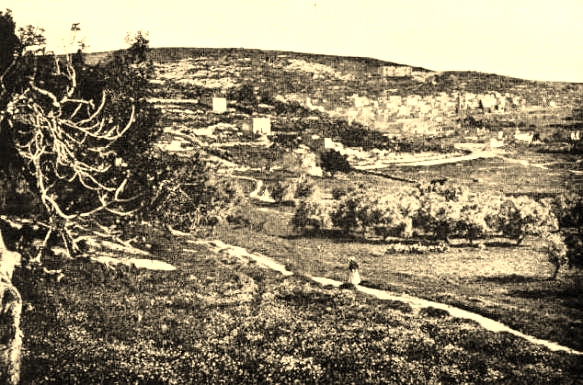
The rustic community is never mentioned in any of the Old Testament writings, meaning it had yet to exist then, suffered utmost insignificance, or was known by a different name, one of which might have been “white town” or a variation, named after the ready supply of limestone rocks in the area. Nestled among the lower hills of the Nazareth Range in the ancient tribal land of Zebulun, the city lay about halfway between the seas—the great Mediterranean on the west where sailing ships launched for far-off lands, and to the east, the indigenous, often mysterious Sea of Galilee, loved freshwater fishery of the locals.
From the little we know, Mary was likely born is this little village by the cliffs in circa 18 BC. This was during the early years of Augustus, who became the first Roman emperor in 27 BC, and the local reign of the ruthless client-king Herod the Great who had gained power a decade earlier. How she or her family arrived in the area is lost to history. Though Nazareth was within the small area originally allotted to the Tribe of Zebulun (the tenth son of Jacob and sixth born to Leah), Mary was actually a distant descendent of King David of the ruling line of Judah. Her connection to the latter tribe is somewhat problematic for a Galilean from the north due to her clear connection to relatives in the territory of Judea south of Jerusalem. The unknown story of her family’s transplantation is an intriguing one.
We know from the later annual pilgrimages made by the holy family to Jerusalem for the feasts that young Mary likely also made such trips as a child growing up, probably as part of small caravans. She was thus familiar with the territory and probably looked forward to such opportunities to see the great city and visit family. Journeying from the north in Galilee, one would traverse the disparaged Samaria, sandwiched between Galilee and Judea, and venture through the ancient tribal areas of Issachar, Manasseh, and Ephraim in the process, and lastly through the allotment of Benjamin on the approach to Yerushalayim which was located on the southern edge of his tribal land.
The eastern border between the two famous territories of Benjamin and Judah actually runs north and south along the Kidron Valley. The Kidron divides the city of Jerusalem in Benjamin’s territory to the west from the Mount of Olives in Judah’s territory to the east. The southern border between the tribes is divided by the valley of Hinnom which was immediately due south of the ancient city. Beyond these two natural demarcation lines was the fatherland of Judah and the ancestral land of King David to which Mary and her family sojourned frequently. It was also the ancestral homeland of her new husband Joseph, the strong but tender carpenter, chosen also as she was, and suited well for the calling.
AN ANGELIC VISITATION
Now in the sixth month the angel Gabriel was sent from God to a city in Galilee called Nazareth, to a virgin engaged to a man whose name was Joseph, of the descendants of David; and the virgin’s name was Mary. [Luke 1:26-27]
Luke makes it clear in his definitive account that Mary was a virgin when the angel Gabriel revealed to her the plan of God which would soon go into effect upon her consent. She was betrothed to the carpenter, meaning the marriage was not yet fully contracted, and both were honorable and chaste. It is often not acknowledged that young Mary had a choice regarding the Lord’s plan for her life. We all have a choice, and for everyone there is a plan. Notwithstanding the discipline required to live and work for the Lord according to His will and not our own, any other plan created and chosen by a person is always inferior to His. Mary understood this. It is why she replied to Gabriel with no hesitation in her heart:
And coming in, he said to her, “Greetings, favored one! The Lord is with you.” But she was very perplexed at this statement, and kept pondering what kind of salutation this was. The angel said to her, “Do not be afraid, Mary; for you have found favor with God. And behold, you will conceive in your womb and bear a son, and you shall name Him Jesus. He will be great and will be called the Son of the Most High; and the Lord God will give Him the throne of His father David; and He will reign over the house of Jacob forever, and His kingdom will have no end.”
Mary said to the angel, “How can this be, since I am a virgin?” The angel answered and said to her, “The Holy Spirit will come upon you, and the power of the Most High will overshadow you; and for that reason the holy Child shall be called the Son of God. And behold, even your relative Elizabeth has also conceived a son in her old age; and she who was called barren is now in her sixth month. For nothing will be impossible with God.”
And Mary said, “Behold, the bondslave of the Lord; may it be done to me according to your word.” And the angel departed from her. [Luke 1:28-38] [2]
Mary’s use of the word “bondslave” is not without import. It is from the Greek doulos and is defined accordingly as a female slave without any ownership rights of her own. This word, also translated as bond-servant, is used throughout the New Testament denoting the pure servanthood and dedication to the Master by real believers. The Hebrew equivalent for a female servant is shiphchah and has an ancient etymology dating to the book of Genesis. Though we often fail to perceive, in these brief Scriptural renderings, the full connotation and significance of the choice she made, Mary knew exactly what she was doing by deciding in the affirmative. She understood the gravity of the situation, the ramifications thereof, and that it was a lifelong commitment.
But there is more. Mary alluded to her current state of life before the angelic visitation as thoroughly humble and insignificant. We see this first in her initial reaction to Gabriel’s greeting when he referred to her as “favored one” and said the Lord was with her: But she was very perplexed at this statement, and kept pondering what kind of salutation this was. She was also afraid, probably for the same reasons you or I would be startled at the appearance of an angel. It was more than this, however. She was concerned about what it meant for her life and, in those first few seconds, that she was in no way worthy of such an astounding visitation and calling.
Why did she feel this way? There is something else here that Luke’s narrative hints at which he does not delve into, possibly because he knew his audience was aware of whatever particulars were involved with Mary and the circumstances of her humble life.
In Part 2, I will continue delving into such lesser-known particulars. We will look closer at Mary’s upbringing, family, and momentous visit to her elderly but expecting relative Elizabeth, also a chosen woman of the Lord who found much grace in His sight.
© 2019 by RJ Dawson. All Rights Reserved. [To Be Continued]
[1] John 1:46
[2] Unless otherwise noted all Scriptures are taken from the New American Standard Bible, © 1960, 1963, 1968, 1971, 1972, 1973, 1975, 1977, 1995 by The Lockman Foundation. Used by permission.
MARY HIGHLY FAVORED: “BLESSED ARE YOU AMONG WOMEN!” (4)
There was an unknown circumstance in Mary’s young life that spoke of great humility. We don’t know what this was exactly, and Luke does not elaborate. But there are directive clues. Read on:
.
The following is from Part 1: There is something else here that Luke’s narrative hints at which he does not delve into, possibly because he knew his audience was aware of whatever particulars were involved with Mary and the circumstances of her humble life.
In the very beginning, after initially being told by the angel Gabriel that she was highly favored and the Lord was indeed with her, Mary became, depending on the translation, troubled/disturbed/perplexed. The Greek says greatly agitated. She wondered where this extraordinary greeting came from and what it could possibly be about. One senses she thought it must be meant for another, that the joyous messenger must have the wrong house.
In answering a faithful reader’s comment on Part 3 when I first wrote this series two years ago, who said of Mary, She must have indeed been a highly intelligent, spiritually sensitive young woman, I wrote the following:
“Yes. A perfect choice. And she had to somehow come to a quick understanding of this fact though her humble nature would otherwise preclude it. She had to look beyond her humble circumstances and do her best to see herself as God saw her. He needed her. He wanted her to be the one. Here we have a good look into the counterintuitive nature of humanity. If Mary had previously thought herself as the best choice she would be disqualified, since that would reveal the presence of sinful pride. But if she thought herself unworthy and could never be persuaded to the contrary she would disqualify herself.”
Why did she feel so unworthy? And why did she refer to herself not once but twice as a bondslave? I mentioned this in Part 1. The Hebrew word for a female slave is shiphchah. The Greek word used here is doulos, which speaks directly to a slave of the basest order and is used throughout the New Testament. One gets the idea that young Mary was somehow familiar with such status.
It is also quite interesting that the New Testament never mentions any interaction with Mary’s parents or possible siblings. We know her father’s name was Eli (Heli), from her genealogy in Luke 3:23, but there is never any mention of her mother or her mother’s name. It appears they were no longer around. It is also evident that Mary was an only child. Imagine that. There is also a distinct possibility that Joseph, her betrothed, was her father’s adopted son, as alluded to in the genealogy. This was actually a Hebrew tradition going back centuries for men with no natural male heirs, so the idea isn’t so far-fetched. Any or all of these challenging life circumstances might be the cause of her feelings of unworthiness, but there is yet another, and it is here where we shall gain even greater understanding of the well known verse, “For God sees not as man sees, for man looks at the outward appearance, but the LORD looks at the heart” (1Samuel 16:7).
There is a Greek word that only occurs four times in the NT. It only applies to two specific people in the NT. Those two people are the Lord Jesus and His mother Mary. The word is tapeinosis. It is defined as “lowness, low estate, and humiliation.” Regarding the Lord it appears in Acts 8:33 in which the author references Isaiah 53:8. Here are both verses with the translated English word underlined:
“IN HUMILIATION HIS JUDGMENT WAS TAKEN AWAY; WHO WILL RELATE HIS GENERATION? FOR HIS LIFE IS REMOVED FROM THE EARTH.” [Acts 8:33]
By oppression and judgment He was taken away; and as for His generation, who considered that He was cut off out of the land of the living for the transgression of my people, to whom the stroke was due? [Isaiah 53:8]
Here is the verse that references Mary, again with the translated English words underlined:
“For He has had regard for the humble state of His bondslave; for behold, from this time on all generations will count me blessed.” [Luke 1:48]
The Hebrew word is otser. It is defined as “restraint, coercion.” It is translated primarily as “oppression.” It refers in a sense to prison or being a prisoner. This indicates a form of slavery. Mary did refer to herself as a bondslave. This speaks indirectly of possessing a particular humble state or condition and we now have a better understanding of what that was. Isaiah chapter 53 is an OT prophetic picture of the Lord Jesus. Here is the verse that ties both Son and mother together:
He has no stately form or majesty that we should look upon Him, nor appearance that we should be attracted to Him. [Isaiah 53:2][1]
In addition to this appearance circumstance shared by both mother and Son there is a much greater condition shared by both. These two people had extremely high character quotients. Of course, there is no comparison between the Lord’s character and that of Mary (or anyone else) in that He is God and is perfect. But regarding their humanity, and because both were exceptionally concerned with their spiritual standing and desired greatly to have as sterling a standing as possible, it was enormously difficult for them to answer the call because their respective callings would serve to destroy their outwardly perceived characters.
Mary was a chaste virgin with perfect spiritual credentials. She was obviously not without sin and thus required a Savior like everyone else but had striven in her young life to obey God and follow the Law of Moses. She was likely the very best at this among young women of her generation. Her heart was right and this is why she was chosen. But being chosen to be the mother of the Lord would also subject her to endless gossip and the wicked mockery of unbelievers who would believe her to be a gross sinner. This would destroy her sterling reputation among all those who rejected her claims of innocence and the highest of callings. Yet, she accepted the mission anyway, knowing it was always far better to serve the Lord than to decline the calling to protect one’s reputation.
This is one reason why many people never answer their callings and even reject salvation. They are far too weak to handle any affront by society to their public character and artificial social status.
© 2019 by RJ Dawson. All Rights Reserved. [To Be Continued]
[1] Unless otherwise noted all Scriptures are taken from the New American Standard Bible, © 1960, 1963, 1968, 1971, 1972, 1973, 1975, 1977, 1995 by The Lockman Foundation. Used by permission.
MARY HIGHLY FAVORED: “BLESSED ARE YOU AMONG WOMEN!” (3)
Prior to her visitation by the angel Gabriel, Mary was burdened by an undisclosed life circumstance. We gain further clues of this by her reaction to Elizabeth’s powerful prophetic message.
.
To set the scene for the next historical interlude which bears upon the foundational Gospel account after her journey to Judea to visit Elizabeth, we must acknowledge the fact that, according to Luke’s account, Mary had yet to speak to anyone about the great news.
She had left Nazareth in a hurry, almost immediately after she had consented to God’s plan. The Holy Spirit had indeed descended upon her and she was overshadowed with the power of the Most High. A miraculous conception had taken place in her womb! She had told no one, not even Joseph. Her elder relative Elizabeth would be her confidant. As the many repercussions played out in her thinking, Mary had remained amazed but laden with knowledge that no one else possessed.
GOD’S PERFECT TIMING
In Part 1, we covered Luke 1:26-38. In Part 2, we covered Luke 1:39-45. There are several components of the narrative within these verses to be addressed. The first thing we must do, however, is address the timing of the events. The angel Gabriel had told Mary that Elizabeth was already with child and in her sixth month. The human gestation period is 280 days, which is almost exactly 9.5 lunar cycles. An exact 9.5 moons would be a half day longer. Here is the math: A lunar cycle is 29.53059 days. Multiplied by 9.5 the gestation period would be 280.54 days. Since we know the Bible grants much importance to the number 40, it is not a coincidence that 280 is 40 times 7 (another significant number). Regarding the number of days into her pregnancy for Elizabeth at the time, it was somewhere between five and six months because Luke’s account says she was in her sixth month. She had yet to complete her second trimester.
I submit that it was exactly five and a half months and during a new moon.
It should have taken Mary less than a week, probably about five days, to get to Elizabeth’s house in Judea from Nazareth since the journey was at least 70 miles as the crow flies but maybe 80 or more considering the roads and terrain. Luke does not tell us the town or Mary’s specific destination in Judea. This was also during the winter rains though most of the precipitation was in the north. We have no knowledge regarding who may have accompanied Mary on the trip. There is no mention of Joseph. Would she have gone alone? From the narrative it certainly appears that she was alone when greeting Elizabeth.
Regarding the time of year, my research has long indicated that the Lord was born in the autumn. I believe it was likely on the 15th of the month of Tishrei on the Hebrew calendar, which was the first day of the weeklong Feast of Succoth (Tabernacles / Booths) and during a full moon. In 2021 this day fell on September 21. We have a hint of this as the Lord’s birthday in John’s gospel. The word “dwelt” in the following verse is from a Greek word meaning “to fix one’s tabernacle or tent:”
And the Word became flesh, and dwelt among us, and we saw His glory, glory as of the only begotten from the Father, full of grace and truth. [John 1:14]
Tishrei was the seventh month of the ancient sacred calendar adopted originally by the Lord during the time of Moses. The spring is the natural beginning of the year and was also the time of the Exodus and the Resurrection of the Lord. It is thus quite clear that the spring feasts are first and then followed by the autumn feasts. Tishrei later became the first month of the civil calendar and begins with Rosh Hashanah, the “head” of the year which is considered the Jewish New Year. This can get confusing, of course, but for the purposes of this study I will number the months as beginning in the spring from the vernal equinox.
Since the Lord was likely born on Tishrei 15 in the autumn, it would mean the angel Gabriel appeared to Mary nine and a half months before, during a new moon on the 1st of Tevet, the tenth month (if it was a twelve month year, which was most probable). Tevet occurs in Dec/Jan. From this we get a clear timeline of these two miraculous pregnancies of Elizabeth and Mary:
YEAR 1: John was conceived in the summer on the 15th of the fourth month during a full moon.
YEAR 1: The Lord Jesus was conceived in the winter on the 1st of the tenth month during a new moon.
YEAR 2: John was born in the spring on the 1st of the second month during a new moon.
YEAR 2: The Lord Jesus was born in the autumn on the 15th of the seventh month during a full moon.
After Elizabeth’s greeting and anointed word, Mary responded once again, as she did to Gabriel, with amazement and great humility. It was no insignificant response but revealed a woman of strong intellect, spiritual grace, and much insightful knowledge of Scripture for one so young. Her words reverberate through the centuries illustrating the profound nature of the Lord’s great plan and her own unique circumstances. We don’t hear much from Mary ever again but the following passage is filled with spiritual portent and the faithfulness of God. He has come to His people:
And Mary said: “My soul exalts the Lord, and my spirit has rejoiced in God my Savior. For He has had regard for the humble state of His bondslave; for behold, from this time on all generations will count me blessed. For the Mighty One has done great things for me; and holy is His name. AND HIS MERCY IS UPON GENERATION AFTER GENERATION TOWARD THOSE WHO FEAR HIM. He has done mighty deeds with His arm; He has scattered those who were proud in the thoughts of their heart. He has brought down rulers from their thrones, and has exalted those who were humble. HE HAS FILLED THE HUNGRY WITH GOOD THINGS; and sent away the rich empty-handed. He has given help to Israel His servant, in remembrance of His mercy, as He spoke to our fathers, to Abraham and his descendants forever.” [Luke 1:46-55][1]
Luke tells us that Mary stayed in Judea with Elizabeth for about three months after her arrival. The two would have had many long talks. As I stated earlier, Elizabeth was Mary’s only confidant. She was the only one who would have understood her circumstances because she had the same circumstances. These two ladies would have discussed all the implications of what they were presented with and how best to deal with the outcome and responses of others, especially as how it affected Mary. She still had to tell Joseph. She had to tell her parents. How would they react? She knew how everybody else would react and it was a hard pill to swallow. The time with Elizabeth was cherished because she gained the support she would need, to build herself up, and prepare for the coming storm of controversy.
And Mary stayed with her about three months, and then returned to her home. [Luke 1:56]
One would think Mary would have stayed for John’s birth. We are tempted to add to the narrative and think she must have stayed, but Luke did not present it that way. With regard to why she left early, the calendar gives us a direct clue: It was now the early spring. The first month of Nisan had arrived. The spring feasts, to which Mary had remained faithful her entire life, were upon the nation. Passover week would be happening very soon, within about a week or so. Did Mary leave a few weeks before John’s birth to celebrate Passover in Jerusalem?
© 2019 by RJ Dawson. All Rights Reserved. [To Be Continued]
[1] Unless otherwise noted all Scriptures are taken from the New American Standard Bible, © 1960, 1963, 1968, 1971, 1972, 1973, 1975, 1977, 1995 by The Lockman Foundation. Used by permission.
MARY HIGHLY FAVORED: “BLESSED ARE YOU AMONG WOMEN!” (2)
The conventional perception of the mother of our Lord is off. It is way off. She is commonly depicted in religious art, iconography, and statuary as European, and often northern European.
.
Knowledge of her Hebrew heritage among Christians is largely lost. Even her actual name is mostly unknown. The name Mary derives from the Judeo-Aramaic variant Maryam, from the Greek Mariam, which was derived from the original Hebrew Miryam, the name of the elder sister of Moses and Aaron (which is translated into English primarily as Miriam). New Testament readers know this was a popular name for Hebrew women at that time, as there are several with the name in the Gospel accounts.
As a young Hebrew maiden of eastern Mediterranean stock, she was likely dark complected with dark hair and Semitic features. Semitic refers to one of the three sons of Noah—Shem—whose descendants predominantly populated the Middle East and still do today. We know from early OT accounts that the ancient Hebrews shared their DNA with many different ethnos of the greater region, including the Canaanite tribes. There were also the two great disruptions to the nation when the ten northern tribes of Israel were deported to the east in 722 BC followed by the Babylonian captivity of Judah 136 years later. The three remaining tribes of the latter—Judah, Levi, and Benjamin—were removed to Babylon for 70 years. They were allowed to return but many chose to stay. The lands of Israel and Judah had been repopulated somewhat by foreigners in the interim, especially the Samaritan region. The land was then ruled by a succession of Persians, Greeks, and Romans. It is therefore difficult if not impossible to arrive at a definitive Hebrew nationality by the first century AD.
Even so, we do have two extant genealogies of our Lord Jesus from that time, both of which stem from the tribe of Judah and feature the persons of Abraham and David. The genealogy of Joseph the carpenter in Matthew’s gospel descends through King David’s son Solomon, the third and final king of a united Israel. After Solomon’s death the kingdom split into the northern Kingdom of Israel and the southern Kingdom of Judah. Luke’s gospel contains the genealogy of Mary, which also goes through David but by his son Nathan, Solomon’s brother. This family tree divergence took place over 900 years before the Lord’s birth. The last of the Hebrew kings of the Judaic line ceased with the Babylonian captivity in 586 BC. Zedekiah was the last king of Judah, but was somewhat illegitimate in that he was installed by the Babylonian king Nebuchadnezzar in 597 BC after the siege of Jerusalem. The king before Zedekiah was Jeconiah (AKA Coniah, Jehoiachin), who was carted off to Babylon a prisoner in chains. This is what the prophet Jeremiah said about him:
“Is this man Coniah a despised, shattered jar? Or is he an undesirable vessel? Why have he and his descendants been hurled out and cast into a land that they had not known? O land, land, land, hear the word of the LORD! Thus says the LORD, ‘Write this man down childless, a man who will not prosper in his days; for no man of his descendants will prosper sitting on the throne of David or ruling again in Judah.’” [Jeremiah 22:28-30]
The Hebrew monarchy was thus abolished. There were no more kings. No one could ever again qualify. Joseph the carpenter’s line included Jeconiah and he is listed in Matthew’s genealogy. Nevertheless, it was established that Joseph, the legal stepfather of the Lord, could trace his direct lineage to Solomon and David. Mary’s genealogy could also be traced directly to King David. This means the Lord Jesus had a legal right as king through Joseph and a biological right through His mother. Though the monarchial birthright was essentially revoked by Jeremiah’s prophecy, this did not apply to the Lord Jesus because he was not a blood descendant of Jeconiah. Thus, the only possible way the Davidic line of kings could be restored, even after a six century interval, would be through the following:
“Behold, a virgin will be with child and bear a son, and she will call His name Immanuel.” [Isaiah 7:14]
GREETINGS FROM THE WOMB
As described in Part 1, Mary was soon on the road south to Judea to visit her relative Elizabeth. The two women were anxious to share the great news of their pregnancies, both of which were only possible through direct miraculous means. Elizabeth was greatly humbled in her long life of barrenness but maintained her faith regardless. Mary was also burdened somewhat by an undisclosed life circumstance. Here we have the young and the old, both of whom must deal with the inevitable gossip of unbelievers, yet blessed abundantly as major players in the great plan of God for the salvation of Israel and humanity. But besides these two who knew each other well, there were others who met for the very first time:
Now at this time Mary arose and went in a hurry to the hill country, to a city of Judah, and entered the house of Zacharias and greeted Elizabeth. When Elizabeth heard Mary’s greeting, the baby leaped in her womb; and Elizabeth was filled with the Holy Spirit. And she cried out with a loud voice and said,
“Blessed are you among women, and blessed is the fruit of your womb! And how has it happened to me, that the mother of my Lord would come to me? For behold, when the sound of your greeting reached my ears, the baby leaped in my womb for joy. And blessed is she who believed that there would be a fulfillment of what had been spoken to her by the Lord.” [Luke 1:39-45][1]
© 2019 by RJ Dawson. All Rights Reserved. [To Be Continued]
[1] Unless otherwise noted all Scriptures are taken from the New American Standard Bible, © 1960, 1963, 1968, 1971, 1972, 1973, 1975, 1977, 1995 by The Lockman Foundation. Used by permission.
MARY HIGHLY FAVORED: “BLESSED ARE YOU AMONG WOMEN!” (1)
She was given the opportunity to be the mother of Messiah—the Son of the Most High. She accepted without question, filled with wonder, in humble awe of being chosen.
.
In reading between the lines in the initial Gospel references to the mother of our Lord, we happen upon facts otherwise escaping our notice, primarily, her humble origin. We already know her hometown was not the greatest of places, as none other than one of the twelve, Nathanael Bar Tholmai (Bartholomew) articulated,
“Can any good thing come out of Nazareth?” [1]
The rustic community is never mentioned in any of the Old Testament writings, meaning it had yet to exist then, suffered utmost insignificance, or was known by a different name, one of which might have been “white town” or a variation, named after the ready supply of limestone rocks in the area. Nestled among the lower hills of the Nazareth Range in the ancient tribal land of Zebulun, the city lay about halfway between the seas—the great Mediterranean on the west where sailing ships launched for far-off lands, and to the east, the indigenous, often mysterious Sea of Galilee, loved freshwater fishery of the locals.
From the little we know, Mary was likely born in this little village by the cliffs in circa 18 BC. This was during the early years of Augustus, who became the first Roman emperor in 27 BC, and the local reign of the ruthless client-king Herod the Great who had gained power a decade earlier. How she or her family arrived in the area is lost to history. Though Nazareth was within the small area originally allotted to the Tribe of Zebulun (the tenth son of Jacob and sixth born to Leah), Mary was actually a distant descendent of King David of the ruling line of Judah. Her connection to the latter tribe is somewhat problematic for a Galilean from the north due to her clear connection to relatives in the territory of Judea south of Jerusalem. The unknown story of her family’s transplantation is an intriguing one.
We know from the later annual pilgrimages made by the holy family to Jerusalem for the feasts that young Mary likely also made such trips as a child growing up, probably as part of small caravans. She was thus familiar with the territory and probably looked forward to such opportunities to see the great city and visit family. Journeying from the north in Galilee, one would traverse the disparaged Samaria, sandwiched between Galilee and Judea, and venture through the ancient tribal areas of Issachar, Manasseh, and Ephraim in the process, and lastly through the allotment of Benjamin on the approach to Yerushalayim which was located on the southern edge of his tribal land.
The eastern border between the two famous territories of Benjamin and Judah actually runs north and south along the Kidron Valley. The Kidron divides the city of Jerusalem in Benjamin’s territory to the west from the Mount of Olives in Judah’s territory to the east. The southern border between the tribes is divided by the valley of Hinnom which was immediately due south of the ancient city. Beyond these two natural demarcation lines was the fatherland of Judah and the ancestral land of King David to which Mary and her family sojourned frequently. It was also the ancestral homeland of her new husband Joseph, the strong but tender carpenter, chosen also as she was, and suited well for the calling.
AN ANGELIC VISITATION
Now in the sixth month the angel Gabriel was sent from God to a city in Galilee called Nazareth, to a virgin engaged to a man whose name was Joseph, of the descendants of David; and the virgin’s name was Mary. [Luke 1:26-27]
Luke makes it clear in his definitive account that Mary was a virgin when the angel Gabriel revealed to her the plan of God which would soon go into effect upon her consent. She was betrothed to the carpenter, meaning the marriage was not yet fully contracted, and both were honorable and chaste. It is often not acknowledged that young Mary had a choice regarding the Lord’s plan for her life. We all have a choice, and for everyone there is a plan. Notwithstanding the discipline required to live and work for the Lord according to His will and not our own, any other plan created and chosen by a person is always inferior to His. Mary understood this. It is why she replied to Gabriel with no hesitation in her heart:
And coming in, he said to her, “Greetings, favored one! The Lord is with you.” But she was very perplexed at this statement, and kept pondering what kind of salutation this was. The angel said to her, “Do not be afraid, Mary; for you have found favor with God. And behold, you will conceive in your womb and bear a son, and you shall name Him Jesus. He will be great and will be called the Son of the Most High; and the Lord God will give Him the throne of His father David; and He will reign over the house of Jacob forever, and His kingdom will have no end.”
Mary said to the angel, “How can this be, since I am a virgin?” The angel answered and said to her, “The Holy Spirit will come upon you, and the power of the Most High will overshadow you; and for that reason the holy Child shall be called the Son of God. And behold, even your relative Elizabeth has also conceived a son in her old age; and she who was called barren is now in her sixth month. For nothing will be impossible with God.”
And Mary said, “Behold, the bondslave of the Lord; may it be done to me according to your word.” And the angel departed from her. [Luke 1:28-38] [2]
Mary’s use of the word “bondslave” is not without import. It is from the Greek doulos and is defined accordingly as a female slave without any ownership rights of her own. This word, also translated as bond-servant, is used throughout the New Testament denoting the pure servanthood and dedication to the Master by real believers. The Hebrew equivalent for a female servant is shiphchah and has an ancient etymology dating to the book of Genesis. Though we often fail to perceive, in these brief Scriptural renderings, the full connotation and significance of the choice she made, Mary knew exactly what she was doing by deciding in the affirmative. She understood the gravity of the situation, the ramifications thereof, and that is was a lifelong commitment.
But there is more. Mary alluded to her current state of life before the angelic visitation as thoroughly humble and insignificant. We see this first in her initial reaction to Gabriel’s greeting when he referred to her as “favored one” and said the Lord was with her: But she was very perplexed at this statement, and kept pondering what kind of salutation this was. She was also afraid, probably for the same reasons you or I would be startled at the appearance of an angel. It was more than this, however. She was concerned about what it meant for her life and, in those first few seconds, that she was in no way worthy of such an astounding visitation and calling.
Why did she feel this way? There is something else here that Luke’s narrative hints at which he does not delve into, possibly because he knew his audience was aware of whatever particulars were involved with Mary and the circumstances of her humble life.
In Part 2, I will continue delving into such lesser-known particulars. We will look closer at Mary’s upbringing, family, and momentous visit to her elderly but expecting relative Elizabeth, also a chosen woman of the Lord who found much grace in His sight.
© 2019 by RJ Dawson. All Rights Reserved. [To Be Continued]
[1] John 1:46
[2] Unless otherwise noted all Scriptures are taken from the New American Standard Bible, © 1960, 1963, 1968, 1971, 1972, 1973, 1975, 1977, 1995 by The Lockman Foundation. Used by permission.
MARY HIGHLY FAVORED: “BLESSED ARE YOU AMONG WOMEN!” (5-Part Series)

Dear Readers: The following series, based solely on the New Testament, is an in-depth study of Mary, the mother of our Lord. I wrote it last year at Christmas time. Some of you are already familiar with it and have added sterling comments. I highly recommend these posts, as you will undoubtedly fill in many of the blanks regarding Mary’s life and calling. There is actually very little in the New Covenant Scriptures regarding her but much can be gained by drawing on several intriguing clues. She was an exceptional person and deserves a closer look into a life extremely well lived.
Dec. 12, 2019: MARY HIGHLY FAVORED: “BLESSED ARE YOU AMONG WOMEN” (Intro)
Dec. 13, 2019: MARY HIGHLY FAVORED: “BLESSED ARE YOU AMONG WOMEN” (Part 1)
Dec. 18, 2019: MARY HIGHLY FAVORED: “BLESSED ARE YOU AMONG WOMEN” (Part 2)
Dec. 22, 2019: MARY HIGHLY FAVORED: “BLESSED ARE YOU AMONG WOMEN” (Part 3)
Dec. 24, 2019: MARY HIGHLY FAVORED: “BLESSED ARE YOU AMONG WOMEN” (Part 4)
Dec. 25, 2019: MARY HIGHLY FAVORED: “BLESSED ARE YOU AMONG WOMEN” (Part 5)
.
© 2019 by RJ Dawson. All Rights Reserved.
THE INHERENT RISK OF COVENANT RELATIONSHIP

When two are together in any venture in complete reliance upon the other, both are in an otherwise precarious position. Each one is absolutely vulnerable to the possible failure of their associate.
.
The longer the relationship exists the more vulnerable each becomes. The dependency grows due to the progress accomplished. In other words, at the beginning of the contract or covenant, the only element gained is the relationship itself. The relationship is such that it is seen by both partners as having much higher value than the absence of it. Both parties had chosen to begin the relationship. Both had sowed the vital nutrients into it as it grew. Both parties benefited and continued to gain greater benefits until a point was reached when each party decided to make an absolute commitment to the relationship rather than maintain any portion of themselves apart from it.
Such a decision places one party at the mercy of the other. Though it is not perceived in that manner at the time due to the beneficial nature of the initial relationship which each party greatly appreciates, it must certainly be a consideration in the beginning. One must move slowly in learning who one can trust. We are instructed by God to guard our hearts. One must also seek the requisite compatibility. If the opposite party displays trustworthiness at the outset, the only way it can be tested is by a furtherance of the relationship. If each step reveals honesty and apparent fidelity, a sense of reliability emerges and increases. One has less reason to be self-protective. One has greater freedom to be open. One has more willingness to share.
At least, this is how relationships should proceed. It is obvious that many relationships do not develop in such a way, based simply on their finality, brought about primarily from endemic disharmony stemming from selfish and/or immature behavior. If the proper steps are not taken and applied, or if a relationship is fast tracked due to the immediate benefits of one particular aspect without paying any attention to all the other aspects, either because they are considered but rejected or simply not perceived, it allows for a poorly constructed and weak foundation which will certainly present itself in time when the growing pressures of derivative relationship accretion are placed upon it.
In the event, however, when all proper steps are taken and any evident inappropriate or harmful future possibilities are rightfully considered and all appears good to go, it still does not mean that the partnership or relationship will not be tested or suffer to some degree, only because such is the nature of life in this world and also the nature of humanity itself in that we are complicated beings subjected to many influences.
From a Christian perspective, there is always the possibility of the specter of temptation. Of course, both parties must be well aware of this and do their due diligence to avoid it knowing that so much rides upon it. Each party must have already been right with God in the beginning and must maintain their relationship with God throughout. Each party must also maintain their commitment to one another.
Any person who does not consider these aspects or embrace them are effectively attempting to create something which is bound to fail unless corrective measures are taken in the early stages to rectify any incorrect applications, improper attitudes, or selfish conduct which can only restrict or do damage to the relationship but more importantly, to the other party. The vulnerability of each partner which is always present as a necessary component of the relationship must always be considered by the other party when deliberating upon possible actions and choices, because wrong actions and choices will harm one’s partner and stand in opposition to the love one has committed to and should indeed demonstrate.
Normally, one would never do any wrong thing in this regard because their love or respect for the other would prohibit it. But human beings are not automatons. There is always the possibility of straying from one’s covenant promises and responsibilities, or failing in them entirely. Judas proved this.
On a positive note, there is also the possibility of applying forgiveness and walking in proper humility. This is relatively easy if not extremely so when one acknowledges the high price paid for saving grace. For best results, we must always prioritize the Lord’s perfect example.
YOKED WITH GOD: A NO RISK VENTURE
“Come to Me, all who are weary and heavy-laden, and I will give you rest. Take My yoke upon you and learn from Me, for I am gentle and humble in heart, and you will find rest for your souls. For My yoke is easy and My burden is light.” [Matthew 11:28-30][1]
© 2020 by R.J. Dawson. All Rights Reserved.
[1] Unless otherwise noted all Scriptures are taken from the New American Standard Bible, © 1960, 1963, 1968, 1971, 1972, 1973, 1975, 1977, 1995 by The Lockman Foundation. Used by permission.
MARY HIGHLY FAVORED: “BLESSED ARE YOU AMONG WOMEN!” (4)
There was an unknown circumstance in Mary’s young life that spoke of great humility. We don’t know what this was exactly, and Luke does not elaborate. But there are directive clues. Read on:
.
The following is from Part 1: There is something else here that Luke’s narrative hints at which he does not delve into, possibly because he knew his audience was aware of whatever particulars were involved with Mary and the circumstances of her humble life.
In the very beginning, after initially being told by the angel Gabriel that she was highly favored and the Lord was indeed with her, Mary became, depending on the translation, troubled/disturbed/perplexed. The Greek says greatly agitated. She wondered where this extraordinary greeting came from and what it could possibly be about. One senses she thought it must be meant for another, that the joyous messenger must have the wrong house.
In answering a faithful reader’s comment on Part 3 today, who said of Mary, She must have indeed been a highly intelligent, spiritually sensitive young woman, I wrote the following:
“Yes. A perfect choice. And she had to somehow come to a quick understanding of this fact though her humble nature would otherwise preclude it. She had to look beyond her humble circumstances and do her best to see herself as God saw her. He needed her. He wanted her to be the one. Here we have a good look into the counterintuitive nature of humanity. If Mary had previously thought herself as the best choice she would be disqualified, since that would reveal the presence of sinful pride. But if she thought herself unworthy and could never be persuaded to the contrary she would disqualify herself.”
Why did she feel so unworthy? And why did she refer to herself not once but twice as a bondslave? I mentioned this in Part 1. The Hebrew word for a female slave is shiphchah. The Greek word used here is doulos, which speaks directly to a slave of the basest order and is used throughout the New Testament. One gets the idea that young Mary was somehow familiar with such status.
It is also quite interesting that the New Testament never mentions any interaction with Mary’s parents or possible siblings. We know her father’s name was Eli (Heli), from her genealogy in Luke 3:23, but there is never any mention of her mother or her mother’s name. It appears they were no longer around. It is also evident that Mary was an only child. Imagine that. There is also a distinct possibility that Joseph, her betrothed, was her father’s adopted son, as alluded to in the genealogy. This was actually a Hebrew tradition going back centuries for men with no natural male heirs, so the idea isn’t so far-fetched. Any or all of these challenging life circumstances might be the cause of her feelings of unworthiness, but there is yet another, and it is here where we shall gain even greater understanding of the well known verse, “For God sees not as man sees, for man looks at the outward appearance, but the LORD looks at the heart” (1Samuel 16:7).
There is a Greek word that only occurs four times in the NT. It only applies to two specific people in the NT. Those two people are the Lord Jesus and His mother Mary. The word is tapeinosis. It is defined as “lowness, low estate, and humiliation.” Regarding the Lord it appears in Acts 8:33 in which the author references Isaiah 53:8. Here are both verses with the translated English word underlined:
“IN HUMILIATION HIS JUDGMENT WAS TAKEN AWAY; WHO WILL RELATE HIS GENERATION? FOR HIS LIFE IS REMOVED FROM THE EARTH.” [Acts 8:33]
By oppression and judgment He was taken away; and as for His generation, who considered that He was cut off out of the land of the living for the transgression of my people, to whom the stroke was due? [Isaiah 53:8]
Here is the verse that references Mary, again with the translated English words underlined:
“For He has had regard for the humble state of His bondslave; for behold, from this time on all generations will count me blessed.” [Luke 1:48]
The Hebrew word is otser. It is defined as “restraint, coercion.” It is translated primarily as “oppression.” It refers in a sense to prison or being a prisoner. This indicates a form of slavery. Mary did refer to herself as a bondslave. This speaks indirectly of possessing a particular humble state or condition and we now have a better understanding of what that was. Isaiah chapter 53 is an OT prophetic picture of the Lord Jesus. Here is the verse that ties both Son and mother together:
He has no stately form or majesty that we should look upon Him, nor appearance that we should be attracted to Him. [Isaiah 53:2][1]
In addition to this appearance circumstance shared by both mother and Son there is a much greater condition shared by both. These two people had extremely high character quotients. Of course, there is no comparison between the Lord’s character and that of Mary (or anyone else) in that He is God and is perfect. But regarding their humanity, and because both were exceptionally concerned with their spiritual standing and desired greatly to have as sterling a standing as possible, it was enormously difficult for them to answer the call because their respective callings would serve to destroy their outwardly perceived characters.
Mary was a chaste virgin with perfect spiritual credentials. She was obviously not without sin and thus required a Savior like everyone else but had striven in her young life to obey God and follow the Law of Moses. She was likely the very best at this among young women of her generation. Her heart was right and this is why she was chosen. But being chosen to be the mother of the Lord would also subject her to endless gossip and the wicked mockery of unbelievers who would believe her to be a gross sinner. This would destroy her sterling reputation among all those who rejected her claims of innocence and the highest of callings. Yet, she accepted the mission anyway, knowing it was always far better to serve the Lord than to decline the calling to protect one’s reputation.
This is one reason why many people never answer their callings and even reject salvation. They are far too weak to handle any affront by society to their public character and artificial social status.
© 2019 by RJ Dawson. All Rights Reserved. [To Be Continued]
[1] Unless otherwise noted all Scriptures are taken from the New American Standard Bible, © 1960, 1963, 1968, 1971, 1972, 1973, 1975, 1977, 1995 by The Lockman Foundation. Used by permission.
MARY HIGHLY FAVORED: “BLESSED ARE YOU AMONG WOMEN!” (Intro)
MARY HIGHLY FAVORED: “BLESSED ARE YOU AMONG WOMEN!” (1)
MARY HIGHLY FAVORED: “BLESSED ARE YOU AMONG WOMEN!” (2)
MARY HIGHLY FAVORED: “BLESSED ARE YOU AMONG WOMEN!” (3)
Prior to her visitation by the angel Gabriel, Mary was burdened by an undisclosed life circumstance. We gain further clues of this by her reaction to Elizabeth’s powerful prophetic message.
.
To set the scene for the next historical interlude which bears upon the foundational Gospel account after her journey to Judea to visit Elizabeth, we must acknowledge the fact that, according to Luke’s account, Mary had yet to speak to anyone about the great news.
She had left Nazareth in a hurry, almost immediately after she had consented to God’s plan. The Holy Spirit had indeed descended upon her and she was overshadowed with the power of the Most High. A miraculous conception had taken place in her womb! She had told no one, not even Joseph. Her elder relative Elizabeth would be her confidant. As the many repercussions played out in her thinking, Mary had remained amazed but laden with knowledge that no one else possessed.
GOD’S PERFECT TIMING
In Part 1, we covered Luke 1:26-38. In Part 2, we covered Luke 1:39-45. There are several components of the narrative within these verses to be addressed. The first thing we must do, however, is address the timing of the events. The angel Gabriel had told Mary that Elizabeth was already with child and in her sixth month. The human gestation period is 280 days, which is almost exactly 9.5 lunar cycles. An exact 9.5 moons would be a half day longer. Here is the math: A lunar cycle is 29.53059 days. Multiplied by 9.5 the gestation period would be 280.54 days. Since we know the Bible grants much importance to the number 40, it is not a coincidence that 280 is 40 times 7 (another significant number). Regarding the number of days into her pregnancy for Elizabeth at the time, it was somewhere between five and six months because Luke’s account says she was in her sixth month. She had yet to complete her second trimester.
I submit that it was exactly five and a half months and during a new moon.
It should have taken Mary less than a week, probably about five days, to get to Elizabeth’s house in Judea from Nazareth since the journey was at least 70 miles as the crow flies but maybe 80 or more considering the roads and terrain. Luke does not tell us the town or Mary’s specific destination in Judea. This was also during the winter rains though most of the precipitation was in the north. We have no knowledge regarding who may have accompanied Mary on the trip. There is no mention of Joseph. Would she have gone alone? From the narrative it certainly appears that she was alone when greeting Elizabeth.
Regarding the time of year, my research has long indicated that the Lord was born in the autumn. I believe it was likely on the 15th of the month of Tishrei on the Hebrew calendar, which was the first day of the weeklong Feast of Succoth (Tabernacles / Booths) and during a full moon. In 2019 this day fell on October 14th. We have a hint of this as the Lord’s birthday in John’s gospel. The word “dwelt” in the following verse is from a Greek word meaning “to fix one’s tabernacle or tent:”
And the Word became flesh, and dwelt among us, and we saw His glory, glory as of the only begotten from the Father, full of grace and truth. [John 1:14]
Tishrei was the seventh month of the ancient sacred calendar adopted originally by the Lord during the time of Moses. The spring is the natural beginning of the year and was also the time of the Exodus and the Resurrection of the Lord. It is thus quite clear that the spring feasts are first and then followed by the autumn feasts. Tishrei later became the first month of the civil calendar and begins with Rosh Hashanah, the “head” of the year which is considered the Jewish New Year. This can get confusing, of course, but for the purposes of this study I will number the months as beginning in the spring from the vernal equinox.
Since the Lord was likely born on Tishrei 15 in the autumn, it would mean the angel Gabriel appeared to Mary nine and a half months before, during a new moon on the 1st of Tevet, the tenth month (if it was a twelve month year, which was most probable). Tevet occurs in Dec/Jan. From this we get a clear timeline of these two miraculous pregnancies of Elizabeth and Mary:
YEAR 1: John was conceived in the summer on the 15th of the fourth month during a full moon.
YEAR 1: The Lord Jesus was conceived in the winter on the 1st of the tenth month during a new moon.
YEAR 2: John was born in the spring on the 1st of the second month during a new moon.
YEAR 2: The Lord Jesus was born in the autumn on the 15th of the seventh month during a full moon.
After Elizabeth’s greeting and anointed word, Mary responded once again, as she did to Gabriel, with amazement and great humility. It was no insignificant response but revealed a woman of strong intellect, spiritual grace, and much insightful knowledge of Scripture for one so young. Her words reverberate through the centuries illustrating the profound nature of the Lord’s great plan and her own unique circumstances. We don’t hear much from Mary ever again but the following passage is filled with spiritual portent and the faithfulness of God. He has come to His people:
And Mary said: “My soul exalts the Lord, and my spirit has rejoiced in God my Savior. For He has had regard for the humble state of His bondslave; for behold, from this time on all generations will count me blessed. For the Mighty One has done great things for me; and holy is His name. AND HIS MERCY IS UPON GENERATION AFTER GENERATION TOWARD THOSE WHO FEAR HIM. He has done mighty deeds with His arm; He has scattered those who were proud in the thoughts of their heart. He has brought down rulers from their thrones, and has exalted those who were humble. HE HAS FILLED THE HUNGRY WITH GOOD THINGS; and sent away the rich empty-handed. He has given help to Israel His servant, in remembrance of His mercy, as He spoke to our fathers, to Abraham and his descendants forever.” [Luke 1:46-55][1]
Luke tells us that Mary stayed in Judea with Elizabeth for about three months after her arrival. The two would have had many long talks. As I stated earlier, Elizabeth was Mary’s only confidant. She was the only one who would have understood her circumstances because she had the same circumstances. These two ladies would have discussed all the implications of what they were presented with and how best to deal with the outcome and responses of others, especially as how it affected Mary. She still had to tell Joseph. She had to tell her parents. How would they react? She knew how everybody else would react and it was a hard pill to swallow. The time with Elizabeth was cherished because she gained the support she would need, to build herself up, and prepare for the coming storm of controversy.
And Mary stayed with her about three months, and then returned to her home. [Luke 1:56]
One would think Mary would have stayed for John’s birth. We are tempted to add to the narrative and think she must have stayed, but Luke did not present it that way. With regard to why she left early, the calendar gives us a direct clue: It was now the early spring. The first month of Nisan had arrived. The spring feasts, to which Mary had remained faithful her entire life, were upon the nation. Passover week would be happening very soon, within about a week or so. Did Mary leave a few weeks before John’s birth to celebrate Passover in Jerusalem?
© 2019 by RJ Dawson. All Rights Reserved. [To Be Continued]
[1] Unless otherwise noted all Scriptures are taken from the New American Standard Bible, © 1960, 1963, 1968, 1971, 1972, 1973, 1975, 1977, 1995 by The Lockman Foundation. Used by permission.
MARY HIGHLY FAVORED: “BLESSED ARE YOU AMONG WOMEN!” (Intro)
MARY HIGHLY FAVORED: “BLESSED ARE YOU AMONG WOMEN!” (1)
MARY HIGHLY FAVORED: “BLESSED ARE YOU AMONG WOMEN!” (2)
MARY HIGHLY FAVORED: “BLESSED ARE YOU AMONG WOMEN!” (4)
MARY HIGHLY FAVORED: “BLESSED ARE YOU AMONG WOMEN!” (5)
MARY HIGHLY FAVORED: “BLESSED ARE YOU AMONG WOMEN!” (2)
The conventional perception of the mother of our Lord is off. It is way off. She is commonly depicted in religious art, iconography, and statuary as European, and often northern European.
.
Knowledge of her Hebrew heritage among Christians is largely lost. Even her actual name is mostly unknown. The name Mary derives from the Judeo-Aramaic variant Maryam, from the Greek Mariam, which was derived from the original Hebrew Miryam, the name of the elder sister of Moses and Aaron (which is translated into English primarily as Miriam). New Testament readers know this was a popular name for Hebrew women at that time, as there are several with the name in the Gospel accounts.
As a young Hebrew maiden of eastern Mediterranean stock, she was likely dark complected with dark hair and Semitic features. Semitic refers to one of the three sons of Noah—Shem—whose descendants predominantly populated the Middle East and still do today. We know from early OT accounts that the ancient Hebrews shared their DNA with many different ethnos of the greater region, including the Canaanite tribes. There were also the two great disruptions to the nation when the ten northern tribes of Israel were deported to the east in 722 BC followed by the Babylonian captivity of Judah 136 years later. The three remaining tribes of the latter—Judah, Levi, and Benjamin—were removed to Babylon for 70 years. They were allowed to return but many chose to stay. The lands of Israel and Judah had been repopulated somewhat by foreigners in the interim, especially the Samaritan region. The land was then ruled by a succession of Persians, Greeks, and Romans. It is therefore difficult if not impossible to arrive at a definitive Hebrew nationality by the first century AD.
Even so, we do have two extant genealogies of our Lord Jesus from that time, both of which stem from the tribe of Judah and feature the persons of Abraham and David. The genealogy of Joseph the carpenter in Matthew’s gospel descends through King David’s son Solomon, the third and final king of a united Israel. After Solomon’s death the kingdom split into the northern Kingdom of Israel and the southern Kingdom of Judah. Luke’s gospel contains the genealogy of Mary, which also goes through David but by his son Nathan, Solomon’s brother. This family tree divergence took place over 900 years before the Lord’s birth. The last of the Hebrew kings of the Judaic line ceased with the Babylonian captivity in 586 BC. Zedekiah was the last king of Judah, but was somewhat illegitimate in that he was installed by the Babylonian king Nebuchadnezzar in 597 BC after the siege of Jerusalem. The king before Zedekiah was Jeconiah (AKA Coniah, Jehoiachin), who was carted off to Babylon a prisoner in chains. This is what the prophet Jeremiah said about him:
“Is this man Coniah a despised, shattered jar? Or is he an undesirable vessel? Why have he and his descendants been hurled out and cast into a land that they had not known? O land, land, land, hear the word of the LORD! Thus says the LORD, ‘Write this man down childless, a man who will not prosper in his days; for no man of his descendants will prosper sitting on the throne of David or ruling again in Judah.’” [Jeremiah 22:28-30]
The Hebrew monarchy was thus abolished. There were no more kings. No one could ever again qualify. Joseph the carpenter’s line included Jeconiah and he is listed in Matthew’s genealogy. Nevertheless, it was established that Joseph, the legal stepfather of the Lord, could trace his direct lineage to Solomon and David. Mary’s genealogy could also be traced directly to King David. This means the Lord Jesus had a legal right as king through Joseph and a biological right through His mother. Though the monarchial birthright was essentially revoked by Jeremiah’s prophecy, this did not apply to the Lord Jesus because he was not a blood descendant of Jeconiah. Thus, the only possible way the Davidic line of kings could be restored, even after a six century interval, would be through the following:
“Behold, a virgin will be with child and bear a son, and she will call His name Immanuel.” [Isaiah 7:14]
GREETINGS FROM THE WOMB
As described in Part 1, Mary was soon on the road south to Judea to visit her relative Elizabeth. The two women were anxious to share the great news of their pregnancies, both of which were only possible through direct miraculous means. Elizabeth was greatly humbled in her long life of barrenness but maintained her faith regardless. Mary was also burdened somewhat by an undisclosed life circumstance. Here we have the young and the old, both of whom must deal with the inevitable gossip of unbelievers, yet blessed abundantly as major players in the great plan of God for the salvation of Israel and humanity. But besides these two who knew each other well, there were others who met for the very first time:
Now at this time Mary arose and went in a hurry to the hill country, to a city of Judah, and entered the house of Zacharias and greeted Elizabeth. When Elizabeth heard Mary’s greeting, the baby leaped in her womb; and Elizabeth was filled with the Holy Spirit. And she cried out with a loud voice and said,
“Blessed are you among women, and blessed is the fruit of your womb! And how has it happened to me, that the mother of my Lord would come to me? For behold, when the sound of your greeting reached my ears, the baby leaped in my womb for joy. And blessed is she who believed that there would be a fulfillment of what had been spoken to her by the Lord.” [Luke 1:39-45][1]
© 2019 by RJ Dawson. All Rights Reserved. [To Be Continued]
[1] Unless otherwise noted all Scriptures are taken from the New American Standard Bible, © 1960, 1963, 1968, 1971, 1972, 1973, 1975, 1977, 1995 by The Lockman Foundation. Used by permission.
MARY HIGHLY FAVORED: “BLESSED ARE YOU AMONG WOMEN!” (Intro)
MARY HIGHLY FAVORED: “BLESSED ARE YOU AMONG WOMEN!” (1)
MARY HIGHLY FAVORED: “BLESSED ARE YOU AMONG WOMEN!” (3)
MARY HIGHLY FAVORED: “BLESSED ARE YOU AMONG WOMEN!” (1)
NAZARETH
She was given the opportunity to be the mother of Messiah—the Son of the Most High. She accepted without question, filled with wonder, in humble awe of being chosen.
.
In reading between the lines in the initial Gospel references to the mother of our Lord, we happen upon facts otherwise escaping our notice, primarily, her humble origin. We already know her hometown was not the greatest of places, as none other than one of the twelve, Nathanael Bar Tholmai (Bartholomew) articulated,
“Can any good thing come out of Nazareth?” [1]
The rustic community is never mentioned in any of the Old Testament writings, meaning it had yet to exist then, suffered utmost insignificance, or was known by a different name, one of which might have been “white town” or a variation, named after the ready supply of limestone rocks in the area. Nestled among the lower hills of the Nazareth Range in the ancient tribal land of Zebulun, the city lay about halfway between the seas—the great Mediterranean on the west where sailing ships launched for far-off lands, and to the east, the indigenous, often mysterious Sea of Galilee, loved freshwater fishery of the locals.
From the little we know, Mary was likely born is this little village by the cliffs in circa 18 BC. This was during the early years of Augustus, who became the first Roman emperor in 27 BC, and the local reign of the ruthless client-king Herod the Great who had gained power a decade earlier. How she or her family arrived in the area is lost to history. Though Nazareth was within the small area originally allotted to the Tribe of Zebulun (the tenth son of Jacob and sixth born to Leah), Mary was actually a distant descendent of King David of the ruling line of Judah. Her connection to the latter tribe is somewhat problematic for a Galilean from the north due to her clear connection to relatives in the territory of Judea south of Jerusalem. The unknown story of her family’s transplantation is an intriguing one.
We know from the later annual pilgrimages made by the holy family to Jerusalem for the feasts that young Mary likely also made such trips as a child growing up, probably as part of small caravans. She was thus familiar with the territory and probably looked forward to such opportunities to see the great city and visit family. Journeying from the north in Galilee, one would traverse the disparaged Samaria, sandwiched between Galilee and Judea, and venture through the ancient tribal areas of Issachar, Manasseh, and Ephraim in the process, and lastly through the allotment of Benjamin on the approach to Yerushalayim which was located on the southern edge of his tribal land.
The eastern border between the two famous territories of Benjamin and Judah actually runs north and south along the Kidron Valley. The Kidron divides the city of Jerusalem in Benjamin’s territory to the west from the Mount of Olives in Judah’s territory to the east. The southern border between the tribes is divided by the valley of Hinnom which was immediately due south of the ancient city. Beyond these two natural demarcation lines was the fatherland of Judah and the ancestral land of King David to which Mary and her family sojourned frequently. It was also the ancestral homeland of her new husband Joseph, the strong but tender carpenter, chosen also as she was, and suited well for the calling.
AN ANGELIC VISITATION
Now in the sixth month the angel Gabriel was sent from God to a city in Galilee called Nazareth, to a virgin engaged to a man whose name was Joseph, of the descendants of David; and the virgin’s name was Mary. [Luke 1:26-27]
Luke makes it clear in his definitive account that Mary was a virgin when the angel Gabriel revealed to her the plan of God which would soon go into effect upon her consent. She was betrothed to the carpenter, meaning the marriage was not yet fully contracted, and both were honorable and chaste. It is often not acknowledged that young Mary had a choice regarding the Lord’s plan for her life. We all have a choice, and for everyone there is a plan. Notwithstanding the discipline required to live and work for the Lord according to His will and not our own, any other plan created and chosen by a person is always inferior to His. Mary understood this. It is why she replied to Gabriel with no hesitation in her heart:
And coming in, he said to her, “Greetings, favored one! The Lord is with you.” But she was very perplexed at this statement, and kept pondering what kind of salutation this was. The angel said to her, “Do not be afraid, Mary; for you have found favor with God. And behold, you will conceive in your womb and bear a son, and you shall name Him Jesus. He will be great and will be called the Son of the Most High; and the Lord God will give Him the throne of His father David; and He will reign over the house of Jacob forever, and His kingdom will have no end.”
Mary said to the angel, “How can this be, since I am a virgin?” The angel answered and said to her, “The Holy Spirit will come upon you, and the power of the Most High will overshadow you; and for that reason the holy Child shall be called the Son of God. And behold, even your relative Elizabeth has also conceived a son in her old age; and she who was called barren is now in her sixth month. For nothing will be impossible with God.”
And Mary said, “Behold, the bondslave of the Lord; may it be done to me according to your word.” And the angel departed from her. [Luke 1:28-38] [2]
Mary’s use of the word “bondslave” is not without import. It is from the Greek doulos and is defined accordingly as a female slave without any ownership rights of her own. This word, also translated as bond-servant, is used throughout the New Testament denoting the pure servanthood and dedication to the Master by real believers. The Hebrew equivalent for a female servant is shiphchah and has an ancient etymology dating to the book of Genesis. Though we often fail to perceive, in these brief Scriptural renderings, the full connotation and significance of the choice she made, Mary knew exactly what she was doing by deciding in the affirmative. She understood the gravity of the situation, the ramifications thereof, and that is was a lifelong commitment.
But there is more. Mary alluded to her current state of life before the angelic visitation as thoroughly humble and insignificant. We see this first in her initial reaction to Gabriel’s greeting when he referred to her as “favored one” and said the Lord was with her: But she was very perplexed at this statement, and kept pondering what kind of salutation this was. She was also afraid, probably for the same reasons you or I would be startled at the appearance of an angel. It was more than this, however. She was concerned about what it meant for her life and, in those first few seconds, that she was in no way worthy of such an astounding visitation and calling.
Why did she feel this way? There is something else here that Luke’s narrative hints at which he does not delve into, possibly because he knew his audience was aware of whatever particulars were involved with Mary and the circumstances of her humble life.
In Part 2, I will continue delving into such lesser-known particulars. We will look closer at Mary’s upbringing, family, and momentous visit to her elderly but expecting relative Elizabeth, also a chosen woman of the Lord who found much grace in His sight.
© 2019 by RJ Dawson. All Rights Reserved. [To Be Continued]
[1] John 1:46
[2] Unless otherwise noted all Scriptures are taken from the New American Standard Bible, © 1960, 1963, 1968, 1971, 1972, 1973, 1975, 1977, 1995 by The Lockman Foundation. Used by permission.
MARY HIGHLY FAVORED: “BLESSED ARE YOU AMONG WOMEN!” (Intro)
MARY HIGHLY FAVORED: “BLESSED ARE YOU AMONG WOMEN!” (2)
MARY HIGHLY FAVORED: “BLESSED ARE YOU AMONG WOMEN!” (3)
MARY HIGHLY FAVORED: “BLESSED ARE YOU AMONG WOMEN!” (4)
MARY HIGHLY FAVORED: “BLESSED ARE YOU AMONG WOMEN!” (5)
THE ONGOING AWAKENING: RECENT SIGNS AND PORTENTS

Almost three months ago, at the conclusion of my five-part series regarding America’s immediate future, I wrote an article regarding the call to national repentance. This post is an update.
.
On August 23, two days after the transcontinental national solar eclipse this summer, I posted At the Crossroads: Will America Repent? We have already seen substantial changes in the country as a whole but especially in the realm of perception. We are seeing a veil lifted. We now know all the more that what is being presented as reality is not reality. The following is an excerpt from the article:
“Religious pride and personal repentance don’t get along. In fact, these two hate each other. Only one can win. The other gets destroyed. Most people choose pride. A comparative few find life, though it will cost them. The unrepentant religious pride people always attempt to throw the repentant life people off a cliff. Their pride, conviction of sin, and refusal to repent demands it. Thus, those who find life have a harder row to hoe and constitute the fewer. Not only must they dodge the cliff-throwers, they also take the time to pray for them. That’s rare. Also, staying on the path of life, due to the demands of real discipleship, sometimes causes their numbers to be reduced over time.”
THE 2016 ELECTION PORTENT
To better understand this phenomenon we can see an excellent example of it in the 2016 presidential election. The entire mass apparatus of the collective mainstream media got the election completely and absolutely wrong, and they got it wrong by historically huge margins. There had never been a presidential election forecast that was so off base and one-sided. The entire media establishment was anti-Trump and pro-Clinton, and the people thereof were so full of themselves (and have been for decades) that they were completely fooled. We see this exact phenomenon on a micro level regarding how individuals and small groups set up their social parameters. For the people who endlessly promote “diversity” most of them have the very opposite. Their level of hatred and rejection of anyone who does not agree with them is truly off the charts and as a result they become blinded to reality. This is what happened to the media in the fall of 2016.
Did they repent for being so wrong? NO. A few individual reporters and media personalities did but the entire hegemonic media never repented or admitted failure but instead mashed the accelerator through the floor all the more and went into hyper drive attack mode. THIS HAS ALSO FAILED. This is what happens when someone is desperate after putting all their eggs in one basket and betting the entire farm. Because these entities are so huge and worth billions it will take a while to see the full failure effect transpire, but it is happening. At the same time, the alternative media, where truth thrives, is growing by leaps and bounds and has captured the truth narrative.
What is most important, however, is that the Internet has made it possible that any American can create a website and start exercising their First Amendment right to Freedom of the Press by becoming the press.
All successful freedom movements throughout history have involved the ability to get the word out. But no group was ever more successful than the early Church. Our Christian forebears, especially in the first century AD but also over the next two centuries (the real Christians, not the later fake constructs), were said, in the King James English, to have turned the world upside down:
But the Jews which believed not, moved with envy, took unto them certain lewd fellows of the baser sort, and gathered a company, and set all the city on an uproar, and assaulted the house of Jason, and sought to bring them out to the people. And when they found them not, they drew Jason and certain brethren unto the rulers of the city, crying, These that have turned the world upside down are come hither also; whom Jason hath received: and these all do contrary to the decrees of Caesar, saying that there is another king, one Jesus. [Acts 17:4-7 KJV]
No group had ever done this before. The early Christians had more spirit, more power, more strength, more perseverance, more unity, and more love than any group in history. And they managed to succeed in an epic manner in a place and time where their belief system was illegal, there was no freedom of the press, no freedom of religion, and the level of idolatry was such that a human being was forced to be worshipped as god (government works much better that way), which the Christians obviously refused to do. Nothing that the governing authorities did to stop them worked. In fact, the more they tried to stop them the more they grew. Religious authorities tried to stop them and that didn’t work either. The unbelieving Jewish religious authorities were the worst. But again, regardless of ongoing censoring and persecution, none of it worked. They really did turn the world upside down.
But when Christianity became official everything went south.
“Woe to you when all men speak well of you, for their fathers used to treat the false prophets in the same way.” [Luke 6:26]
THE CHRISTIAN DARK AGES PORTENT
As the heavily-biased mainstream press completely missed the 2016 election, the same thing has happened with mainstream Christianity. Most Christians are so used to the goings-on in their own exclusive clubs they are never aware of the big picture until it lands right on top of their heads from on high. So the answer to the question “Has America Repented?” is yes and no. For those Christians so encased in their own limited paradigms with the resources to stay afloat, they have not repented and will not. They will keep going as usual, like the hypocritical Pharisees, refusing to see the proverbial handwriting on the wall until it is too late. Entities such as this always ride the revenue wave until the money is gone and social support ceases. Remember the Lord’s clear prediction:
And while some were talking about the temple, that it was adorned with beautiful stones and votive gifts, He said, “As for these things which you are looking at, the days will come in which there will not be left one stone upon another which will not be torn down.” [Luke 21:5-6] [1]
No matter what the Lord attempted to do to convince the religious leaders of His day that they were playing a fool’s game it ended up doing no good whatsoever. Though a great many Jews became His followers, perhaps hundreds of thousands, what was left of the once great nation of Israel was destroyed forever and the city of Jerusalem became a fiery heap of fallen stones. This did not have to happen. It was a fate they chose. Their pride was too great. Their hubris had no rival.
THE NEW DARK AGES OF CHRISTIANITY
This is in part why the Lord teaches humility. Human pride is a killer and religious pride is the worst. It promotes sinful flesh, the last thing that should ever be promoted. Thus, when the Lord Jesus does something new it always starts small and always involves societal nobodies. The same thing happens to churches in need of light (not the perfect ones). The Lord brings the Word in whatever way He can but the establishment powers always reject it unless it lines up perfectly with their respective doctrinal statements and bylaws. And, of course, all churches and denominations have different doctrinal statements and bylaws, some of which are contradictory to the others.
Churches can get away with rejecting truth for a while but unless they repent at some point and began following the Lord as they should they will begin a slow decaying process. This is happening all over America at present, and many think this means that American Christianity is dying out, but the opposite is happening. Christianity is only dying out from the perspective of those who can only see the institutional paradigm, just as those churches out of the will of God can never see what He is really doing in the Spirit because they are not in the Spirit. Once such Christians take their religious blinders off, change their attitudes, and get out of their boxes, a whole world opens up they never saw before. In reality, the Great Awakening is right on schedule.
Regarding those who don’t see any signs of an Awakening, it is most likely for the exact reason the media completely missed the 2016 election, which was yet another sign of present reform as opposed to the false construct.
© 2017 by RJ Dawson. All Rights Reserved. [To Be Continued]
[1] Unless otherwise noted all Scriptures are taken from the New American Standard Bible, © 1960, 1963, 1968, 1971, 1972, 1973, 1975, 1977, 1995 by The Lockman Foundation. Used by permission.
HOW TO ENTER THE DOOR OF ABUNDANCE

The Lord Jesus, God Himself, the Creator of the Universe, became a human being, just like us, but knew He would have the loneliest calling of all.
.
He also knew, in order to achieve His calling and get the job done, He would have to be last in all things.
OFF THE GRID
Since He created everything I think it is safe to say He knows how everything works. He also knows, in the spiritual realm, that the way up is down:
But they kept silent, for on the way they had discussed with one another which of them was the greatest. Sitting down, He called the twelve and said to them, “If anyone wants to be first, he shall be last of all and servant of all.” [Mark 9:34-35]
Now, I can tell you with no hesitation that the Lord wanted to be first. He was already first before He got here and was determined to be first again. It was not a selfish motive, however, but the opposite. No one else could do the job and the Lord knew that. He took it upon Himself to humble Himself to the nth degree and do whatever it took to rescue us even if it meant living a very difficult but perfect life and then sacrificing it all at the end. He had to be first but also had to be last to get there. No one else could have done it. No one else qualified. Here is another example:
And He began speaking a parable to the invited guests when He noticed how they had been picking out the places of honor at the table, saying to them, “When you are invited by someone to a wedding feast, do not take the place of honor, for someone more distinguished than you may have been invited by him, and he who invited you both will come and say to you, ‘Give your place to this man,’ and then in disgrace you proceed to occupy the last place.
“But when you are invited, go and recline at the last place, so that when the one who has invited you comes, he may say to you, ‘Friend, move up higher’; then you will have honor in the sight of all who are at the table with you. For everyone who exalts himself will be humbled, and he who humbles himself will be exalted.” [Luke 14:7-11]
Now, consider the powerful ramifications of what the apostle Paul revealed in the following passage regarding the difficult path the Lord had chosen:
He is the image of the invisible God, the firstborn of all creation. For by Him all things were created, both in the heavens and on earth, visible and invisible, whether thrones or dominions or rulers or authorities—all things have been created through Him and for Him. He is before all things, and in Him all things hold together. He is also head of the body, the church; and He is the beginning, the firstborn from the dead, so that He Himself will come to have first place in everything. [Colossians 1:15-18]
CHOOSING TO LIVE VICARIOUSLY THROUGH CHOSEN ONES
Rather than actually strive for personal spiritual victory, some people who believe they will never be winners like to associate with those characterized as such, if at all possible, as a way to be around winning. Believing they will never be accepted, well-liked, admired, or popular, they strive to associate with the people who are. This is why so many people fawn over the few recognized prominent and distinguished among us. It starts in childhood. It gets ramped up in high school as a manifestation of the popularity contests which thrive in that environment. If one looks better than others, is more talented, or is simply more self-assured, one will rise in the ranks and be seen as better and more worthy of whatever accolades there may be. Many of these got a head start early on and probably always had a strong support group.
The Lord had none of this, save for Joseph and Mary. He was obscure and most likely not attractive. He had no “charisma.” He was never seen as someone destined for greatness. He had decided all of this in advance. He would arrive as a nobody and people would often treat Him that way. He would never expect any special favors. He would be last:
Do nothing from selfishness or empty conceit, but with humility of mind regard one another as more important than yourselves; do not merely look out for your own personal interests, but also for the interests of others. Have this attitude in yourselves which was also in Christ Jesus, who, although He existed in the form of God, did not regard equality with God a thing to be grasped, but emptied Himself, taking the form of a bond-servant, and being made in the likeness of men. Being found in appearance as a man, He humbled Himself by becoming obedient to the point of death, even death on a cross. [Philippians 2:3-8]
As you can see, the Lord decided He would take a totally opposite road of the so-called popular people and hupokritai. Rather than be a performing, stage-oriented glory hound seeking fame and money, He would instead strive to serve others and help them, and bless them. As a result, no one was more spiritually fruitful than the Lord Jesus. He planted Himself in death as a lonely rejected seed, the last and the only one there was.
From such a humble beginning so long ago, the fruit of His ministry is still bringing forth a burgeoning, incessant, and abundant yield all over the planet to this day, and continues to increase. He started out last, became the Servant of all, and then gained first place in everything. This means He also became the only Door of salvation and eternal life. No one can get to heaven without Him.
So Jesus said to them again, “Truly, truly, I say to you, I am the door of the sheep. All who came before Me are thieves and robbers, but the sheep did not hear them. I am the door; if anyone enters through Me, he will be saved, and will go in and out and find pasture. The thief comes only to steal and kill and destroy; I came that they may have life, and have it abundantly. I am the good shepherd; the good shepherd lays down His life for the sheep.” [John 10:7-11] [1]
© 2017 by RJ Dawson. All Rights Reserved.
[1] Unless otherwise noted all Scriptures are taken from the New American Standard Bible, © 1960, 1963, 1968, 1971, 1972, 1973, 1975, 1977, 1995 by The Lockman Foundation. Used by permission.
THE LORD WILL RESCUE YOU

There comes a time when you know the Lord will come to your rescue. He always does. If you humble yourself, repent, and pray, He will meet you there.
.
We know that we are of God, and that the whole world lies in the power of the evil one. [1John 5:19]
God has allowed the existence of evil, evil people, and the evil things they do. Evil is never greater than when it is wielded by the most powerful people in the world and when these powerful people have been made to appear legitimate.
THE EVIL ELITE
They are leaders of governments, corporations, international banks, and the like. They have been in power for centuries. Their hearts are not circumcised unto the Lord Jesus. They have never repented. They live for this world only. They pass their time living in splendor doing whatever they want since they are worth billions or are put in high positions as puppets in which they are given the relative worth of billions.
These people have sold their souls for power and wealth but the vast majority never sees it that way. They do not understand what they are doing because they are deceived by sin and by the deception of their comfortable lifestyle. When they have so much at their disposal and can do whatever they want they have a tendency to believe in their false freedom. It appears to them that it will last forever. Most of them are so caught up in all the fun of their great power and wealth that they just don’t think about it. They do not think about eternity, unless they have been deceived by some false religious belief.
The time will come when they will die. They will then find out that their entire existence was a self-created sham and that they lost to the devil.
The devil controlled them and owned them but they didn’t know that. They were deceived. They will find out at the judgment. It will be pointed out to them that they had great wealth and power and could have used it for the good but instead wasted it all on selfish temporary purposes and tried their best to mold the world in accordance with their own sordid vision.
But don’t try to tell them now. They will not believe you. They are far too entranced by the mere illusion of wealth and power. Most will never change. They are bringing great corruption to the world. There will be an end to their deception and chicanery, and indeed, it has already begun. Truth is breaking out everywhere.
THE EARTH IS THE LORD’S
The Lord can never be pleased when people misuse His assets and destroy His world. These people will pay. It is only a matter of time. Even on this planet in this era there will be a time just as there was when the great empires of old crumbled into the dustbin of history. They were once very great and powerful and the leaders thereof were arrogant and unmerciful. Egyptian pharaohs, Roman emperors, and relatively recent world rulers have destroyed millions of people through the building of their mini-kingdoms and great empires and subjected good people to slavery and poverty all in the name of their own ill-gotten wealth and stolen power. They paid for it all through the loss of their souls. Their kingdoms were eventually destroyed and they all went to hell.
That’s exactly where the current crop of human elites is heading. The vast majority will never repent of their great sins and will all go to hell. They will be destroyed forever. Justice will be served.
HELP IS ON THE WAY
But for His own people, those who take it on the chin and subject themselves to suffering and rejection for the cause of truth and the Gospel, He will certainly rescue them. He will come to their aid. He will come to your aid soon. KEEP THE FAITH.
Alexander the coppersmith did me much harm; the Lord will repay him according to his deeds. Be on guard against him yourself, for he vigorously opposed our teaching. At my first defense no one supported me, but all deserted me; may it not be counted against them. But the Lord stood with me and strengthened me, so that through me the proclamation might be fully accomplished, and that all the Gentiles might hear; and I was rescued out of the lion’s mouth. The Lord will rescue me from every evil deed, and will bring me safely to His heavenly kingdom; to Him be the glory forever and ever. Amen. [2Timothy 4:14-18] [1]
© 2017 by RJ Dawson. All Rights Reserved.
[1] Unless otherwise noted all Scriptures are taken from the New American Standard Bible, © 1960, 1963, 1968, 1971, 1972, 1973, 1975, 1977, 1995 by The Lockman Foundation. Used by permission.
Is God Three People? JESUS IS OUR PERFECT EXAMPLE (5)
Dear Readers: Thank you for all your support this year. I believe the content in this current series is indispensible regarding the coming Great Awakening in America. We must all grow closer to the Lord Jesus. He must be exalted in this nation. His real identity must be known. Christian persecution will continue rising in America in 2016 and we must all be prepared. Please help make this current series reach as many believers as possible. Be blessed!
“When you lift up the Son of Man, then you will realize that I AM…” [John 8:28 NAB]
Everything that happens in this world can be judged by what happened to the Lord Jesus.
The Scriptures prove with absolutely no doubt that the Lord Jesus is exactly who He said He was. When collected together, the many Old Testament prophecies regarding the coming Messiah were fulfilled to the exact letter by Him. There is no possible way any of it happened by chance. The odds were impossible that He was not the Messiah.
Therefore, the people who discount the Lord Jesus, His historical reality as vouched for in other historical writings of the time, and the many prophecies which He fulfilled, only proves their lack of knowledge and prejudice against Him.
THE GREATEST WINNER OF ALL TIME
When one adds up everything He achieved, the fact that He never did anything wrong, that He never committed a single sin, that He kept all the commandments, that He possessed great miraculous power doing things no one ever did, that He defeated death, hell, and the grave, and most of all, that He consistently showed a pure heart of love for all by giving His perfect life as a sacrifice for His friends, one would think He would be treated with the honor He deserves.
But they killed Him.
That fact right there tells a person all they need to know about this world. This fallen planet, therefore, must be judged by how God Himself was treated when He came here, because that’s exactly who the Lord Jesus is. He is God Himself.
THE MOST HUMBLE MAN WHO EVER LIVED
He was the most humble Man who ever lived. Most people with a mere miniscule fraction of His resume would be spouting off about their own personal greatness and would use whatever talent they were given toward full self-promotion.
Before we go further, it must be noted that the Lord is obviously not against His people doing well, but only that whatever promotion and blessing we receive must come through Him and not be of ourselves:
“Whoever exalts himself shall be humbled; and whoever humbles himself shall be exalted.” [Matthew 12:12]
GOD IS OPPOSED TO THE PROUD, BUT GIVES GRACE TO THE HUMBLE. Therefore humble yourselves under the mighty hand of God, that He may exalt you at the proper time, casting all your anxiety on Him, because He cares for you. [1Peter 5:5-7]
This is why the Lord Jesus did not appear to be God. He didn’t look the part. It is especially why He was rejected by the religion boys and “spiritual leaders.” They didn’t think He was anywhere near as good as them (and regardless of how highly they thought of themselves, they were actually complete hell-bound idiots like so many Christian Pharisees of today).
The Lord’s goal and actual destiny was to eventually be first in all things, but the only way He could achieve that was to first be LAST in all things. Remember that when you think about blessing and promotion. He said whoever would be the greatest must first be the greatest servant.
He is before all things, and in Him all things hold together. He is also head of the body, the church; and He is the beginning, the firstborn from the dead, so that He Himself will come to have first place in everything. [Colossians 1:17-18]
Now, THERE IS NOTHING WRONG WITH HAVING A DESIRE TO ACHIEVE GREAT THINGS. Paul said we must run the race well and finish first. Winning and achieving, in fact, is exactly what the Lord has called His people to do:
“Truly, truly, I say to you, he who believes in Me, the works that I do, he will do also; and greater works than these he will do; because I go to the Father.” [John 14:12]
We were made to achieve great things. It is a joy to be productive. But our achieving must be in line with the Lord’s will. We must always remember that, for the real disciple, anything done is done in partnership with the Lord Jesus.
This is why He set the humble and obedient example He lived out. He said the only things He did were what the Father had for Him to do. His life was a life of service, obedience, and humility.
But after His resurrection He gained ALL power and authority:
“All authority has been given to Me in heaven and on earth.” [Matthew 28:18] [1]
In other words, YHWH successively added all of His power and authority to within the realm of humanity after it had been removed since the time of Adam’s sin. God Himself reestablished His power and authority within humanity after it had been lost by becoming a human being and living a sinless life.
The only way to do this was by taking the humble road. Why? To illustrate how unregenerate human nature is focused on self-exaltation and personal pride, He showed us the proper example and taught us that—
Pride goes before destruction, and a haughty spirit before a fall. [Proverbs 16:18 NKJ]
Therefore, rather than simply eliminate the desire to do great things, we must keep the desire but put it under the Lord’s authority and His leading so as not to go off on personal me-first tangents which always result in some form of destruction.
One may argue that the Lord’s attitude got Him killed. But this is incorrect. His excellent and proper attitude revealed the evil attitudes of His enemies. If a Christian blends in with the world the world will not have a problem with such a Christian. But to be friends with the world is to be the enemy of God. There were many people, however, who loved the Lord and had no evil intent toward Him. Because He was so humble, approachable, gentle, and kind, such people were able to be His friends.
How else could mere human beings relate to the great and mighty God of the Universe? He had to become one of us.
It was an extremely humble and loving gesture on His part. It was also the only possible way to defeat sin and set us free.
© 2015 by RJ Dawson. All Rights Reserved. [To Be Continued.]
[1] Unless otherwise noted all Scriptures are taken from the New American Standard Bible, © 1960, 1963, 1968, 1971, 1972, 1973, 1975, 1977, 1995 by The Lockman Foundation. Used by permission.


 Real Christianity